What does appropriation do?
Appropriation is the use of an existing image, object, text, style or cultural form within a new artwork. A found photograph might be enlarged and placed beside another image. A familiar product package might be remade in an unexpected material. An artist might repeat a visual convention so that viewers notice assumptions they would otherwise overlook. The borrowed element is not simply a shortcut to making something new; it can be the subject of the work.
That does not mean every reuse has the same purpose or effect. Quoting an advertisement to examine its promises differs from copying another artist’s composition without acknowledging it. Even when two works look similar, their choices of scale, material, placement and audience can create different meanings. A useful first question is not only “Where did this come from?” but also “What is this work asking me to notice about its source?”
How context changes a borrowed image
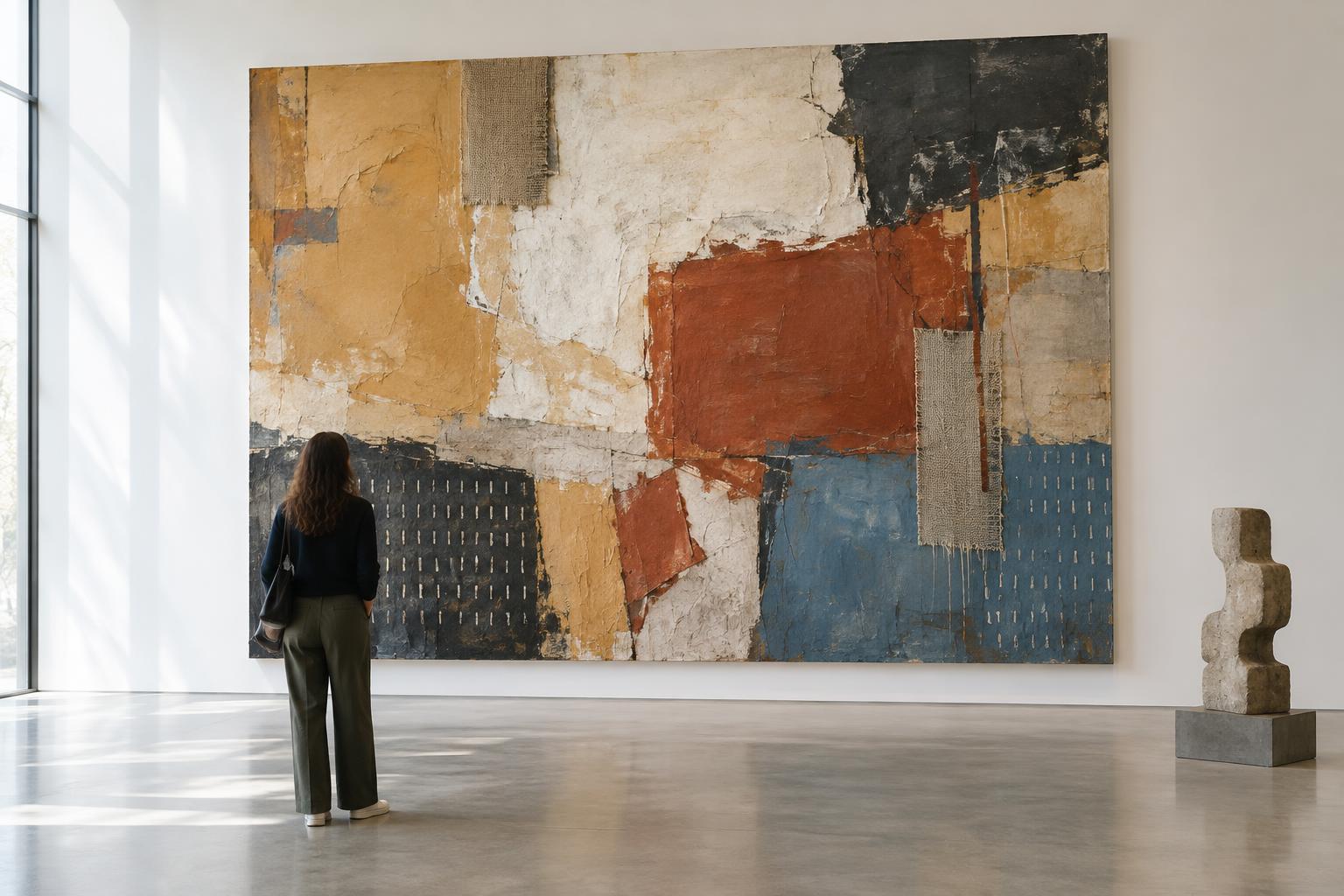
Images gather meaning from where we encounter them. A picture printed on a package serves a different purpose when it appears on a gallery wall. Removed from its original setting, it may seem strange, beautiful or unsettling. An artist can use that shift to examine how repetition makes an image feel natural, or how presentation lends an object authority.
Context also includes the history carried by the source. A borrowed family photograph, a commercial logo and a ceremonial design do not present the same questions. Viewers may need to know who made the source material, what it was used for and who could reasonably expect to control its circulation. Without that knowledge, a work intended as a critique can be mistaken for an endorsement, while a visually striking piece can conceal an unequal relationship between borrower and source.
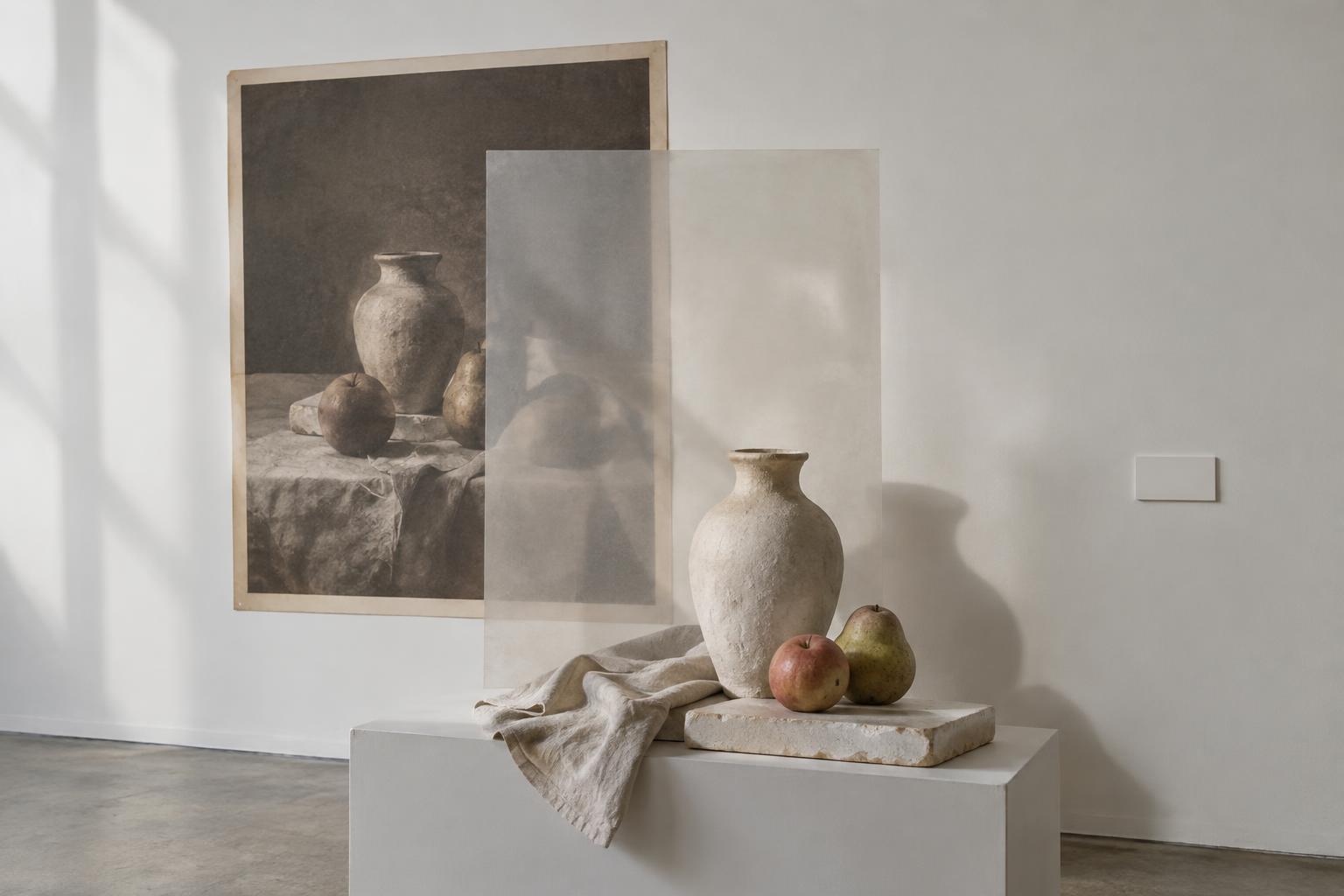
Exhibition interpretation can make those relationships easier to see. A label may identify source material and explain what the artist changed without insisting on a single reading. Showing the original alongside the new work, when appropriate, can help viewers assess the transformation for themselves. The goal is not to remove ambiguity, which can be productive, but to give audiences enough context to ask better questions.
Credit is more than a name in small print
Attribution helps viewers understand how an artwork was made and whose labor contributed to it. Depending on the project, that may mean naming a photographer, designer, archive, community, performer or collaborator. A credit can clarify a work’s argument: if an artist is examining how a particular image has circulated, identifying its maker may deepen rather than weaken the artwork.
Credit alone, however, does not resolve every concern. Someone may be named while having little say in how their work or cultural expression is presented. Conversely, a source may be anonymous or difficult to trace, especially when an image has been repeatedly shared and altered. Artists can respond by documenting their research, describing uncertainty honestly and considering whether permission, collaboration or a different source would better suit the project. These are artistic and ethical questions as well as, in some circumstances, legal ones; the answers depend on the specific use and setting.
Questions for making and looking
For an artist considering appropriation, the most useful test may be to describe what the borrowing accomplishes. Does the new work reveal something about the source, its circulation or the setting in which it appears? Would the idea survive if the source were credited prominently? If not, secrecy may be doing more work than transformation. It is also worth asking who might be affected by the reuse and whether those people have an opportunity to respond.
For a viewer, close looking offers a similar path. Notice what has been kept, removed, enlarged or repeated. Ask whether the work treats its source as evidence, a collaborator, a target of critique or merely an attractive surface. Then consider what information is missing. You need not settle every question to engage with the piece; uncertainty about authorship and meaning may be part of what it asks you to examine.
Appropriation is most interesting when borrowing becomes an inquiry rather than a disguise. The space between source and new work can expose habits of seeing, overlooked labor and the power of presentation. Attending to that space makes room for both imaginative reuse and a more careful account of where images and ideas come from.