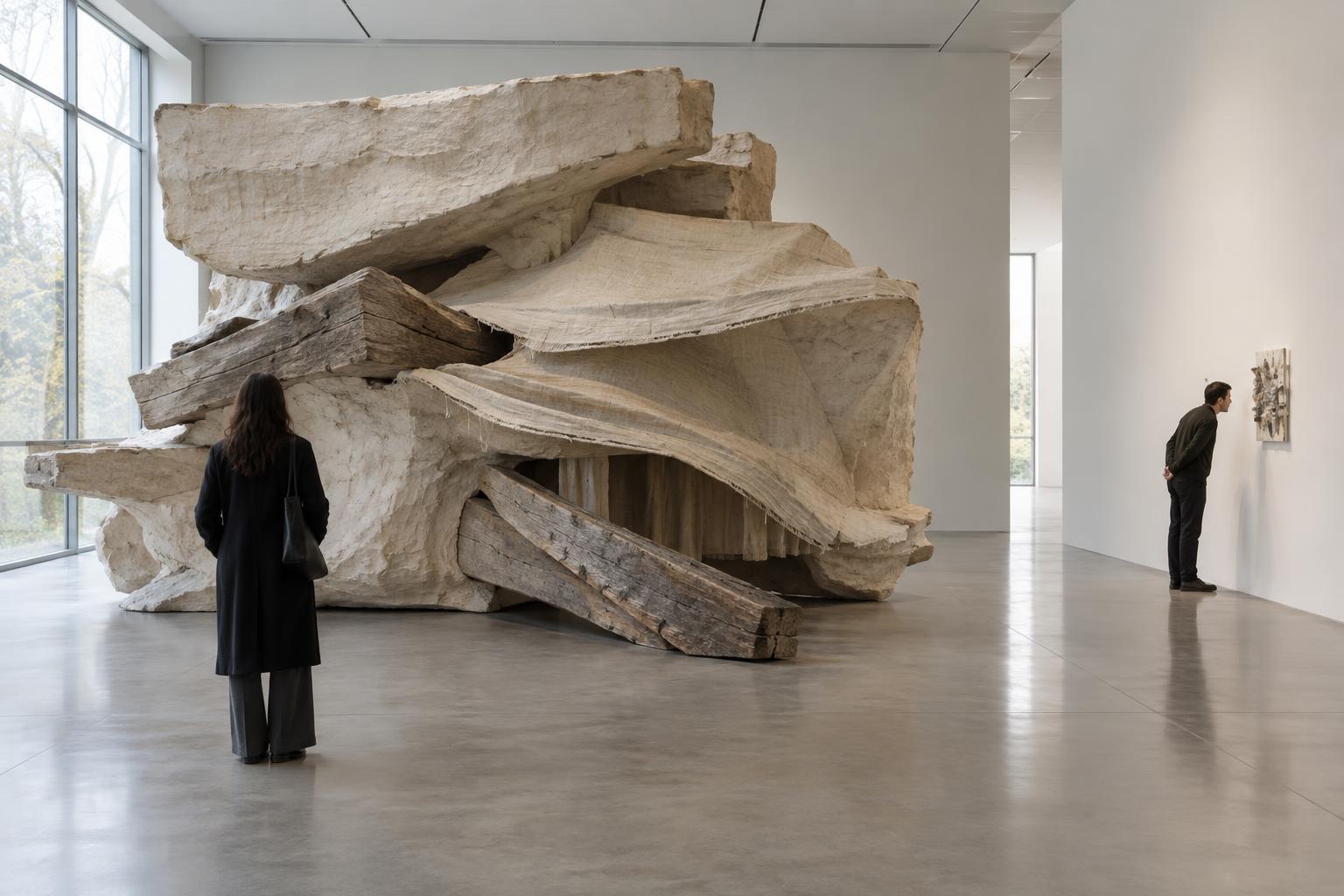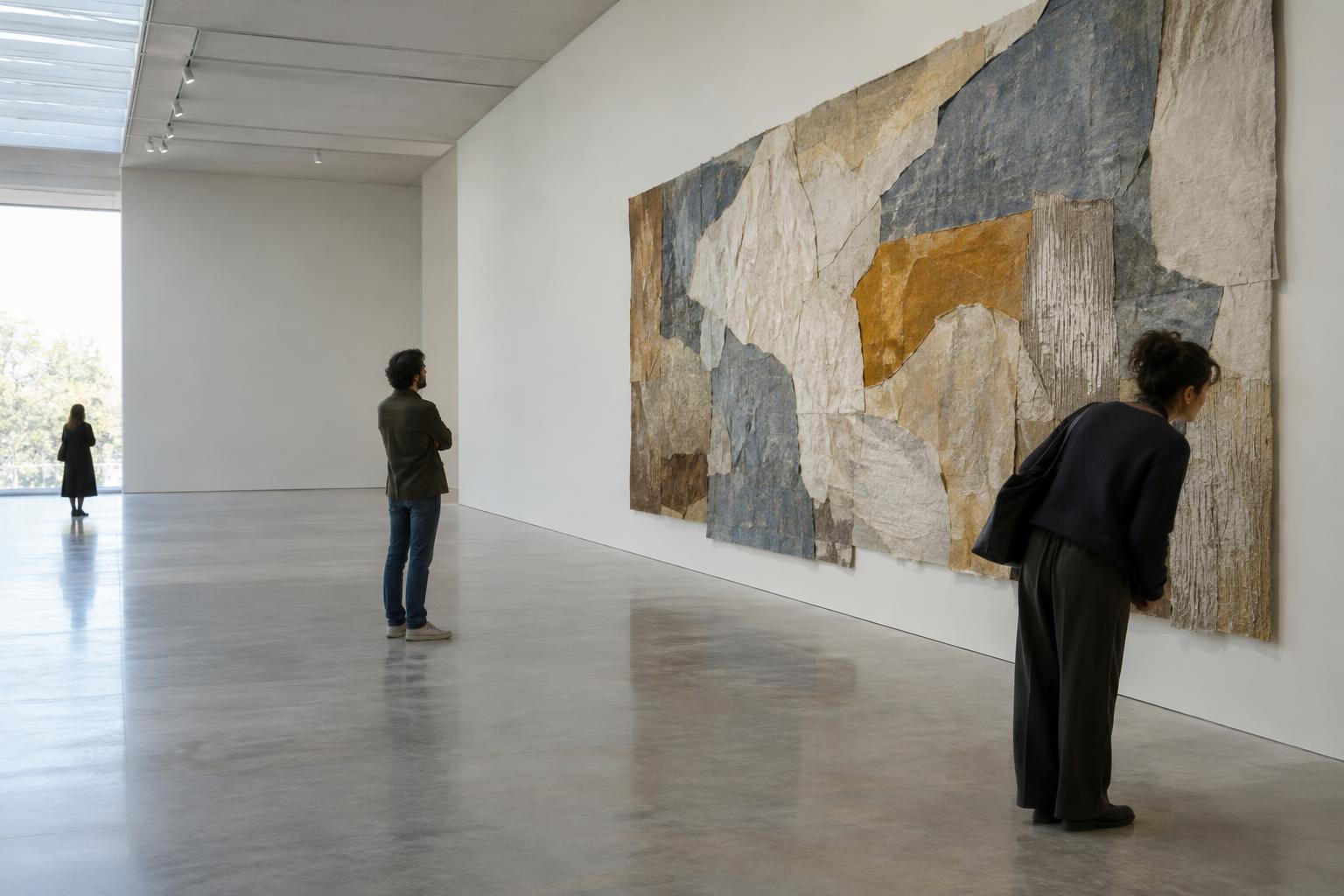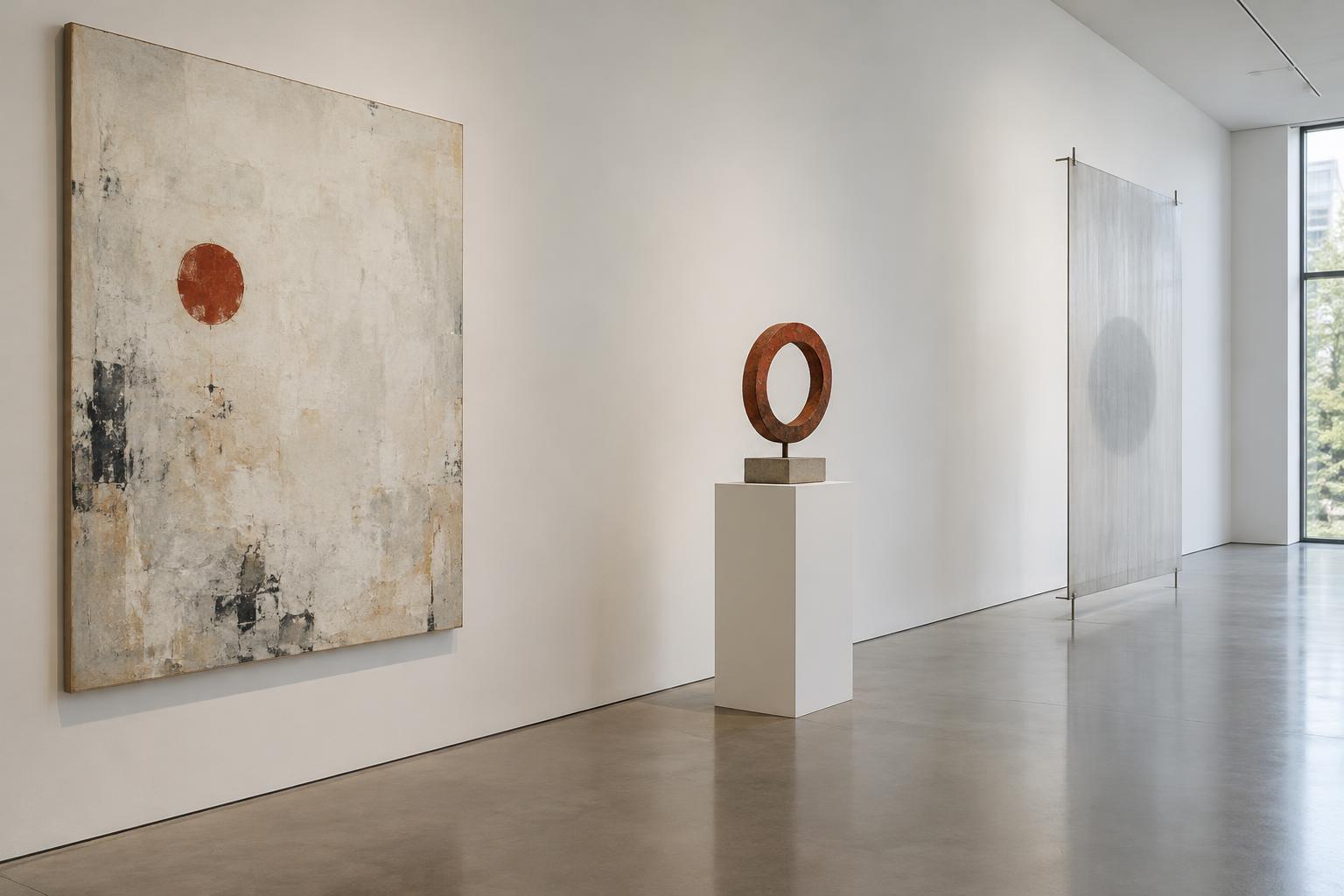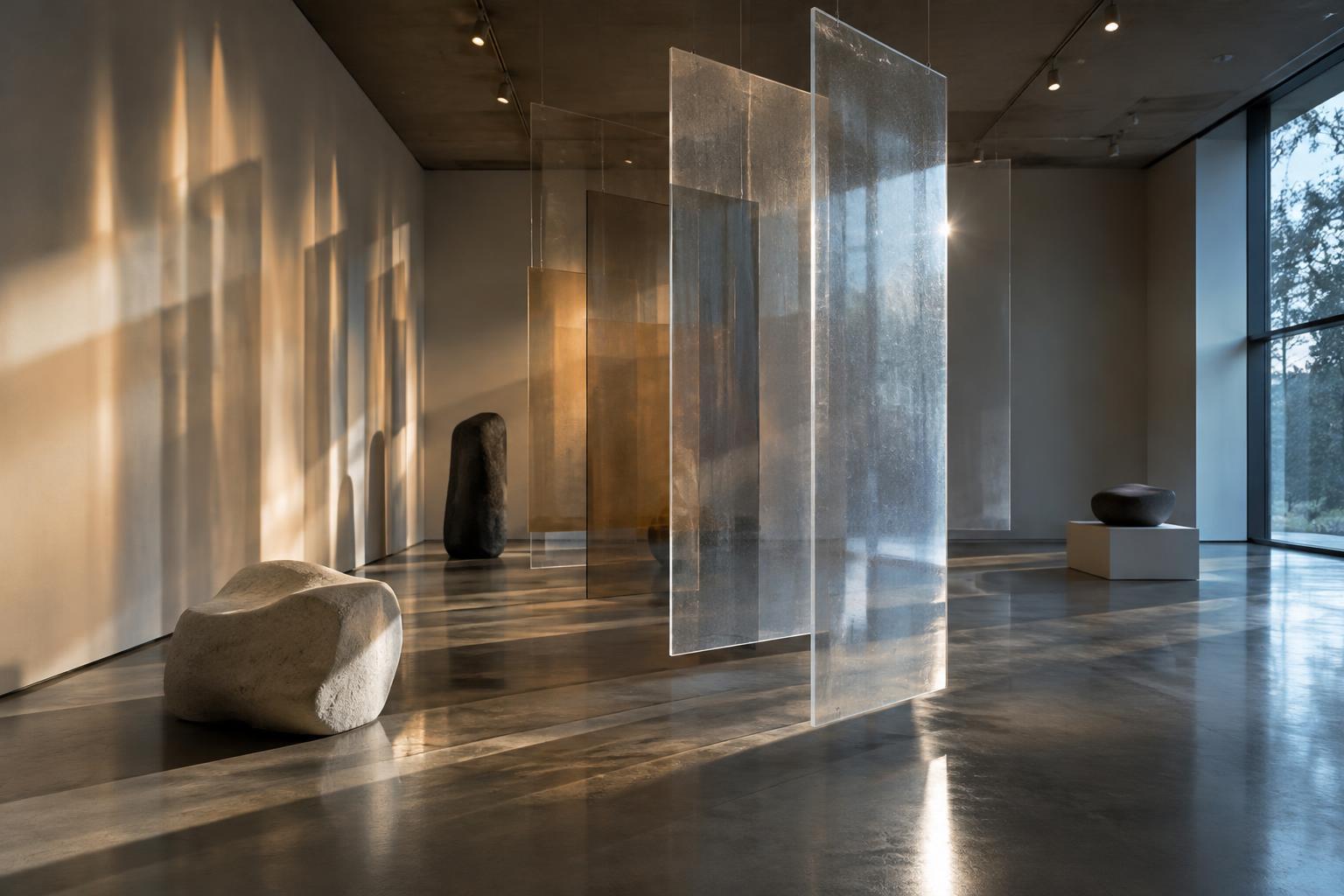
Begin with the light already in the space
Before choosing a lamp or deciding where to place it, spend time observing the room. Daylight may enter through windows, fall across the floor and fade as conditions change. Existing fixtures may leave corners dim or create bright patches on walls. These conditions are not merely obstacles: they are part of what visitors will see alongside the work.
Walk the space from its entrance and from the positions where people are likely to pause. Notice what catches your eye first and whether a bright surface draws attention away from a quieter element. If the installation will be open at different times of day, observe the room under more than one lighting condition where possible. A plan that works in afternoon daylight may feel very different after dark.
Decide which conditions the work can accommodate. An installation built around shifting daylight may welcome variation. One that depends on a subtle shadow or a faint illuminated detail may need a more controlled setting. The aim is not always to eliminate change, but to know which changes support the work and which make it difficult to experience.
Give each source of light a purpose
Lighting becomes easier to assess when each source has a clear role. One light might reveal the texture of a hanging material; another might help visitors find a route through the room. A broad, even wash can make elements feel connected, while a narrower beam can separate an object from its surroundings. Neither approach is inherently better. The choice depends on what deserves attention and how the parts of the installation relate.
Consider what happens outside the brightest area. If everything around a lit object disappears into darkness, the object may feel isolated. If the surrounding walls remain visible, viewers may read it as part of a larger arrangement. Try adjusting one source at a time, then step back. This makes it easier to tell whether a change improves the work or simply makes it brighter.
Treat the lighting equipment as part of the visual environment, too. A visible fixture, cable or stand may be welcome in a work that exposes its own construction. In another installation, the same equipment may interrupt the intended view. Plan its position with that distinction in mind rather than assuming it should always be hidden.
Use shadows as spatial elements
A shadow can extend an installation beyond the physical edge of an object. A small form placed near a light may produce a much larger shape on a wall; a perforated surface may scatter a pattern across the floor. These effects can connect separate parts of the room, but they can also introduce shapes that compete with the work.
Test shadows at visitor height and along the route through the space. Moving a light a short distance may change a shadow’s size, sharpness or direction. Moving the object may be just as effective. Notice, too, when visitors cast shadows of their own. Their silhouettes might become a deliberate, temporary part of the installation, or they might obscure a detail you want everyone to see.
Shadows need a surface on which to register. A textured wall, patterned floor or crowded background may make a delicate outline harder to notice. If the shadow matters, assess the receiving surface as carefully as the object that creates it.
Check glare and transitions
A bright effect can look compelling from a single viewing position and uncomfortable from another. Reflective materials, glossy floors and exposed bulbs can direct light toward visitors’ eyes as they move. Walk the likely routes slowly, looking from seated as well as standing positions when relevant. Check whether a reflection distracts from the work or makes a path harder to read.
Pay attention to the transition into and out of the installation. Someone arriving from a brightly lit corridor may need time to perceive detail in a dim room. Conversely, a strong light near an entrance may dominate the first impression before the rest of the work becomes visible. Leaving room for the eye to adjust can be as important as lighting an individual element.
If an installation includes electrical equipment, coordinate placement and operation with the venue and appropriately qualified personnel. Artistic decisions about light should sit alongside the space’s access, maintenance and safety requirements, not replace them.
Test the experience, then record what matters
A lighting plan is a starting point, not a substitute for seeing the installation in place. Set up a trial if the space allows it. Walk through without stopping, then return and examine the work from several positions. Ask what appears first, what remains hidden and whether the intended relationships between elements survive as you move.
Make adjustments in small steps and record the choices that prove important. Notes might describe the direction of a light, the position of a movable object or the room conditions under which a shadow becomes visible. Photographs can help, but a camera may render brightness differently from the way a visitor perceives it. Pair images with written observations rather than relying on them alone.
The strongest lighting arrangement is not necessarily the most dramatic. It is the one that helps the installation communicate through its materials, space and changing viewpoints. When light is treated as something visitors move through rather than a final spotlight added at the end, it becomes a considered part of the work.