Scale is a relationship, not just a measurement
A work’s dimensions can tell you how much space it occupies, but they cannot tell you exactly how it will feel to encounter it. A small object placed alone on a long wall may draw attention across a room. A large work in a crowded gallery may be difficult to see all at once. Scale emerges from the relationship between the work, its surroundings and the person looking at it.
Begin by noticing where you stand when the work first catches your eye. Are you looking up, leaning in or stepping back? Can you take it in from one position, or do you need to move? These questions offer a useful starting point even when you know nothing about the artist’s intentions. They keep your attention on what the work asks you to do before you decide what it means.
Small works can demand close attention
Small does not necessarily mean modest or easy to overlook. A miniature drawing, a compact sculpture or a barely visible mark can slow your pace by asking you to come closer. At that distance, details that might disappear in a reproduction become important: an uneven edge, a change in texture or the space between two elements. You may also become more aware of how carefully you are allowed to approach the work.
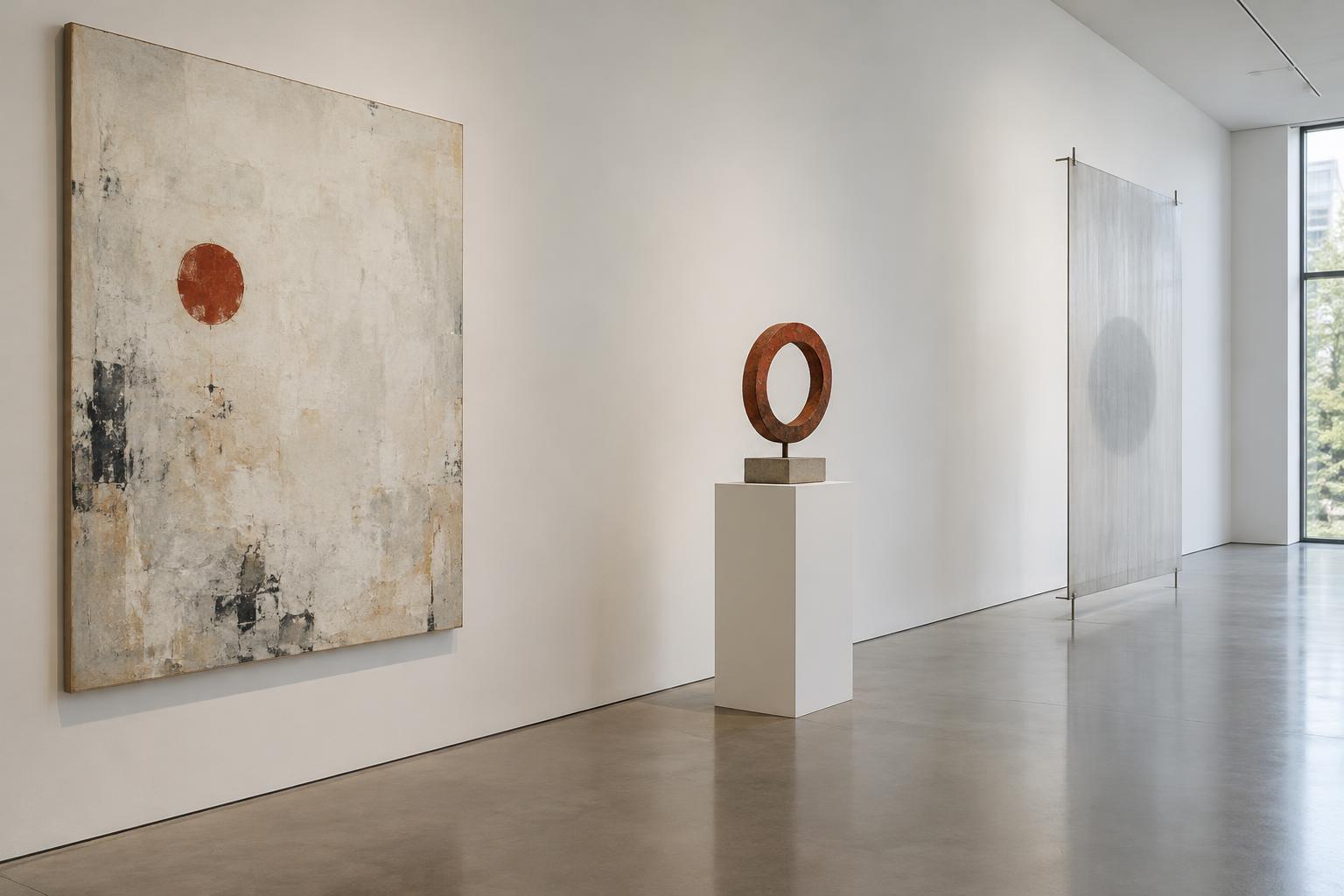
Notice how the work is displayed. A tiny object in a case can feel precious or remote; the same object on a low platform might seem more familiar, though it could also be more vulnerable. Lighting, labels and protective boundaries all affect the encounter. Rather than treating these features as neutral packaging, ask how they direct your attention and shape the work’s apparent significance.
Large works involve the body
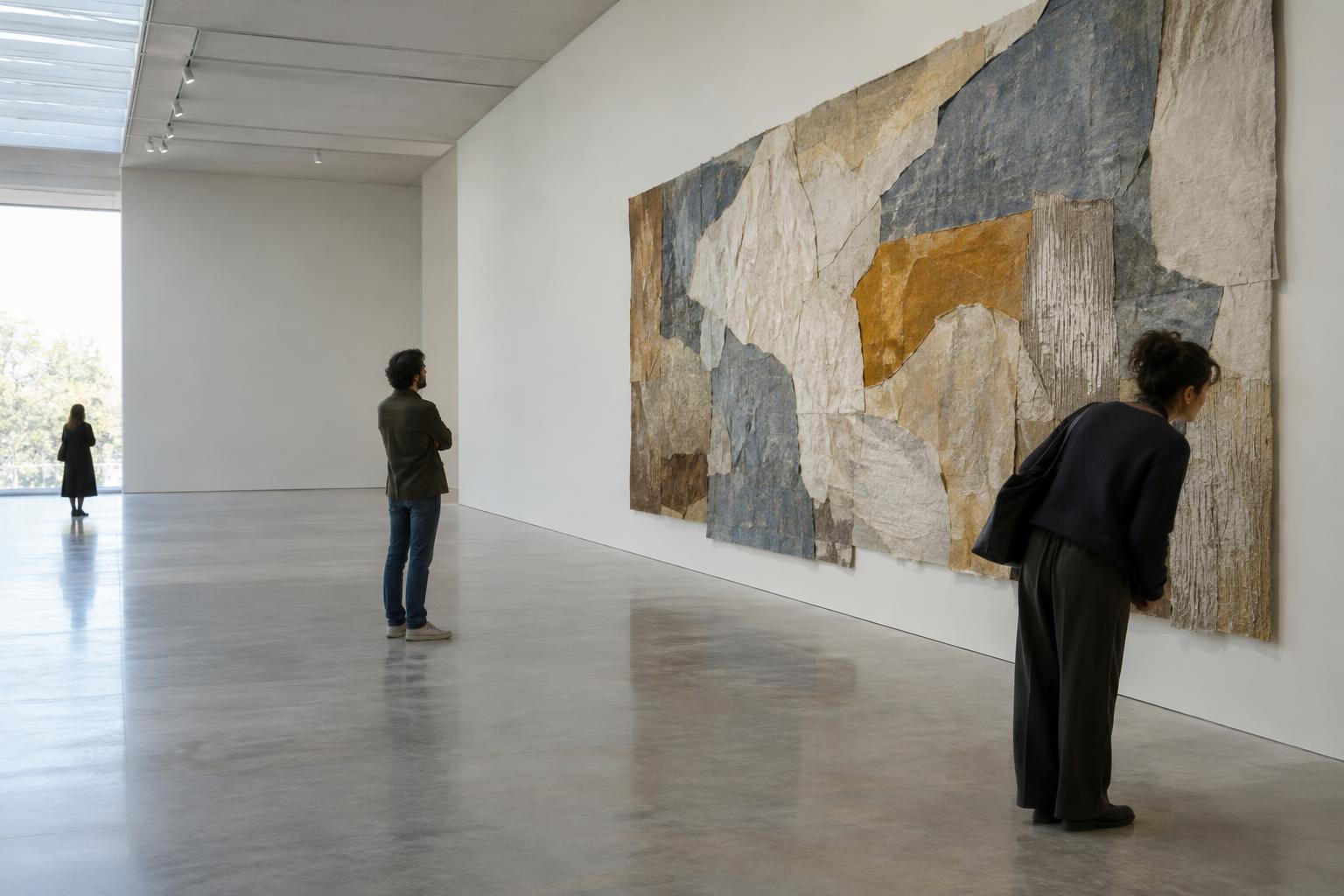
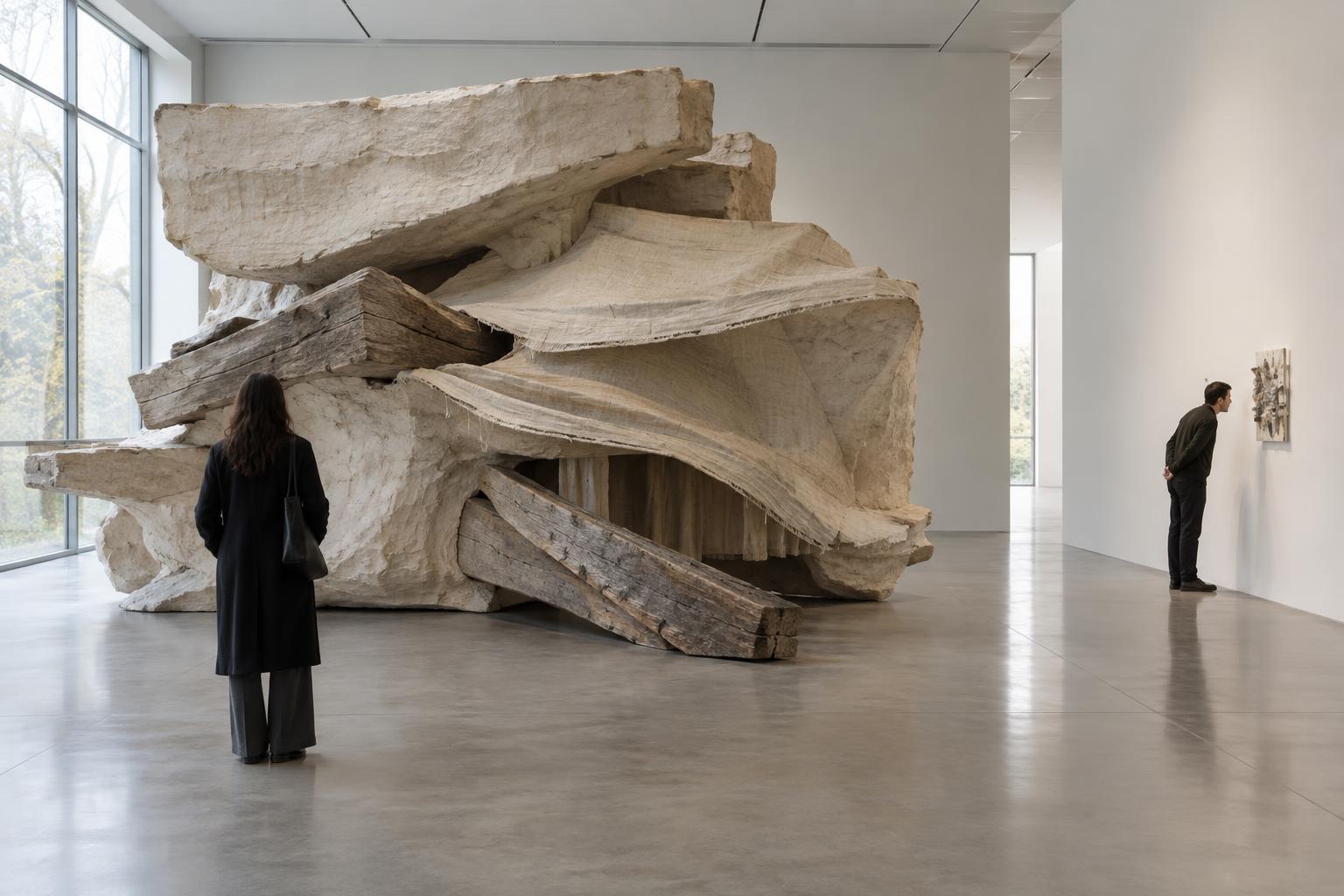
A large painting may extend beyond your immediate field of view. An installation may require you to walk around or through it. In either case, seeing becomes a sequence rather than a single glance. From far away, you might notice an overall form; nearby, the materials and joins become visible. Neither view is automatically the correct one. Moving between them can reveal how the work holds together.
Pay attention to the choices available to you. Is there a clear route, or can you wander? Do you have room to pause without blocking someone else? A work that fills a space can make you feel enclosed, exposed or unusually aware of other visitors. Those responses are worth noticing, but they are not universal: height, mobility, crowding and familiarity with the space can change the experience.
The setting can make size feel different
Imagine the same sculpture in a quiet gallery, a busy entrance hall and an open square. Its dimensions stay constant, but its apparent scale changes against each setting. Walls and ceilings provide a frame indoors. Outdoors, buildings, trees, traffic and passersby offer competing points of comparison. A work can seem monumental in one place and surprisingly slight in another.
When looking at art in a public or shared space, consider who can approach it and from where. A piece designed to be seen across a plaza may also have details visible only at close range. Seating, pathways and sightlines influence whether people linger or pass by. These practical conditions do not settle what the work means, but they help explain why two visitors can have quite different encounters with it.
Use photographs as a guide, then look again
Photographs are useful for recalling a work, but they can flatten the experience of scale. An image may crop out the ceiling, remove surrounding objects or make a small work fill your screen. If a person appears beside the work, they offer one point of comparison, not a complete account of how the space feels. When viewing art online, look for installation views as well as close-ups, and check any dimensions provided.
In person, try a simple exercise: look once from the edge of the space, once from a comfortable closer position and once while moving past the work. Note what becomes visible or disappears at each point. You do not need to arrive at a single interpretation. The aim is to recognize that scale shapes how attention, movement and shared space become part of looking. For further browsing on the separate question of how shared places can feel welcoming, visit Everyday Hospitality · Cold Springs Community Journal.