Start with the way the work may be encountered
An artwork does not have a single fixed appearance. A viewer might first notice it from a doorway, then cross a room, then lean in to examine a seam or mark. At each point, different features become available. Testing those views while you work can reveal problems that are hard to see from your usual position in the studio.
Before moving anything, imagine a plausible path toward the work. Where might someone first see it? Can they walk around it, or will they mostly face it from one side? You do not need to predict every viewer’s behavior. The aim is to identify a few useful positions and look at the work from each one. If the final setting is unknown, use the space you have and treat your observations as provisional.
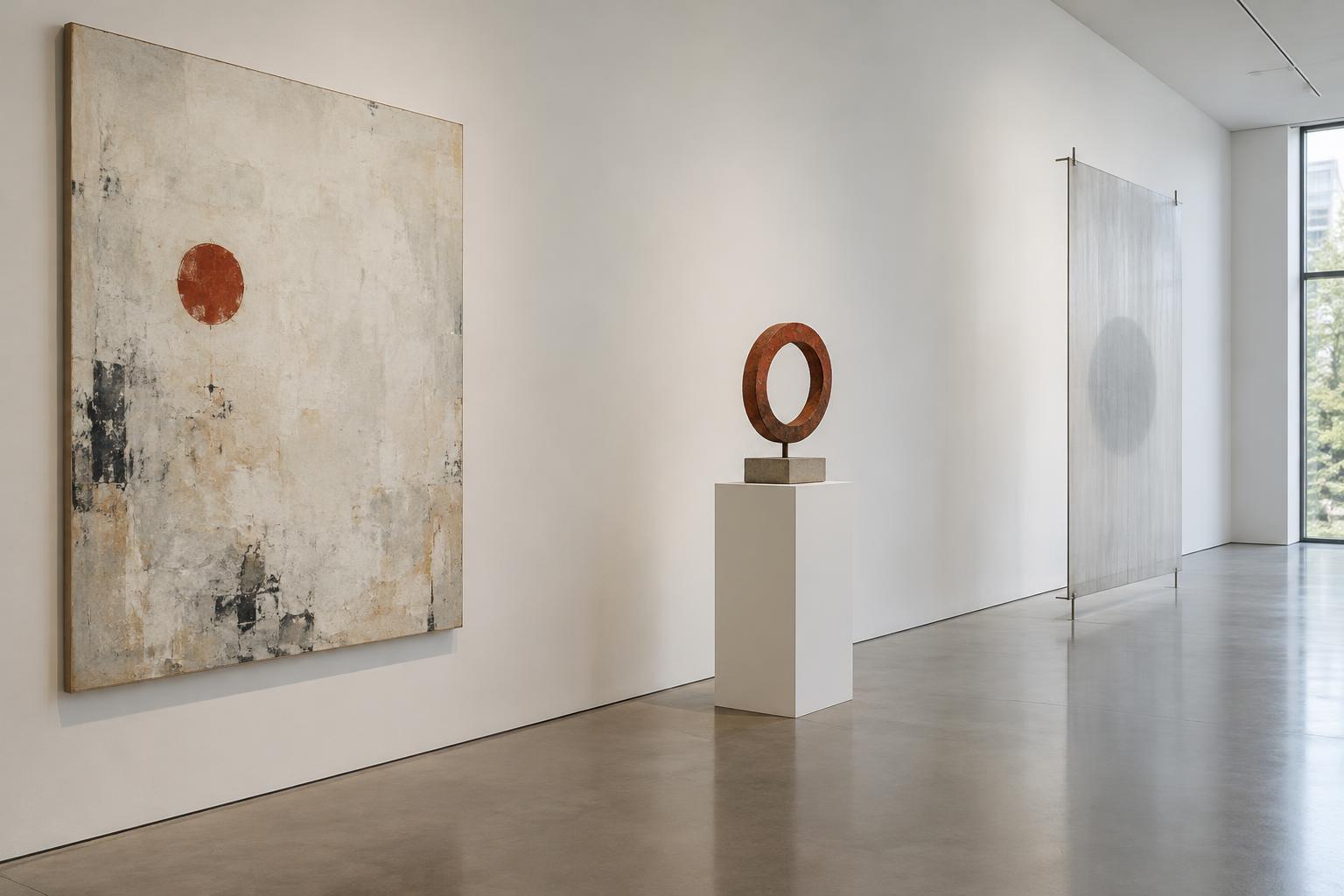
Look for the first impression from a distance
Begin as far away as the room reasonably allows. Notice what you perceive before you can inspect details: an outline, a color relationship, a direction of movement or the amount of space the work occupies. Ask yourself what attracts your eye first. Is that the feature you intended to emphasize? If the work has text or small components, consider whether it needs to be readable from here or whether it is enough for those elements to invite a closer look.
Try entering the room without staring at the work continuously. A brief glance from the threshold can tell you something different from standing back and studying it. You might discover that a strong background shape overwhelms a quieter central element, or that a small work holds its place because of its contrast with the surrounding wall. These are observations, not automatic reasons to make the work bigger or louder.
Photographs can help you compare impressions, but they also flatten scale and change how details appear. If possible, return to the physical work before making a decision based on an image.
Check the middle view and the close view
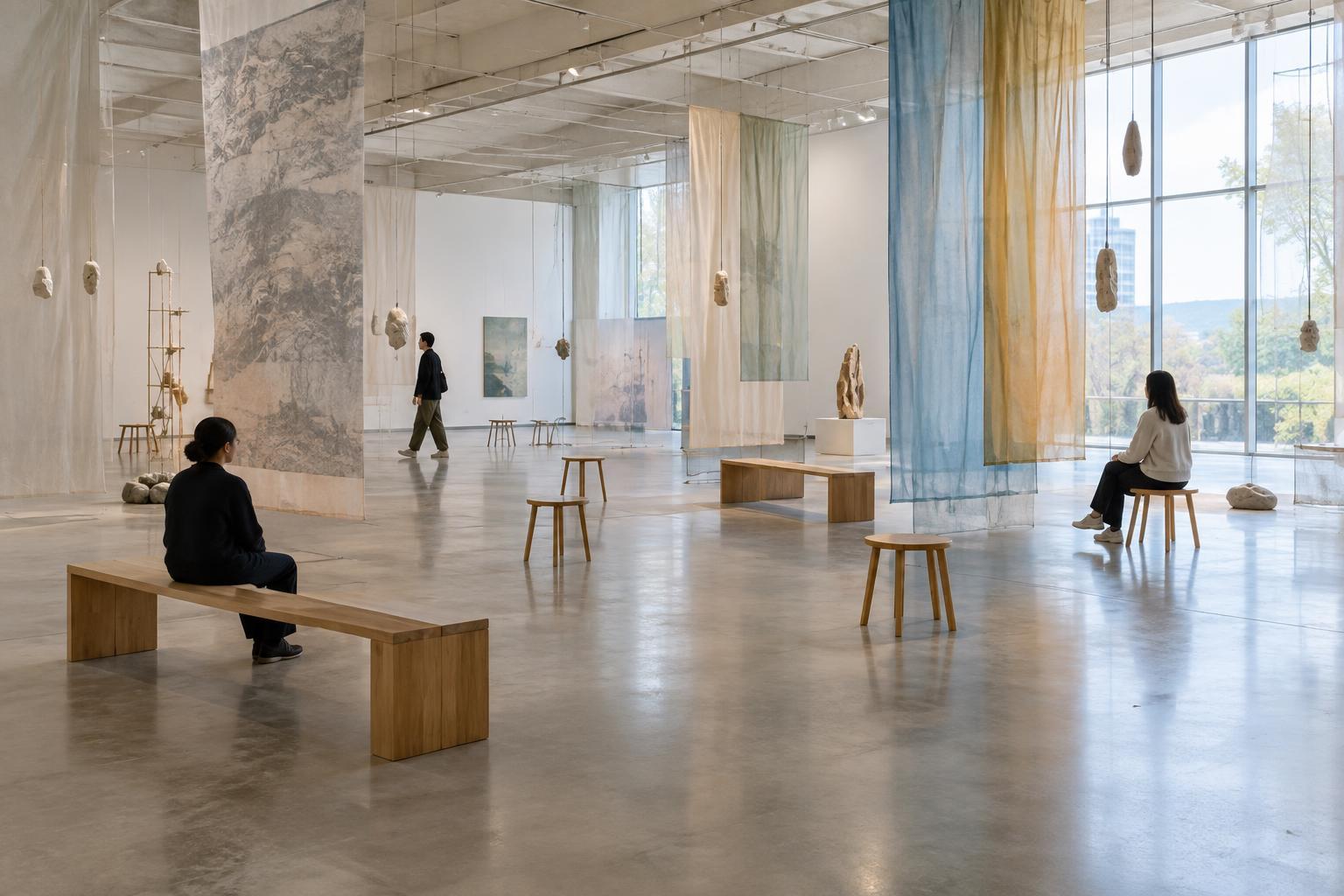
From a comfortable viewing position, look at how the parts relate. Can you follow the sequence you intended, or does your attention get caught somewhere unexpected? For a two-dimensional work, this might concern the balance of forms. For an installation, it might concern the path between objects or whether one component blocks another. Move a little to either side: a change in angle may reveal a relationship that is invisible from straight ahead.
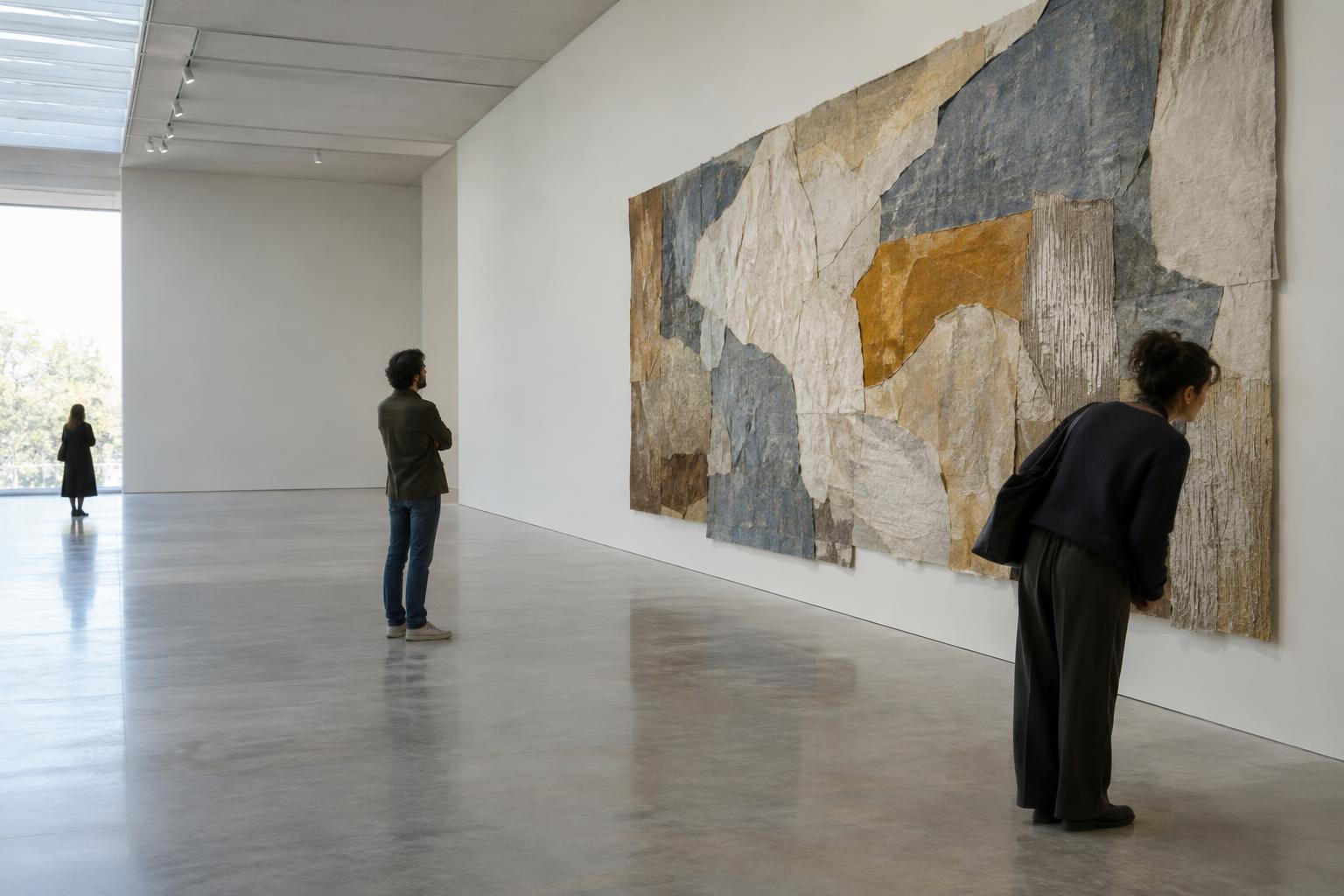
Then approach the work. Look at joins, edges, surfaces, repetitions and any text or instructions. Close viewing can reward curiosity, but it can also expose details that interrupt the experience. A rough edge may be essential to the work’s character; an unintended gap may distract from it. Rather than treating every irregularity as a fault, ask whether it contributes to what the work is doing.
Pay attention to the transition between these positions. Does a distant shape develop into something more complex as you approach? Does a detail that matters to you disappear as soon as you step back? Neither outcome is inherently wrong. The useful question is whether the change supports the experience you want to offer.
Use what you notice to make a limited adjustment
Write down one or two observations at each distance before changing the work. Keep them concrete: “the lower section disappears from the doorway” is more actionable than “the composition feels off.” If possible, change only one variable at a time, such as spacing, height, lighting direction or the placement of a single element. Then repeat the viewing path to see what changed.
For work intended for a particular site, test it there when you can. A wall color, nearby object or narrow approach may alter how it reads. If a full installation is not possible, a temporary arrangement or scaled placement plan can help you ask better questions, though it cannot reproduce the experience completely.
The goal is not to make every detail equally visible from everywhere. Some works depend on discovery; others need an immediate presence. Testing viewing distance helps you choose which features should announce themselves, which should wait and which may be drawing attention by accident.