Start with a question, not a collection
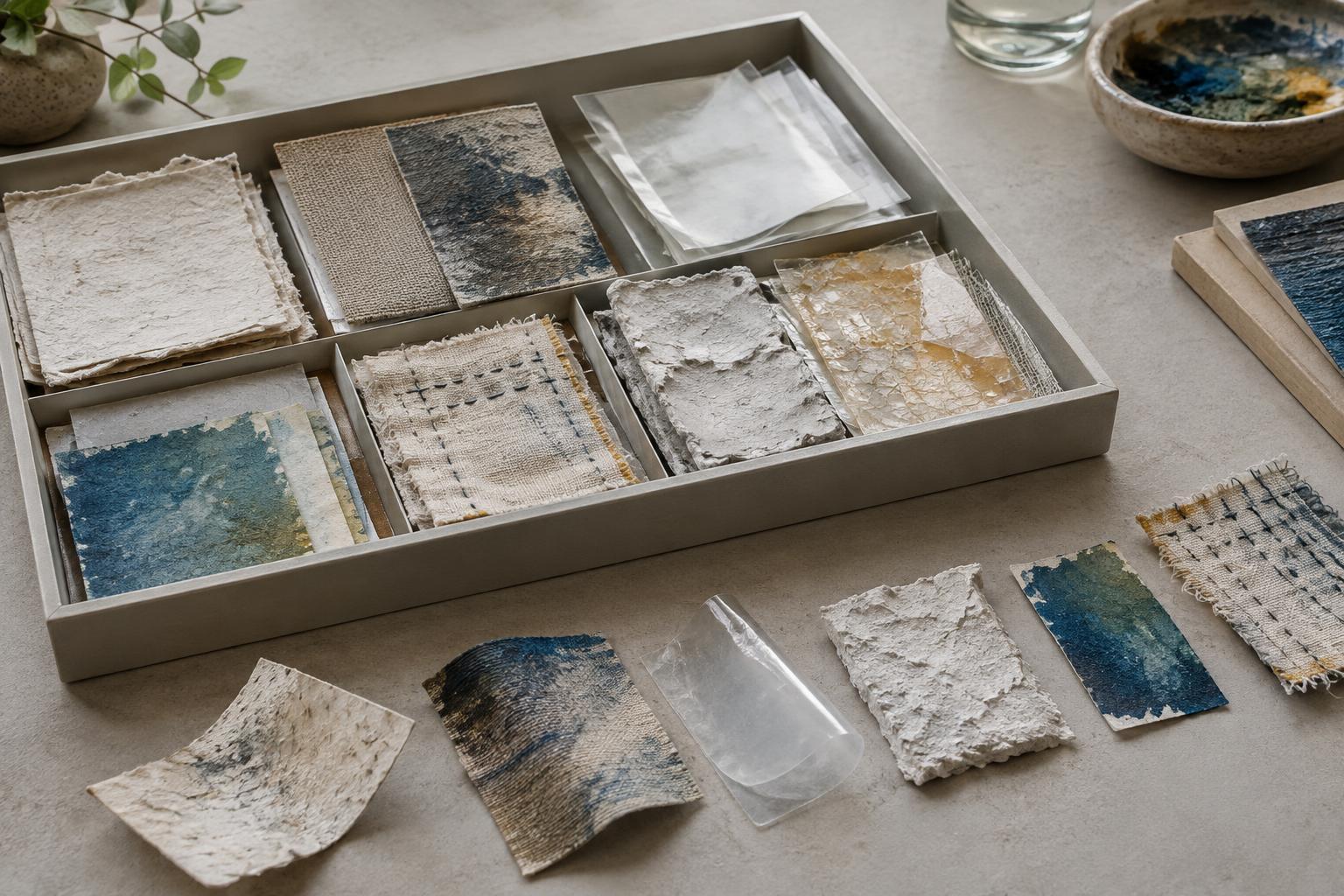
A material test library is a set of small samples made to answer questions you are likely to face again. It might help you compare how a wash behaves on different papers, whether a mark remains visible under a translucent layer, or how a flexible support responds when coated. Unlike a finished artwork, a test does not need to look resolved. Its job is to make a particular behavior visible.
Choose one question before making a batch. For example: Which of these three surfaces gives the clearest pencil line after a thin coat of medium? Keep the pencil, medium and application method the same while changing only the surface. If you change everything at once, you may discover an interesting effect, but you will have a harder time understanding what produced it. Open-ended experiments have a place too; label them as explorations rather than comparisons.
Make samples that resemble the real work
A tiny test can mislead if the planned artwork depends on scale. A coating that looks even across a narrow strip may show brush marks across a broad panel. A joint that holds a light scrap may behave differently when it carries a larger piece. Make the sample large enough to reveal the feature you care about, and use the same support preparation, layer order and application tools you expect to use in the work.
Include a control when it helps: an uncoated piece beside a coated one, or a mark left uncovered next to a mark beneath a new layer. Leave part of each stage visible if you can. A sample showing the bare support, the first layer and the completed combination is often more informative than one showing only the final surface. For processes that change as they dry or settle, inspect the sample again later rather than judging it immediately.
Record what the sample cannot show
The object itself rarely tells the whole story. On a label or accompanying card, note the materials used, the order of operations and any preparation that affected the result. Record practical details you might otherwise forget: whether the surface was lightly sanded, whether the color was brushed or wiped on, and whether a layer was fully dry before the next was added. You do not need a formal template, but consistent notes make samples easier to compare.
Describe observations separately from preferences. “The edge lifted after handling” is an observation; “I like the uneven edge” is a preference. Both are useful, but they answer different questions. If a test fails, keep it when the failure teaches you something specific. Note where the change appeared and what you might vary next time. A failed sample with a clear label can save more effort than a successful sample whose process you cannot remember.
Check performance under ordinary handling
Consider how the proposed work will be used and viewed. If it will be moved, gently handle a sample after it has had time to set and watch for cracking, flaking or loose edges. If a layered surface relies on translucency, view it under more than one lighting condition. If a material needs to bend, test it in the direction and degree the work requires. These checks are not guarantees of long-term behavior; they reveal immediate limitations that appearance alone may hide.
Avoid treating a destructive test as the only measure of success. Rubbing, folding or pulling a sample much harder than the finished work is likely to experience may tell you little about normal use. Decide what kind of stress is relevant, and record how you applied it. When using unfamiliar products, follow their handling instructions and test in a suitable workspace. Your library should support careful decisions, not encourage unnecessary exposure or waste.
Store samples so you can use them
Group tests by the question they address rather than by whichever material happens to be most visible. A folder of “marks under coatings” may be easier to consult than a folder containing every paper experiment. Flat samples can live in labeled sleeves or boxes; bulkier ones may need individual tags and a simple index. Keep notes with their samples, or give each sample an identifier that matches a notebook entry. Photographing a sample can help you find it, but the photograph may not convey texture or sheen accurately.
Review the collection occasionally and remove duplicate tests that add no information. Keep a few useful contrasts, including results you would not choose for a finished piece. Over time, the library becomes less a catalog of materials than a record of decisions: what you tried, what changed and which questions remain open. That makes it valuable even when a new project calls for a combination you have not tested before.