Begin with the relationship between images
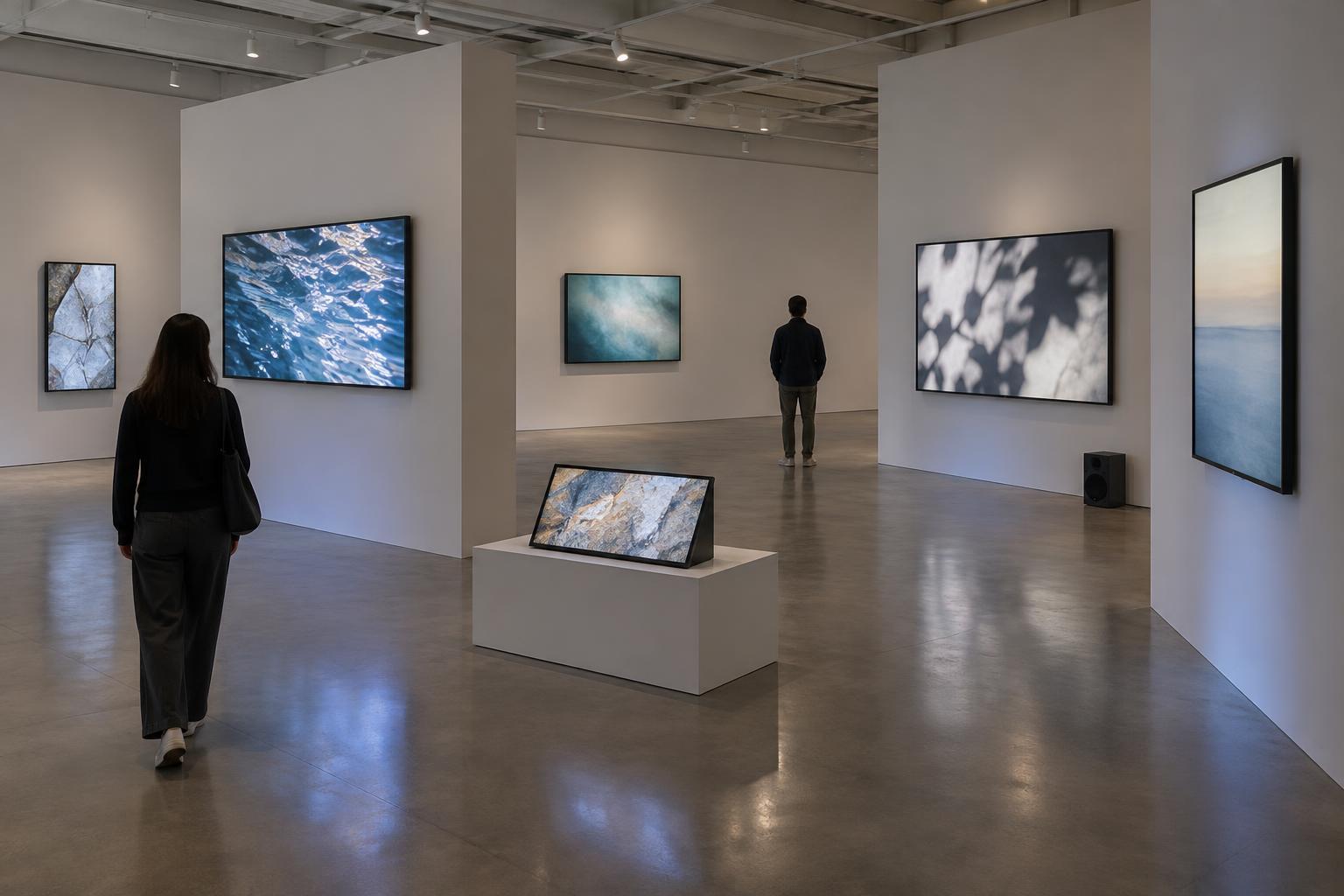
Before choosing mounts or measuring walls, ask what the screens need to do together. Are they showing different views of one event, competing accounts, separate scenes or images that gradually connect? The answer helps determine whether viewers should see every screen at once or discover them in sequence. A synchronized pair placed side by side invites comparison. Screens facing away from each other make turning, remembering and missing part of the work.
Sketch the relationships as well as the floor plan. Mark moments when images echo or contradict each other, and note whether those moments require simultaneous viewing. This can prevent a common mismatch: a sequence designed for close comparison installed where a column or doorway blocks one screen. It may also reveal that a less symmetrical arrangement better serves the work.
Compose for bodies moving through space
A screen’s position affects how long someone stays with it. At an entrance, one display can act as an invitation, while another farther inside rewards exploration. Low screens may encourage a close, downward gaze; large projections can draw attention from across a room. These effects depend on the space, so test them from likely approach routes rather than judging the layout only from its center.
Consider how many people can watch without blocking one another. Leave room to step back from large images, pass between viewing areas and pause without standing in a circulation path. Check sightlines from both standing and seated positions where possible. If a screen is intended to be hard to find or view in full, make that a deliberate part of the encounter rather than an accidental consequence of a cramped layout.
Treat light and sound as part of the arrangement
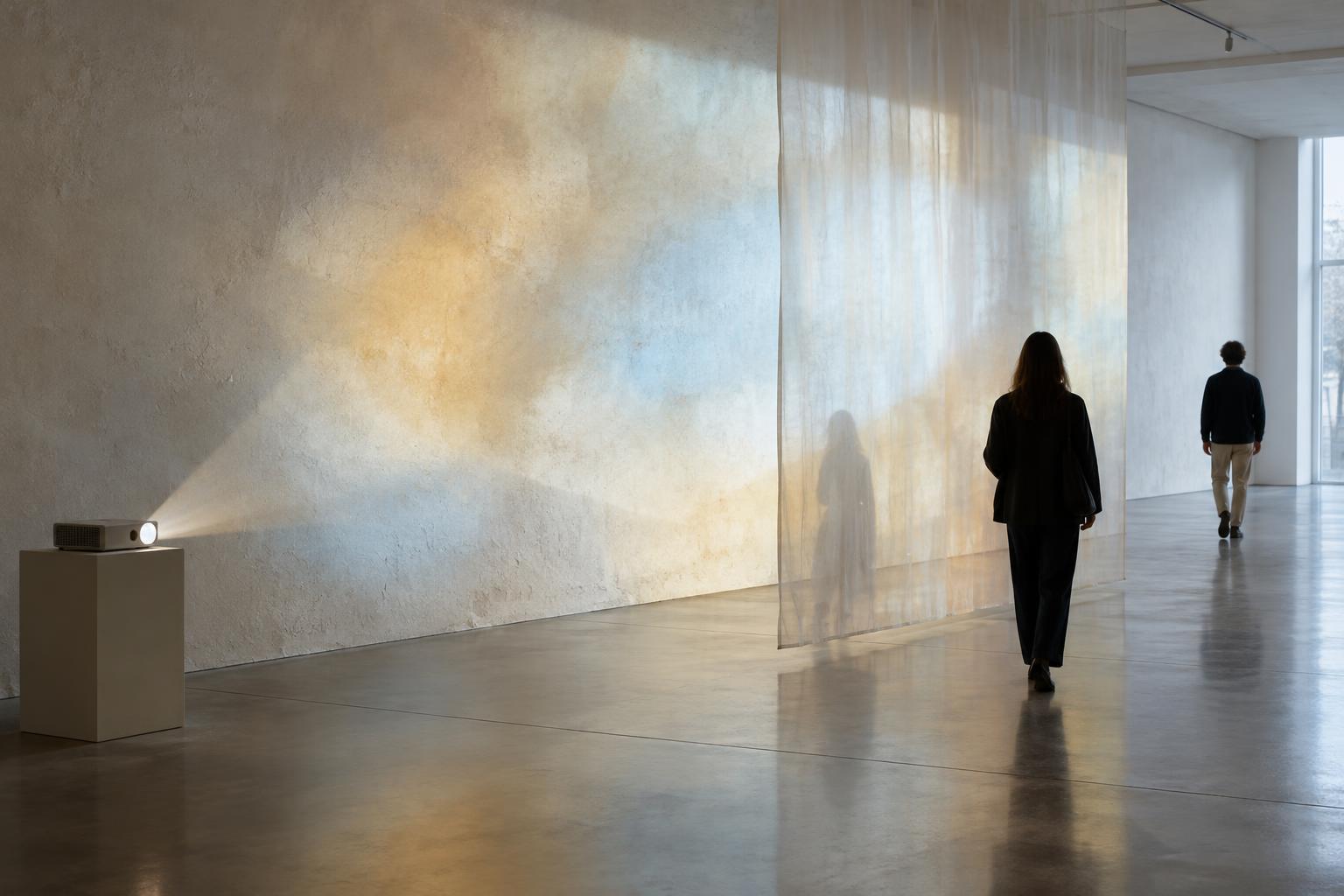
Screens change the light around them. A bright display can wash across a nearby projection or pull the eye away from a quieter image. During a test setup, look at the room while the videos are actually running, including their brightest and darkest passages. Adjust distance, angle, display brightness or surface placement before assuming the files need to change.
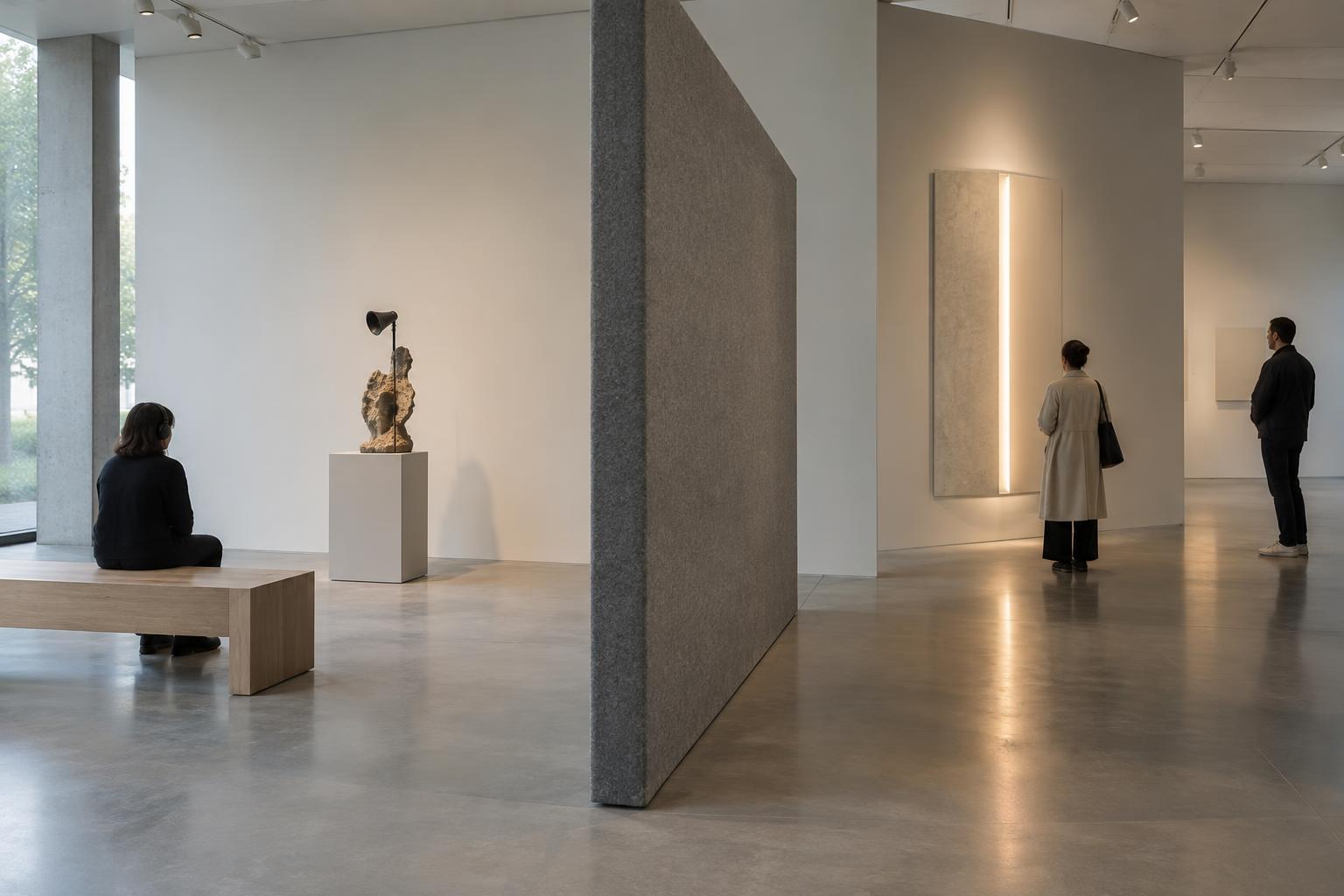
Sound travels beyond a screen’s visual boundary. Several soundtracks may form a shared atmosphere, but they can also make dialogue or subtle audio difficult to follow. Decide whether each screen needs a distinct listening zone, whether sound should overlap or whether some images can remain silent. Speakers, headphones and directional audio offer different experiences; each also brings practical questions about comfort, maintenance and how visitors share the space.
Plan for timing and uneven attention
Visitors rarely enter at the beginning of every video. If the screens loop, consider what someone encounters midway through a cycle and whether one screen depends on information supplied by another. Exact synchronization can give repeated gestures or cuts a strong connection. Independent loops can produce changing combinations. Neither approach is inherently better, but each calls for a different way of orienting the viewer.
Try walking into the installation at several points in the playback. Can a visitor find a place to begin without having to see everything? Does a long, quiet passage still hold its own when another screen becomes visually active? This kind of test helps distinguish productive ambiguity from confusion caused by layout. It also reminds the maker that partial attention can be a meaningful feature of a multi-screen work.
Test the installation at full scale
A diagram cannot fully predict the experience of moving between images. If possible, make a temporary setup using the intended screens or stand-ins of similar size. Play sample footage, walk the route, sit where a visitor might sit and invite someone unfamiliar with the work to move through it. Notice where they pause, what they overlook and whether cables, mounts or equipment draw attention in unintended ways.
Document the decisions that matter: screen heights, distances, playback behavior, audio levels and the amount of ambient light that makes the images legible. These notes are useful when an installation moves to another room, where the same measurements may not produce the same experience. The goal is not to preserve an exact diagram at all costs, but to retain the relationships among images, viewers and space that give the work its shape.