The label is part of the encounter
In an exhibition, writing can shape what you notice before you have spent much time with an artwork. A short label may identify its materials. A longer panel might connect it to a theme, a place, or other works in the room. These texts can be useful, but they are not neutral windows onto meaning. Someone has chosen which details to include, which questions to raise, and how much uncertainty to leave open.
Two common forms are the artist statement and the curatorial text. They can appear side by side, or one may be quoted within the other. Knowing whose perspective you are reading helps you treat the text as a contribution to your encounter with the work, rather than as its final interpretation.
What an artist statement can tell you
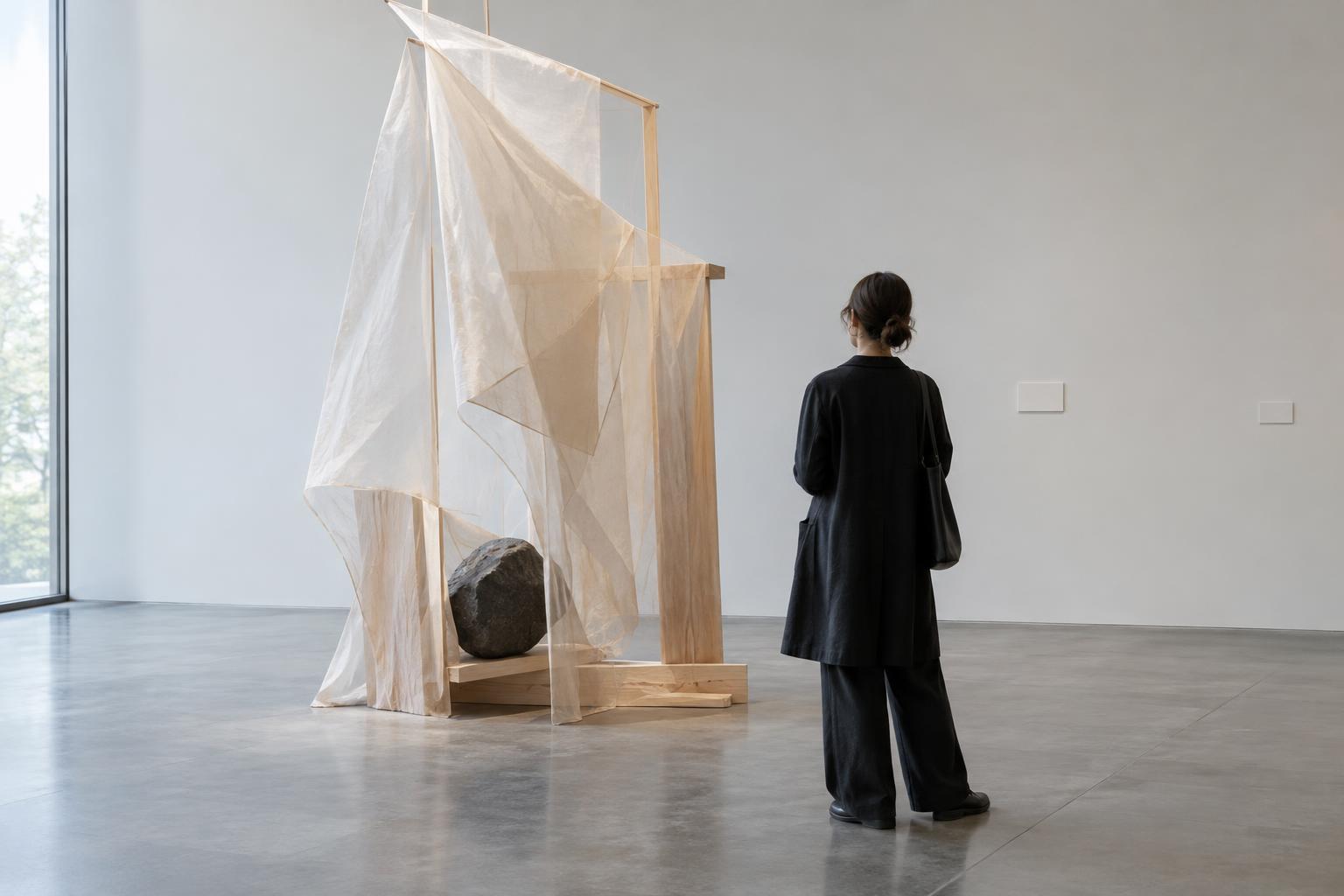
An artist statement presents the maker’s account of a practice or a particular work. It may describe a process, a material choice, a recurring question, or an experience that prompted the work. If an installation uses fragile objects arranged across a floor, for example, the artist might explain why those objects matter to them or why they chose to make the arrangement temporary. That account can draw your attention to decisions you might otherwise miss.
The statement is still one perspective, not a complete key. Artists may write for different audiences and occasions, and a brief statement cannot contain every thought that went into a work. It may emphasize intention, while a visitor notices an effect the artist did not describe. Neither observation automatically cancels the other. You can take the artist’s words seriously without treating them as a rule for what you are allowed to see.
What a curatorial text is doing
A curatorial text usually speaks from the position of someone organizing or interpreting an exhibition. Its task may be to explain why certain works share a space, introduce a theme, or offer a route through unfamiliar material. Where an artist statement often begins with making, a curatorial text often begins with selection and relationship: why this work is here, what it suggests beside another, and how the exhibition invites visitors to think about both.
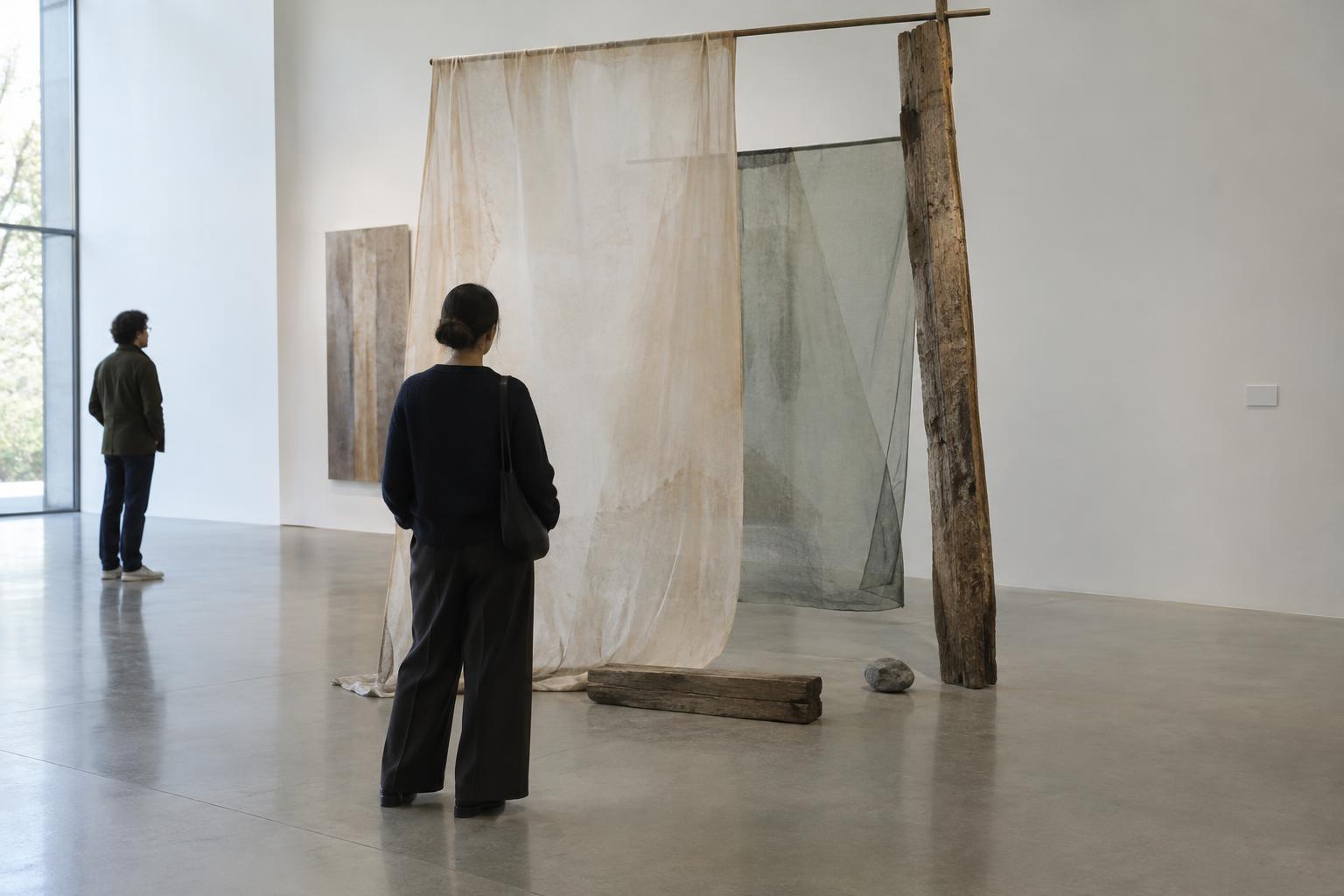
That framing can make an exhibition more legible, especially when its connections are not immediately visible. It can also foreground one reading at the expense of others. A text about a room of sculptures might emphasize their relationship to architecture while giving less attention to touch, humor, or the time required to make them. This does not necessarily make the text misleading. It means the curator has made interpretive choices, just as the exhibition itself has.
How to tell who is speaking
Start with the attribution. Look for an artist’s name, a curator’s name, an exhibition title, or a note identifying an excerpt. A first-person sentence such as “I began with drawings” often signals an artist’s voice, but not always: it could be a quotation inside a larger curatorial panel. Conversely, a third-person description may be drawn from an artist’s own account. Attribution is more reliable than tone alone.
Then notice what the text is asking you to do. Does it explain how something was made, or does it link several works under a shared idea? Does it offer the maker’s intention, or propose what the exhibition as a whole might mean? Some texts blend these roles, and a museum or gallery label may not clearly identify its author. When the source is unclear, it is reasonable to read the words as the exhibition’s framing rather than assume they represent the artist’s view.
Read the work, then return to the words
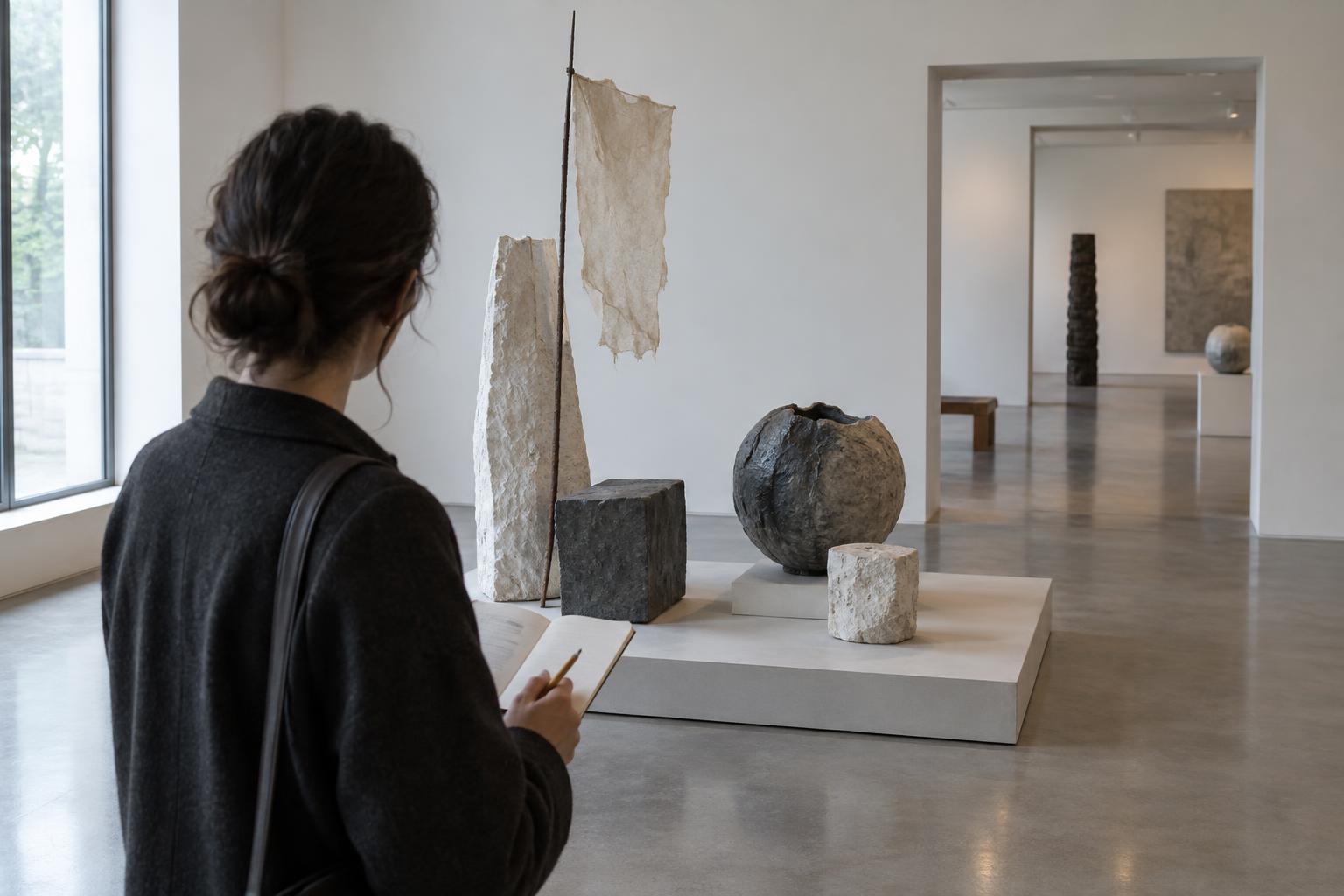
One practical approach is to pause before reading a long panel. Notice the work’s scale, materials, sounds, placement, or effect on your movement through the space. What draws your eye? What feels unresolved? After reading, look again and ask what the text helped you see. It may give a detail that changes your understanding, or it may lead you away from something you still find important.
If an artist statement and a curatorial text differ in emphasis, that difference can be productive. The artist might focus on repeated gestures; the curator might focus on how the finished work changes the room. Rather than deciding which voice wins, consider what each is positioned to know and what each leaves out. Exhibition writing is most useful when it supports close looking and thoughtful disagreement, not when it replaces your own experience.