There is no single correct way to look
At the entrance to an exhibition, an audio guide can feel like either an invitation or an obligation. It promises a route through unfamiliar work, but it also places another voice between you and what you see. Choosing not to use one can feel liberating—or leave you wondering what you have missed. Neither response means you are looking at art incorrectly.
An exhibition asks visitors to make decisions throughout their visit: where to stand, how long to stay, what to read and whether to return to something puzzling. An audio guide is one tool for making those decisions. Independent looking is another. The useful question is not which approach is more serious, but what kind of attention you want to give the work today.
What an audio guide can offer
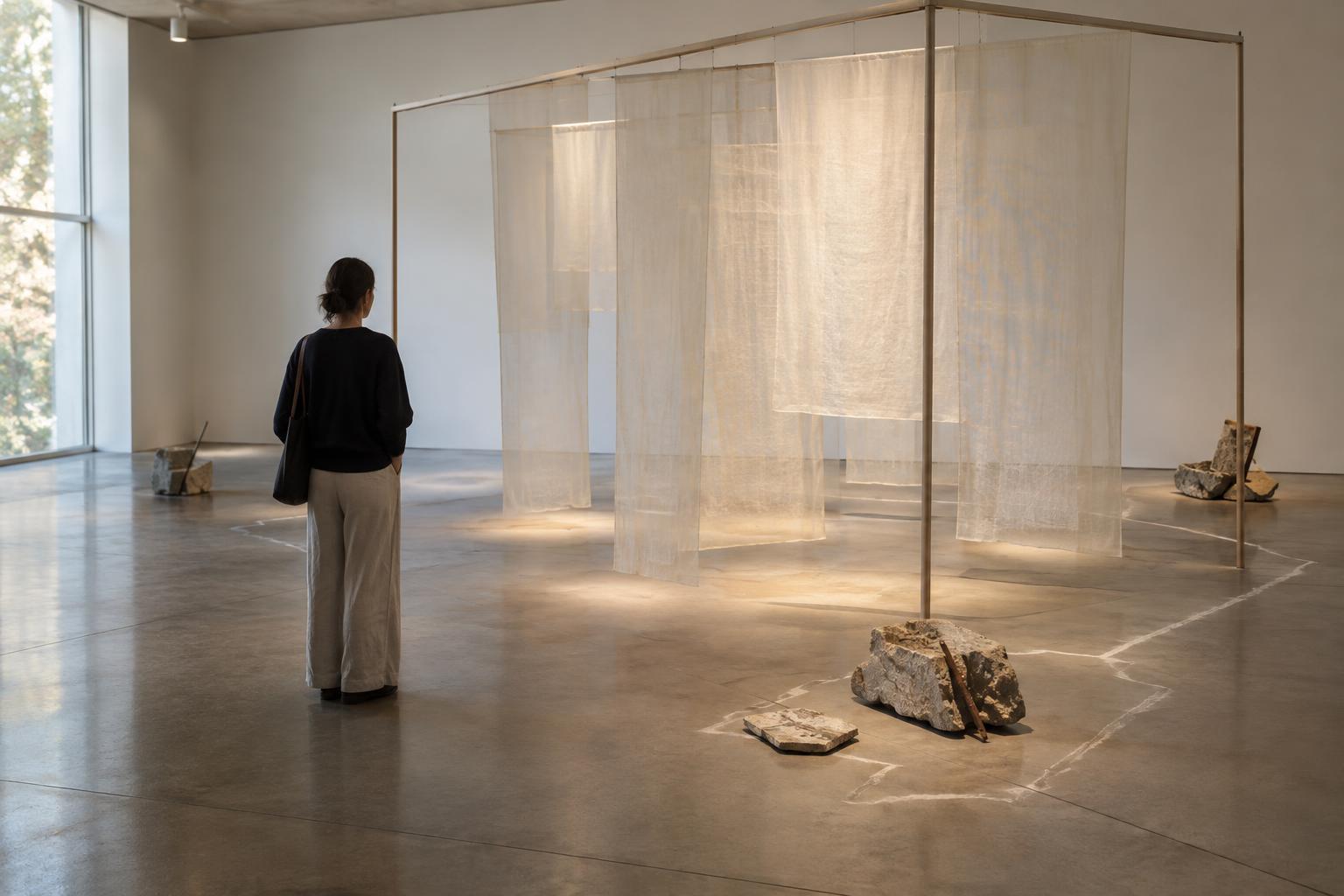
A guide may help you notice a detail, material or spatial relationship that is easy to overlook. In a large installation, for example, it might draw your attention to how sound travels through a room or how an object changes as you move around it. Background on an artist’s process can also make an unfamiliar technique less opaque. For some visitors, spoken interpretation is easier to use than a wall label; for others, it offers a welcome way into a challenging subject.
Guides are interpretations, however, not neutral keys that unlock a work’s single meaning. A recorded segment has to select what to discuss and what to leave out. Its timing can encourage you to move on before you are ready, and a compelling explanation can become difficult to set aside. If you notice yourself listening more closely to the narration than attending to the work, pause the recording. You can always resume it.
What independent looking makes possible
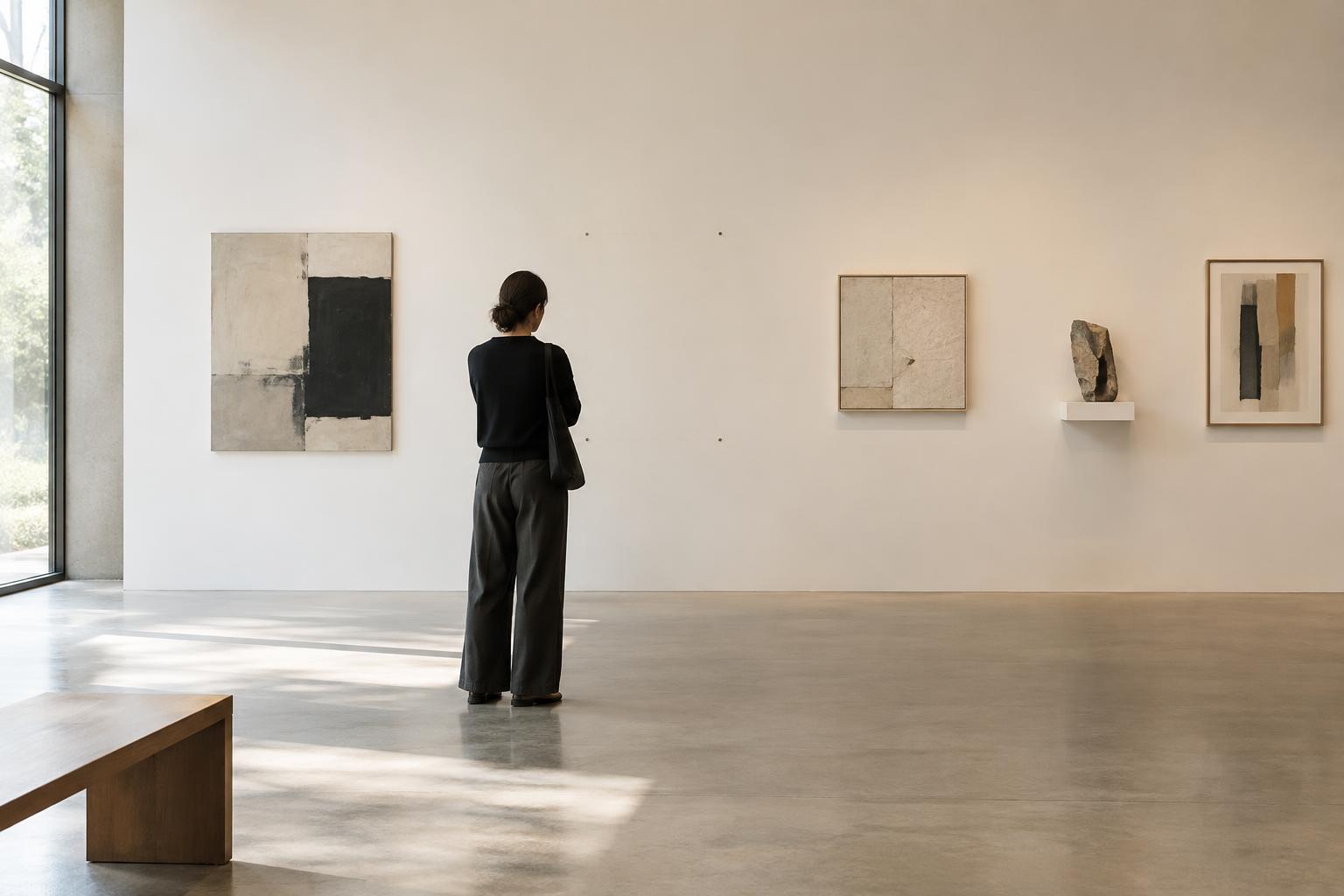
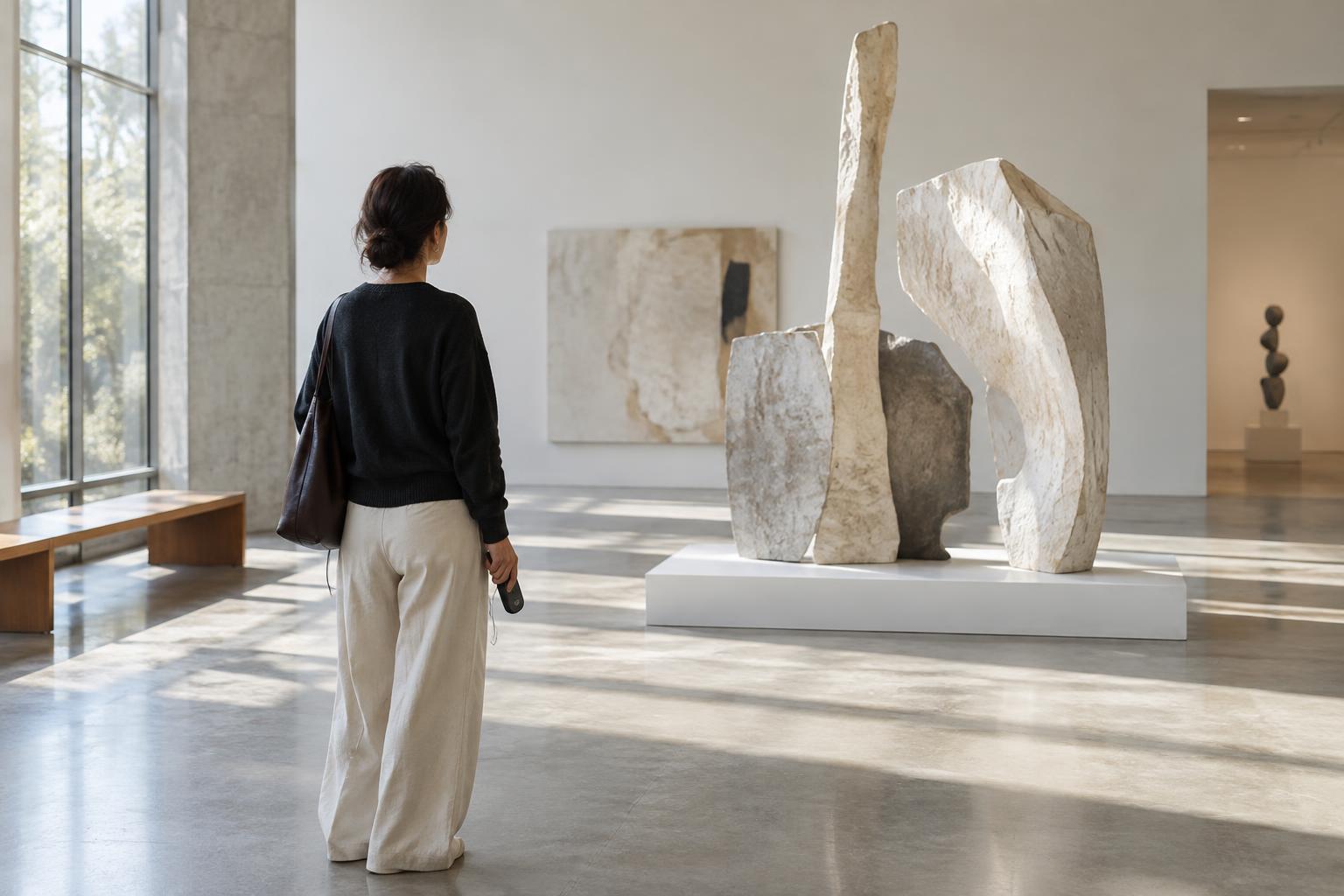
Looking before reading or listening gives your own observations a chance to form. You might first notice a work’s scale, an unexpected shadow, the distance between objects or the way other visitors navigate the space. In contemporary art, where familiar materials may be used in unfamiliar ways, these initial impressions are worth taking seriously. They are not guesses you need to correct with an official answer.
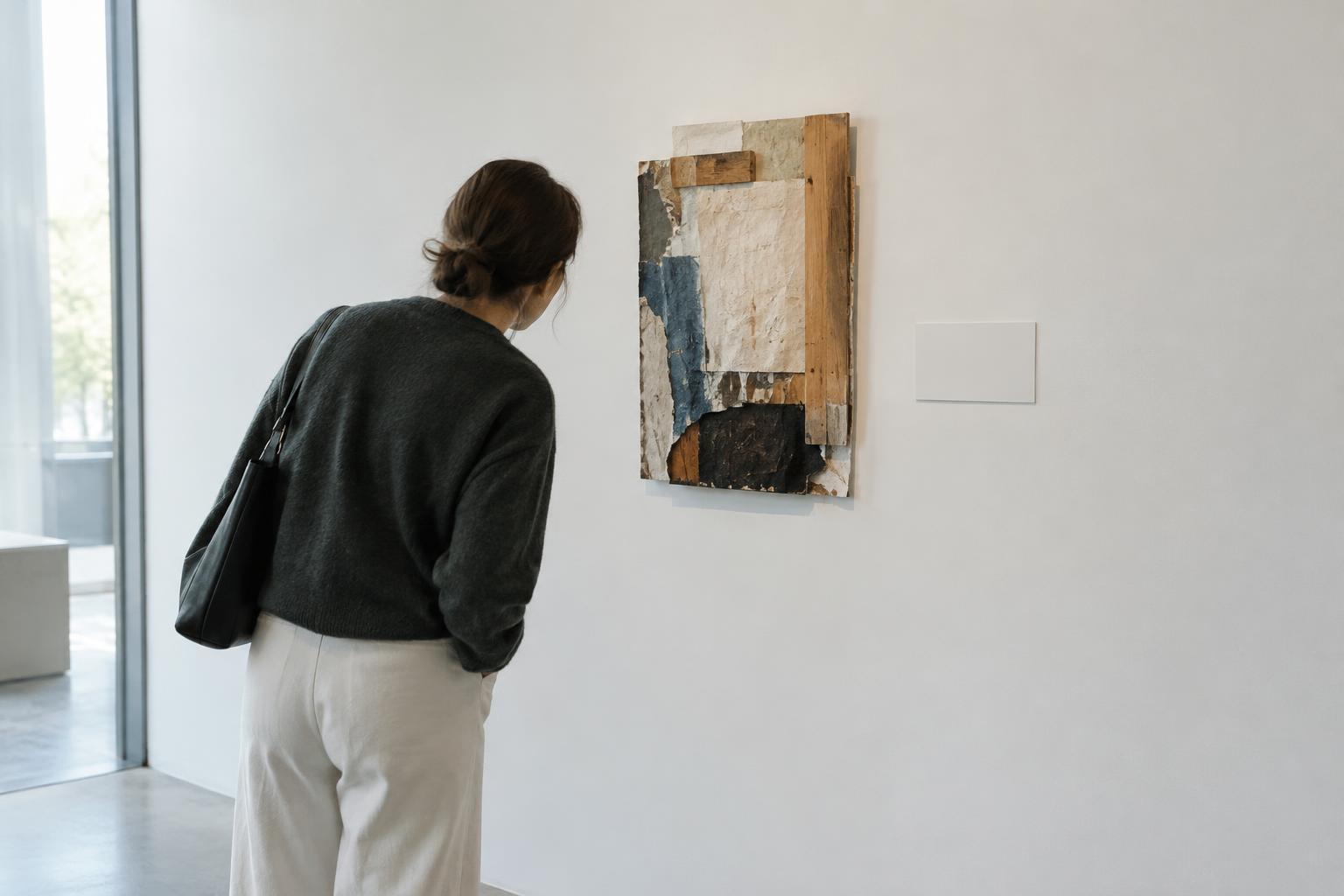
Try staying with one work for a few minutes and asking simple questions: What catches my attention first? What changes when I move closer or farther away? What can I observe, and what am I assuming? You do not need to produce a polished interpretation. An unresolved question can be a productive result of a visit. Independent looking works particularly well when you want time to register the physical experience of an installation before learning how it was made.
Combine listening and looking on your own terms
The choice need not apply to an entire exhibition. You could begin each room without headphones, then listen to selected entries after spending time with the works. Or you could use the guide early to establish a little context and put it away once you feel oriented. If a segment raises a question, look back at the work before starting the next one. This small gap lets you test the interpretation against your own experience.
It also helps to be selective. A work that immediately holds your attention may not need commentary yet, while one that feels distant might benefit from an introduction. In a group, different people can use different approaches and compare what they noticed afterward. The point is not to agree on a reading, but to discover how attention shifts when you change the information available to you.
Let the visit shape the method
Practical circumstances matter. Headphones may make it harder to share observations with a companion or to hear an installation’s own sound. On another day, an audio guide may help you focus amid a busy gallery. If standing for long periods is difficult, a clearly structured guide might help you choose where to spend your time. Where a transcript is available, reading it may suit you better than listening. Use the format that supports your attention rather than treating any one format as a test of commitment.
Before leaving, consider what stayed with you: a detail from the guide, an impression you formed alone or a difference between the two. That reflection can tell you more about your encounter than finishing every audio entry. A good exhibition visit does not depend on consuming all the available interpretation. It depends on finding enough space to notice, question and respond.