Start with the time you actually have
A sustainable studio routine begins with an honest look at your week, not an idealized schedule. Notice when you can usually work, how long those windows last and what kind of attention you have at those times. An hour at a shared table may suit drawing or editing images, while a short evening session may be better for sorting materials than starting a large installation. Treat these observations as design constraints, not evidence that you lack commitment.
Choose a modest rhythm you can repeat. That might mean two sessions each week, with one reserved for making and the other for looking, testing or planning. Leave some space for interruptions. If every session depends on a perfectly clear day, the routine will be difficult to maintain. A workable schedule gives you a reliable way into the studio without asking every visit to produce a finished piece.
Give each session a clear entry point
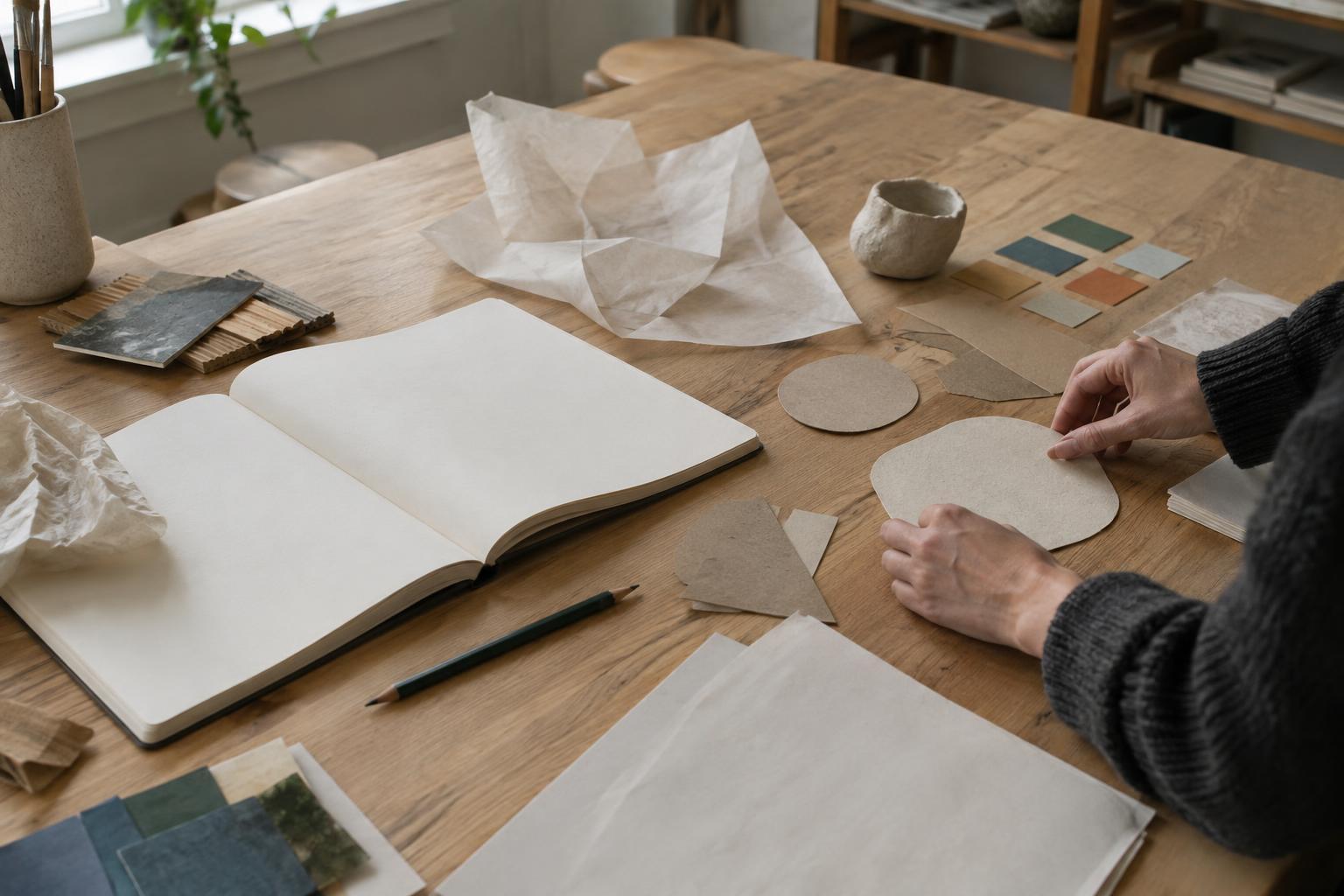
Limited time can disappear into deciding what to do. Before you stop working, write down one possible first action for your next session: cut three paper shapes, photograph the current arrangement from the doorway or test how a material holds a fold. Keep the action small enough to begin without further preparation. You can change direction once you are engaged; the purpose of the note is to lower the threshold for starting.
It also helps to separate tasks by scale. Maintain a short list of actions that fit a brief window, such as labeling images, making a color study or recording questions about a work in progress. Keep a second list for tasks that need more space or setup. When time opens up, you can select a task rather than reconstruct the entire project from memory. This is particularly useful when a practice moves between home, a shared studio and an exhibition site.
Keep experimentation small but visible
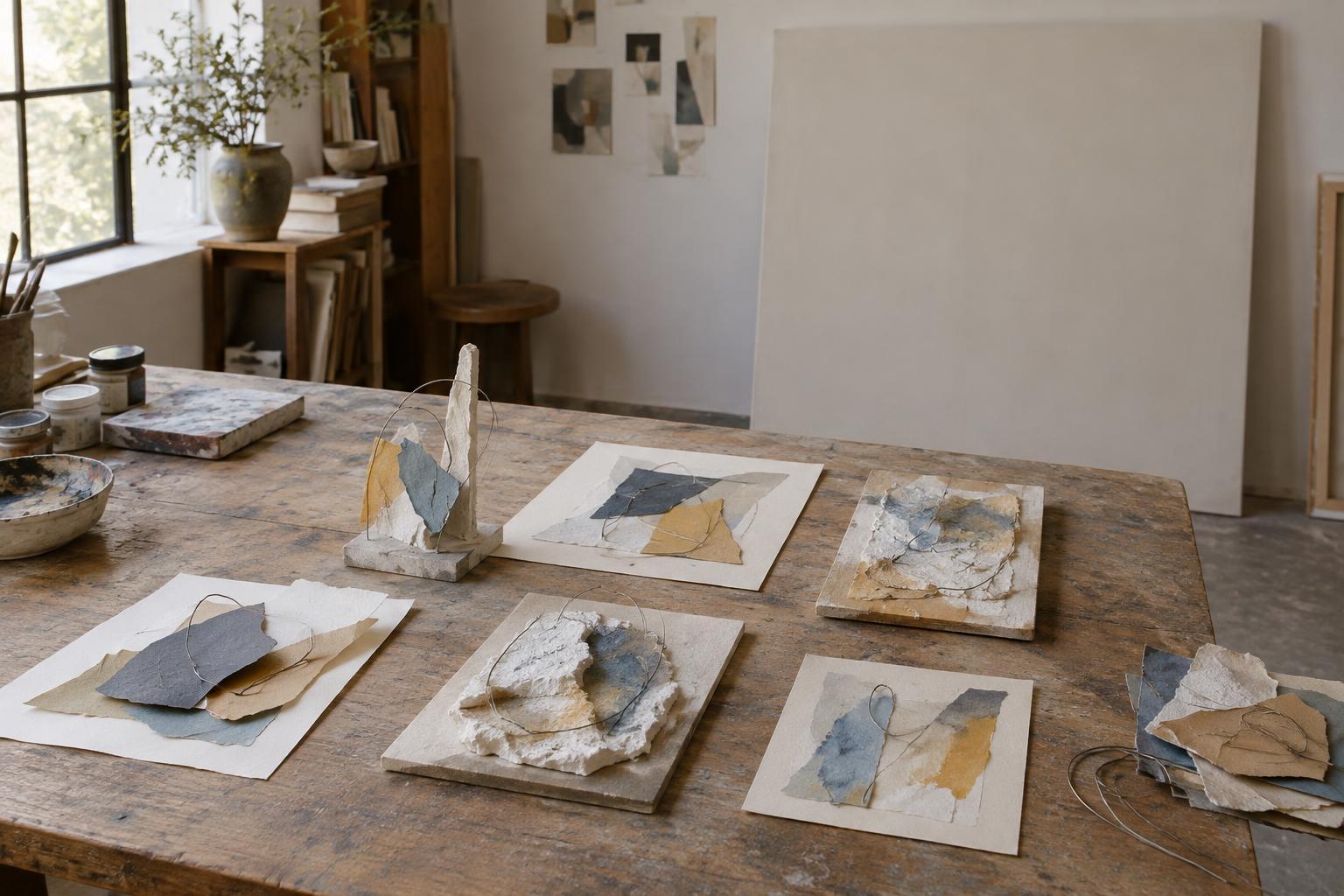
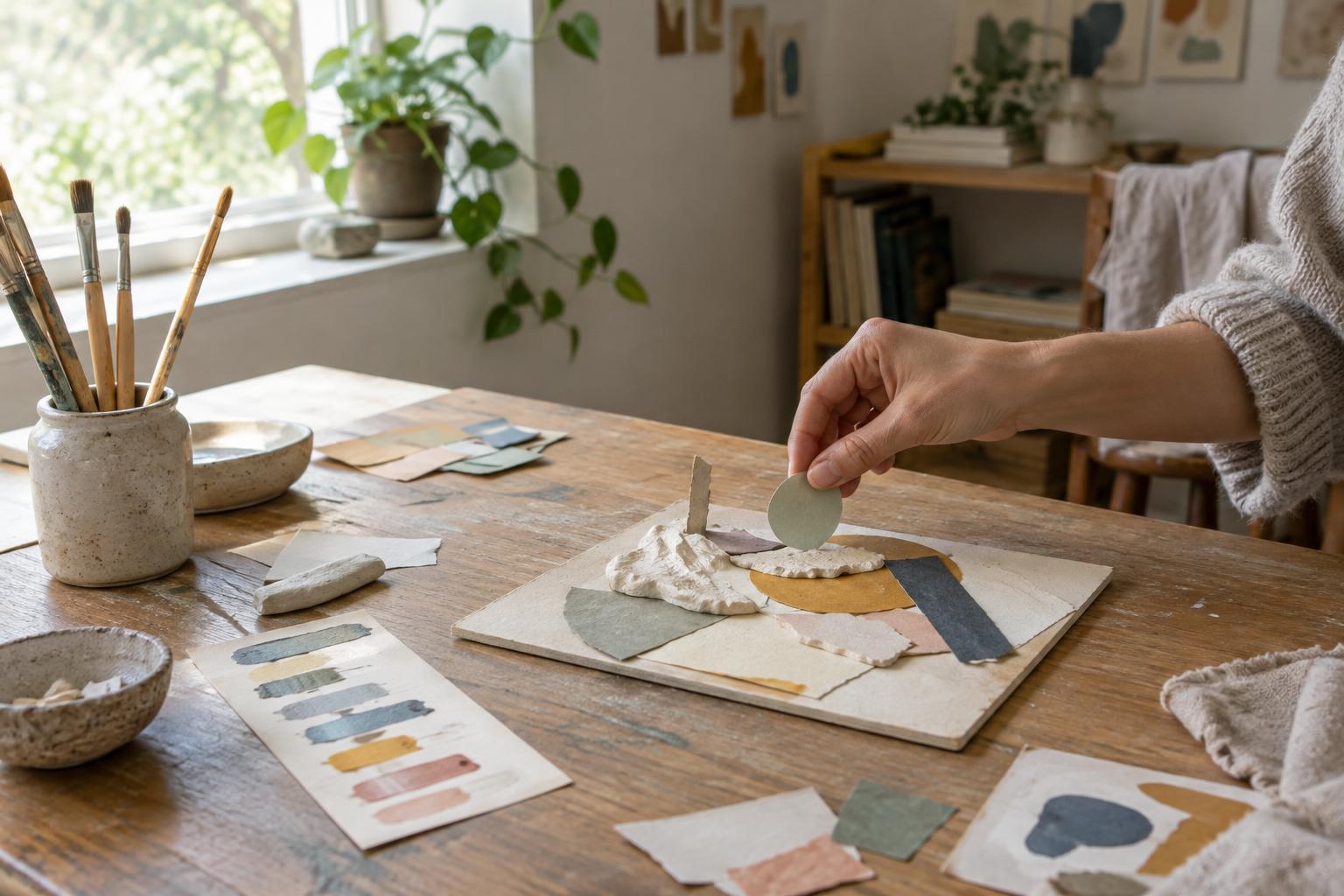
A routine built around efficiency alone can make artistic work feel like a sequence of chores. Protect some time for tests with no predetermined outcome. Try placing the same object in several positions, combining two unfamiliar surfaces or changing the light around a small arrangement. These studies need not become finished work. They can reveal what interests you about a material, image or spatial relationship before you commit to a larger piece.
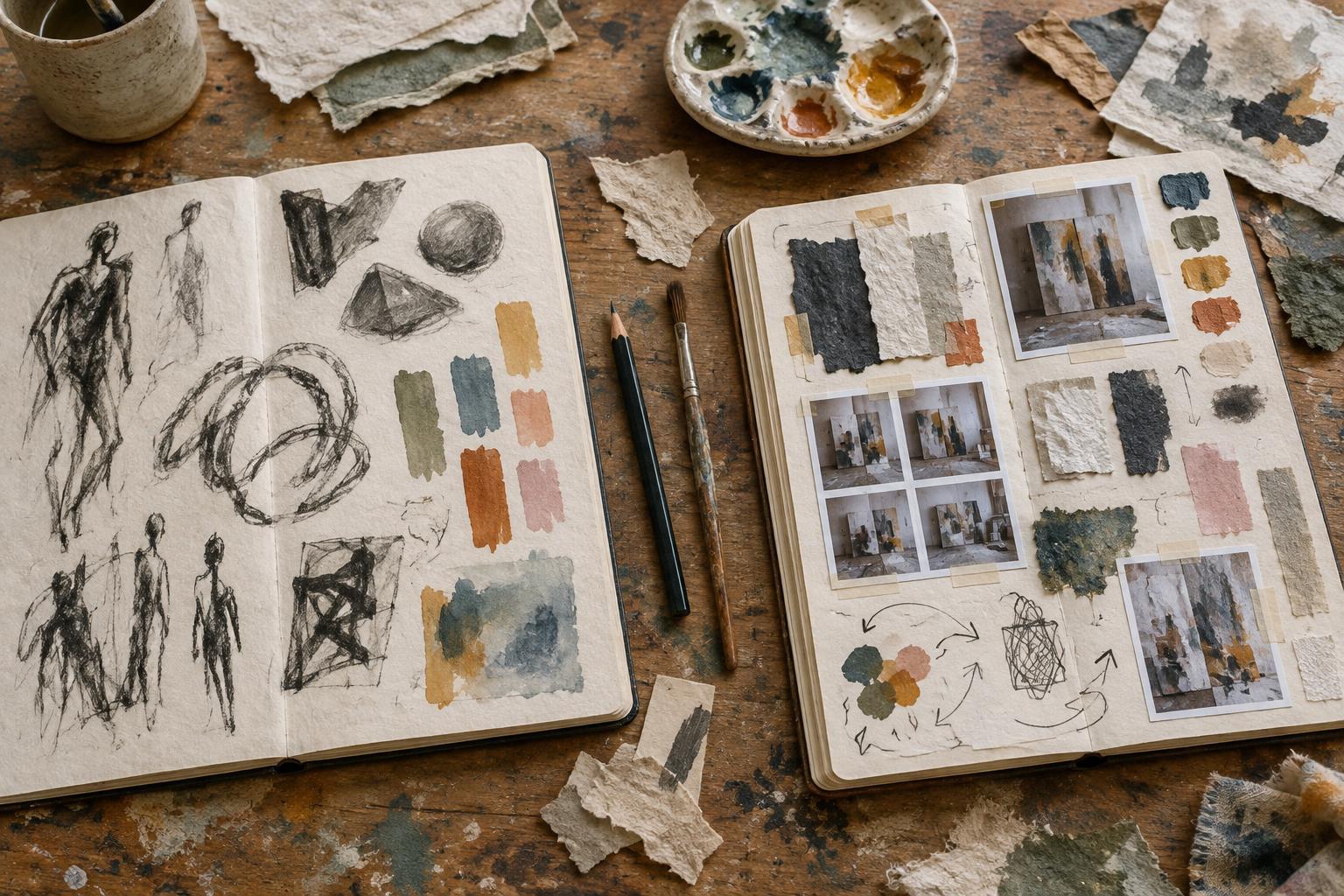
Make the results easy to revisit. A photograph, a dated sketch or a few sentences about what surprised you can preserve a useful observation. Record practical details when they matter, such as which adhesive you used or how a temporary structure was balanced. Documentation should serve the next decision, not become a separate obligation to archive everything. A small, legible record is often more helpful than a large collection you cannot navigate.
Design the space for stopping and returning
The end of a session is part of the practice. With a few minutes left, put tools where you can find them, make materials safe to store and leave a note about what remains unresolved. If you share a workspace or must clear a table after every visit, a portable project box can hold current samples, sketches and essential supplies. The aim is not a pristine studio; it is a setup that lets your future self resume work without repeating avoidable decisions.
For installation or other spatial work, a small-scale stand-in can keep a project active when you cannot access the intended site. Test relationships with cardboard, found objects or a simple floor plan, then note what the model cannot tell you. Changes in height, movement and the viewer’s position may need to be checked in the actual space. Naming those limits helps a short studio session contribute to a larger project without mistaking a model for the finished experience.
Review the routine, not just the output
Every few weeks, look back at which sessions helped you move forward. Did a particular time of day make setup easier? Were your planned tasks too large for the windows available? Did you leave enough room to look at the work before changing it? Use the answers to adjust the routine. You might shorten your task list, prepare materials in advance or reserve an occasional longer session for decisions that cannot be rushed.
Progress in an art practice is not limited to completed objects. Learning that a material fails in a useful way, identifying a stronger question or noticing how viewers might move through a space can all inform what you make next. A sustainable routine creates repeated opportunities for that attention. Its value lies less in maintaining a perfect streak than in making it possible to return, with curiosity, after ordinary life interrupts.