Decide what the object should keep
A found object arrives with more than a shape. Wear, faded color, dust and old repairs may all contribute to its meaning. Before cleaning it, ask which marks support the work and which interfere with handling or assembly. A layer of loose dirt may obscure a surface; a worn edge may be the reason you chose the object. Cleaning is not necessarily a return to an earlier appearance. For an artist, it is a selective decision about what remains visible.
Record the object before changing it. A few photographs and notes about where parts fit, which surfaces are fragile and what drew your attention to it can guide later choices. If you are collecting pieces for an installation, note their approximate dimensions and likely orientation. This simple record is especially useful when cleaning reveals a different color or when a loose component has to be set aside.
Inspect first and set unsafe objects aside
Look over each object in good light before washing, sanding or cutting it. Check for sharp edges, flaking coatings, leaking batteries, oily residues, dampness, insects and loose parts. Unknown powders, suspected mold, chemical containers and materials that may contain hazardous substances call for more caution than ordinary studio cleaning. If an object cannot be identified or handled safely, leave it alone rather than treating uncertainty as a creative challenge. Seek appropriate specialist guidance when needed.
Also consider how the object will be used. Something that can sit untouched on a shelf may be unsuitable for an artwork visitors can touch. A fragile fragment suspended above people presents different concerns from the same fragment placed inside a case. Early decisions about handling, mounting and access can prevent unnecessary cleaning or repair later.
Clean gently, one material at a time
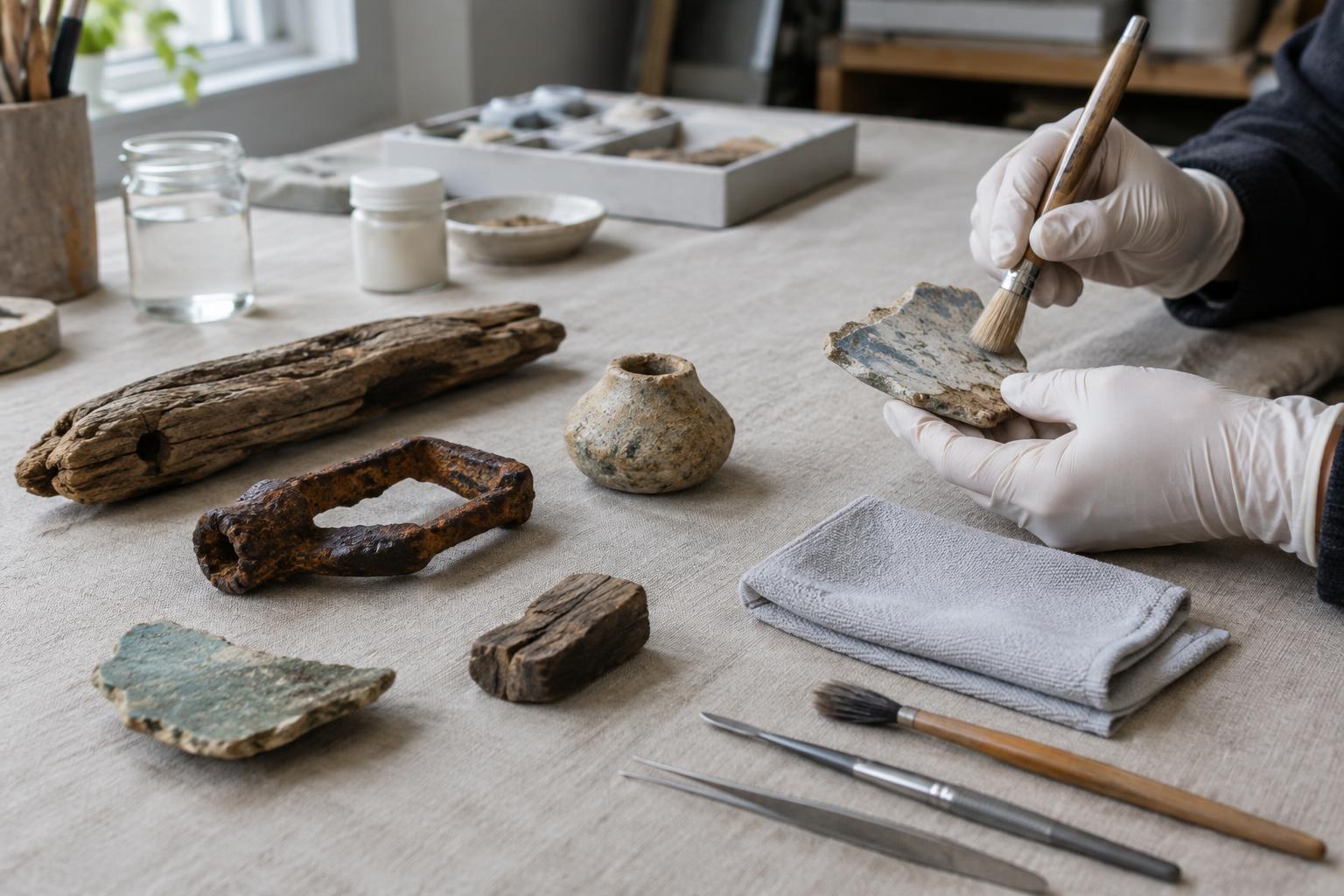
Start with the least intrusive method that meets your goal. For a sturdy, dry surface, a soft brush may remove loose debris; a low-suction vacuum fitted with a screen can help collect it without pulling away small parts. Keep brushes and cloths separate when moving between objects so that residue is not transferred. Test any method on a small, inconspicuous area and stop if color, fibers or surface layers begin to move.
Water is not a universal cleaner. Paper can distort, untreated wood can swell, metal can corrode, and old paint or adhesives may soften. If a nonporous, stable object appears suitable for a lightly damp cloth, use minimal moisture and allow it to dry fully before storage or assembly. Avoid soaking mixed-material objects: water may enter seams that are difficult to dry. Abrasive pads, strong solvents and household sprays can remove finishes or leave residues, so they are poor default choices for an unfamiliar find.
Stabilize without disguising a problem
Stabilization means keeping an object from deteriorating or shedding parts during its intended use; it does not always mean making it look new. Begin with physical support. A padded tray, a fitted cradle or a mounting method that spreads weight may protect a brittle object more effectively than a coating. Keep detached pieces labeled together while you decide whether reattachment serves the artwork.
Before applying glue, varnish or a consolidating coating, consider how the addition might change the surface. It may darken an absorbent material, create a shine, trap moisture or make a later adjustment difficult. Try a small test on a comparable scrap when possible, and avoid assuming that one adhesive will suit every material. If an object continues to flake, leak or crumble, enclosure or substitution may be a better artistic choice than repeated treatment.
Plan for the finished work
Preparation continues after cleaning. Allow objects to dry thoroughly, then keep them in a clean, dry place with enough support that they do not crush one another. Separate materials that could stain, scratch or transfer residue. When assembling a work, choose attachments with the object's weight, movement and surface strength in mind; a secure connection should not depend on a fragile layer of paint or rust.
Finally, view the prepared object from the audience's position. Has cleaning erased a useful trace? Does a repair draw attention away from the intended relationship between materials? Is a loose element now a deliberate visual feature, or an avoidable risk? Found-object practice often works best when preparation stays visible as a set of thoughtful choices, not an attempt to make every component pristine.