Mistake 1: Starting with a format instead of a question
A project can stall when its first decision is “make an installation” or “produce a series of images.” A format gives the work a shape, but it does not explain what the work is trying to explore. Without a guiding question, every material, image, and reference can seem equally relevant. The result may be a collection of interesting parts that never quite connect.
Begin with a short working statement: what are you curious about, and what might this project help you notice? It can be modest, such as exploring how shadows alter the sense of a familiar room. Then list two or three constraints that could sharpen the inquiry: a particular space, a limited set of materials, or a way viewers will encounter the work. Treat this statement as a starting point rather than a promise. If the work leads somewhere more compelling, revise it.
Mistake 2: Assuming materials and space will behave as imagined
A sketch rarely reveals how heavy an object feels, how a surface responds to repeated handling, or whether a projected image remains legible across a room. In spatial work, small physical details can change the entire experience. A piece intended to feel open may interrupt circulation; a delicate material may be difficult to transport or maintain.
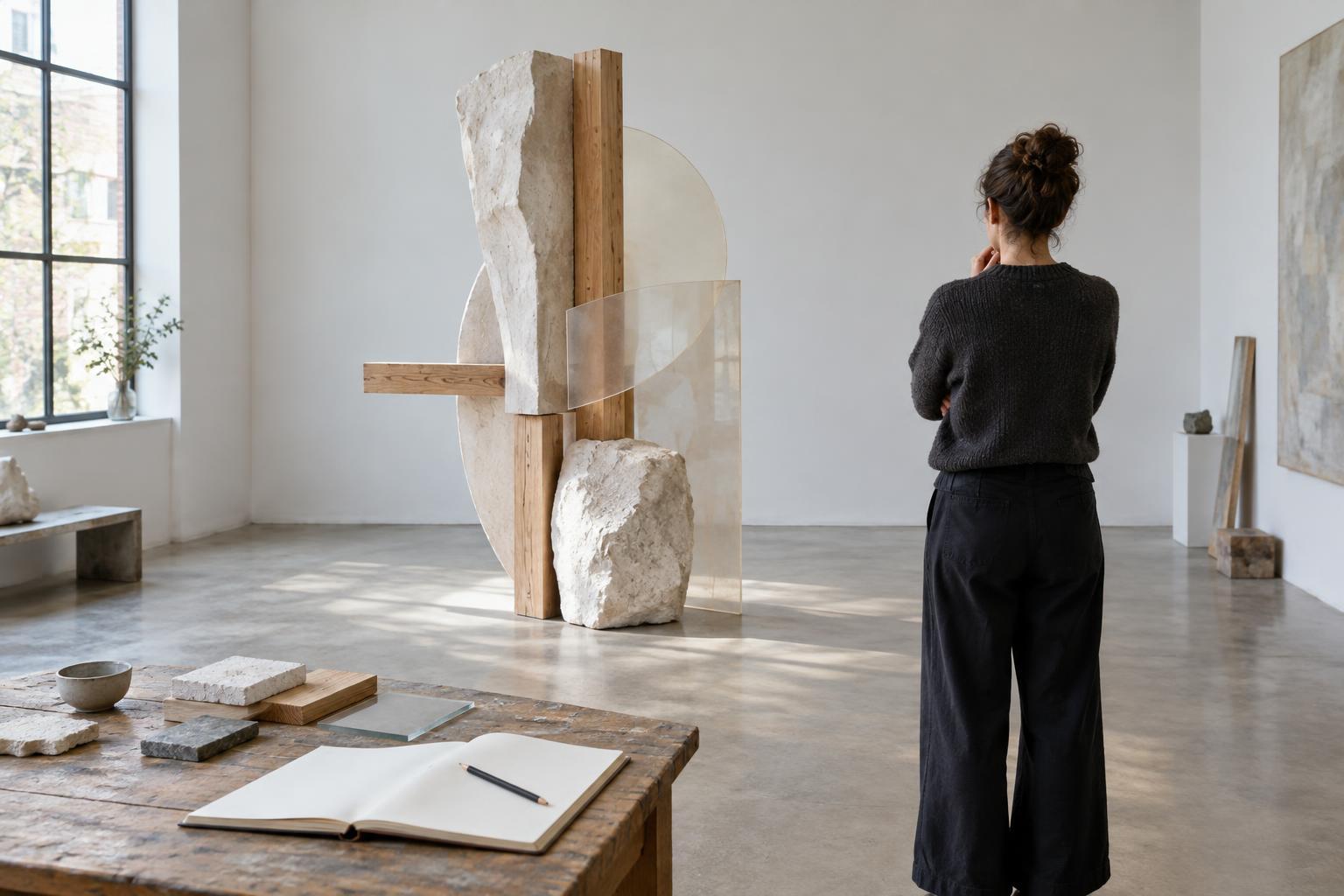
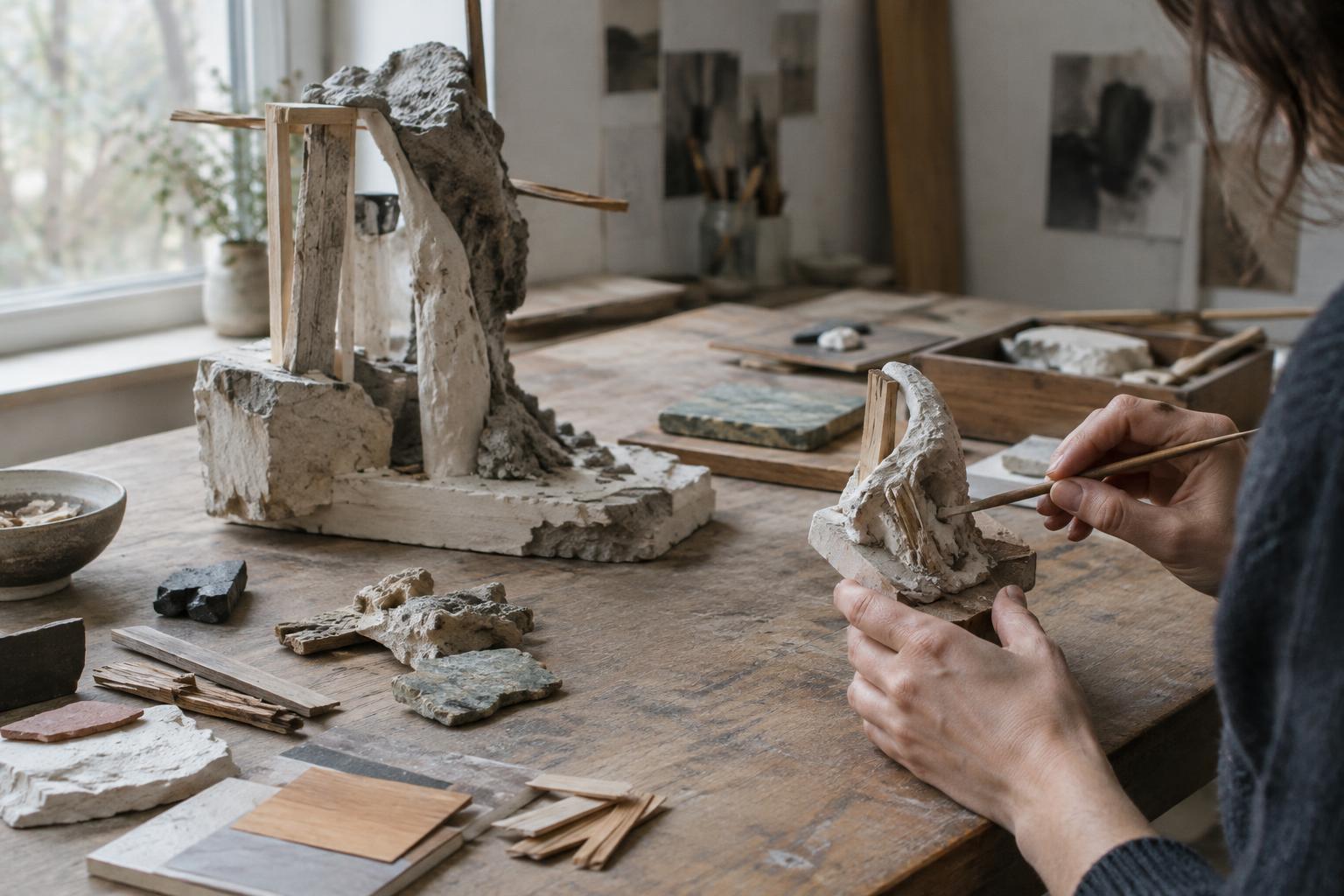
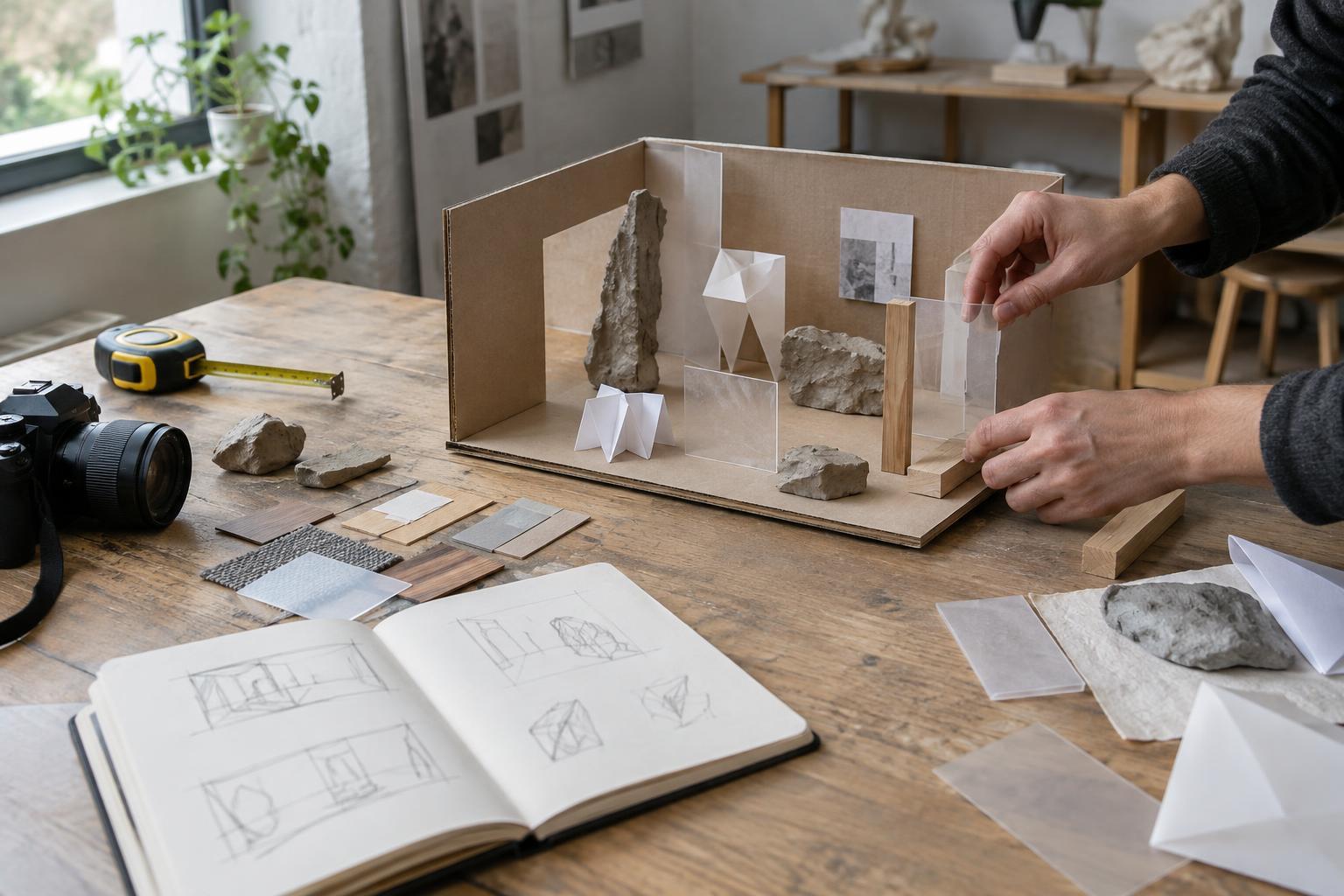
Make quick tests before committing to a finished form. Build a fragment at roughly the intended scale, place it where possible, and observe it from several distances. For an installation, note entrances, sightlines, ambient light, available power, and how people may move through the space. If the final site is unavailable, mark out its dimensions and test the most uncertain relationships. The aim is not to eliminate surprises. It is to find problems while changes are still relatively easy.
Mistake 3: Treating the deadline as the whole schedule
Working backward from a final date is useful, but a plan consisting only of “finish by Friday” hides the steps that take time. Drying, assembly, technical checks, writing, transport, and installation may all compete for the same final days. So can decisions that appear small, such as choosing how a viewer will enter the work or what information belongs on a label.
Divide the project into a few phases: exploration, testing, production, presentation, and review. Give each phase a clear outcome rather than an exhaustive task list. For example, the testing phase might end with a decision about scale and materials, not a perfect prototype. Leave some unscheduled time between production and presentation so you can respond to what the work actually needs. If time becomes tight, identify the central experience you want to preserve and simplify around it.
Mistake 4: Documenting only the finished work
Documentation is often postponed until the project is complete. By then, useful evidence has disappeared: material trials have been dismantled, arrangements have changed, and the reasoning behind decisions is harder to recall. This matters even when the process is not meant to be public. Without a record, it can be difficult to see which experiments were productive or to explain the work clearly during installation and interpretation.
Keep a lightweight project record as you go. Photograph tests under ordinary conditions, note dimensions and materials, and write down why you kept or rejected a direction. A few dated sentences after each work session may be enough. When photographing the final piece, capture both its details and its relationship to the surrounding space. Good documentation does not have to turn every experiment into content; it should help you understand the work and make informed choices later.
Mistake 5: Confusing flexibility with having no decisions
Creative work changes during making, and a rigid plan can shut down a promising discovery. But keeping every possibility open can be just as limiting. If the scale, materials, audience experience, and stopping point are all undecided at once, it becomes hard to judge any new idea. Constant revision may feel exploratory while preventing the project from taking a definite form.
Separate decisions that anchor the project from those you can still test. You might commit to a site and a central question while leaving the arrangement of objects open. Set a point at which you will choose a direction, then assess new ideas against the work’s purpose rather than adding them automatically. Near the end, ask a practical question: what can a viewer encounter in the finished work that they could not encounter in a proposal? Planning succeeds when it makes that encounter possible while leaving enough space for discovery.