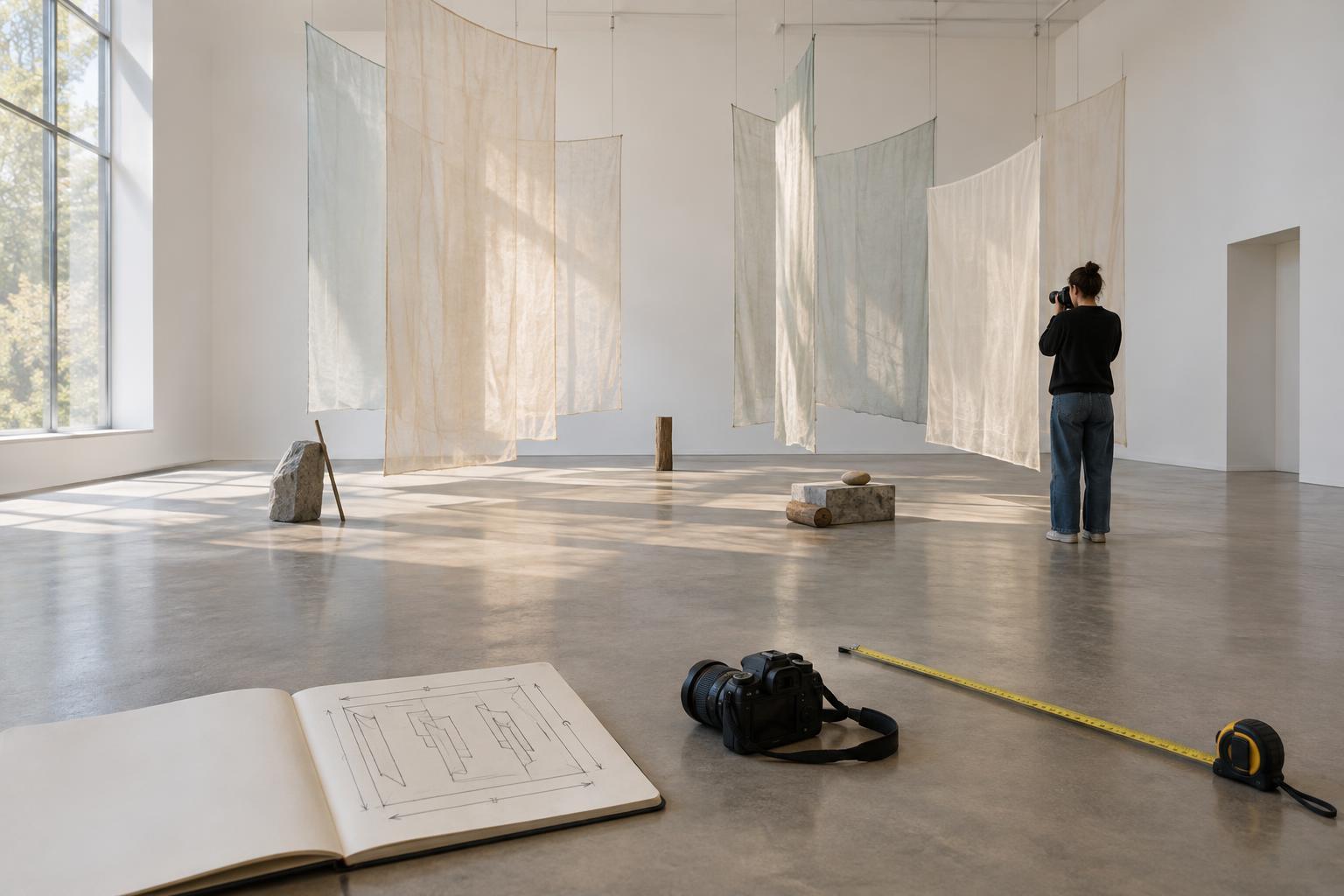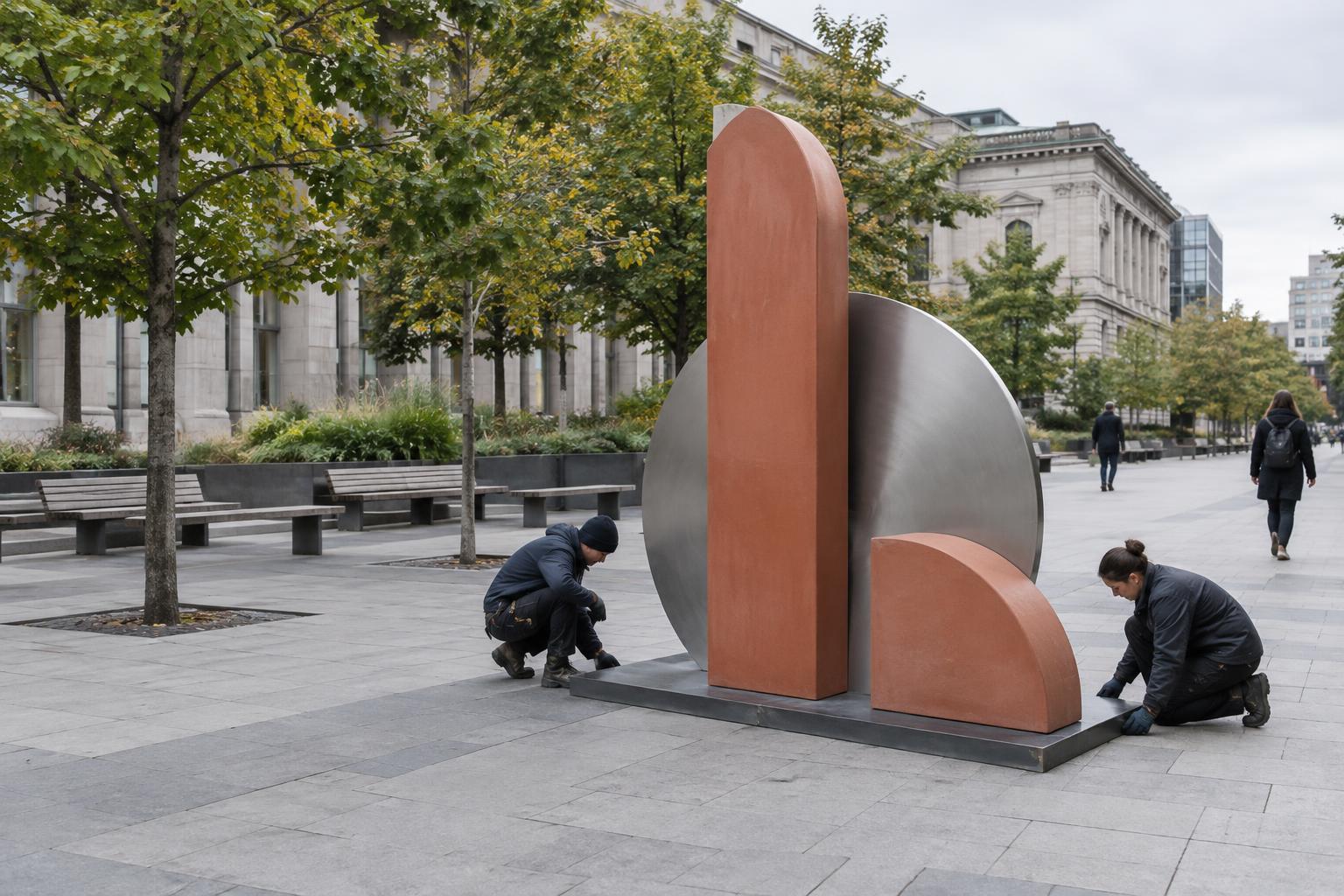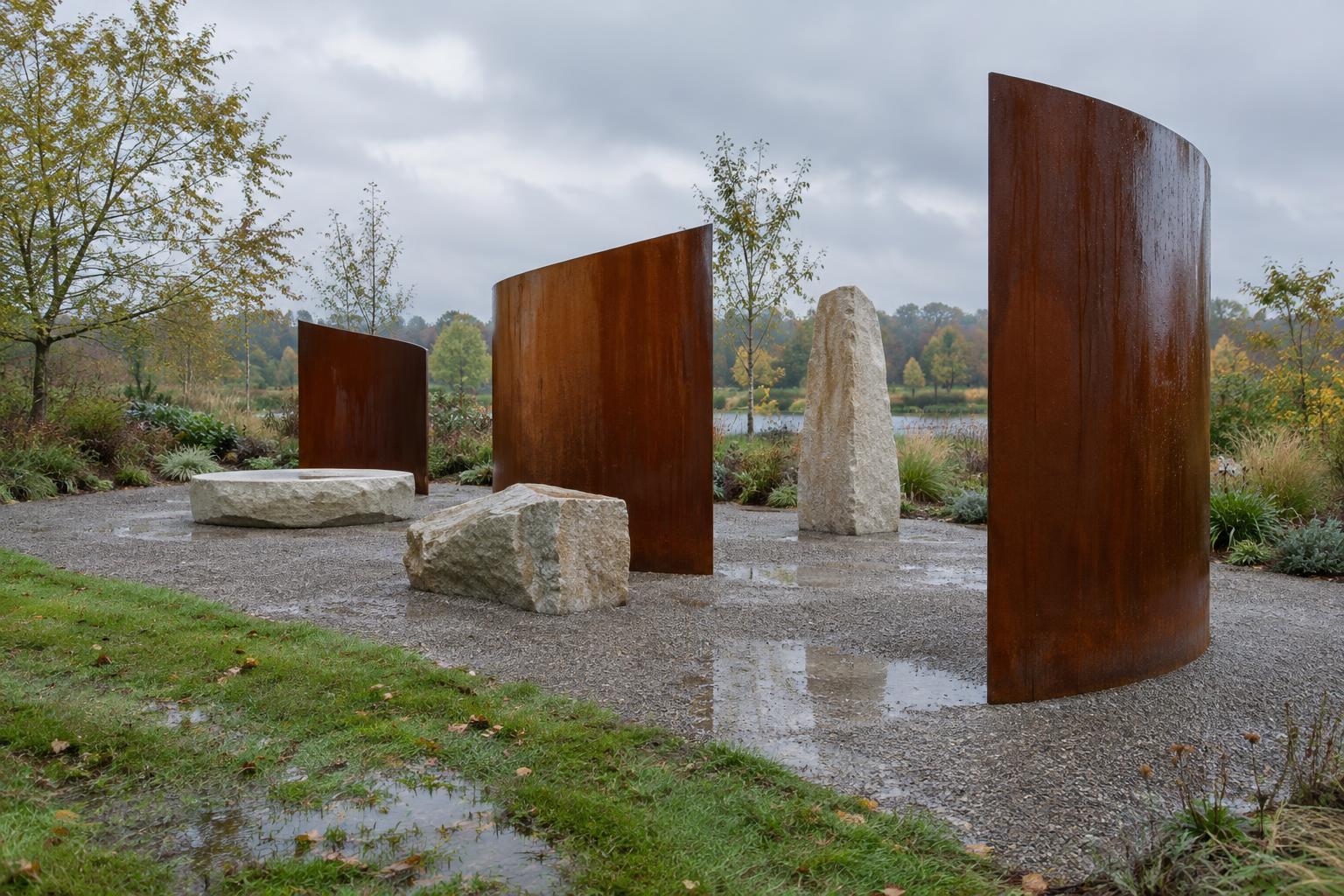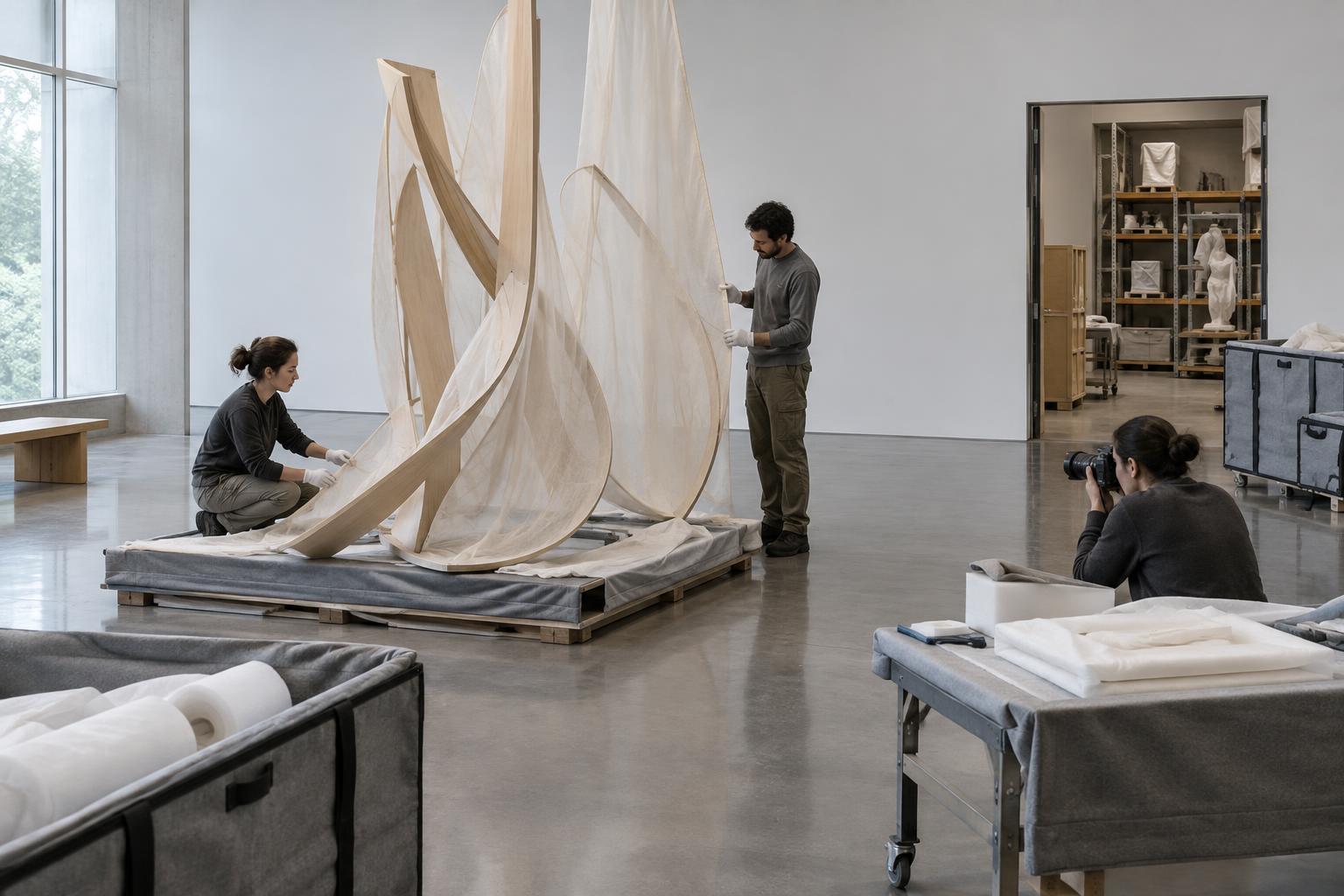
Treating installation as the only event
It is tempting to plan an installation around its opening-day appearance: where a work will stand, how it will be lit and what visitors will see first. But a work also has to arrive, be assembled, remain stable throughout the exhibition and eventually leave. A plan that covers only the finished view can create problems at every other stage.
Before work begins, trace the full path from delivery point to display position and back out again. Consider doors, lifts, stairs, turning space and the room needed to handle each component. Ask whether objects can be removed in a different order from the one used to install them. For site-responsive work, record which elements belong to the artwork, which belong to the venue and which are temporary aids. These distinctions become especially useful when the people removing the work are not the people who installed it.
Leaving responsibilities unstated
An installation may involve an artist, curator, technician, fabricator and venue team. When everyone assumes someone else has approved a mounting point, supplied a tool or retained the packing, small gaps can become costly delays. A short written plan can clarify who makes decisions, who carries out each task and whom to ask when the site differs from expectations.
The plan should cover the work’s orientation, component count, handling preferences, display requirements and any changes that need the artist’s approval. It should also identify practical limits, such as areas that cannot be altered or times when access is restricted. For heavy, suspended, electrical or otherwise complex work, the relevant venue staff and qualified specialists should assess the method rather than relying on an improvised solution.
Removal deserves its own assignment of responsibilities. Decide who will photograph the final state, disconnect or separate components, check for marks or damage, and confirm that nothing has been left behind.
Documenting the appearance but not the process
A polished photograph of a finished installation is valuable, but it rarely explains how the work was put together. Take clear images of component relationships, attachment points, cable routes and details that will be hidden once the work is complete. Pair images with simple notes about sequence and orientation. A label such as “left panel” helps only if the plan also establishes whose left it means.
Keep an inventory that distinguishes individual artwork components from replaceable display materials. Record any approved substitutions or adjustments made on site, rather than letting an outdated plan remain the only reference. At removal, compare the work with its recorded condition before packing it. Notes should describe what is visible without guessing at a cause. Consistent documentation helps a future team understand both what the work looked like and how it functioned in space.
Packing for the journey but not for retrieval
Packing is sometimes treated as a single trip from exhibition space to storeroom. In practice, an artwork may need to be identified, checked and unpacked long after the exhibition has ended. Unmarked bundles and boxes containing unrelated parts make that work harder. Use clear labels that connect each package to the inventory, and keep instructions accessible without requiring someone to open every container.
Choose packing arrangements with the work’s surfaces and structure in mind. Avoid placing pressure on delicate projections or allowing components to rub against one another. Keep small parts contained and identified, including their relationship to the larger work. If original packing is retained, note how its supports fit; if it is changed, update the record. The aim is not simply to fill a box, but to make safe handling and accurate reassembly possible.
Assuming storage is a passive pause
Storage decisions shape what can be shown again. A space that is crowded, difficult to access or unsuitable for a work’s materials may make inspection and future installation more complicated. Materials can respond differently to conditions, so avoid assuming that one storage approach suits every component. Where requirements are uncertain, seek guidance from people experienced with the materials rather than making irreversible changes for convenience.
Plan where the work will sit, how it will be supported and how someone will locate it without moving unrelated objects. Keep the inventory, condition notes and installation instructions linked to its storage location. It is also worth deciding who may authorize access or changes while the work is stored.
The strongest installation plan is therefore a cycle, not a one-way checklist. Thinking about removal and storage at the start can reveal design decisions that are awkward to reverse later. It gives each presentation room to respond to its site while preserving enough knowledge for the work to be understood and cared for afterward.