Begin with what is there
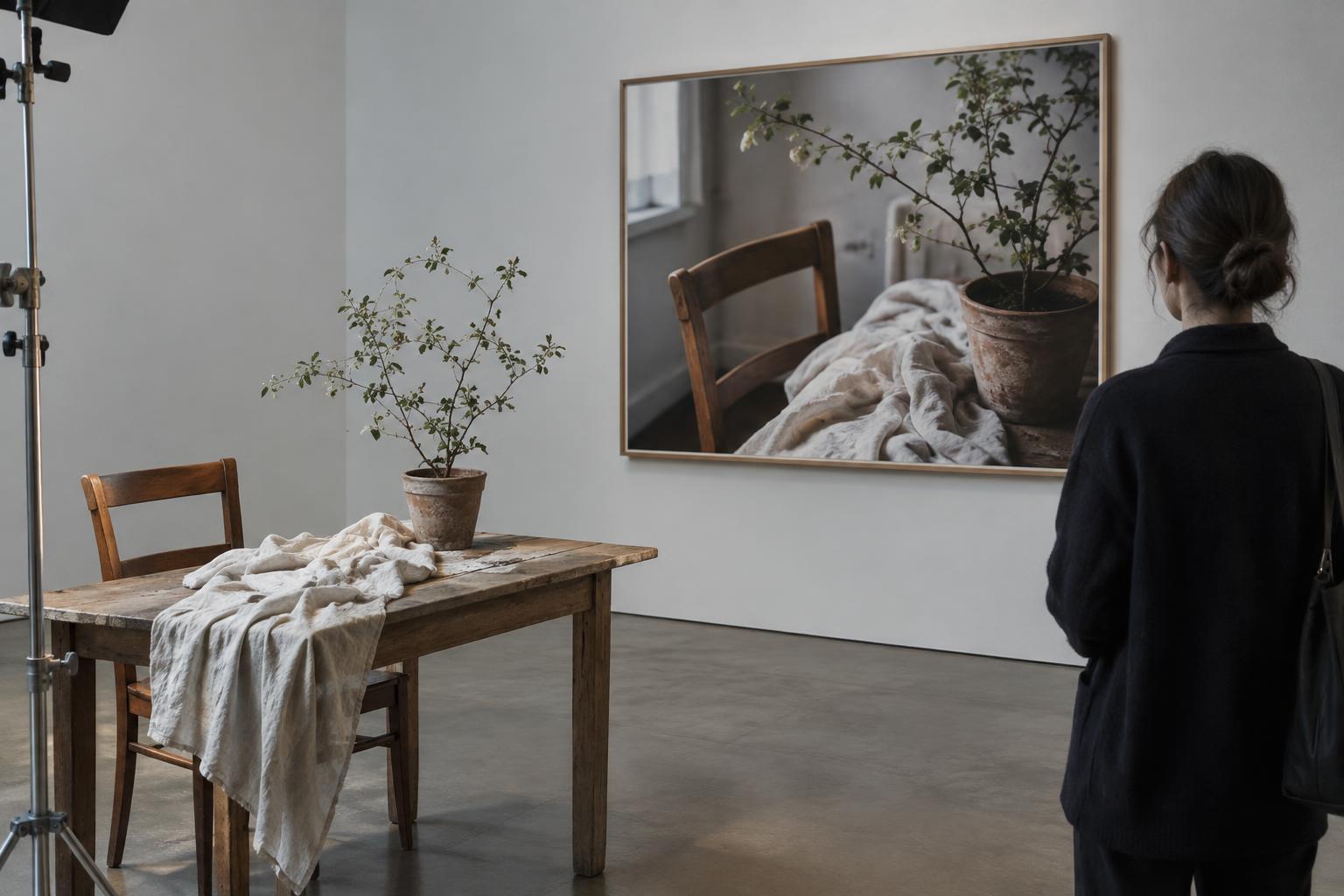
Standing before an abstract artwork, it is tempting to ask, “What is it supposed to be?” That question can be useful, but it need not come first. Start with a description you could share with someone who cannot see the work: a dark shape interrupts a pale field; thin marks gather near one edge; a glossy surface catches the light. Description slows the search for an answer and gives you something specific to think about.
Then notice what your eye does. Where does it land first, and what pulls it elsewhere? Does one area seem crowded while another offers room to rest? Your response may change as you look longer. That change is part of the encounter, not a sign that you missed the correct interpretation. Recognizable images are only one way an artwork can hold attention.
Notice relationships, not just individual elements
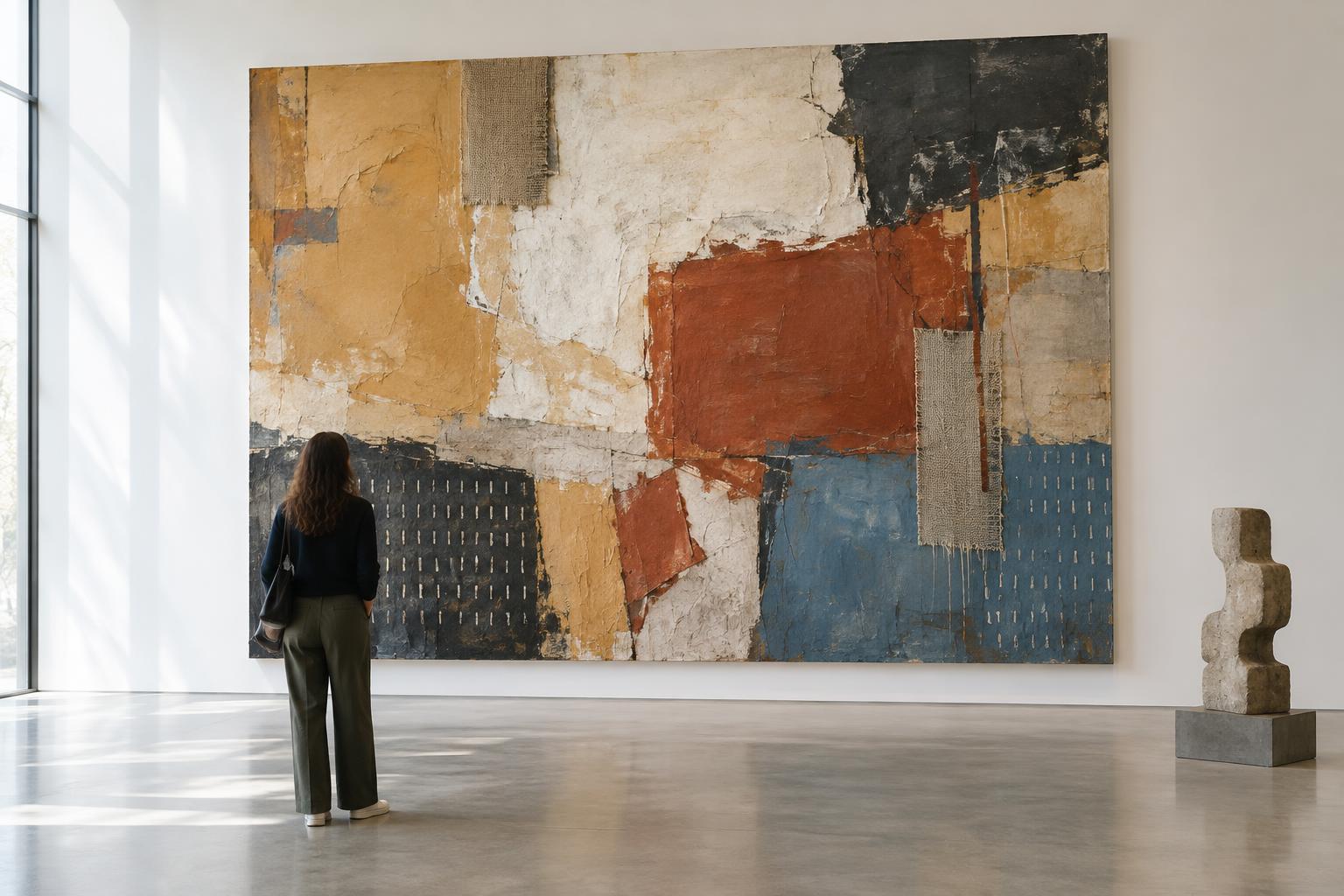
Color, shape and line matter partly because of their relationships. A small patch of bright color can feel forceful against a muted surface; the same patch might nearly disappear in a busier composition. Look for contrasts in size, density, direction and sharpness. Are the edges crisp or uncertain? Do forms seem to meet, overlap or avoid one another? These observations can help you describe the work’s energy without turning every mark into a symbol.
Repetition offers another way in. Similar shapes may establish a rhythm, while slight differences prevent it from becoming predictable. Try following a repeated mark across the work and noting where the pattern changes. A break, gap or reversal can become as important as the repeated element itself. Rather than asking whether the arrangement has a hidden code, consider what the pattern makes possible for your attention.
Let material and process enter the picture
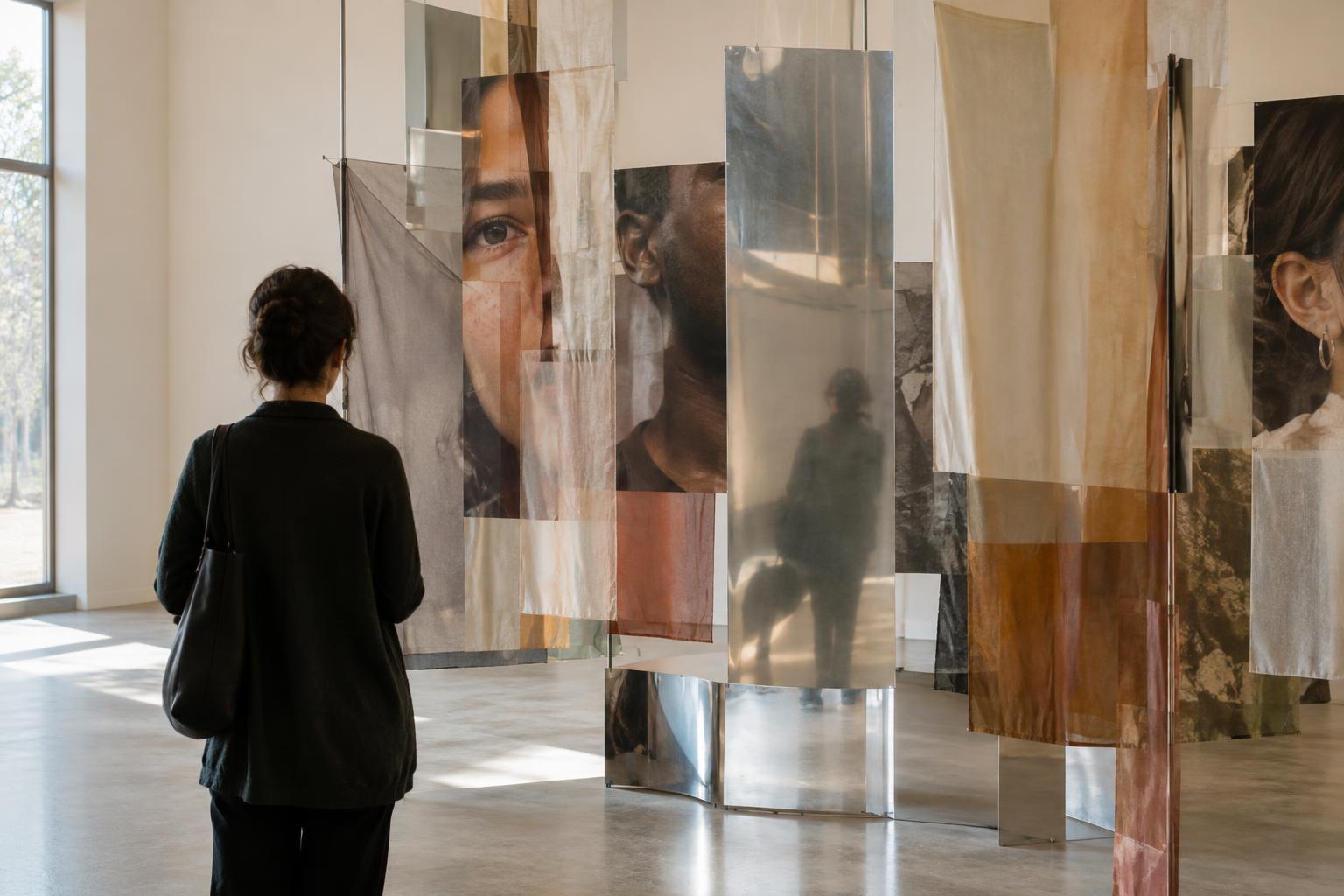
Abstract works often make their materials unusually noticeable. Paint may be thin enough to reveal the surface beneath it, or thick enough to cast a shadow. Fabric can sag, fold or stretch; found materials may retain signs of their earlier use. These qualities are not merely technical details. They affect how a work feels: fragile or weighty, controlled or provisional, smooth or resistant.
Look for traces of making, while remembering that appearances do not always reveal the exact sequence of decisions. A scraped area might suggest removal, and a visible seam might draw attention to assembly. You do not need to reconstruct the artist’s entire process to ask a productive question: how would this work change if it were made from another material? That comparison can clarify why its actual surface, texture or construction matters.
Consider your body and the surrounding space
Scale changes the experience of abstraction. A work you can take in at a glance invites a different kind of looking from one that fills your field of vision. Move closer, if permitted, to examine detail, then step back to see the overall arrangement. Notice whether the work feels contained by its edges or seems to extend beyond them. Even a flat image can suggest depth, movement or a space that resists easy measurement.
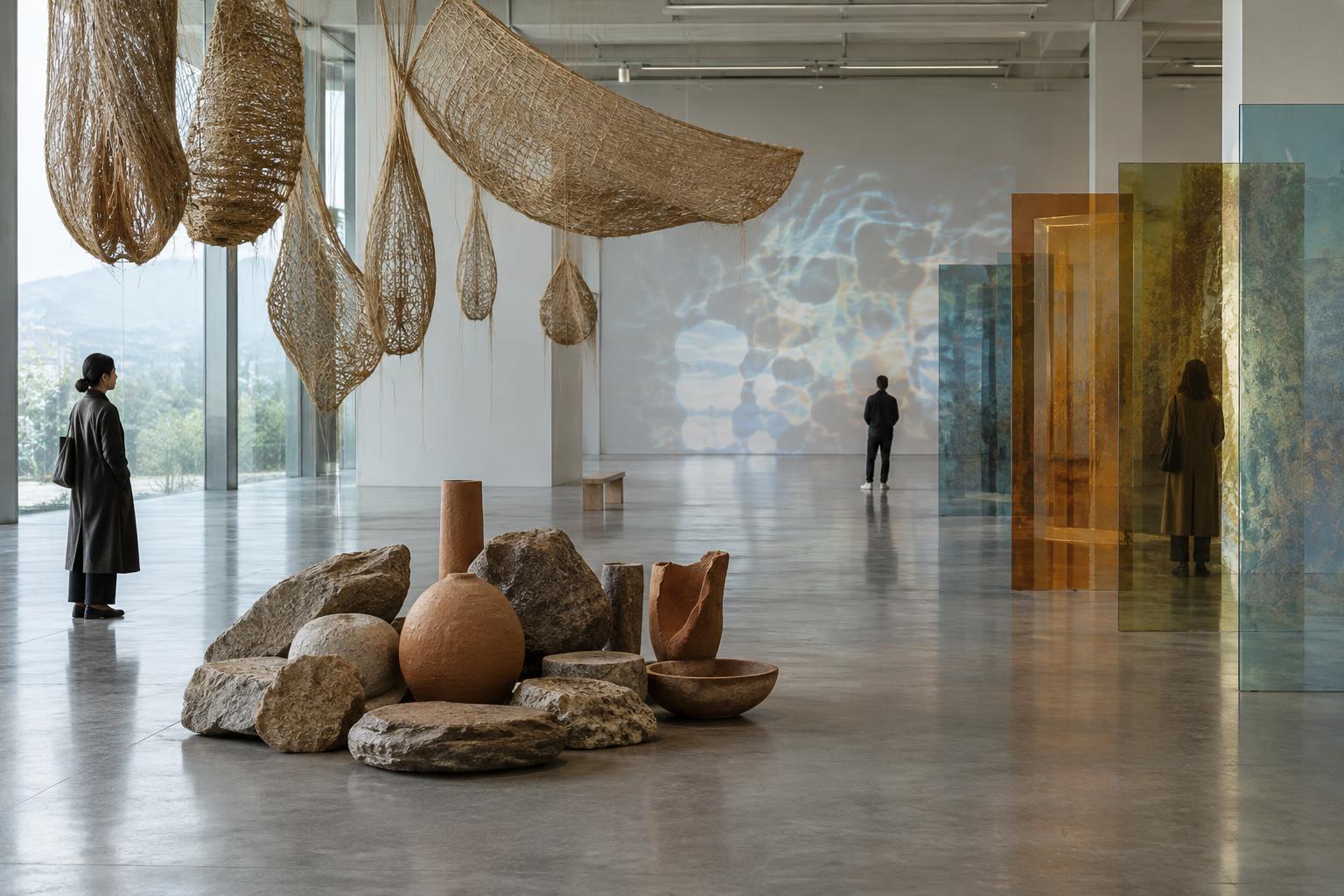
For installations and sculptural works, the room can be part of what you are looking at. Sightlines, shadows and the distance between components may shape your experience as you move. Ask what becomes visible from a new position and what disappears. This does not mean every viewer must have the same experience; it means your physical path can provide evidence for your interpretation.
Make room for meaning without forcing a single answer
Looking closely does not mean ignoring an artwork’s title, context or the artist’s stated interests. Those details can open useful possibilities, especially when a choice of material or form connects to a broader concern. But they need not erase what you noticed for yourself. Try holding the two together: what does the contextual information illuminate, and what remains unresolved when you return to the work?
An interpretation can be modest and still be meaningful. You might say that a composition creates tension through uneven spacing, or that its repeated forms make you aware of time and variation. Explain which features led you there, and stay open to another reading. Contemporary abstraction often rewards this balance of curiosity and precision: you do not have to name an object to say what an artwork is doing.