A dry surface is not always a finished layer
In mixed-media work, one layer often becomes the working surface for the next. Paint may receive a drawing medium; an adhesive may hold found material; a clear coating may cover both. It is tempting to proceed as soon as a layer no longer feels wet. That touch test is useful, but it answers only a narrow question: what is happening at the surface? The material underneath may still be releasing water or solvent, changing shape, or gaining strength.
Drying generally refers to the loss of a liquid, such as water or solvent, from a material. Curing refers to a material developing its intended properties through an ongoing process, often a chemical reaction. The terms are not always used consistently on product labels, and some materials involve more than one process. For studio purposes, the distinction is practical: “dry to the touch” does not necessarily mean ready to bear weight, accept a coating, or be enclosed.
Different materials reach readiness in different ways
Water-based acrylic paint offers a familiar example. As water leaves, its particles come together to form a film. A thin application on an absorbent surface may feel dry well before a thick passage or pooled edge has settled throughout. Changes in humidity, airflow, temperature, and film thickness can affect how long that takes. Covering a thick application too early may trap moisture or create a weak point between layers.
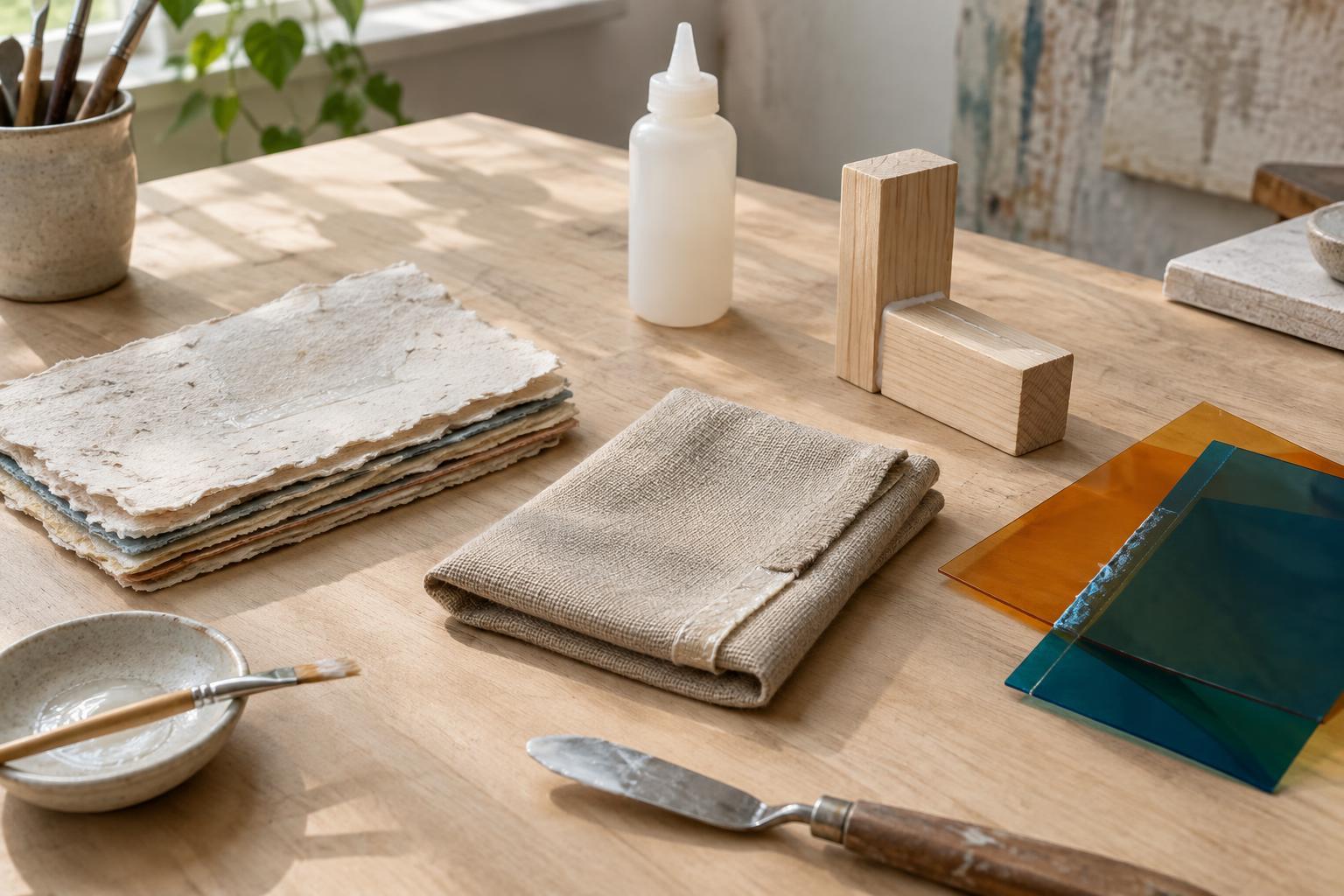
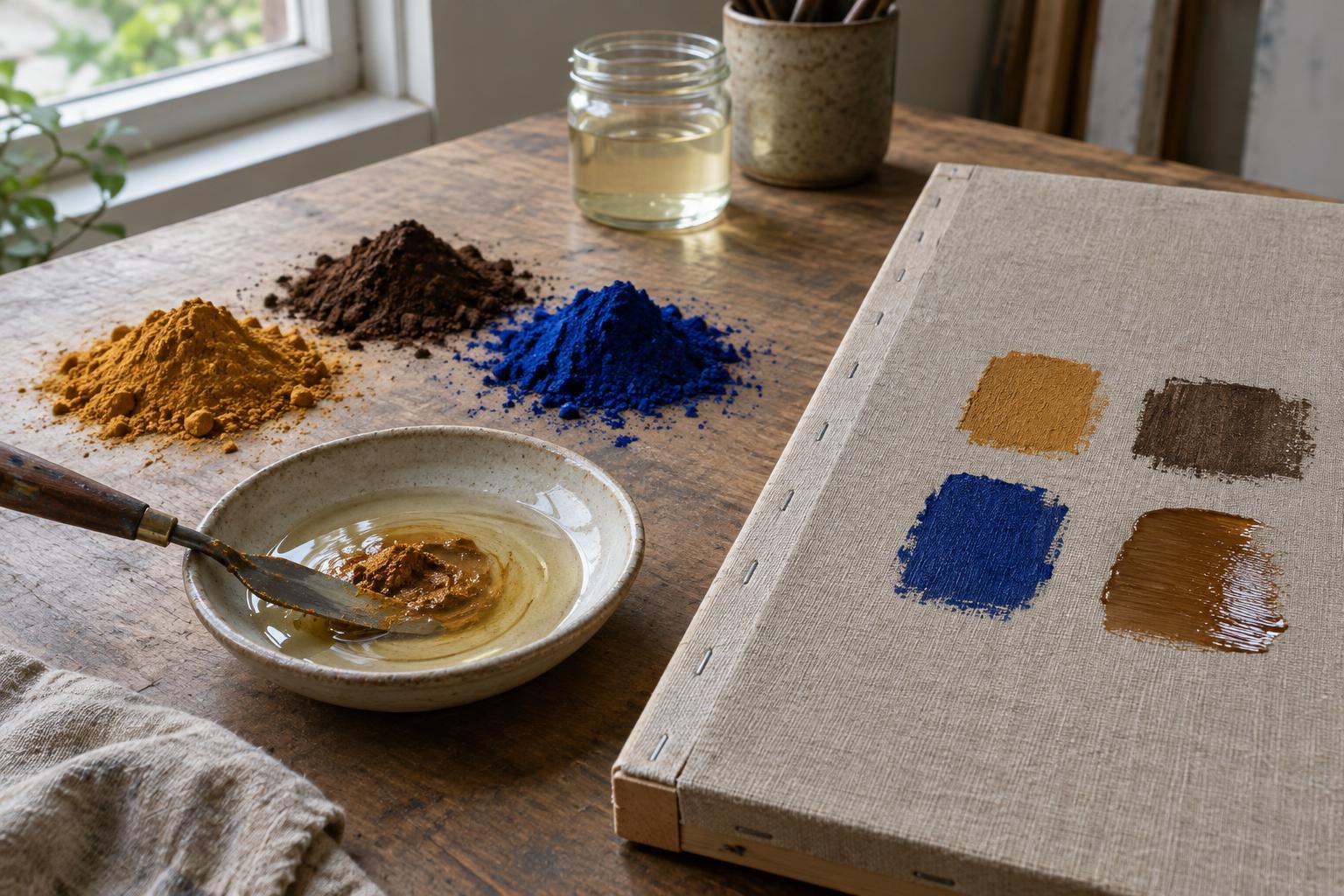
Other materials make the distinction more visible. Oil paint develops through reactions with oxygen, so a touch-dry skin can sit above softer paint. Some adhesives set quickly enough to hold an object in place but gain their intended bond strength later. Two-part resins and epoxies depend on correctly measured and mixed components to cure; a tacky result may indicate a mixing or application problem rather than a simple need for more drying time. Because formulations vary, the product’s instructions are a better guide than a single rule applied to every medium.
Why timing matters between layers
Layering too soon can produce problems that are difficult to see at first. A new coating may slow the escape of moisture or solvent from the layer below. An adhesive holding a heavy element may shift before its bond is strong enough. A flexible film placed over a layer that continues to move may wrinkle, crack, or lose adhesion. These outcomes are possibilities, not certainties; they depend on the materials, the support, the thickness of each layer, and the surrounding conditions.
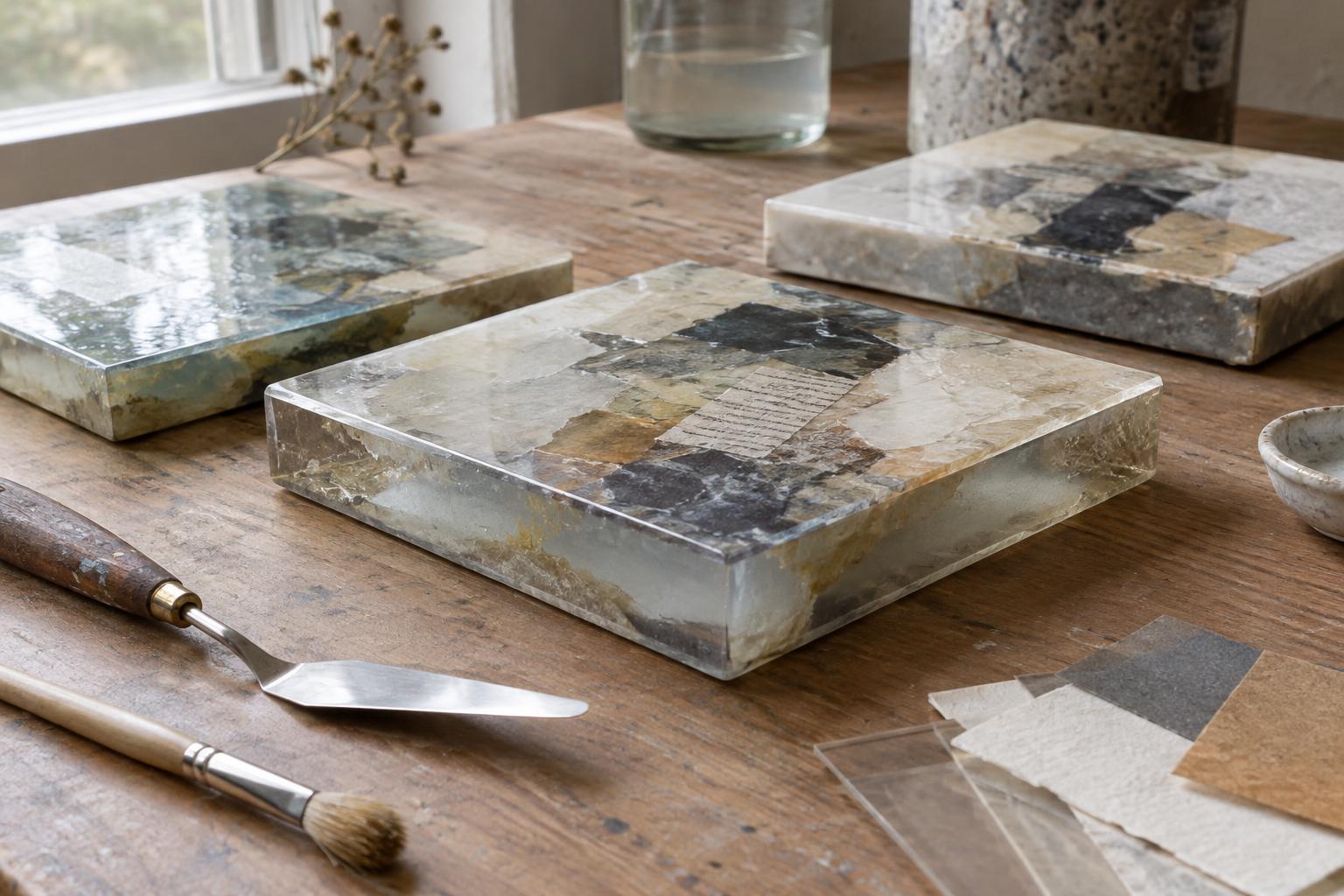
Mixed-media assemblies add another complication: adjacent materials can respond differently to the same room. Paper may expand with moisture while a rigid panel changes less noticeably. Fabric can flex where a hard coating cannot. Drying and curing are therefore not just scheduling issues. They affect how stresses travel through an object. Leaving room for movement, choosing an appropriate support, and allowing each layer to reach a suitable stage can matter as much as the appearance of the finished surface.
A more reliable studio workflow
Start by identifying what each material needs to do. Is a layer merely receiving a light mark, or must it support a heavy attachment? Will it remain exposed to air, or will another material seal it in? Read the manufacturer’s directions for preparation, thickness, working time, recoat intervals, and handling strength where those details are provided. Treat stated times as conditions-dependent rather than universal guarantees, especially when your application is unusually thick or your workspace is cool or humid.
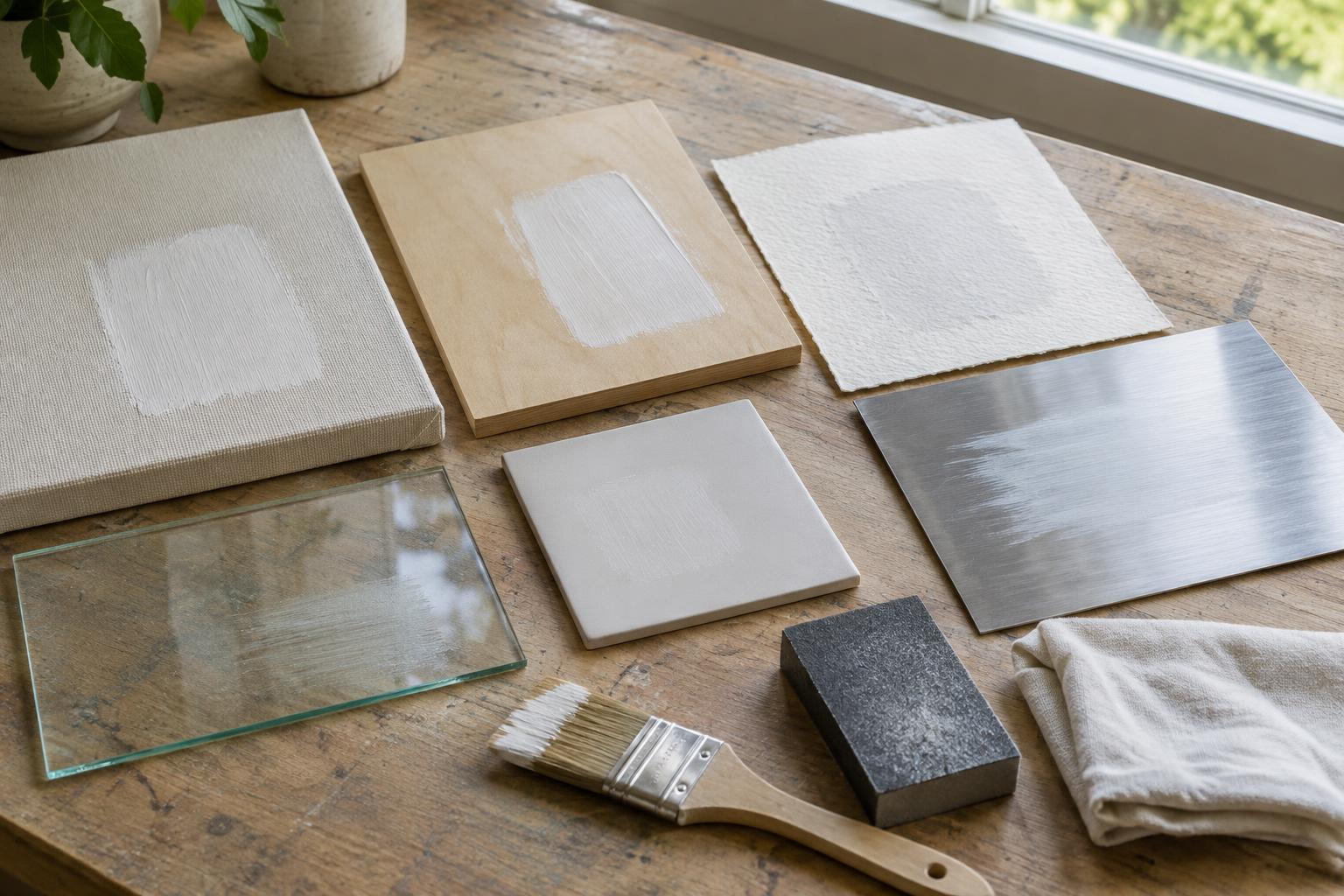
Make a small test piece using the same support and sequence as the artwork. Apply comparable layer thicknesses, not just a thin swatch that dries conveniently fast. Check for tackiness, softness, lifting, discoloration, or changes after the next layer goes on. A test will not predict every long-term outcome, but it can reveal obvious incompatibilities before they become part of a finished piece. Keep brief notes on materials and order of application so a successful combination can be repeated.
Plan for the object, not just the moment
Allowing adequate time is part of making, not an interruption to it. If a work must be moved, wrapped, hung, or enclosed, consider whether every component is ready for that particular step. A surface that can be gently touched may still pick up an imprint from packing material. An attachment that stays in place on a table may not yet tolerate being lifted upright. Where a material gives separate guidance for recoating, handling, and full cure, those milestones serve different purposes.
Good timing cannot make incompatible materials compatible, but it removes one avoidable source of uncertainty. By asking what is evaporating, what is still reacting, and what the next layer will demand, artists can make more deliberate decisions. The result is not a rigid waiting rule. It is a way to give each material enough time to become the surface, bond, or structure the work needs.