The beginning is not always a doorway
A painting usually has a visible edge. An installation may have a doorway, but its beginning can be harder to locate. A low hum might reach a visitor in the corridor; a pool of colored light might spill across the floor; a line of people might slow down before entering. Each cue suggests that the familiar rules of a space are changing. The visitor has not necessarily stepped inside the work, yet the work has already begun to shape their attention.
This makes a threshold more than a physical boundary. It is a moment of adjustment between one mode of looking and another. In a gallery, someone may move from reading labels and scanning walls to listening carefully, watching their footing or noticing how their body casts a shadow. An entrance can invite that shift gradually or make it abrupt. Neither approach is inherently better: a sudden change can sharpen awareness, while a gradual one can let visitors discover the transition for themselves.
Materials that announce a change
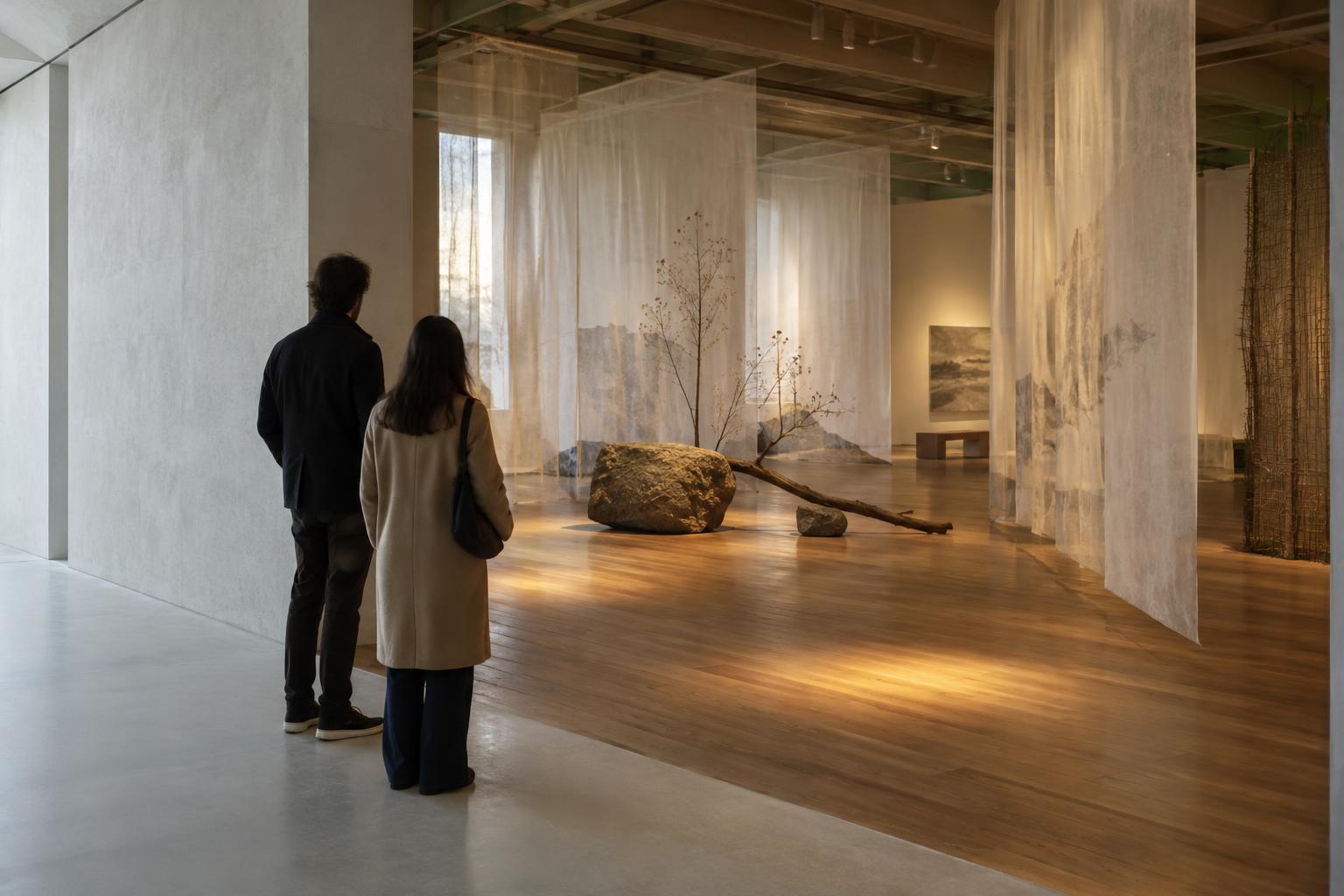
Artists and exhibition makers can signal a threshold with ordinary elements of a room. A curtain changes both the view and the act of entering: the visitor must part it, wait for someone to pass or decide whether to go through at all. A change in floor texture can make each step more noticeable. A narrow opening can frame a first glimpse, while a wide opening can make the work appear to extend into the surrounding space.
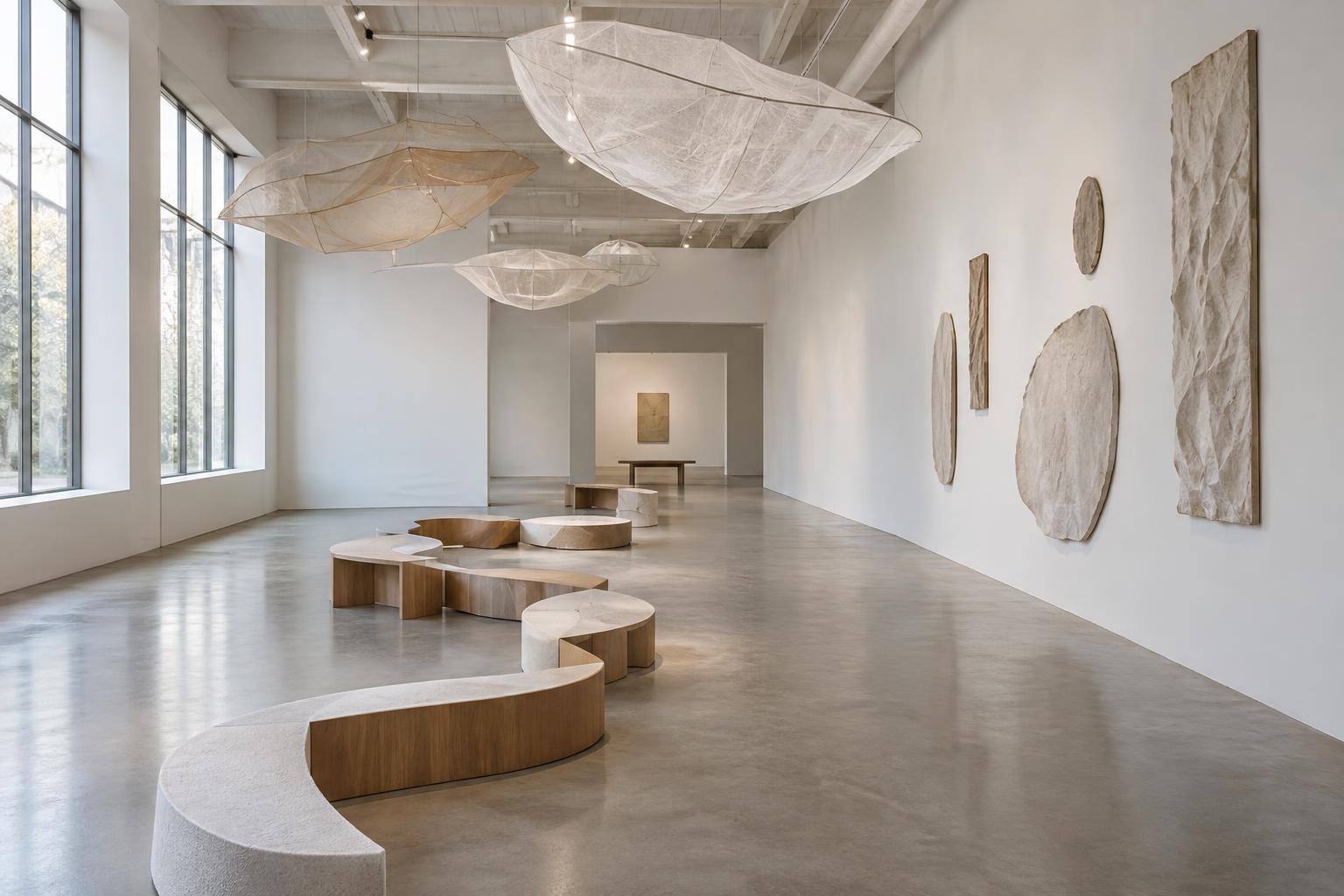
Light and sound often travel beyond an installation’s apparent edge. That reach can build anticipation, but it can also complicate where the work feels separate from its surroundings. A sound heard from the next room may function as an invitation, an interruption or background noise, depending on what else is happening nearby. Likewise, a darkened entrance can make a bright interior striking, but visitors may need time to adjust. Thinking about the threshold means considering not only its visual effect but also how readily someone can understand and use it.
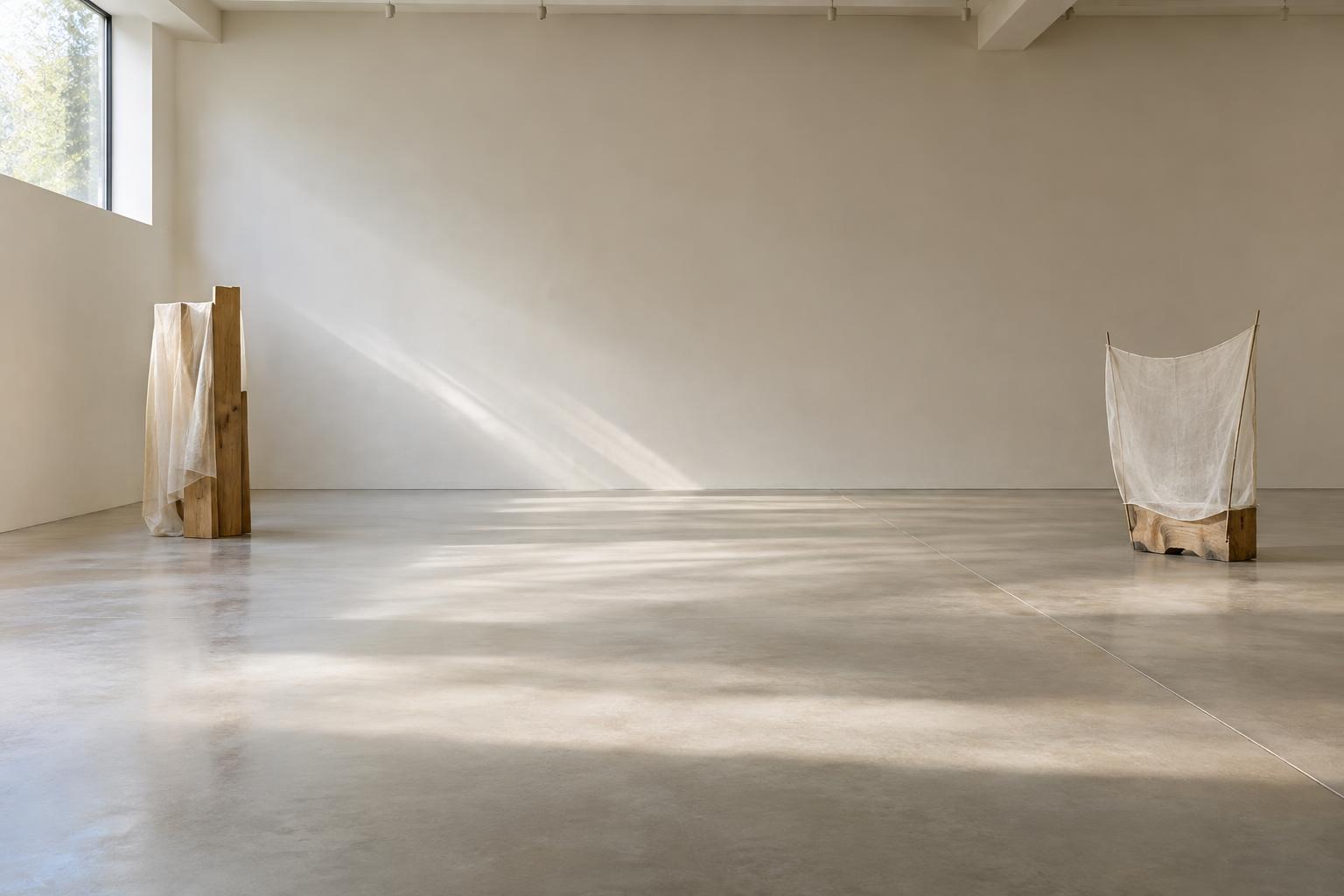
Even the absence of a strong marker can be deliberate. If materials resemble those already present in a building, visitors may notice the work only after realizing that a familiar detail has been repeated, shifted or placed strangely. Such an entrance asks for close attention rather than announcing itself from a distance. Its subtlety can be rewarding, though a modest orientation cue may help visitors who might otherwise pass by.
A threshold directs movement and interpretation
An entrance does not just mark a start; it proposes a way to move. A single opening may suggest a sequence, encouraging visitors to encounter parts of the installation in a particular order. Multiple openings offer a different experience: people can arrive from several directions and assemble their understanding piece by piece. The same elements may feel like a reveal from one approach and like an aftermath from another.
Watching other visitors can also become part of the threshold. Before entering, someone may see people pausing, circling an object or speaking softly. Those actions provide informal clues about what the space seems to ask of them. But they are not fixed rules. An installation that welcomes exploration should leave room for visitors to find their own pace, including the option to stand back before moving closer.
For a viewer, a useful question is: when did I first change my behavior? The answer may come before any wall text or obvious boundary. Perhaps a sound made you lower your voice, or an opening made you wait instead of walking straight through. That small change can reveal how the installation organizes attention—and how much of its meaning depends on the surrounding space.
Designing an invitation without a barrier
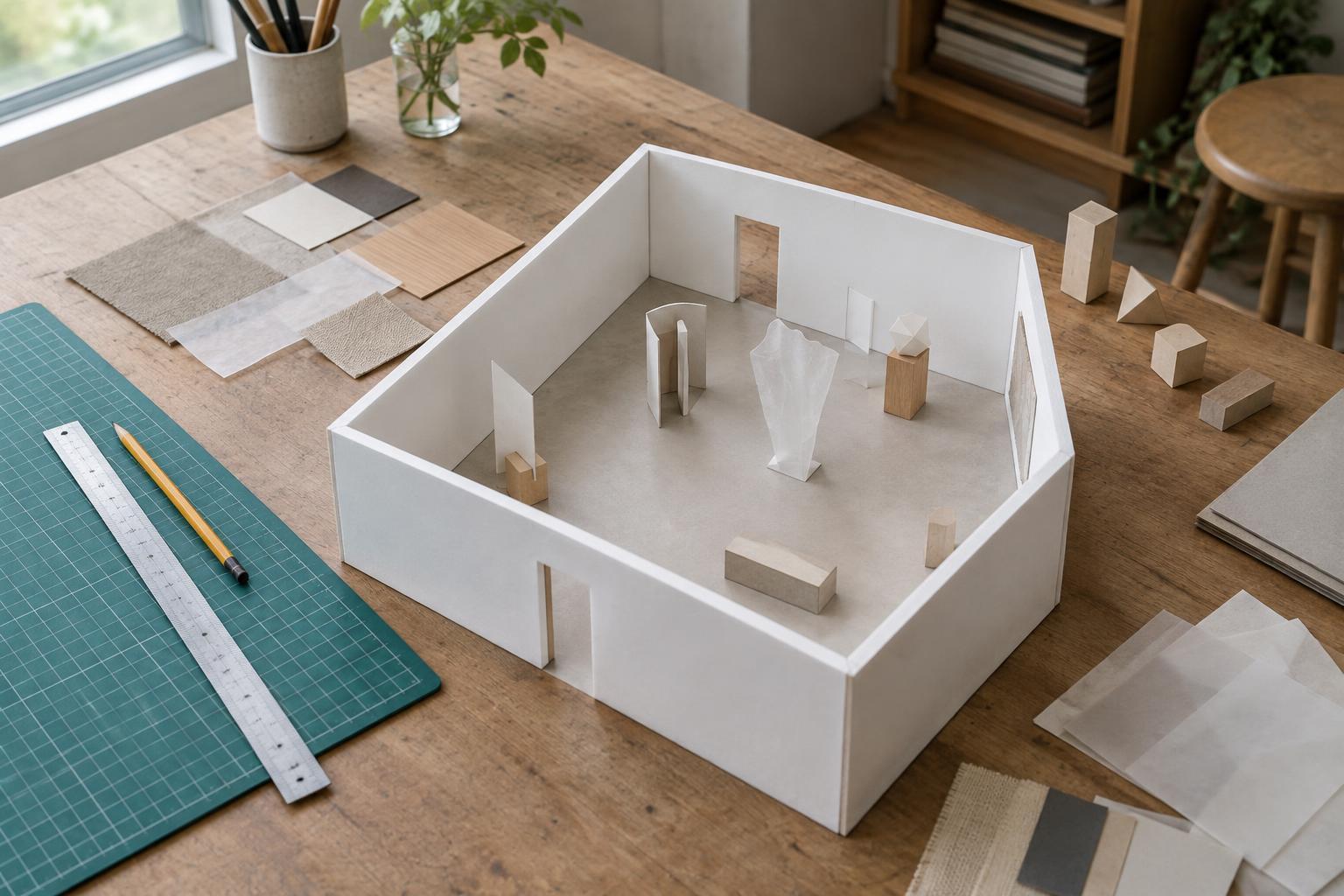
For someone planning an installation, the entrance is worth testing from several positions: approaching from a corridor, arriving with a group, encountering it while another visitor is leaving. What is visible first? Is it clear whether entry is permitted? Can a person pause without blocking the route? These questions concern both artistic effect and everyday use. A mysterious entrance can remain mysterious without making basic access uncertain.
Thresholds also affect how people with different ways of moving or sensing encounter a work. A floor change, hanging material or dim passage may be central to its character, yet it is useful to consider whether the transition is legible and whether an alternative route changes the experience. There is rarely one perfect solution. Treating access as part of the spatial thinking, rather than an afterthought, can reveal possibilities for the work itself.
An installation’s beginning may ultimately be a doorway, a sound, a glimpse or a decision to step closer. Paying attention to that first invitation helps explain what the work asks from its visitors. The threshold prepares the encounter, but it can also be part of the encounter: the place where ordinary space starts to feel newly considered.