Start with what the color should do
A textile artwork may need color that seems to belong to the cloth, or color that sits visibly on top of it. That distinction is a useful starting point. Dye colors fibers through a process that depends on the dye, the fiber and the application method. Fabric paint adds a colored layer to the textile surface. Both can produce bold or subtle results, but they invite different decisions about texture, edges and how the material will move.
Imagine a hanging panel that should remain soft and translucent: dye may help preserve its drape. For a sharply outlined symbol on heavy canvas, paint may offer more direct control. Neither method is inherently more artistic or more permanent. The better choice is the one that supports the work’s visual purpose and its conditions of use.
Let the fabric guide the method
Before choosing a color, identify the textile as closely as you can. Cotton, linen, silk, wool and synthetic fabrics do not necessarily respond to the same dyes. A blend can color unevenly if its fibers take up color differently. Fabric paint is often less dependent on fiber chemistry, but its grip and appearance still vary with the weave, finish and absorbency of the cloth. A coated or tightly finished surface may resist both methods in unexpected ways.
Test on a scrap from the same fabric, including any washing or preparation planned for the final piece. Place the sample in the light in which the work is likely to be viewed. Once it has dried and been treated according to the product directions, bend it, rub it gently and, if relevant, test how it responds to laundering. A sample reveals more than a color swatch on a product label: it shows whether the textile still hangs, folds or catches light as intended.
Compare control, edges and surface feel
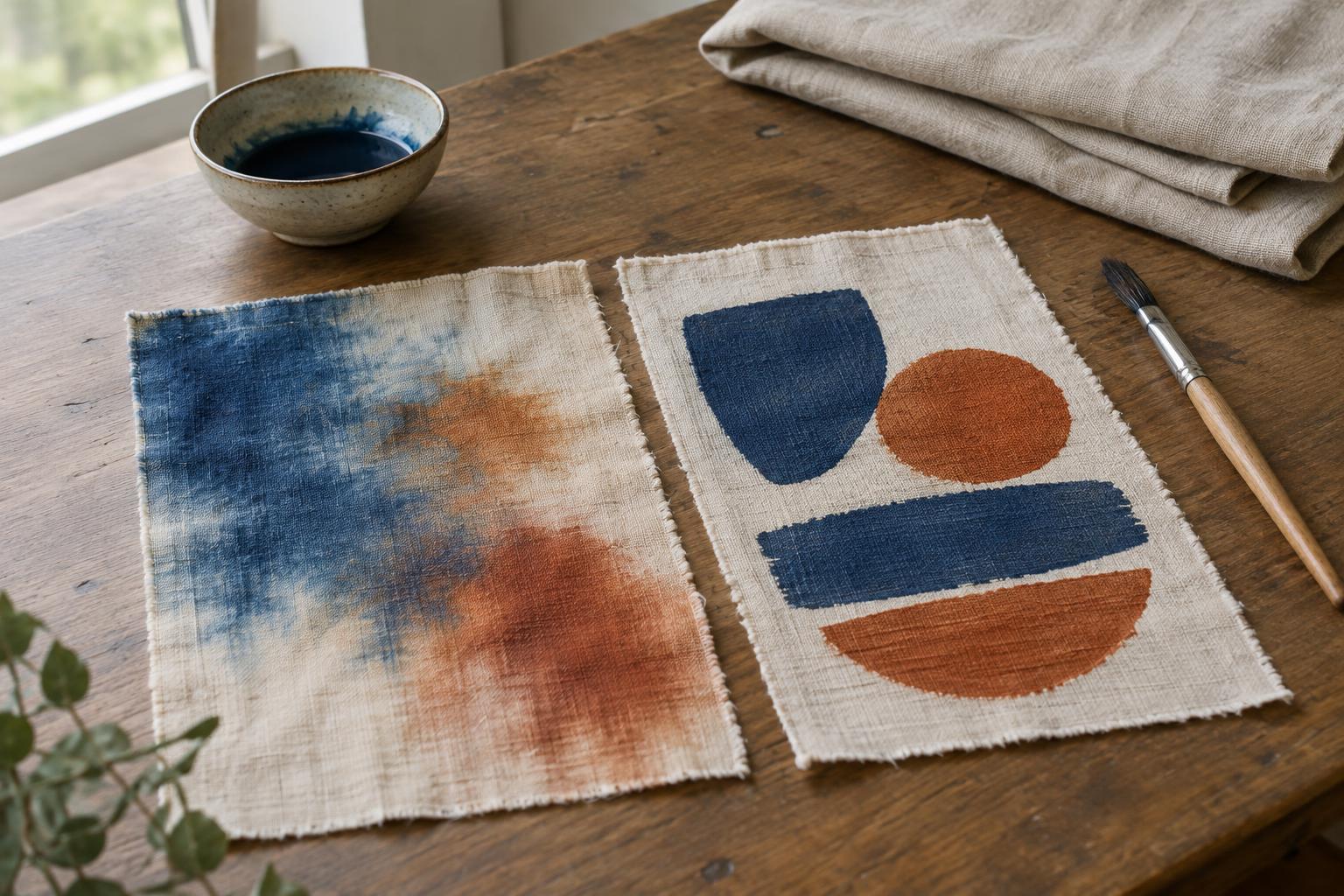
Dye can be useful for broad fields of color, gradual changes and patterns made by folding, binding or selectively applying color. Because the liquid can travel through and along fibers, a crisp line may require careful preparation or a different technique. That movement can also be the point of the work: a spread of color may make the textile’s absorbency visible rather than conceal it.
Paint is well suited to marks placed with a brush, stencil, stamp or other tool. It can make layered shapes and deliberate edges easier to plan, although absorbent cloth may still cause paint to spread. Coverage depends on the product and how heavily it is applied; a thick layer may stiffen the fabric or change its sheen. Thin applications may retain more movement but reveal the cloth beneath. If touch and drape matter, make a sample large enough to handle, not just a small patch to look at.
Plan for process and care
Dyeing often asks for more preparation: a suitable dye for the fiber, a workable space for wet cloth and close attention to the product’s setting and rinsing instructions. Fabric paint may simplify a small, localized design, but it also has drying and setting requirements. Some products call for heat; others have different instructions. Read the label for the specific material rather than assuming that one routine applies to every colorant.
Consider what happens after the artwork leaves the worktable. Will it be stretched, folded for storage, worn, washed or displayed where viewers can approach it closely? Each situation puts different demands on the colored surface. Use protective measures appropriate to the product directions, and keep tools or containers used for art materials separate from food preparation. For a large piece, testing how a treated sample folds and stores can be as important as testing its initial appearance.
Use the choice as part of the artwork
The distinction between dye and paint is not only technical. Dye can emphasize a textile as a permeable material: color follows its fibers, seams and areas of uneven absorption. Paint can make the fabric read as a support for an image, while a visible coating may become a texture in its own right. In an installation, those differences may affect how a piece responds to air movement, casts shadows or looks from both sides.
You do not have to commit to just one approach. A dyed ground can hold painted details, provided the materials are compatible and each stage is properly dried or set. Start with the question the artwork asks of the cloth, then make a few controlled samples. The most useful test is not simply which color looks brighter, but which method lets the textile behave the way the work needs it to.