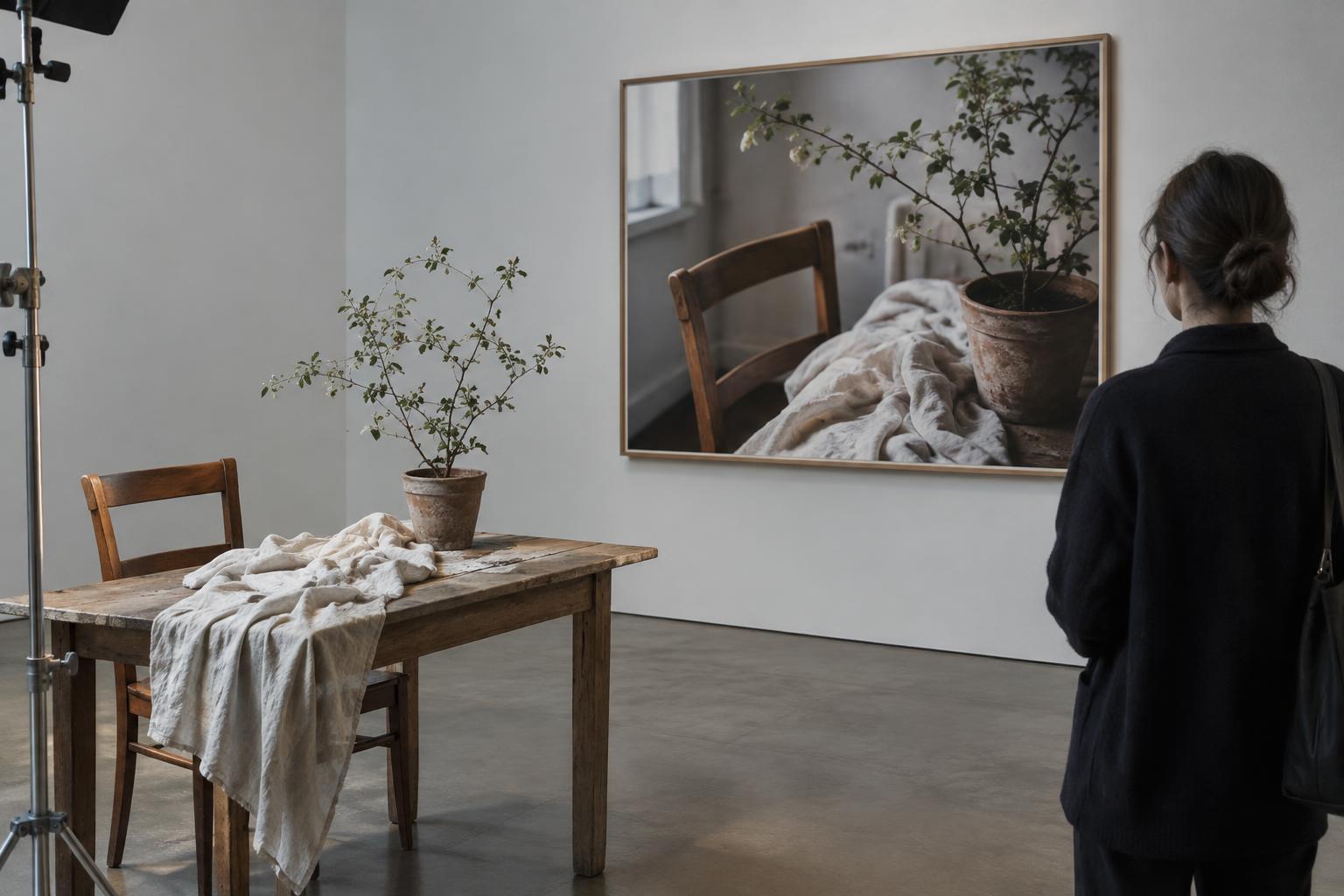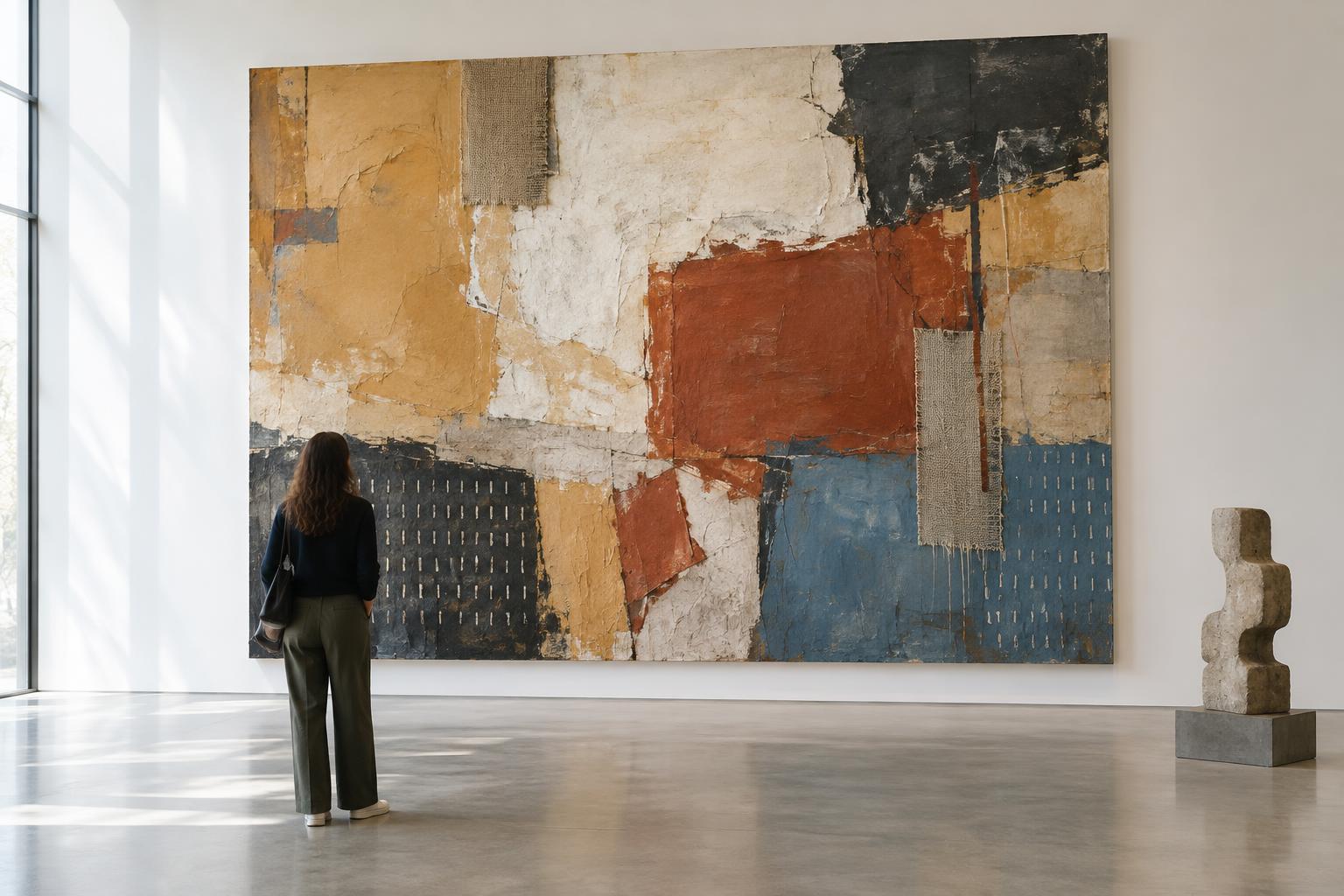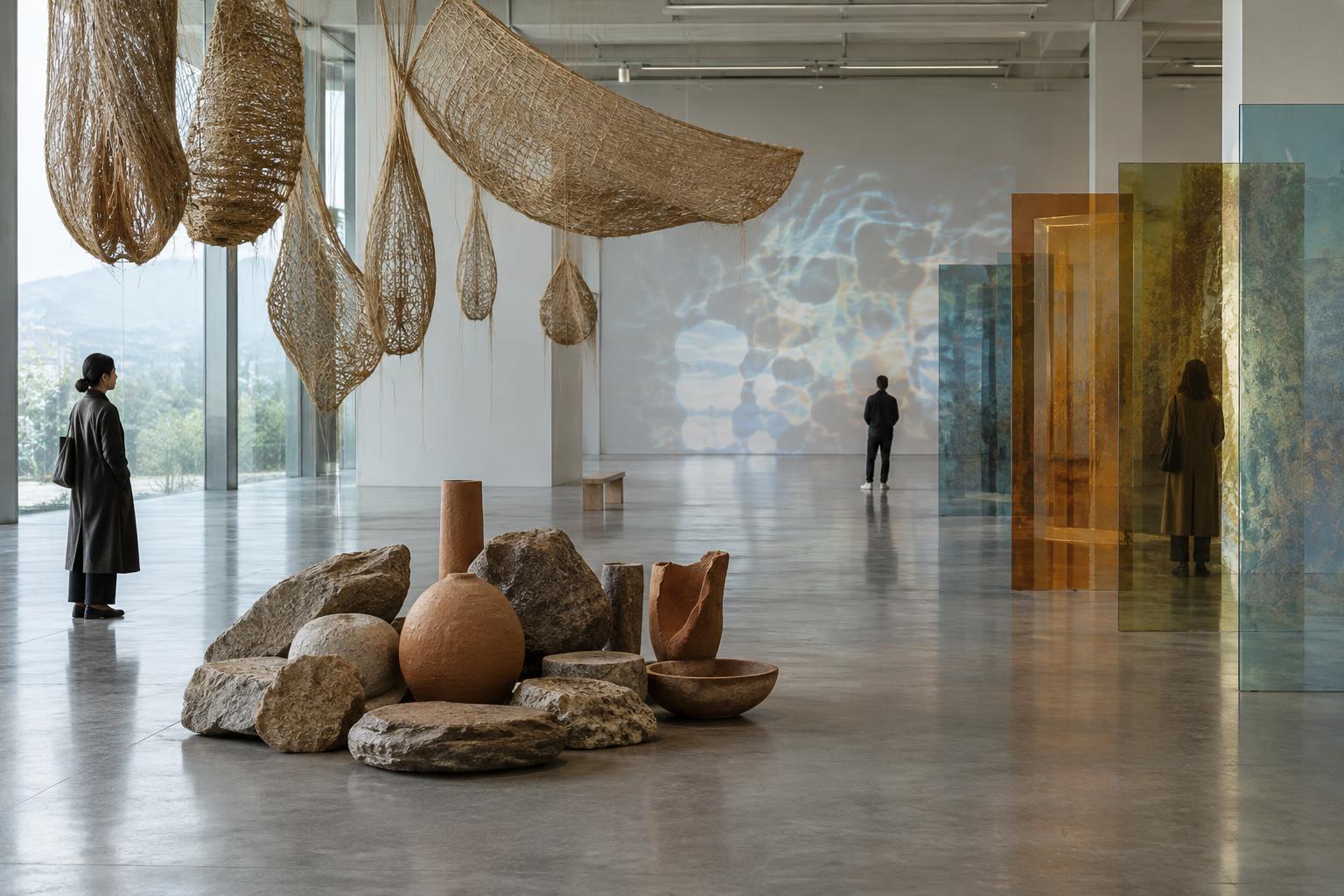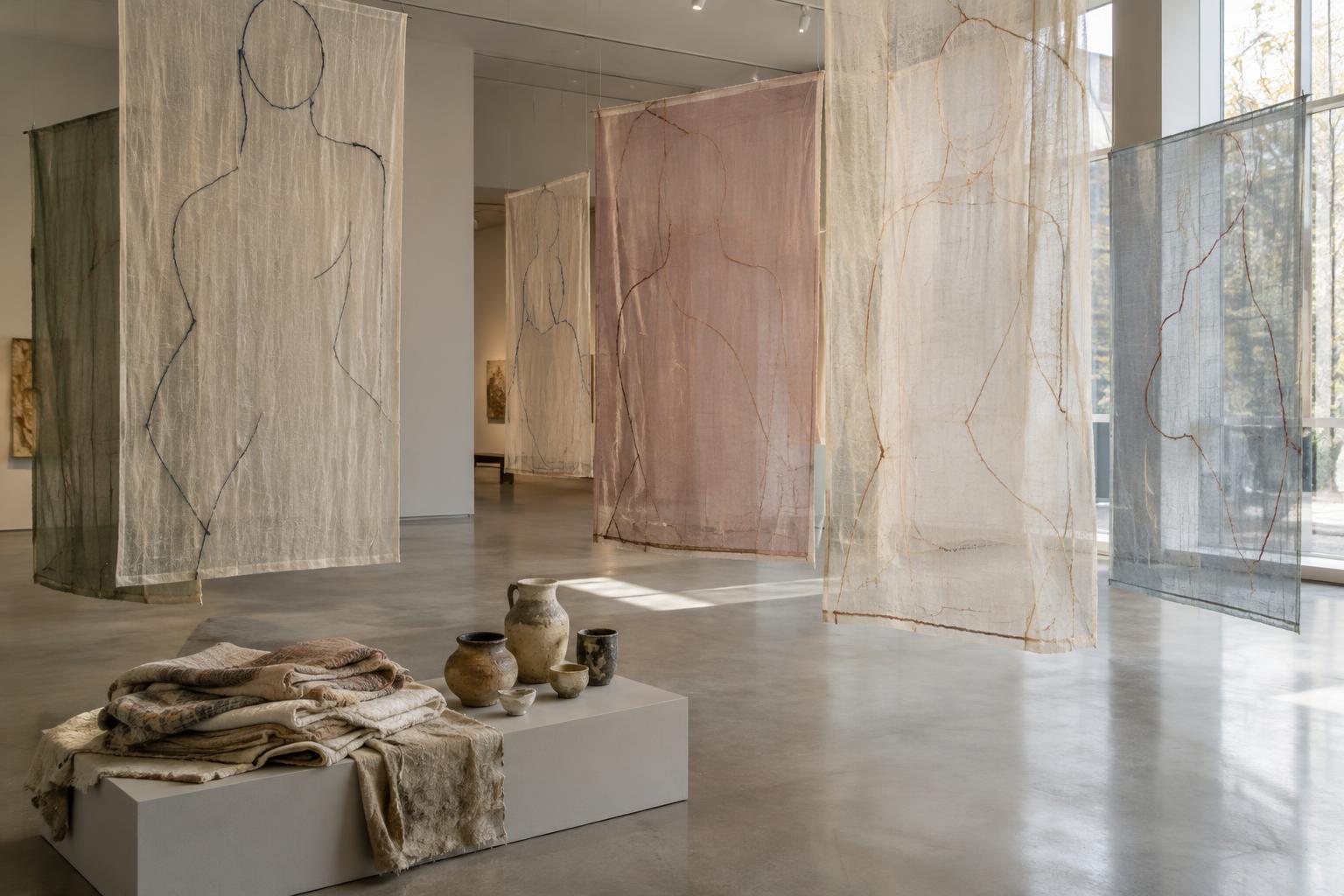
A set of questions, not a visual style
Feminist art is often discussed as though it has a recognizable look. In practice, it can take the form of painting, performance, installation, photography, sound, publishing or an event that leaves behind few objects. What connects these approaches is less a shared appearance than an attention to power: who gets to make images, whose experience is treated as important, and who controls the conditions in which art is seen.
These questions do not produce a single answer. Artists may approach gender through humor, personal memory, abstraction or direct critique. They may also consider how gender intersects with race, class, disability, sexuality and place. Looking at a work through a feminist lens therefore means staying curious about its specific choices rather than assuming that every work by a woman addresses the same concerns, or that feminist art can only be made by women.
Representation and the power to look
Images do more than show people; they establish a relationship between the person depicted and the viewer. A feminist approach might ask who is pictured, who is absent, and whether a subject appears to have agency within the work. Pose, scale, cropping and point of view can all affect that relationship. So can the familiar conventions an artist chooses to repeat, interrupt or refuse.
Representation is not always straightforward visibility. An artist might leave a figure out to protect privacy, use an obscured portrait to resist easy identification, or present several conflicting images rather than one supposedly definitive account. When encountering such work, it helps to describe what is actually visible before deciding what its absence or ambiguity means. The question is not simply whether an image is positive or negative, but what kinds of looking it invites.
Bodies, materials and everyday labor
The body can enter feminist art as a subject, a working tool or a measure of space. A performance may draw attention to endurance and vulnerability; an installation may make visitors aware of how they move, reach or rest. These choices can raise questions about autonomy and care without requiring an artist to disclose personal experience. Respecting the distinction between a work and an artist’s private life is part of reading it carefully.
Materials can carry related questions. Cloth, domestic objects, discarded packaging or repeated handmade marks might suggest forms of work that are easily overlooked. Yet no material has a fixed feminist meaning. A stitched surface could evoke care, routine, skill, constraint or several of these at once. Ask what the artist does with the material: Is the labor made conspicuous? Is a familiar object placed somewhere unexpected? Does repetition feel sustaining, exhausting or both?
The institution is part of the picture
Feminist approaches may address not only what hangs on a wall but also how exhibitions are organized. Selection, labeling, placement and access shape what an audience understands as significant. A work positioned at a gallery’s entrance has a different role from one encountered in a quiet corner. An installation may use that difference deliberately, inviting viewers to notice the habits of the space around it.
This attention can extend to the people whose work makes an exhibition possible: fabricators, installers, educators, cleaners and community participants. Naming every contributor is not always possible or appropriate, but questions of credit remain useful. Who speaks in the wall text? Whose knowledge helps explain the work? Who can comfortably enter and spend time in the space? Such questions connect the artwork to its presentation without reducing it to an argument about the institution.
Reading with attention rather than a checklist
A productive first step is to spend time with the work before assigning it a theme. Notice its materials, sequence and scale. If it includes text or recorded voices, consider how they relate to what you see. Then ask which choices direct your attention and which resist a quick interpretation. A feminist reading may emerge from these details, but it should remain open to other meanings the work supports.
It can also help to distinguish an artist’s stated intention, when available, from your own response. Neither replaces close looking. Some works invite participation or conversation; others keep viewers at a distance. Both can make space for reflection. Feminist art today is best approached as an ongoing field of questions about agency, value and shared life—questions that become more useful when each artwork is allowed to answer them in its own way.