Begin with the space, not the object
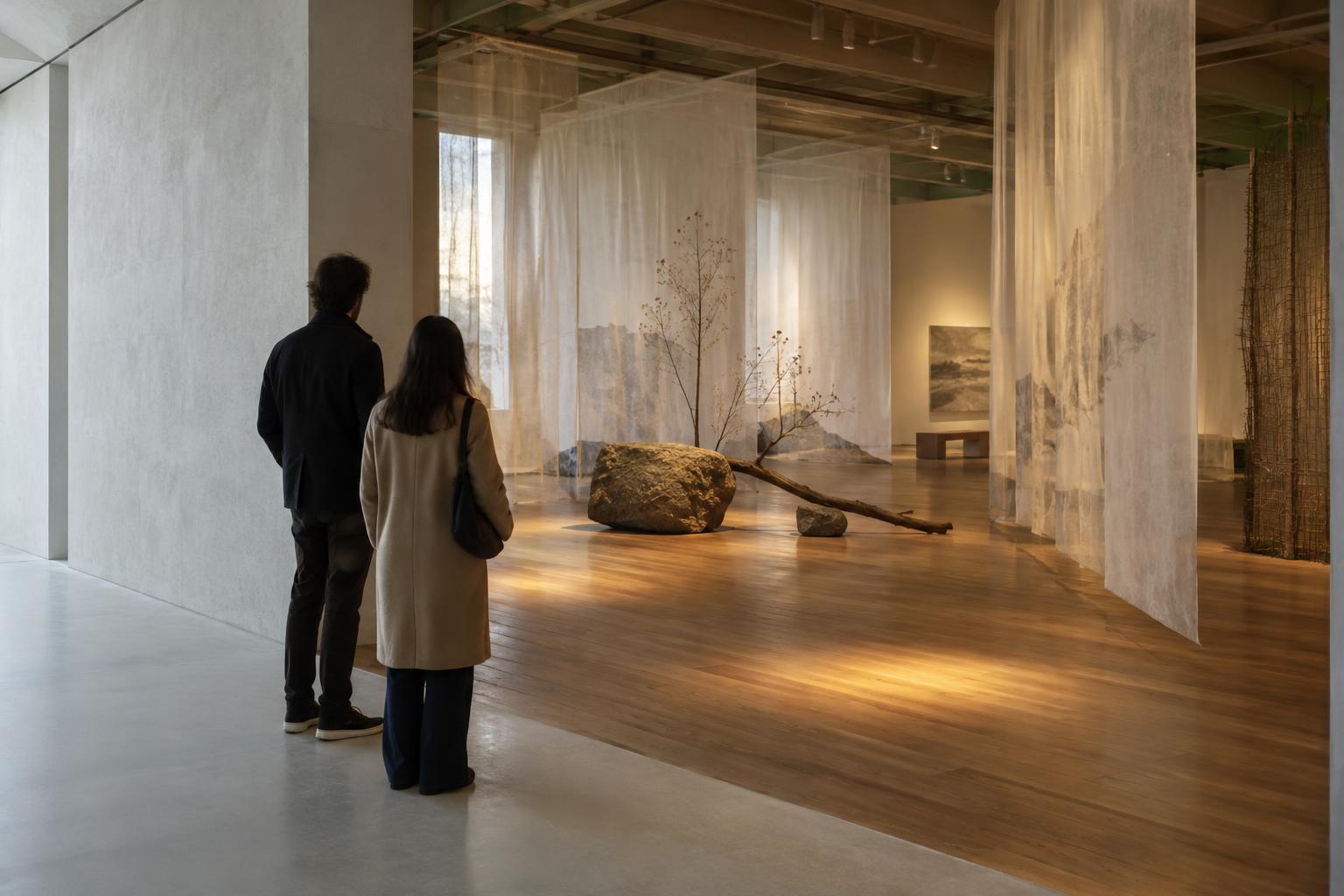
An installation does not simply occupy a room; it changes how people understand that room. A low object can make the floor feel like a landscape. A cluster on a wall can draw attention to a corner. Something overhead can make visitors aware of the volume of air they are moving through. Before deciding where an element belongs, spend time looking at the space from its entrance, edges and likely routes through it.
Notice what the room already emphasizes. Doors frame views, windows compete for attention, and columns interrupt movement. Look for places where visitors may pause and places they are likely to pass quickly. Then ask what each element needs to do: invite close inspection, establish a rhythm, interrupt a familiar route or connect distant parts of the room. Its purpose will usually offer a better starting point than habit or convenience.
Use the floor to shape movement
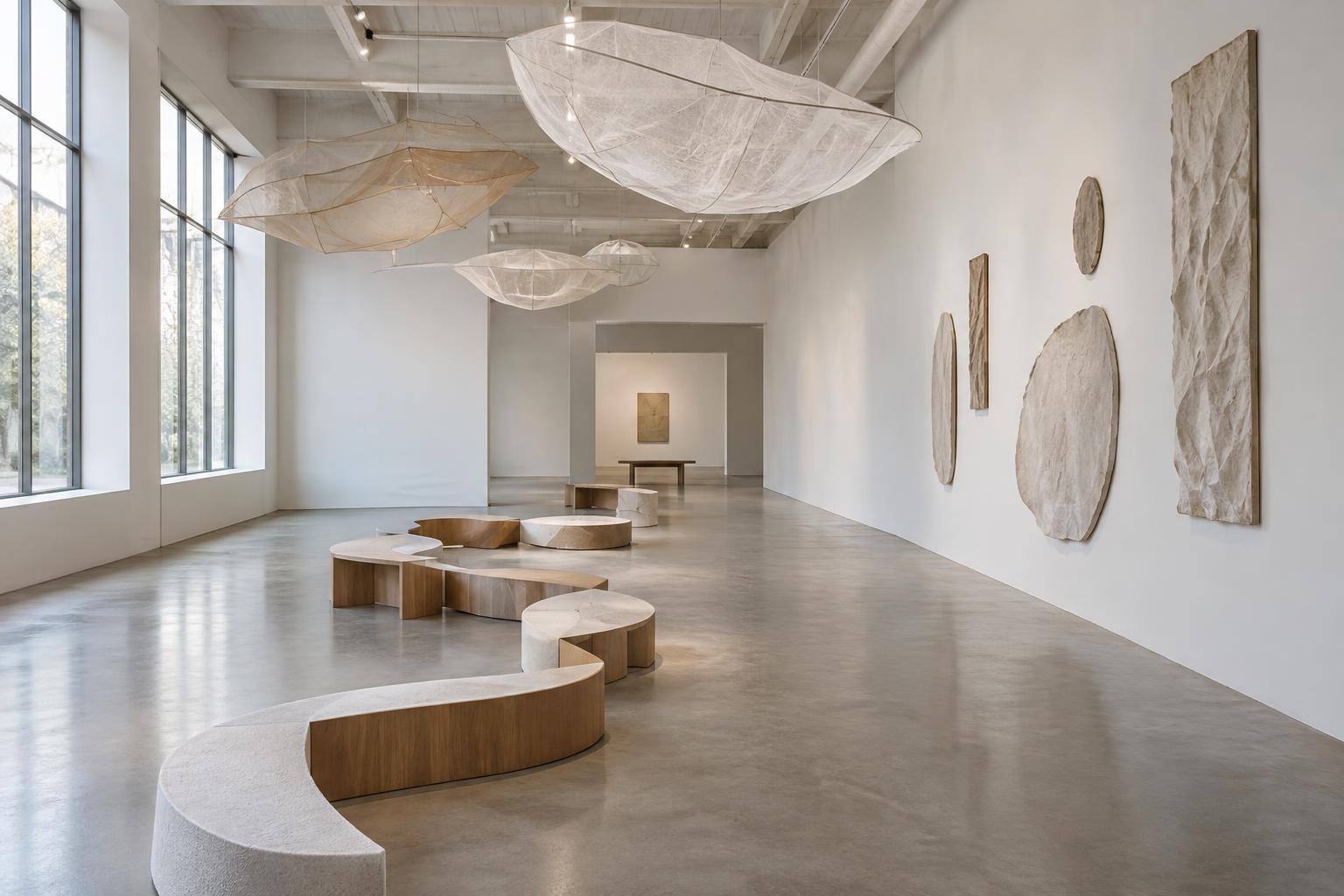
Floor-based elements meet visitors at the scale of their bodies. They can encourage people to slow down, walk around an arrangement or notice a surface they would otherwise ignore. A spread of small components may feel expansive from a distance but detailed from above; a single object in a passage may create a deliberate pause. Height matters here. Even a shallow work can change how readily someone crosses a room.
That influence calls for care. Consider whether an element is easy to perceive, whether visitors have enough room to pass, and whether its edges or loose parts could create an avoidable hazard. A work intended to be walked on raises different questions from one intended to be walked around. Make that distinction legible through placement and the surrounding space rather than relying on visitors to guess.
Let walls guide attention
Walls offer a relatively stable field for viewing. They can support sequences, contrasts and close reading without asking visitors to change their route dramatically. But wall placement is not neutral: eye-level work tends to invite direct examination, while elements set unusually high or low can make viewers more aware of their own posture. Distance from the wall can matter as much as height. A projecting component casts shadows and occupies space differently from one that sits flat against the surface.
Think beyond a single wall at a time. An installation might turn a corner, leave an intentional gap or align with an architectural feature. Such decisions can make separate elements feel connected without filling every available surface. Test sightlines from both nearby and far away. If all the detail becomes visible at once, visitors may have little reason to move; if nothing can be understood until they are very close, the work may be easy to overlook.
Use the ceiling to make volume visible
Overhead elements draw attention to the space above ordinary sightlines. They may produce a sense of shelter, suspension or uncertainty, depending on their scale and spacing. A hanging piece can also change as a visitor moves beneath or beside it: overlapping forms separate, shadows shift, and what first looked like a single shape becomes a series of parts.
The ceiling is not automatically the best place for an element meant to feel immersive. Consider whether visitors will notice it on entering, whether they can see its details without strain, and how it relates to lighting and the room’s height. Suspension and attachment also require appropriate planning and permission for the particular site. If those conditions cannot be met, a wall-mounted or freestanding approach may communicate the idea more clearly.
Test the relationship between placements
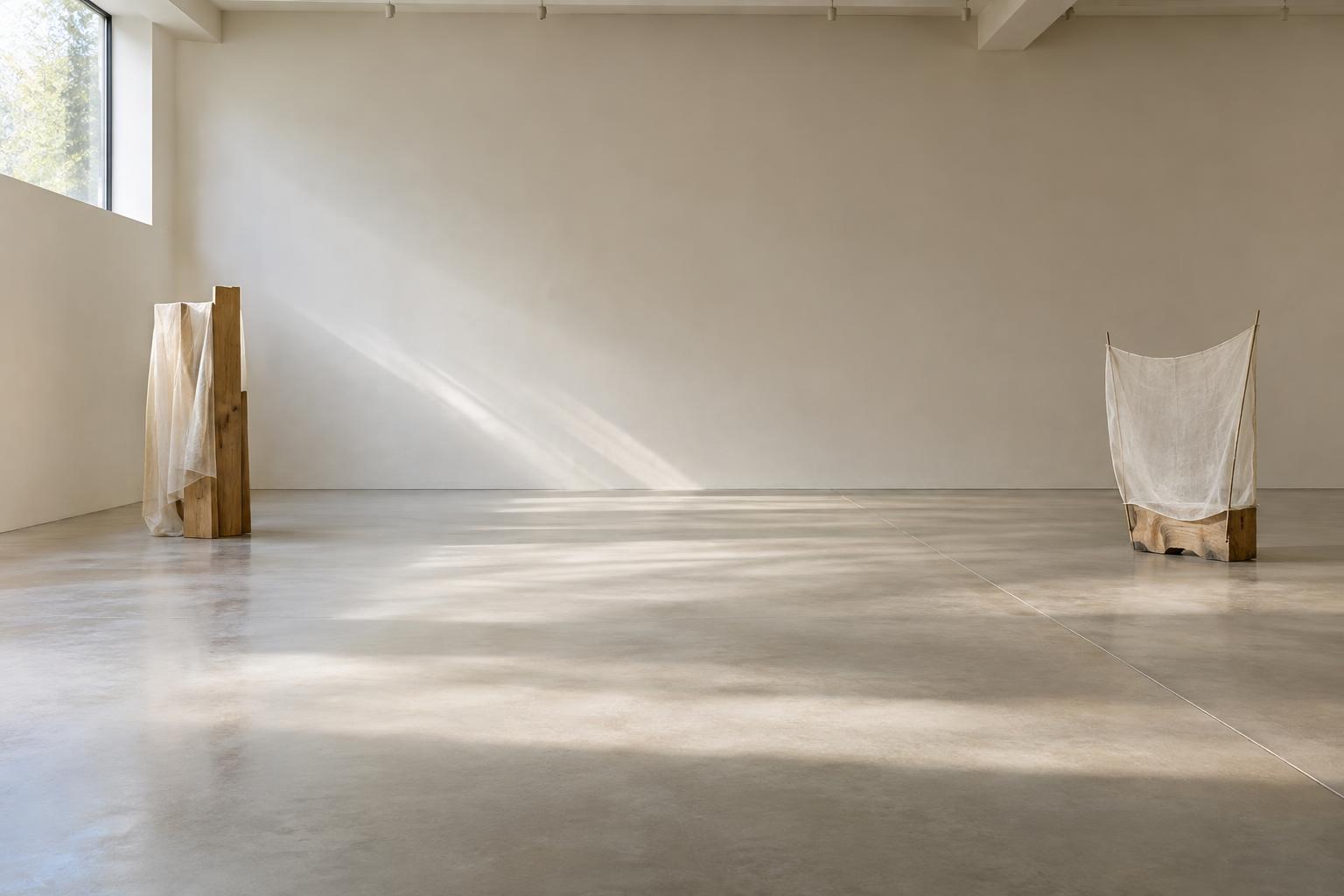
Many installations work across more than one plane. A form on the floor can echo a shape on the wall; a suspended element can cast a shadow that becomes part of a second composition. The aim is not necessarily to fill the room. Empty space gives visitors somewhere to stand, look back and notice connections. It can also prevent one striking placement from overwhelming quieter parts of the work.
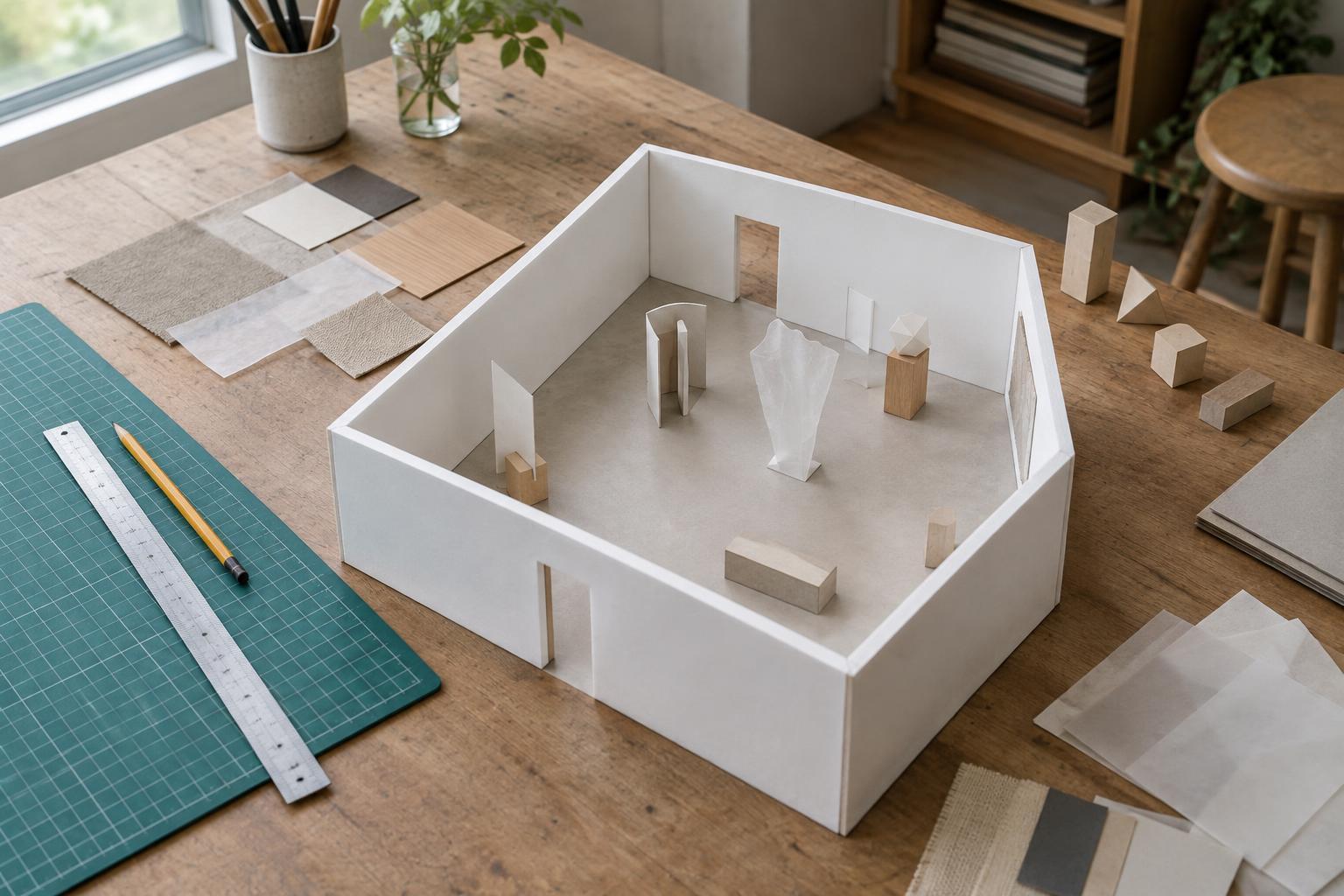
Try a simple rehearsal before settling on a layout. Mark approximate positions with movable materials, walk the likely routes and view the arrangement from different heights and distances. Ask someone unfamiliar with the plan what they notice first and where they feel comfortable moving. Their observations need not dictate the result, but they can reveal assumptions that are hard to see from inside the process. Choose each placement for what it lets the work and its visitors do, not merely for where an element will fit.