What a timeline can—and cannot—do
An art-history timeline is a useful tool. It can show how artists responded to earlier work, how new materials entered studios and how ideas moved between schools, galleries and audiences. Labels such as modernism, conceptual art and contemporary art give readers a starting vocabulary. The trouble begins when that sequence is treated as the story of art everywhere, rather than one way of organizing selected works.
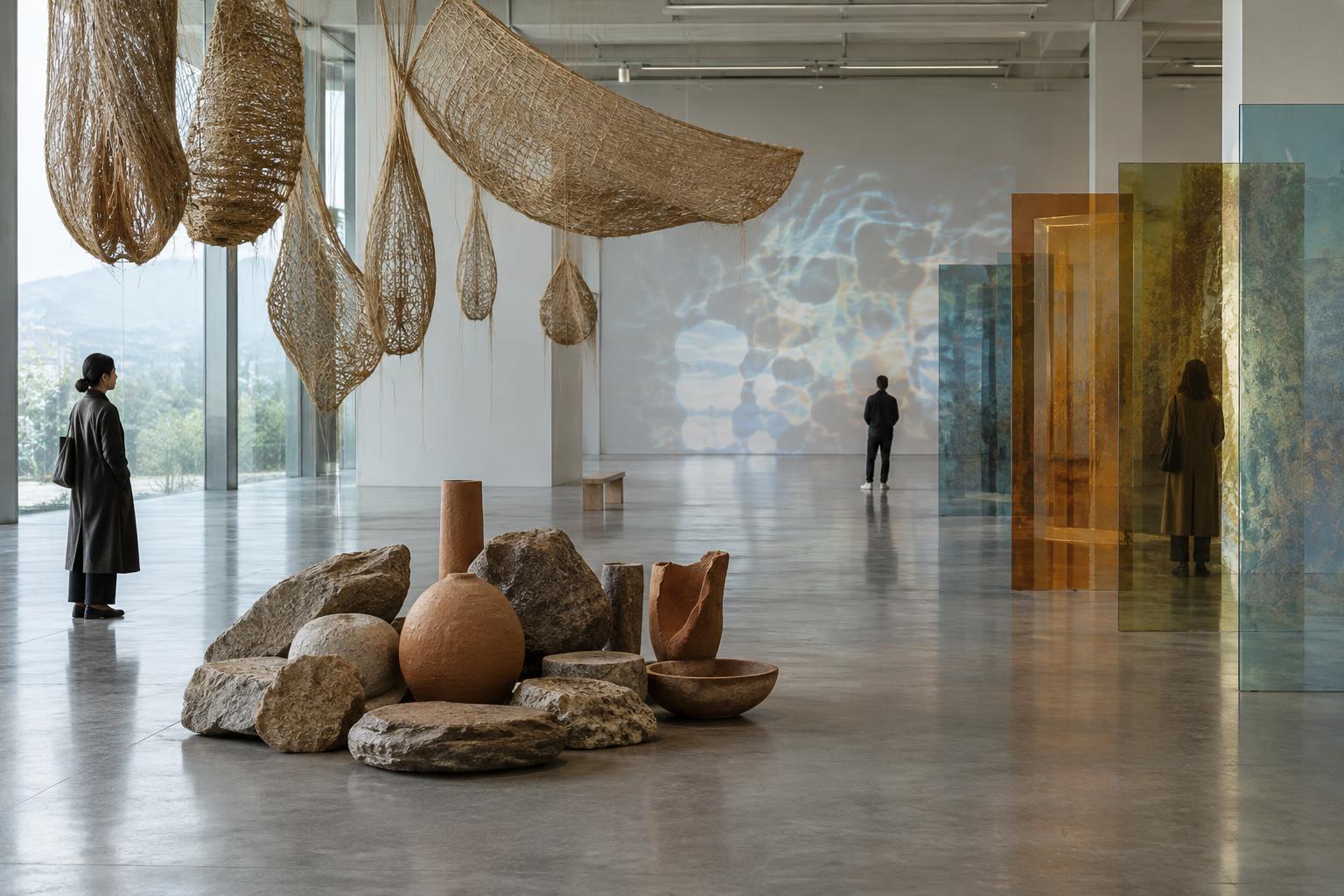
A single timeline often suggests that innovation starts in one center and arrives elsewhere later. That framing can make artists working outside the center seem early, late or derivative, even when their choices answer entirely different questions. An installation made with found objects, for example, might be read as a continuation of an established art movement. It might also grow from local systems of repair, trade, ceremony or access to materials. Neither context can be understood simply by assigning the work a date on a universal chart.
The present contains many histories
Contemporary art is not defined by a shared set of materials or a single visual style. Artists may work with painting, sound, performance, code, textiles, archives or public space. They may revisit inherited techniques while responding to changing cities, migration, environmental concerns or the institutions that display their work. These concerns overlap across places, but they do not follow an identical order. A practice can be experimental and deeply connected to older forms at the same time.
The word “global” can help us notice connections, but it can also flatten differences. It does not mean that every artist participates in the same conversation under the same conditions. Opportunities to travel, exhibit, translate and preserve work vary. So do the meanings attached to familiar formats. A textile in an exhibition might invite discussion of abstraction, labor, domestic knowledge and cultural memory. Which of those discussions matters most depends on the work itself and on the questions we bring to it.
How exhibition stories shape what we see
An exhibition has to make choices. Its layout, labels and groupings can clarify relationships that might otherwise be hard to see. They can also create an impression of a neat progression: one movement gives way to the next, one technique replaces another. Visitors may leave with a memorable story while missing the exchanges, interruptions and parallel developments that do not fit the route through the rooms.
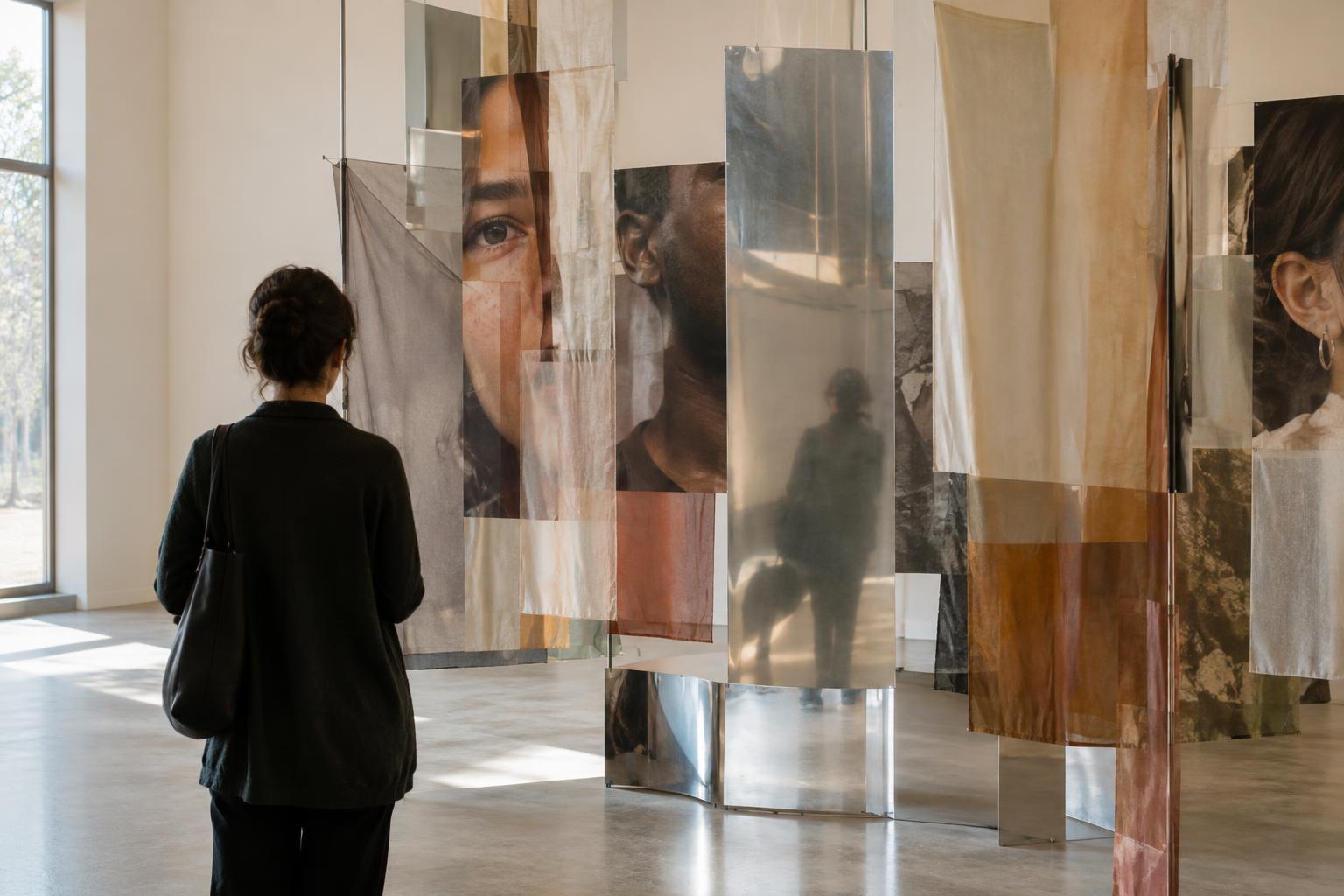
One way to read an exhibition more closely is to ask what principle holds it together. Are works grouped by date, geography, medium or a question they share? Does a wall label explain why two objects belong in the same conversation, or does it assume their relationship is obvious? Notice, too, when a work changes meaning as you move around it or hear it from a different position. Installation and performance make especially clear that an artwork’s history is not only the history of its image. Space, duration, participation and the conditions of display also matter.
A more flexible way to look
Replacing one timeline with many does not require abandoning chronology. Dates remain useful for understanding what an artist could encounter and what circumstances shaped a work. The aim is to use chronology alongside other questions. What materials were available, and why were they chosen? Who was the intended audience? What local traditions or debates does the work engage? How has its meaning shifted when it has been shown in different settings?
It also helps to distinguish resemblance from influence. Two works made far apart may look similar without one being modeled on the other. Conversely, a meaningful exchange may produce works that look nothing alike. Rather than forcing an immediate comparison, begin with close observation: describe what the work does, how it occupies space and what information you still need. Then consider possible connections without treating them as settled facts.
A wider account of contemporary art is not a map on which every place has its assigned slot. It is a practice of holding several scales in view: the artist’s decisions, the histories around a work and the routes through which it reaches an audience. A timeline can still orient us. It becomes more useful when we recognize its limits—and remain willing to follow a work beyond the path it lays out.