Architecture as a starting point
An installation takes shape in a place, and that place is rarely neutral. A narrow passage may encourage visitors to move in single file, while a large open room may let them approach a work from several directions. A column might interrupt a view or become the point around which the work is arranged. Instead of treating these features as obstacles to conceal, artists can use them to determine the installation’s form.
This approach begins with close observation. Where does a visitor first enter? Which surfaces are visible immediately, and which appear only after a turn? An artist might place a small element where it will be discovered gradually, or position a large one so that it changes the apparent proportions of the room. The building becomes part of the work’s conditions, even when nothing is attached to it.
Working with surfaces and boundaries
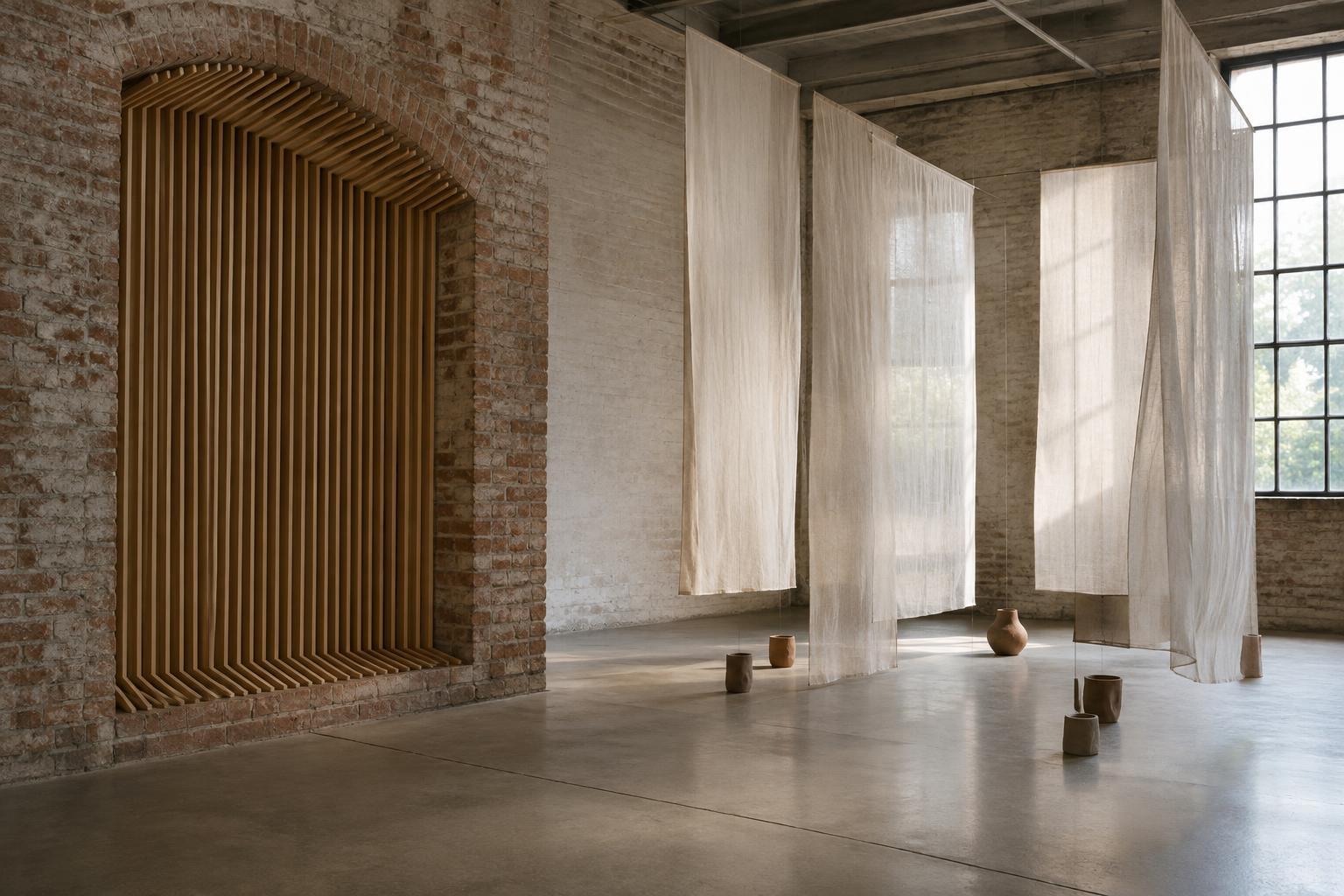
Walls and floors give artists places to locate objects, images, sound or light. They also carry their own visual character: a rough wall can make a smooth material look especially precise, while a tiled floor may introduce a strong pattern beneath a sparse arrangement. An installation can echo those qualities, contrast with them or leave them clearly visible. In each case, the existing surface affects what visitors notice.
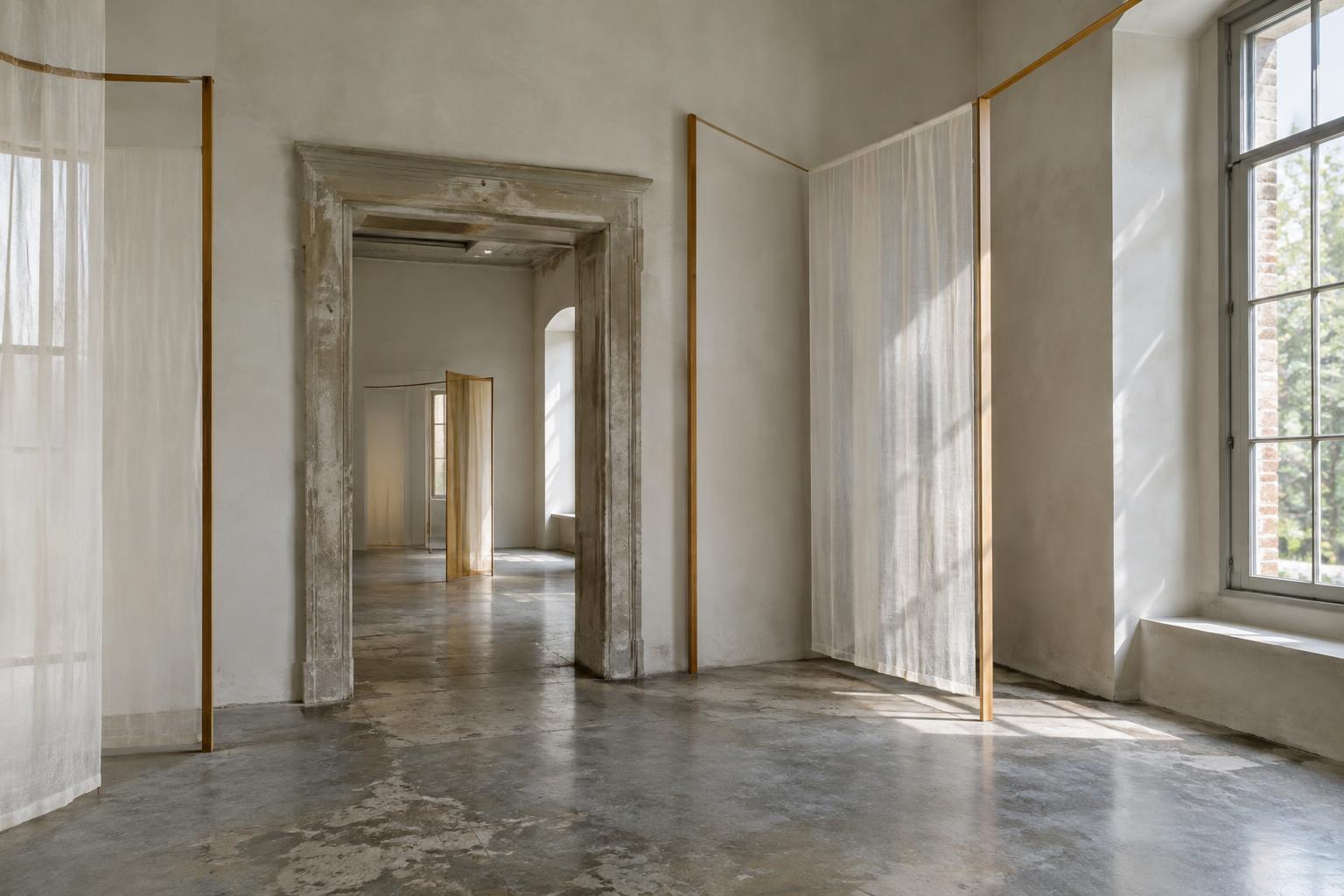
Architecture also establishes boundaries. A doorway frames a view into the next space; a recess offers an area that feels distinct from the room around it. Artists may use these divisions to organize a sequence, with one part of a work preparing visitors for another. Even an empty stretch of wall can matter if it creates a pause between elements. When viewing an installation, it helps to ask not only what has been added, but what has deliberately been left unobstructed.
Guiding movement without prescribing it
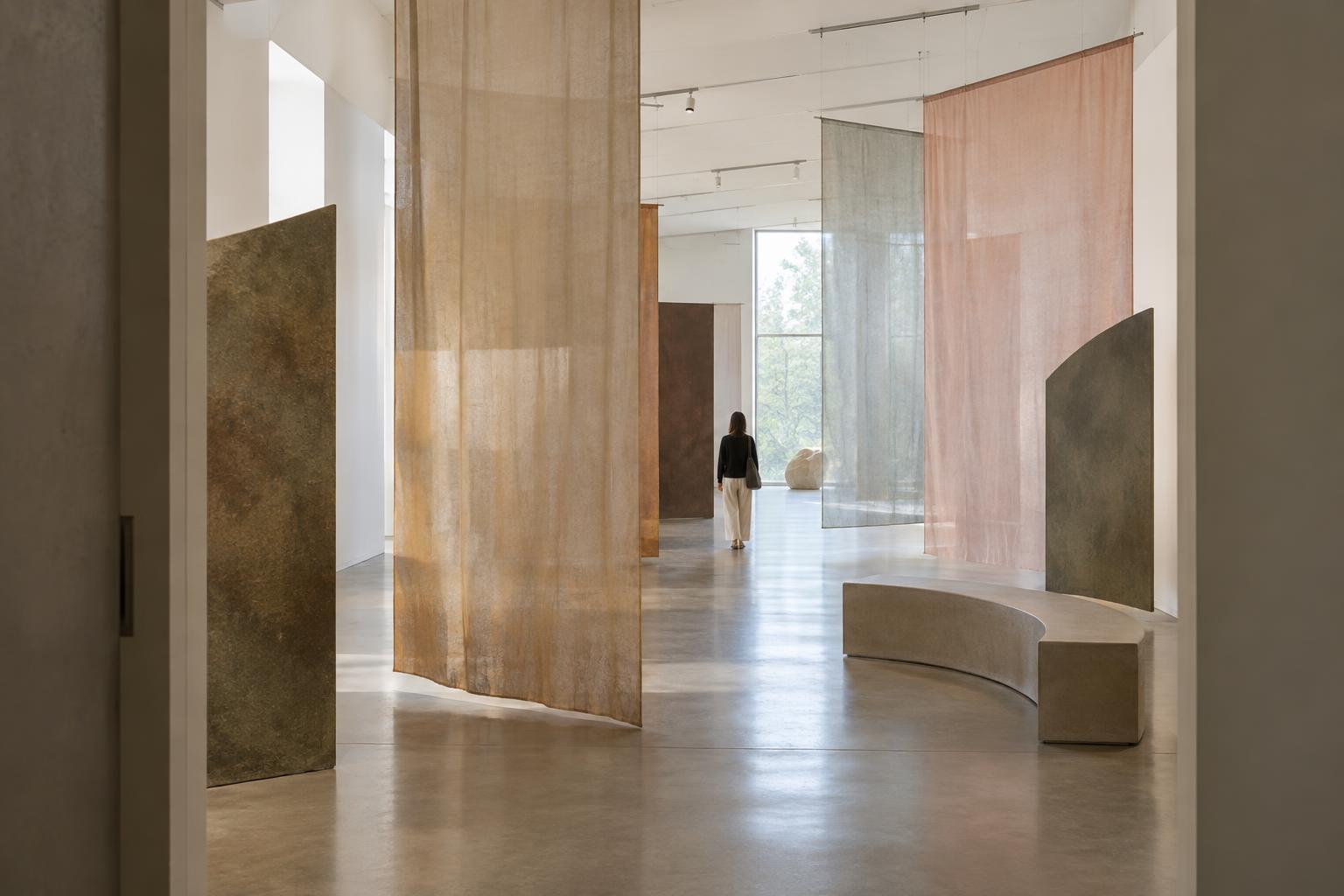
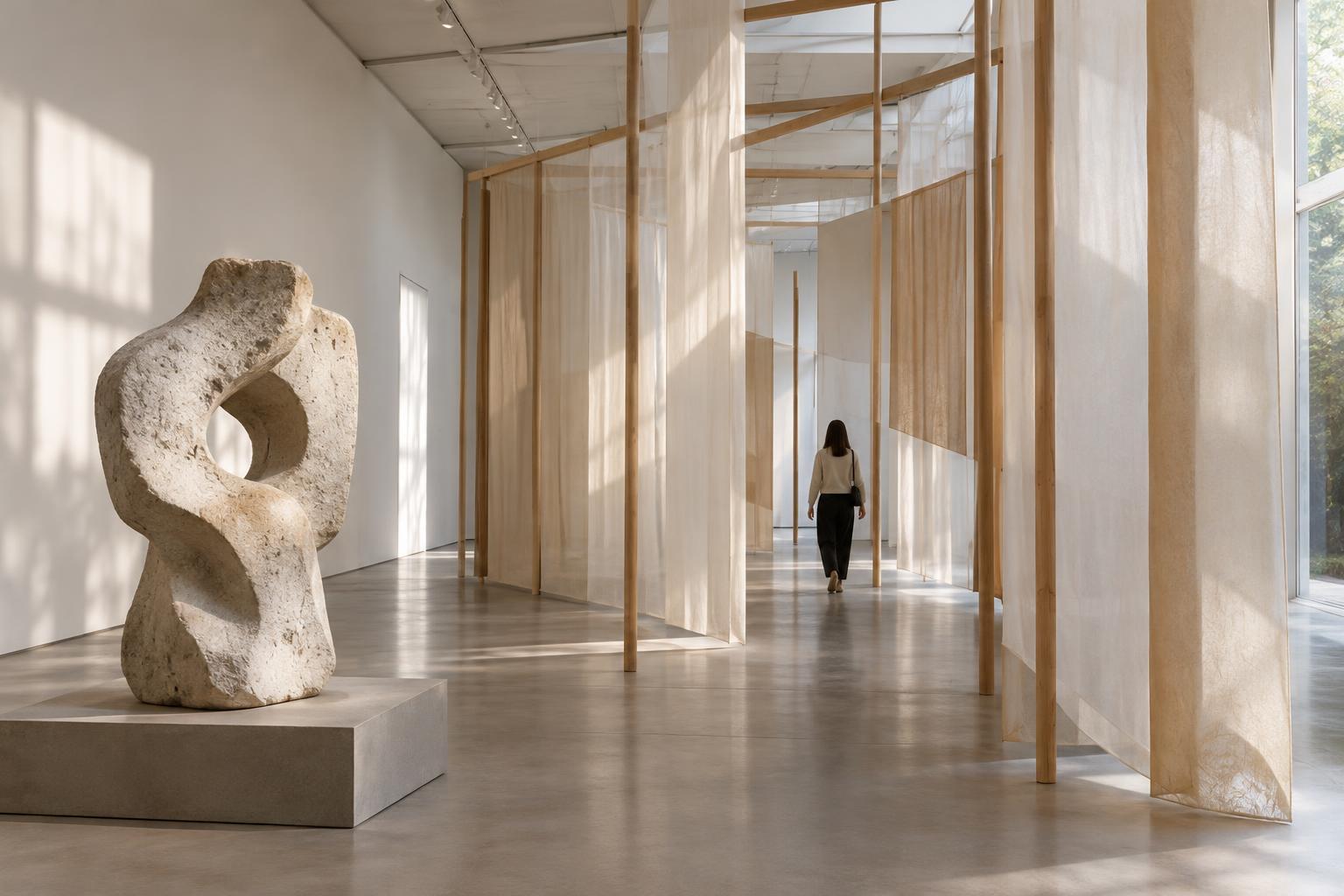
The route through an installation can be as important as the objects on display. A work placed near an entrance may slow the transition from a corridor into a gallery. An arrangement that spans a room can invite visitors to walk around it, revealing different relationships from each side. Changes in ceiling height, corners and openings can create moments of compression or release as people move.
Artists do not always control that movement completely. Visitors may double back, stop at different distances or notice details in an unexpected order. A responsive installation allows for those variations while still making purposeful use of the room. For a visitor, changing position is a useful way to test the work: Does an element align with a window only from one spot? Does a form disappear behind a column and then return? Such shifts can make the act of moving through the space part of the experience.
Light, sound and a building’s character
Windows, skylights and artificial fixtures can change how an installation reads. Daylight may reveal texture or cast shadows that shift over the course of a visit. A darker corner can make a modest light source feel prominent. Artists may plan for these conditions, but they may also accept some variation rather than seeking a single fixed appearance. The result is a work whose relationship to the room remains visible.
Sound offers another way to work with architecture. Hard surfaces may make footsteps or voices more noticeable; a doorway may allow a sound from one area to reach another before its source comes into view. An artist can use these effects to connect spaces or draw attention to an otherwise overlooked feature. The character of an older or heavily used building may matter too, though its traces need not be assigned a single meaning. They can remain part of the setting visitors bring into their interpretation.
Reading the relationship between work and site
To understand how an installation uses architecture, imagine the same work in a different room. Would its scale still feel convincing? Would its elements be encountered in the same order? If a window, staircase or low ceiling seems essential to the experience, the work may depend strongly on its site. If it could move easily, it may still respond to the present room through placement and adjustment.
It is also worth noticing practical limits. Existing buildings set conditions for where materials can rest, how people can circulate and which features must remain usable. Those limits can prompt inventive choices, such as freestanding structures that suggest a new wall without altering an existing one. Looking closely at these choices turns architecture from background into an active part of viewing. The installation is not simply in a space; it creates a conversation with what is already there.