Scale begins with a relationship
Scale describes how large something feels in relation to something else: a person, a doorway, a room or another object. Proportion describes the relationships among parts of a work. A suspended sheet might be modest in size, yet seem expansive if it hangs in a narrow passage. The same sheet in a high-ceilinged hall might appear delicate. Neither impression comes from its measurements alone.
Installation makes these relationships hard to ignore because the viewer shares space with the work. A form that rises above eye level can prompt someone to look up or step back. A cluster of objects near the floor asks for a slower, more downward gaze. An artist can therefore change the experience of a familiar material without changing the material itself, simply by adjusting its size and placement.
The viewer’s body is a measure
An installation is encountered from a particular height and at a particular pace. Artists can work with those everyday conditions. A doorway-sized opening may suggest entry even when it is not meant to be crossed. A low canopy can make a room feel compressed; a generous gap around an object can give it room to breathe. These effects depend on how a visitor approaches, not just on how the work looks from a single viewpoint.
It helps to distinguish between an intended movement and a possible one. Some visitors cannot or may not want to crouch, walk a long route or pass through a tight space. If an experience depends entirely on one physical action, its impact may be lost for those who encounter it differently. Sightlines from several positions, clear routes and meaningful views from outside an enclosed area can make the work’s spatial ideas more widely perceptible.
Proportion directs attention
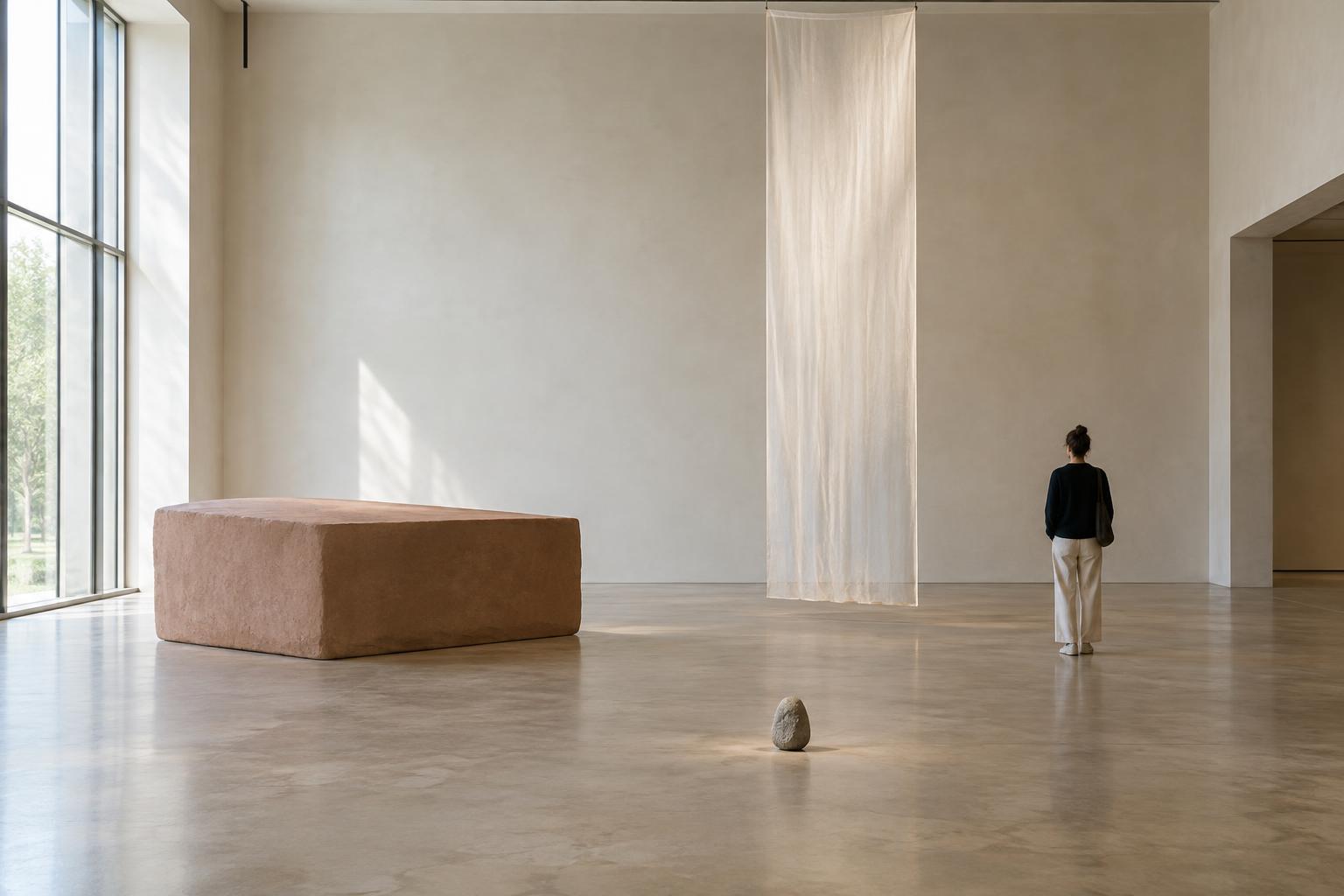
A work does not need to fill a room to hold it. One small object placed far from the entrance can draw attention across a large stretch of empty floor. Conversely, many similar objects packed closely together can make a corner feel dense. The distance between elements becomes part of the composition: a wide interval may encourage comparison, while a narrow one may let separate pieces read as a single mass.
Changes in proportion can also create a sequence. Imagine three frames that share a shape but increase in height as they recede into a room. Their progression may suggest growth or pull the eye toward the far wall. Reverse the order, and the same frames may lead attention back toward the entrance. Repetition establishes a pattern; a change in size or spacing gives viewers a reason to notice where that pattern breaks.
The room is never a neutral container
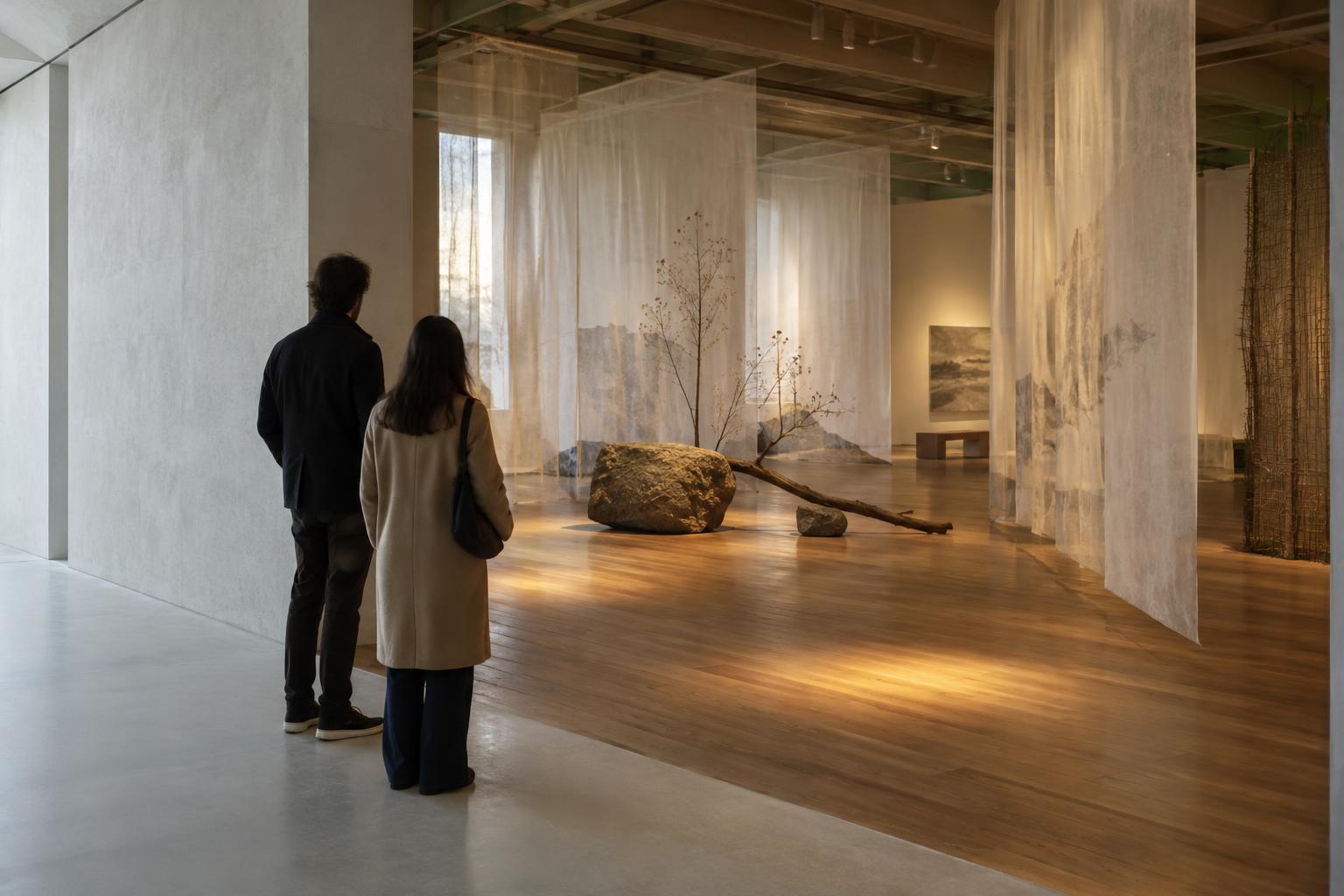
Walls, corners, windows and ceiling height all affect an installation’s apparent scale. A work aligned with an architectural feature can seem to extend that feature. A piece set slightly apart from a wall may instead make the gap noticeable. Natural light can bring a tall form into focus at one point in the room, while a dimmer edge may make its boundaries harder to judge. These are relationships to observe rather than effects to assume.
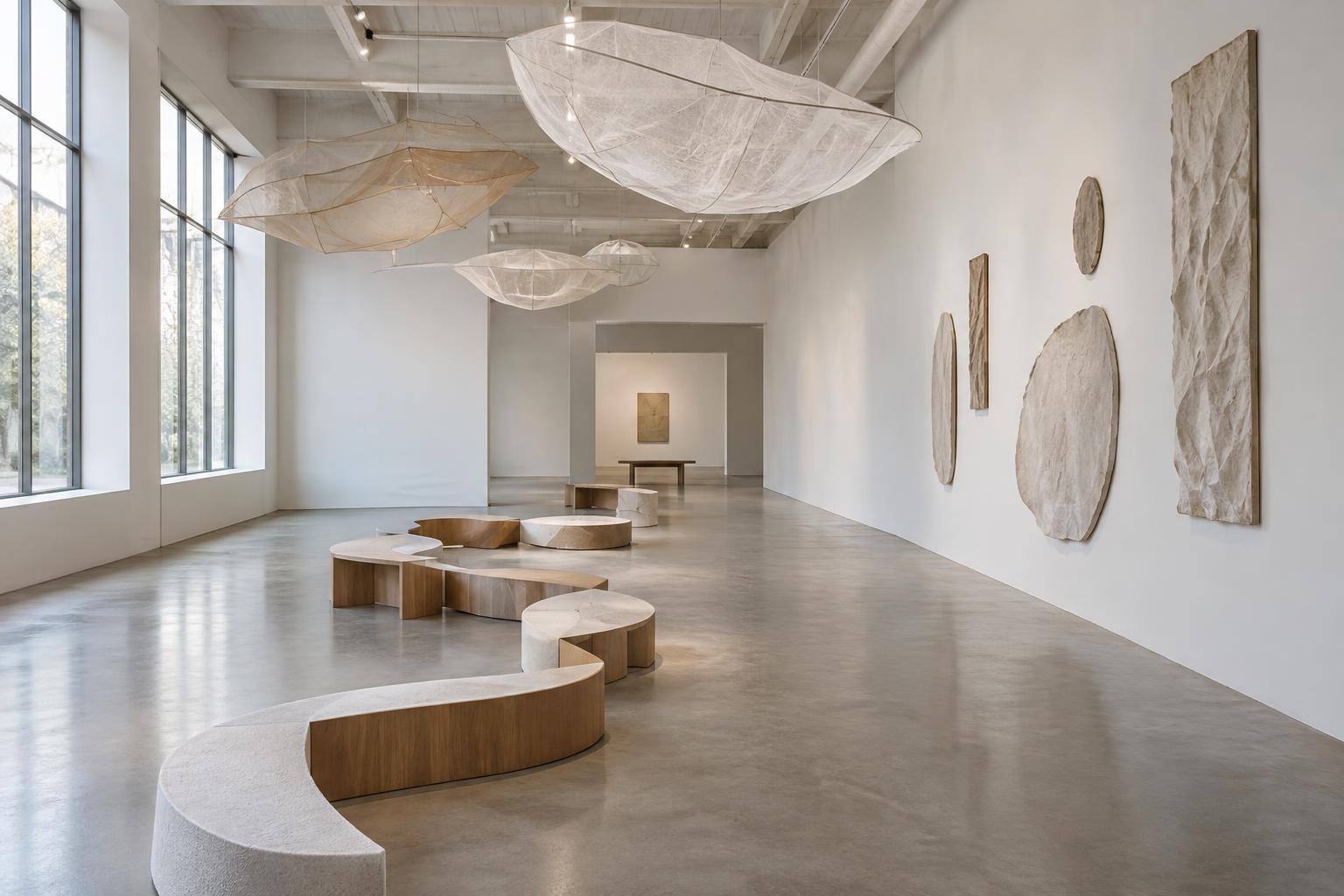
The surrounding space also includes other people. In an empty room, a line of floor-based objects may read as a quiet path. When visitors gather along it, their bodies become temporary points of comparison and may change the perceived rhythm. An installation designed for a particular site benefits from considering both conditions: how the arrangement stands on its own and how it changes as people occupy the space.
Testing an idea at different sizes
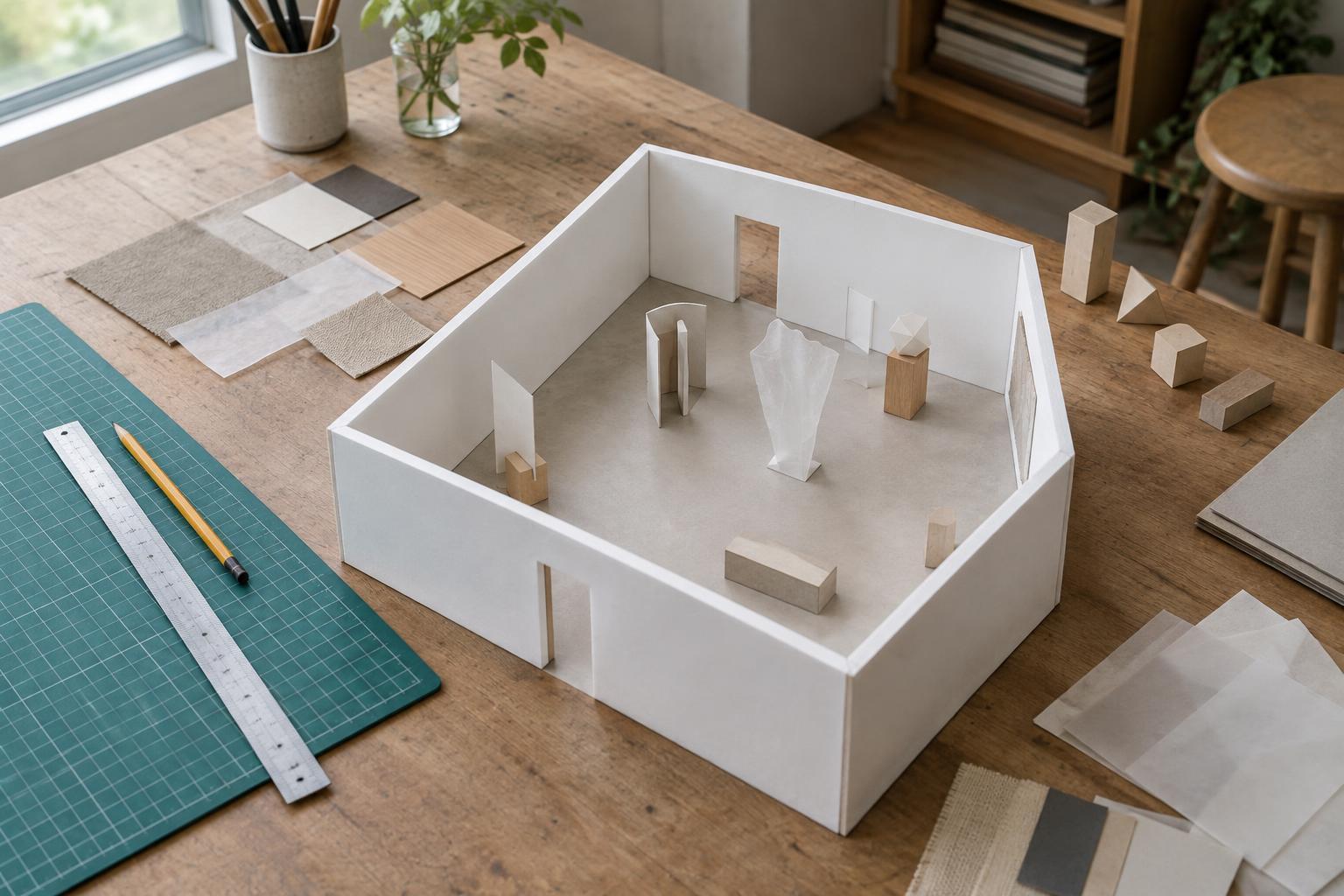
For artists developing an installation, a small model can reveal relationships between parts, but it cannot fully predict bodily experience. After sketching or making a model, mark out approximate dimensions on the floor or wall. Walk toward the proposed work from the entrance, pause near it and view it from the room’s edges. Ask what becomes visible first, where attention settles and whether the intended gaps still feel generous at full size.
For viewers, similar questions offer a way to look closely without searching for a single correct interpretation. What serves as your measure of the work’s size? Does it invite you nearer or hold you at a distance? What changes when you move a few steps? Scale and proportion shape impact through these encounters. They turn dimensions into a sequence of perceptions, making the space around an installation as consequential as the objects within it.