Start with the exhibition’s structure
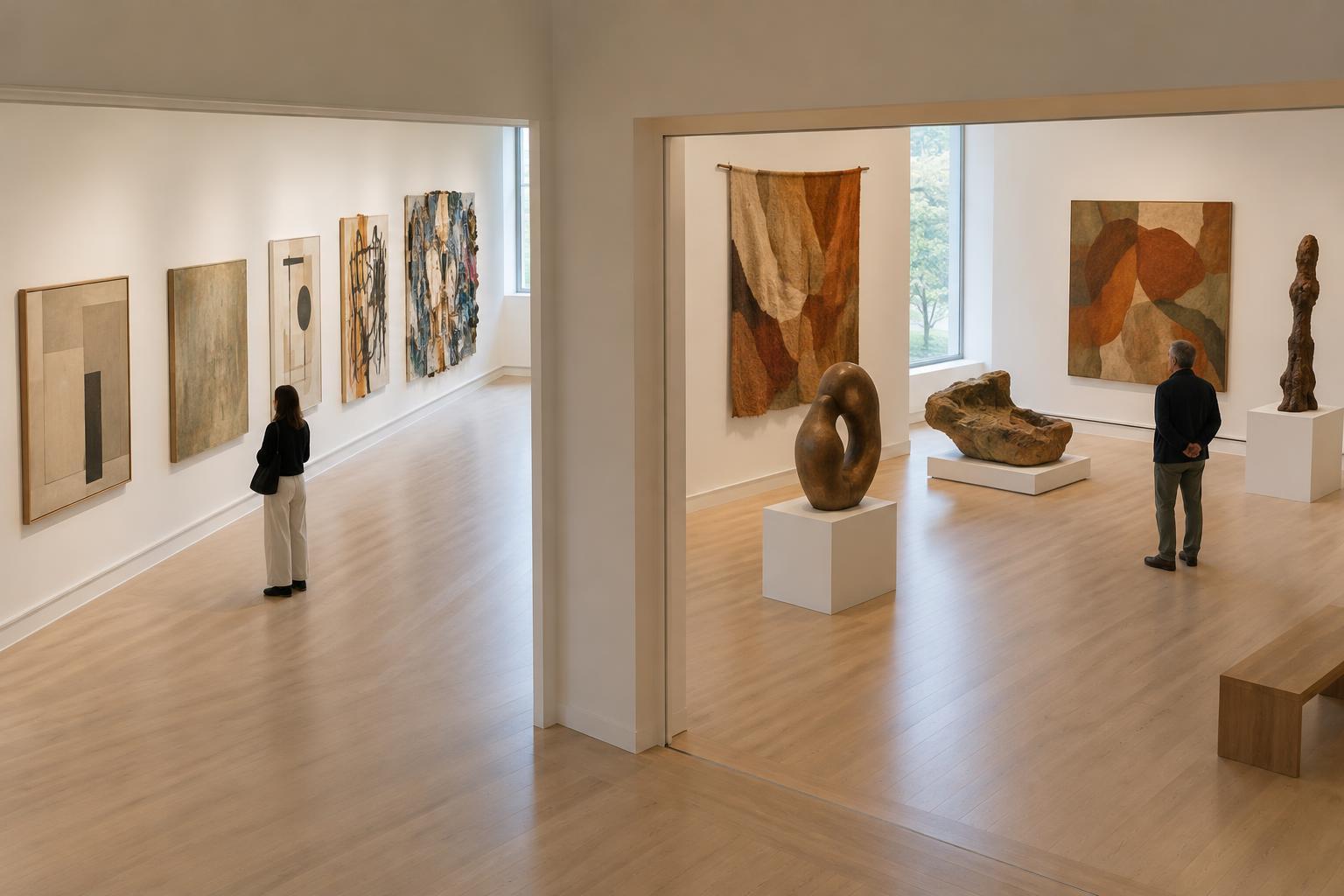
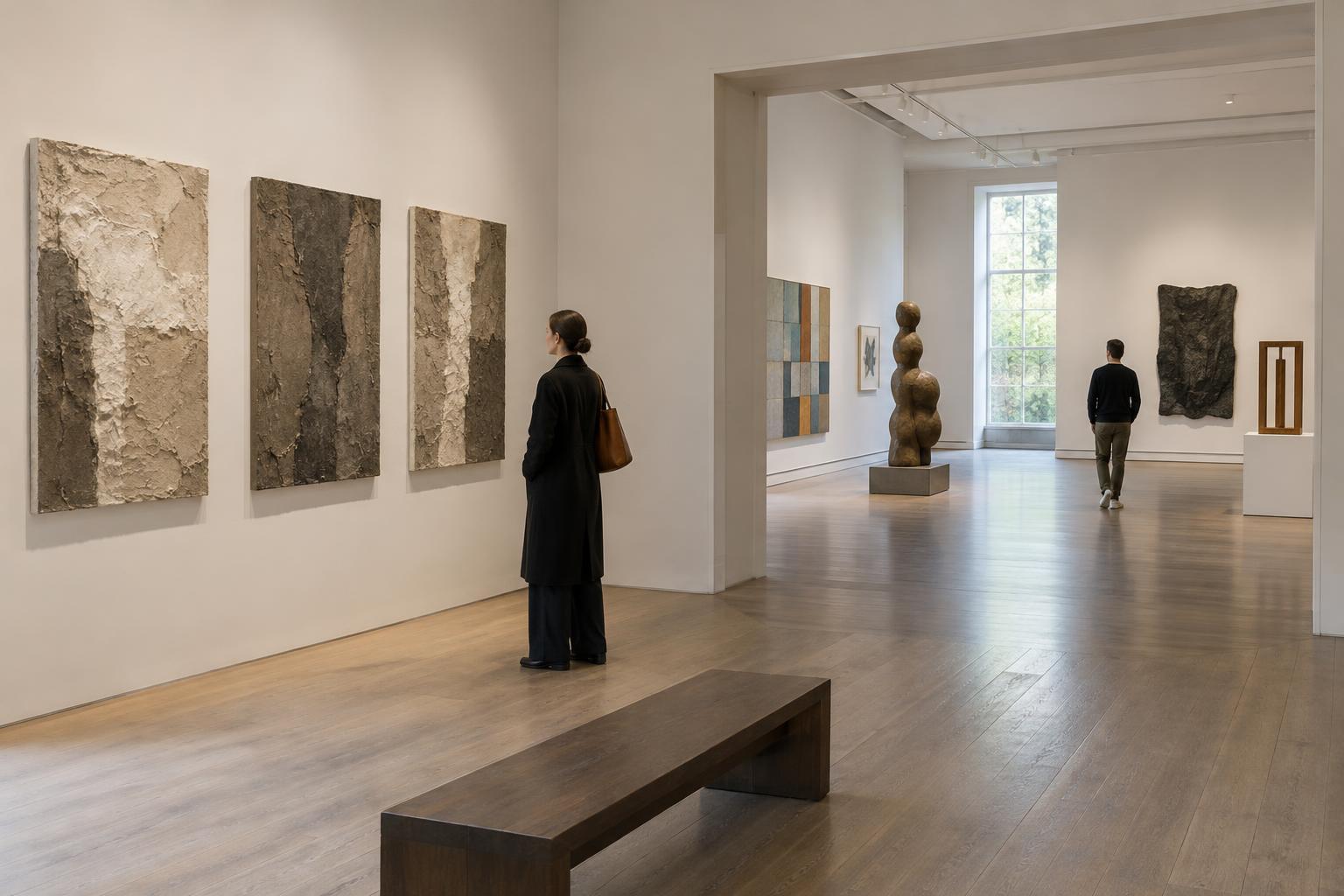
Before concentrating on an individual work, take a slow look around the room. How many artists are represented? Are works arranged by theme, material, chronology, or simply by the shape of the space? These first observations help you understand what sort of comparison the exhibition makes possible. You do not need to identify its organizing principle immediately. Treat your first walk-through as a chance to gather questions rather than settle on an interpretation.
In a solo exhibition, you can often follow one artist’s decisions across multiple works: a repeated material, a shifting approach to scale, or a question revisited in different forms. In a group show, the connections between artists may be just as important as the works themselves. Neither format has a single correct way to be read, and some exhibitions deliberately blur the distinction. The structure is a starting point, not a set of rules.
In a solo show, look for variation within a practice
A solo exhibition offers room to notice what changes and what persists. Choose one feature that catches your attention, such as a particular color, found object, gesture, or use of empty space. Follow it from work to work. Does it serve the same purpose each time, or does its meaning change when the artist alters its size, placement, or context? This kind of looking can reveal more than a quick search for a single message behind the entire exhibition.
Be careful not to turn every work into evidence for one tidy story about the artist. An exhibition may include experiments, unresolved ideas, or pieces that resist the pattern you have noticed. Give those exceptions time. If the show spans several periods or bodies of work, ask what the arrangement encourages you to see: continuity, a change in method, or a contrast between approaches. The sequence on the walls is itself a proposal about how to encounter the work.
In a group show, compare without making it a contest
A group exhibition creates opportunities to read works in relation to one another. Two artists might address a similar subject through very different materials, or use similar forms for different purposes. Try pairing works that seem connected, then name both the resemblance and the difference. “These both use repetition” is a useful beginning; “one makes repetition feel orderly while the other makes it feel unstable” gives you more to consider.
Avoid assuming that every artist is answering the same question. A curatorial theme can bring works together without exhausting what each work does. Notice which connections feel persuasive to you and which seem less clear. A productive group show can hold disagreement, tension, and unexpected detours as well as harmony. If you find yourself drawn to a work that appears to sit outside the theme, ask what it contributes to the conversation rather than dismissing it.
Use the room, not just the labels
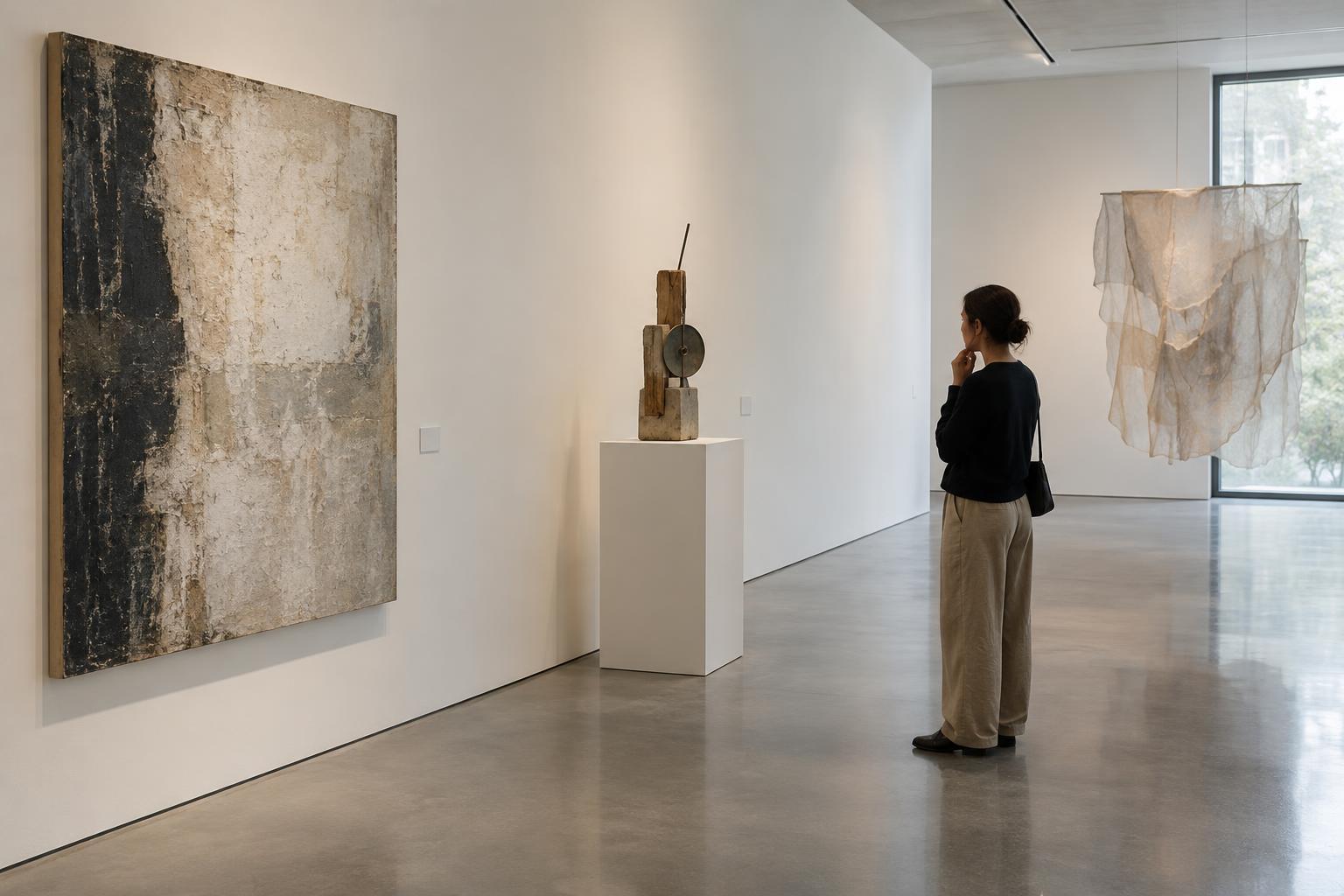
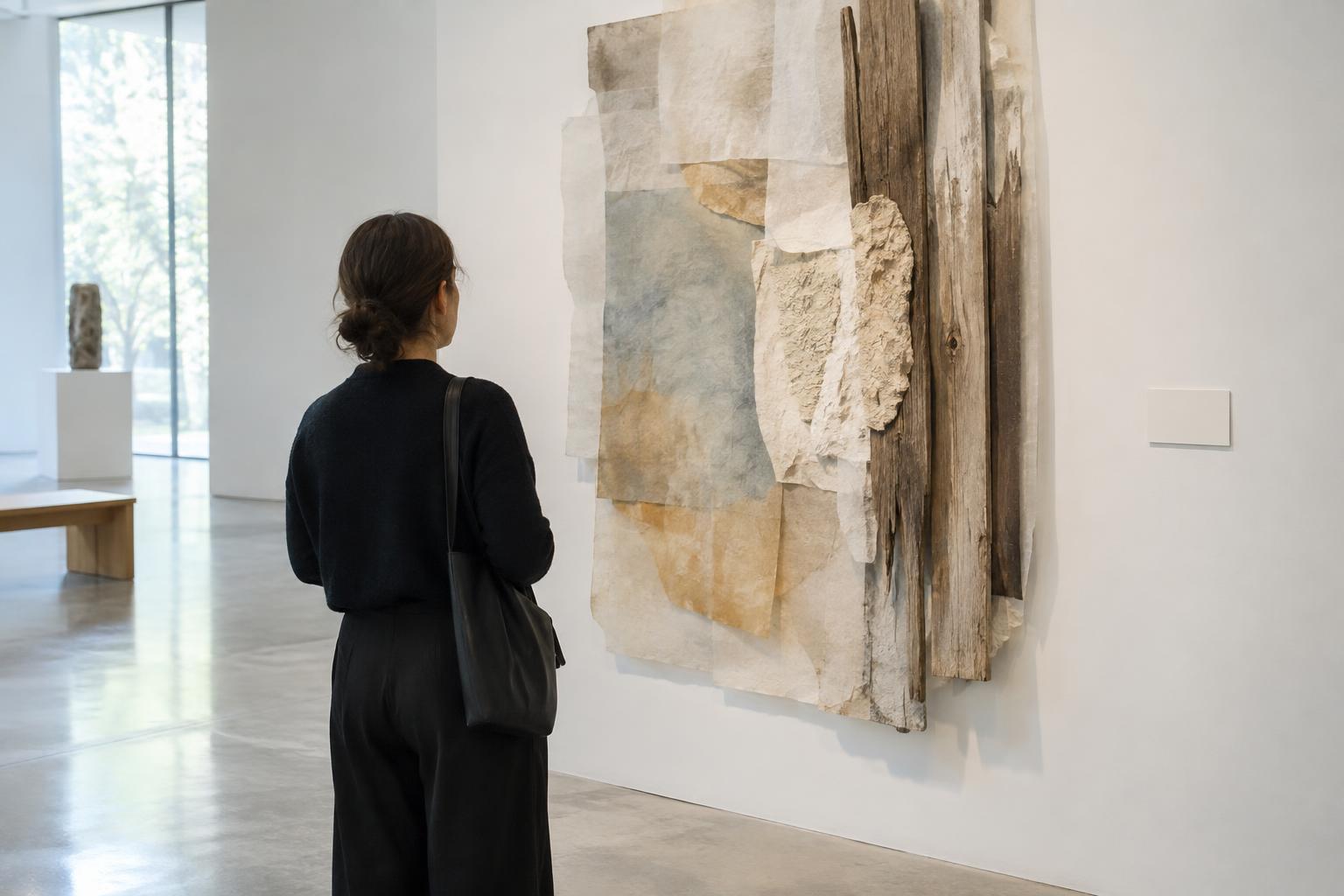
Exhibition interpretation happens through movement as well as reading. Step back to see what shares a sightline, then move closer to examine a surface or small detail where appropriate. In an installation, consider how sound, light, entrances, and walking routes shape your experience. A work encountered first may feel different after you have seen what surrounds it. Returning to it can make that shift easier to notice.
Wall labels and introductory texts can provide helpful context, but you can choose when to read them. One approach is to spend a short time with a work before consulting its label, then return to it with the new information in mind. In a solo show, text may help clarify how works relate across an artist’s practice. In a group show, it may explain why particular works were brought together. Neither replaces your own close observation.
Leave with a question worth keeping
At the end of a solo exhibition, you might ask which work changed your understanding of another work by the same artist. At the end of a group show, you might ask which pairing created a connection you would not have noticed elsewhere. These questions are more useful than trying to decide whether you have fully understood the exhibition. They keep your response specific while leaving room for uncertainty.
If you like to take notes, record a few concrete details before writing an opinion: the position of a work, a material you noticed, or a contrast between neighboring pieces. You may remember the exhibition differently once you have left the space. A solo show can sharpen your attention to an artist’s range; a group show can sharpen it to relationships and differences. Both reward looking twice.