Decide what kind of help you need
Showing unfinished work can feel exposing, particularly when an installation has not yet found its scale or an image has several possible directions. Before inviting anyone to respond, identify the decision you are trying to make. You might be testing whether a sequence is legible, whether a material choice supports an idea, or where a viewer’s attention goes first. A specific question gives the conversation somewhere to start without requiring the work to be resolved.
Match the question to the stage of the project. An early experiment may benefit from open observations: What possibilities does this suggest? A nearly finished piece may need narrower feedback: Does the transition between these two elements feel deliberate? If you are still deciding what the work is about, avoid asking for a verdict on whether it is “good.” That question can produce reassurance or preference when you need information about what the work actually does.
Give context without supplying the answer
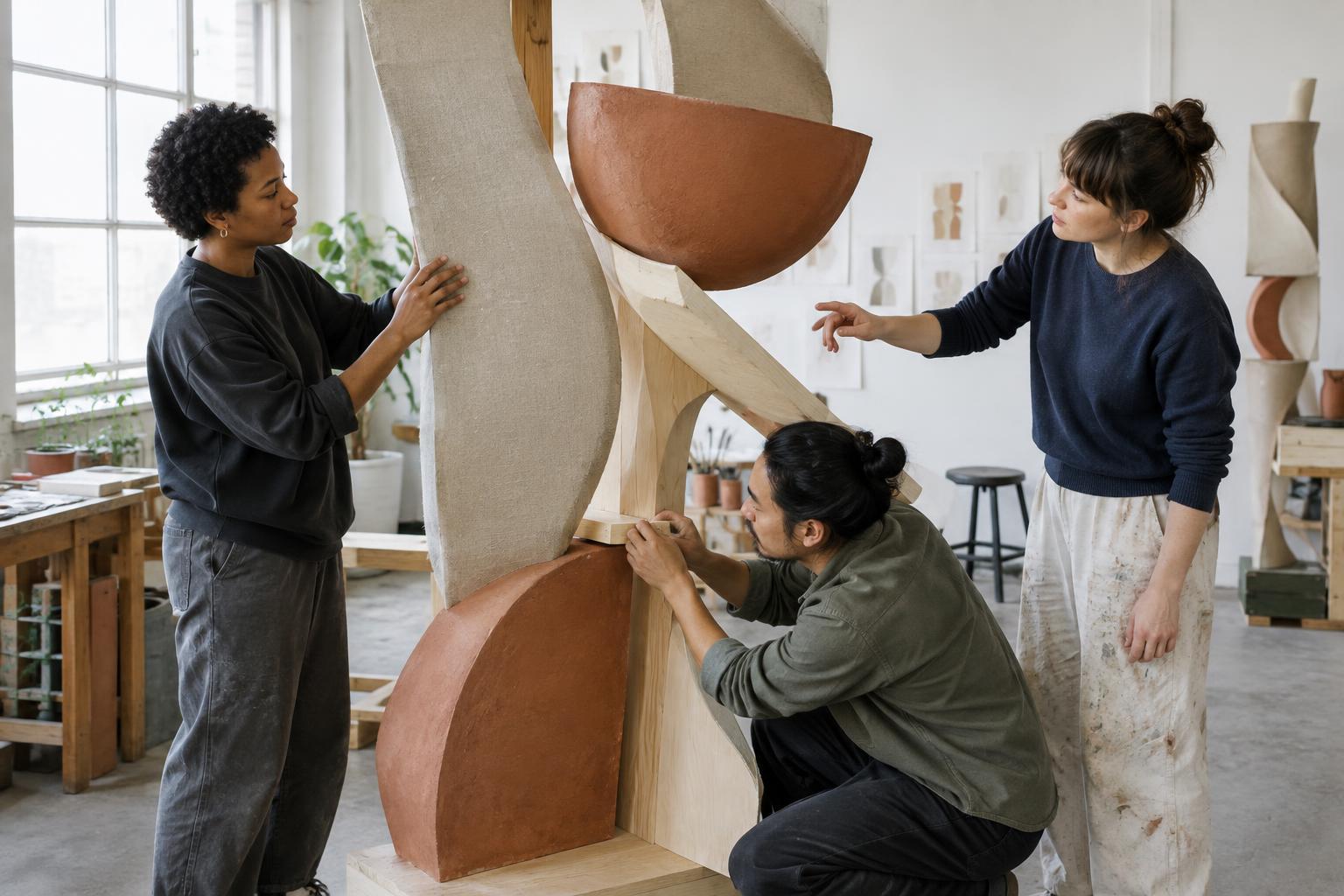
Tell viewers what they are looking at and what remains unsettled. For a spatial work, that may include the intended site, approximate dimensions, and whether a mock-up represents final materials. For a video or performance proposal, it may help to say which parts are fixed and which are placeholders. This prevents a discussion from spending all its time on something you already plan to change.
Keep the introduction brief enough that people can still encounter the work for themselves. If you explain every symbol or desired effect first, viewers may repeat your account rather than describe their experience. One approach is to let them look before offering your intentions. Ask what they noticed, what they assumed, and where they felt uncertain. You can then explain what you were attempting and see where intention and experience meet or diverge.
Choose viewers for different kinds of insight
A fellow artist may notice process, construction, or relationships to other visual approaches. Someone less familiar with the project may reveal what is visible without that background. If the work is meant for a particular space, a person who knows how people move through it may help you test assumptions about sightlines or access. No single viewer can stand in for an entire audience, so seek a few perspectives rather than treating one response as a final ruling.
Make the invitation manageable. Say how much time you need, what form the work is in, and whether you want a conversation or written notes. You can also name the type of response that would help: “I’m looking for observations about pacing, not suggestions for new imagery.” This is not a request for praise. It is a way to respect the viewer’s time and keep the exchange focused on decisions you can still make.
Listen for evidence, not just opinions
During the conversation, try to separate what a viewer experienced from what they think you should do. “I missed the sound until I reached the far wall” describes an encounter; “make the sound louder” proposes a solution. Both may be useful, but the observation gives you more room to investigate. Perhaps volume is the issue, or perhaps the speaker’s placement, competing noise, or the route through the room matters more.
Ask gentle follow-up questions when a comment is vague. “Which part gave you that impression?” or “What changed for you as you moved closer?” can reveal details that a general judgment hides. Resist explaining away every unexpected reading. You can correct a practical misunderstanding when needed, but let yourself hear the response first. Taking brief notes afterward may be easier than trying to document and debate every point in the moment.
Turn responses into a small test
Afterward, sort the feedback into three groups: observations you want to investigate, suggestions that fit the project, and comments you can set aside. Repeated reactions may point to a pattern, but repetition alone does not mean you must change the work. Consider whether the response relates to your aims. Confusion, for example, might undermine an intended sequence or be part of the experience you are deliberately making.
Choose one or two changes you can test before committing to a full revision. Move an element, try another lighting condition, reorder a pair of images, or show the work without its explanatory text. Keep a record of what you changed and what you learned. Useful feedback does not hand over authorship to the viewer. It helps you see the gap between what you made, what you intended, and what someone else can encounter—and decide what to do with that gap.