Begin with a question, not a signature look
A cohesive series does not need to repeat one image, color palette or composition. It needs a reason for the works to be considered together. Start with a question you can investigate from several angles: What happens when a soft material takes the shape of a rigid structure? How does an object change when its scale changes? What can a sequence of images reveal that a single image cannot? A question creates direction without prescribing every result.
Write the question in ordinary language and keep it visible while you work. If you can answer it completely with one piece, it may be too narrow to sustain a series. If it could describe almost anything you make, it may be too broad. A useful question suggests possible experiments and helps you recognize when a work belongs, even if it looks different from its neighbors.
Choose constraints that leave room to move
Constraints can give a series its structure. You might work with one material, a limited set of dimensions, a recurring form or a consistent method of collecting images. Choose only a few to begin with. When every decision is fixed, making the next work can become an exercise in substitution rather than discovery.
Distinguish between a rule and a habit. A rule is a choice you can explain: for example, each piece begins with a found object and changes how that object occupies space. A habit is something you may do without noticing, such as always centering the subject. Keep the rules that serve your question, and test whether a habit is limiting the series. Breaking one familiar pattern may create more meaningful variation than adding a new material.
Make each work test a different possibility
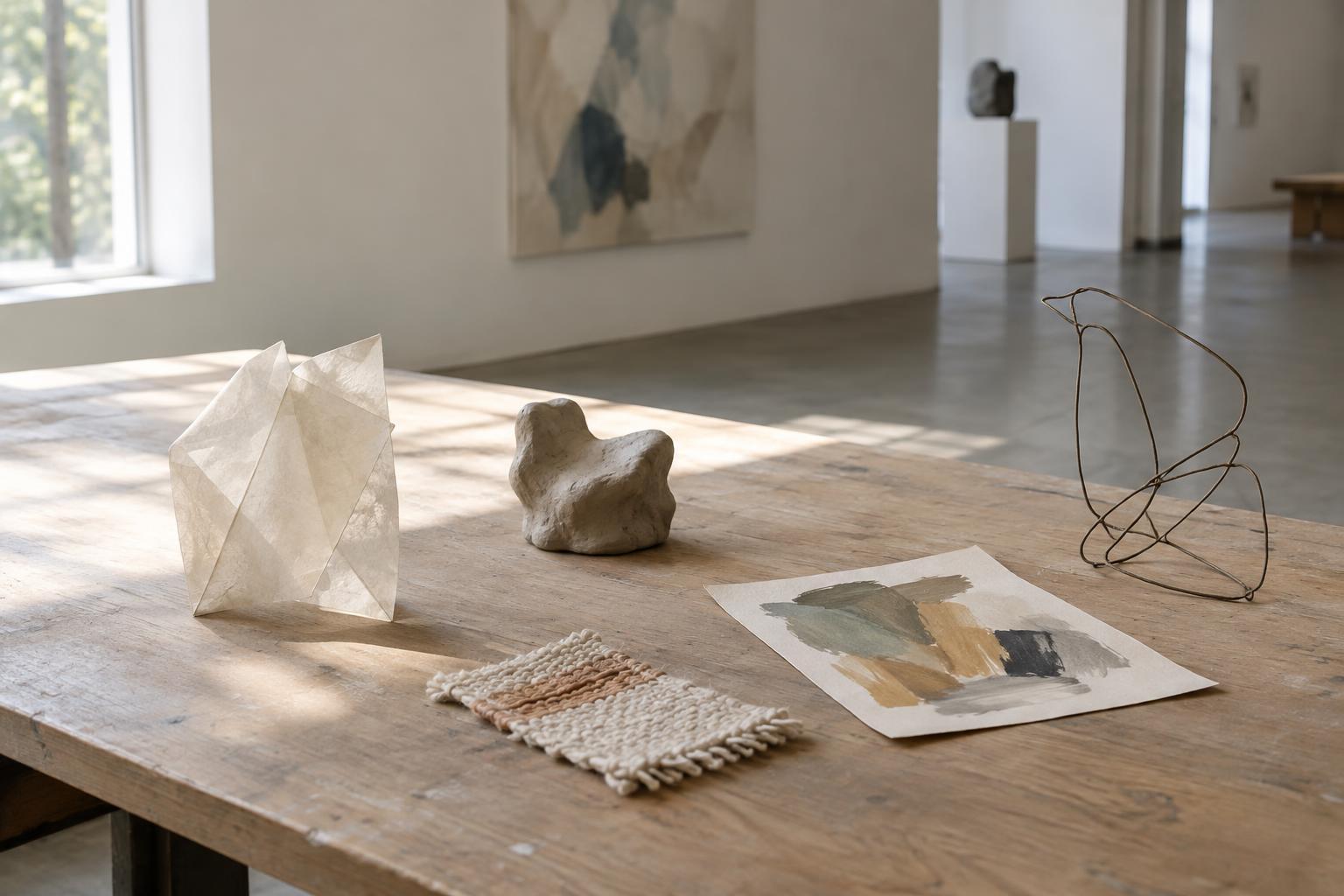
Before starting a new piece, ask what it will contribute that the existing works do not. It could shift scale, change the viewer’s position, introduce absence or alter the pace at which something is encountered. A series of installations, for instance, might use the same translucent material in each work while changing how light passes through it or how a visitor moves around it. The repeated material gives viewers a point of reference; the changing conditions give them something new to notice.
Variation is most useful when it follows the series’ question. Changing everything at once can make it difficult to see what an experiment has taught you. Try holding one element steady while changing another. Photograph or describe the results, including what surprised you. Those records can reveal a promising direction even when an individual piece does not feel resolved.
Look at the works together, not only one at a time
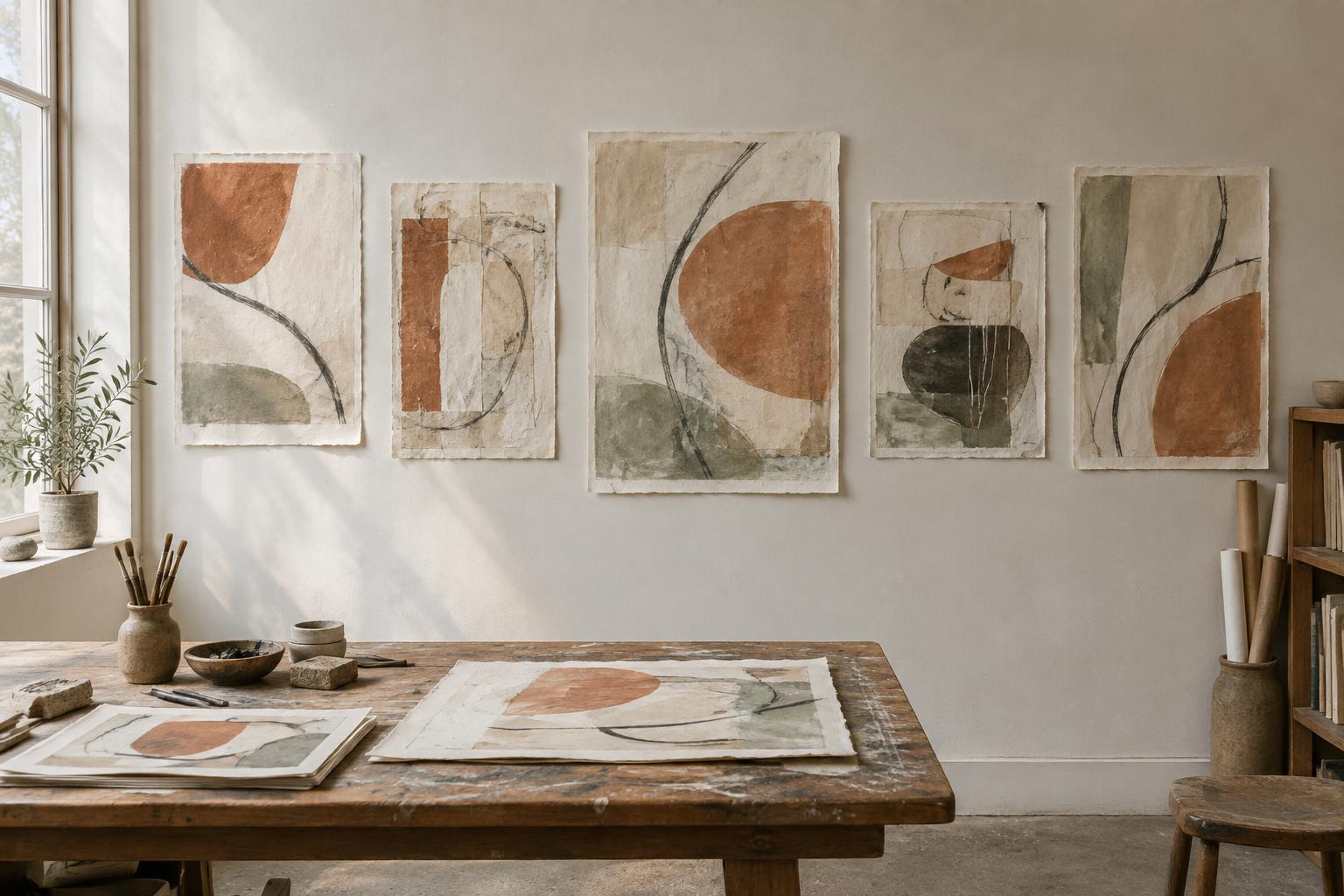
A piece that succeeds on its own may not strengthen the series. Arrange images, sketches or small models where you can see several at once. Look for visual echoes, abrupt gaps and works that perform the same role. Which piece introduces the central idea? Which one complicates it? Does one offer a pause, or does every work demand attention in the same way?
Editing does not always mean removing the weakest object. Two strong pieces may make nearly the same point, while an awkward piece may expose a question worth pursuing. If the sequence feels too uniform, try making a work that challenges one established rule. If it feels scattered, identify an element that already recurs and develop it more deliberately. The goal is not to force agreement among the works, but to make their differences legible.
Let the series end or change shape
A series can be complete without exhausting its subject. You may have enough work when additional pieces mainly confirm what the existing ones already show. You might also reach a point where the most interesting experiment no longer fits the original question. That does not make it a failure; it may be the beginning of another series.
Write a short description of the finished group without listing its materials or techniques first. Explain what the works explore and why they need to be seen together. If that description is difficult, revisit the group rather than inventing a theme after the fact. Cohesion comes from the decisions you make across the work. Repetition becomes less necessary when each piece has a clear part to play.