What makes an exhibition an argument?
A curatorial argument is the idea an exhibition develops through the works it brings together and the way it presents them. It may propose that a material deserves closer attention, that two artistic approaches share a concern, or that a familiar subject looks different when viewed from another perspective. The argument need not be stated as a single thesis. It can emerge gradually as visitors move between objects, images, texts and spaces.
This is different from the subject of the exhibition. “Artists working with fabric” describes a subject; “fabric can carry both personal memory and public history” suggests an argument. To find the difference, ask what the exhibition wants you to notice, compare or reconsider. Treat your answer as a working interpretation rather than a hidden message you must decode correctly.
Start with the frame, then look beyond it
The title and introductory text offer useful starting points. Notice the words they emphasize. Do they point to a shared material, a period, a question or a tension? If the introduction asks visitors to think about belonging, for example, you can watch for the different meanings that idea takes on across the exhibition. Keep the framing in mind, but do not let it replace looking at the works themselves.
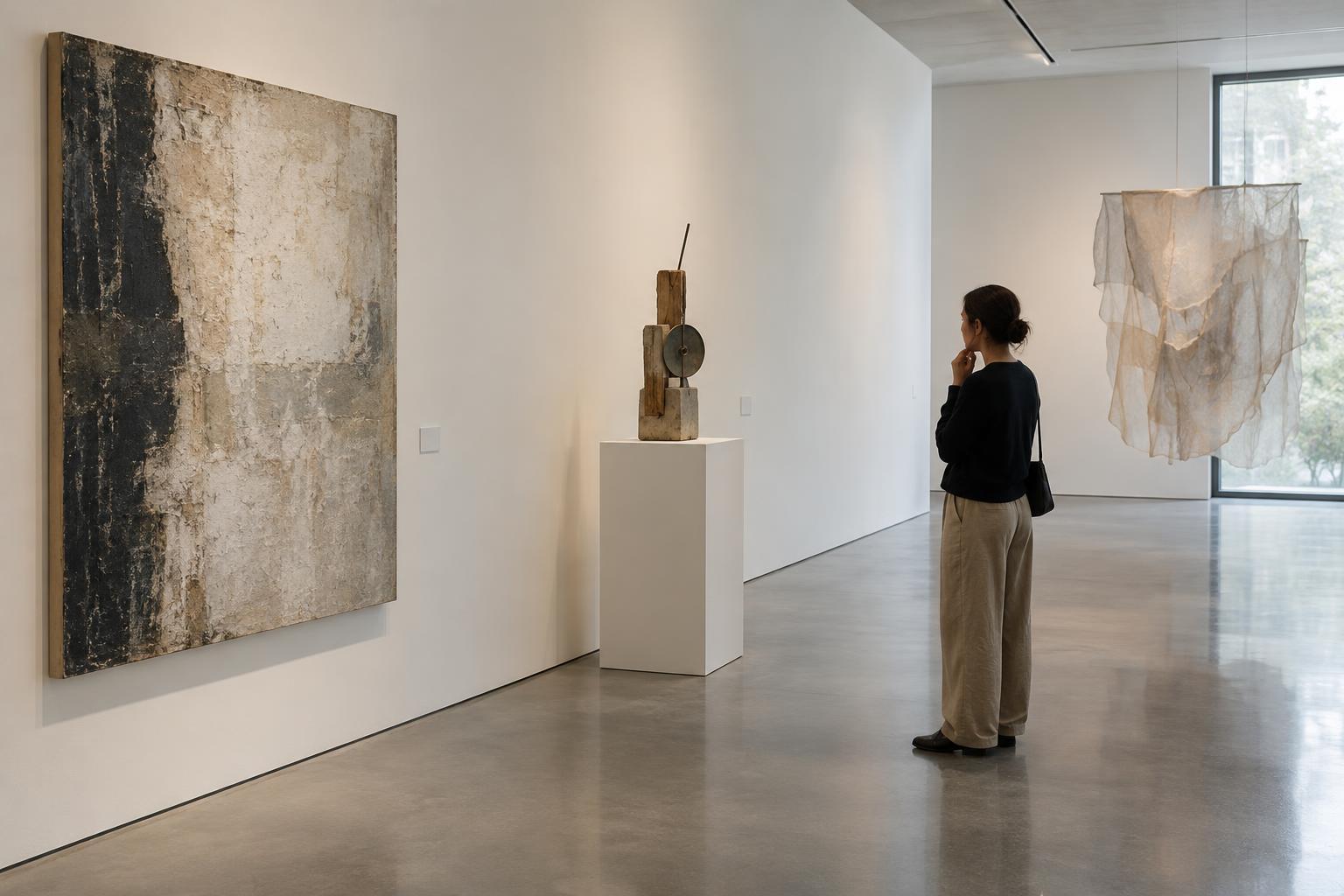
As you move through the exhibition, ask why these works might have been selected together. Look for a recurring gesture, process or question that connects pieces that seem unlike one another. A group might include a sculpture, a video and an archival object not because they look alike, but because each handles evidence differently. Selection also has limits: you can consider whose approaches receive space and which plausible alternatives are absent without assuming you know every reason behind those decisions.
Read the route through the room
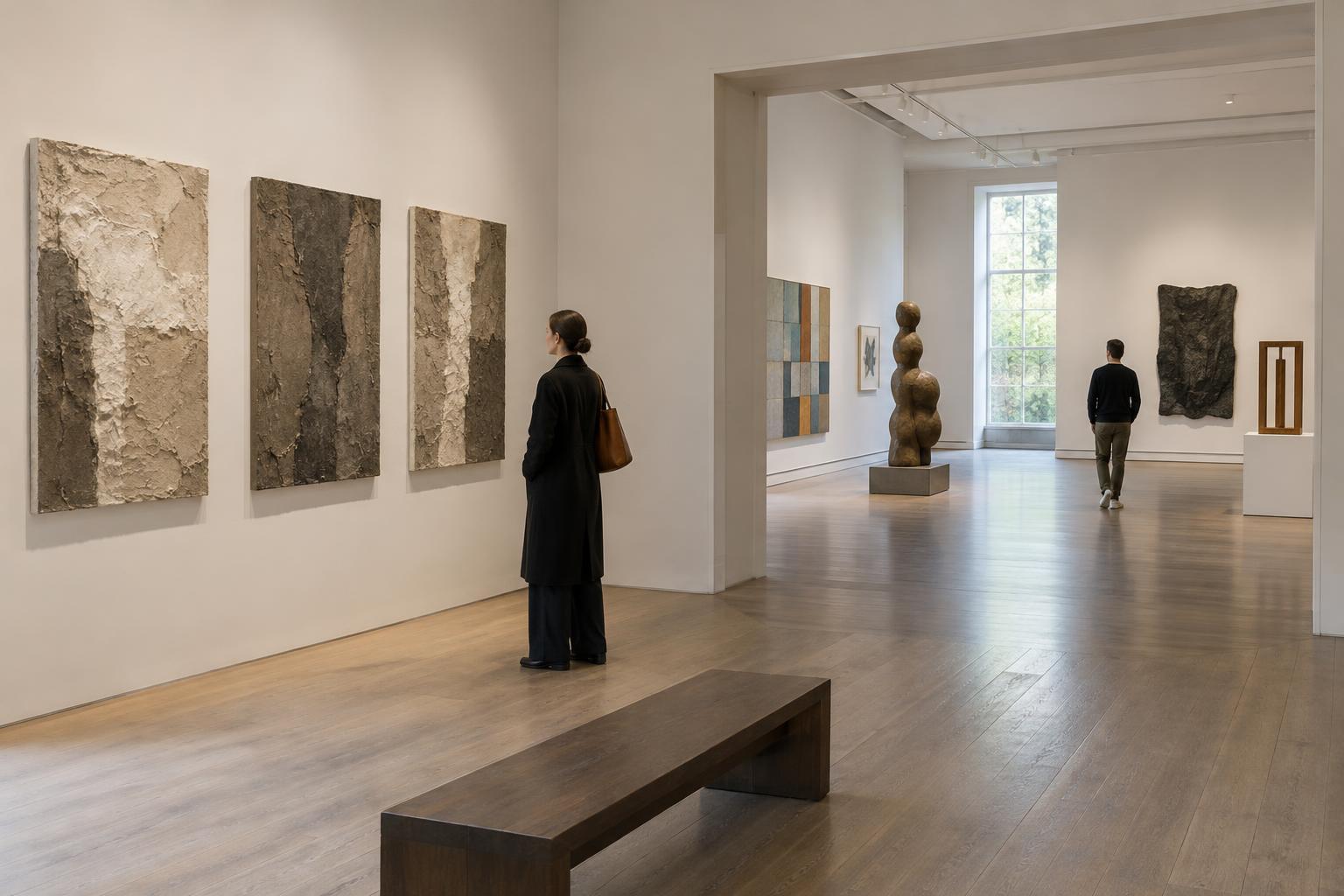
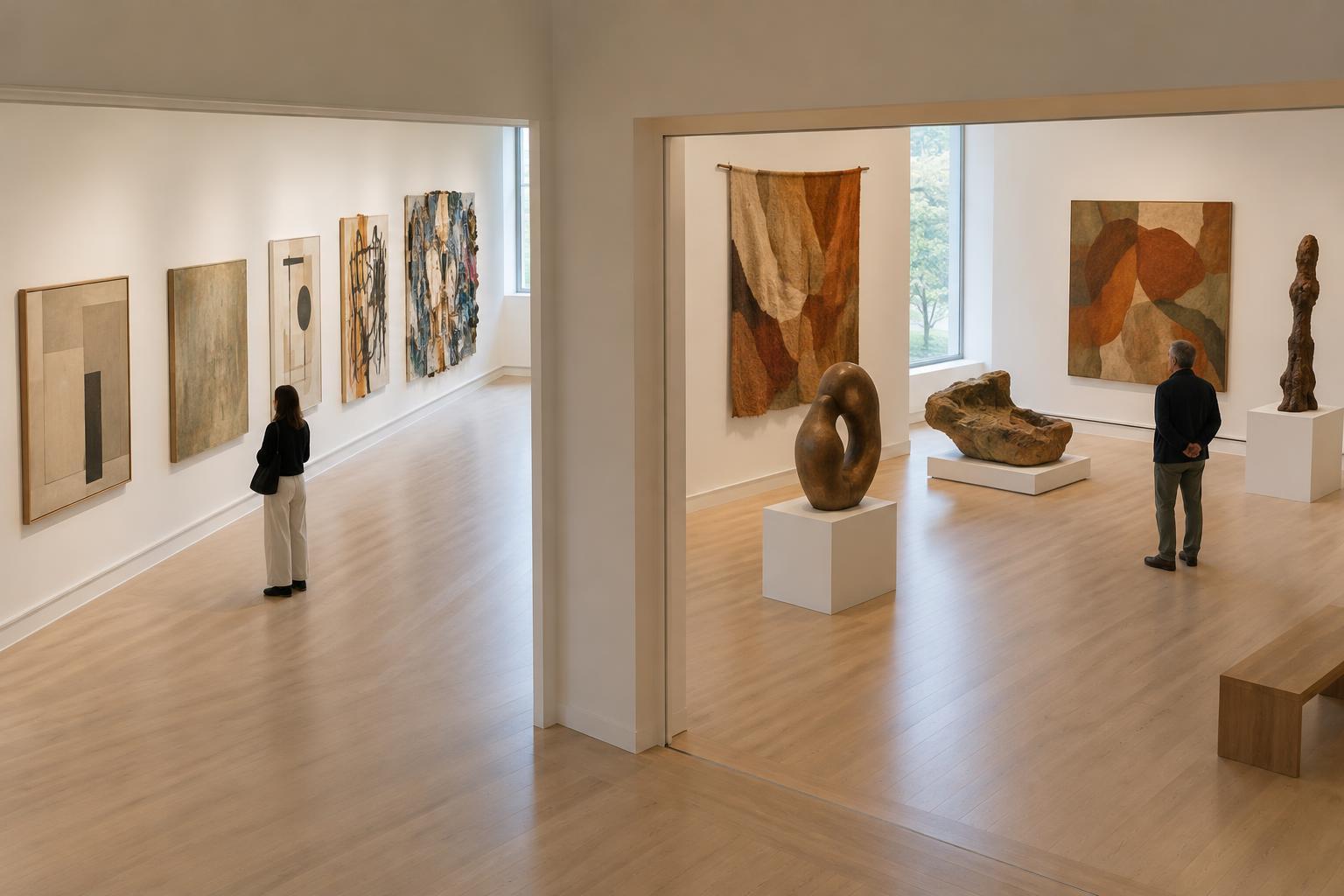
Curatorial arguments are often spatial. The work encountered first may establish a question; a later work may complicate it. Pay attention to transitions between rooms or clusters. Does the exhibition move from small, intimate objects to large public-facing installations? Does it place similar forms side by side to sharpen their differences? Such decisions can shape interpretation even when no wall text explains them.
Try pausing at a point where your view includes several works. Ask what their proximity makes visible that you might miss if you saw each one alone. Then consider the practical features of the space. A narrow passage, a seat facing a projection, or a sound that carries into another area can affect attention and meaning. Not every detail is necessarily an intentional claim; the useful question is how the arrangement influences your experience.
Use labels as evidence, not as answers
Wall labels and captions can reveal what the exhibition considers important. Compare what they discuss: technique, an artist’s process, a work’s subject, or its relationship to neighboring pieces. Repeated terms may help you name the exhibition’s central concerns. Short labels can also leave visitors to make connections through looking, while longer texts may guide a more specific reading.
Test the language against what you encounter. If a label stresses collaboration, can you see signs of shared making in the work or its presentation? If it describes an installation as open-ended, how much freedom does the layout give you to choose your route? A mismatch does not automatically make the label wrong. It may reveal a productive tension between the exhibition’s proposal and your experience of a particular work.
Put the argument into your own words
After viewing, try completing this sentence: “By placing these works in this order and setting, the exhibition suggests that…” Support your version with two or three concrete observations, such as a pairing, a repeated material or a shift in scale. If you cannot finish the sentence, start smaller: identify one comparison the exhibition encouraged you to make and ask what that comparison changed.
Finally, look for a work that resists your summary. An effective curatorial argument does not have to flatten every piece into an illustration of one idea. A difficult fit may show where the argument becomes more complex, or where your interpretation needs adjusting. Reading an exhibition this way keeps you attentive to curatorial choices while allowing individual artworks to remain more than evidence for a thesis.