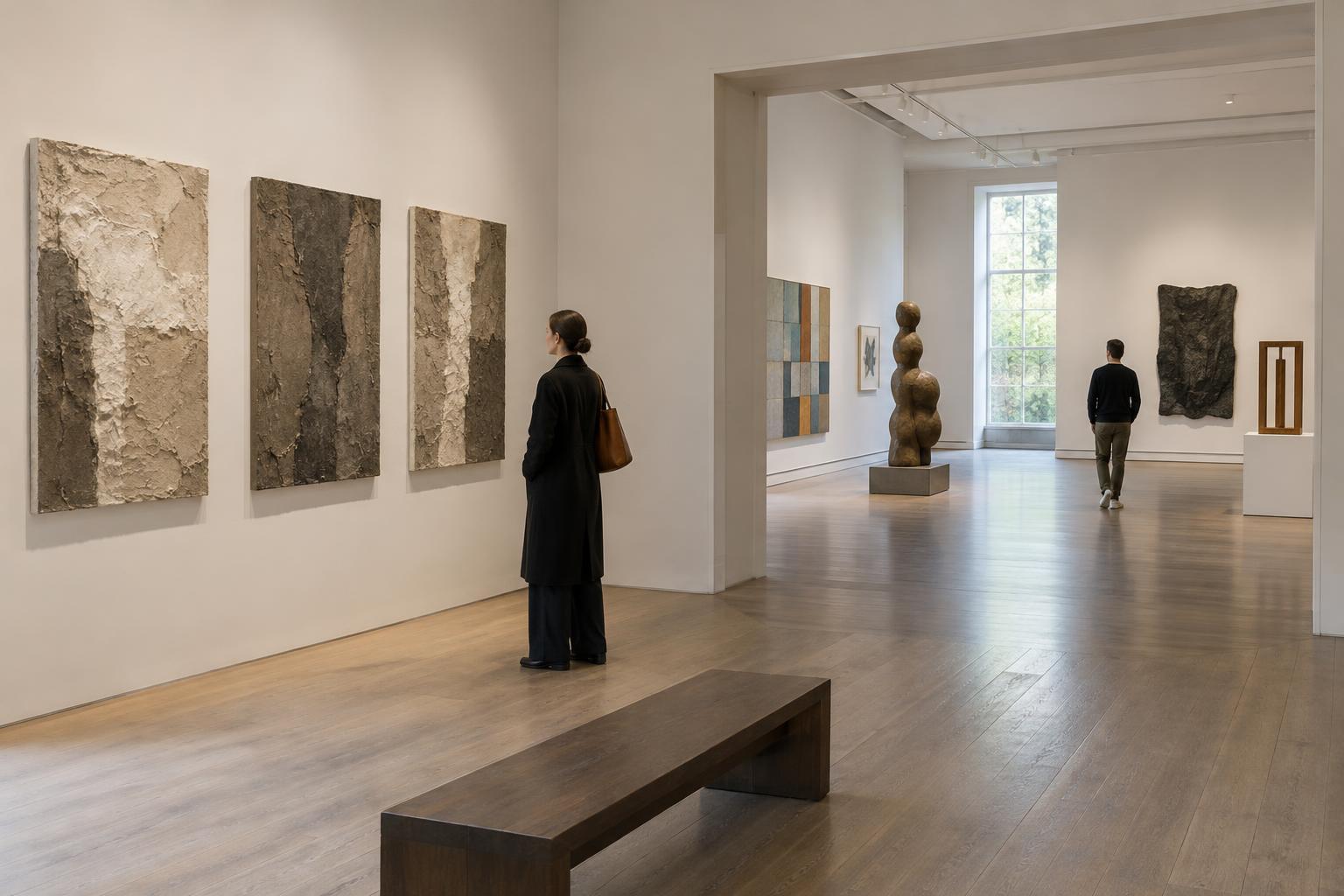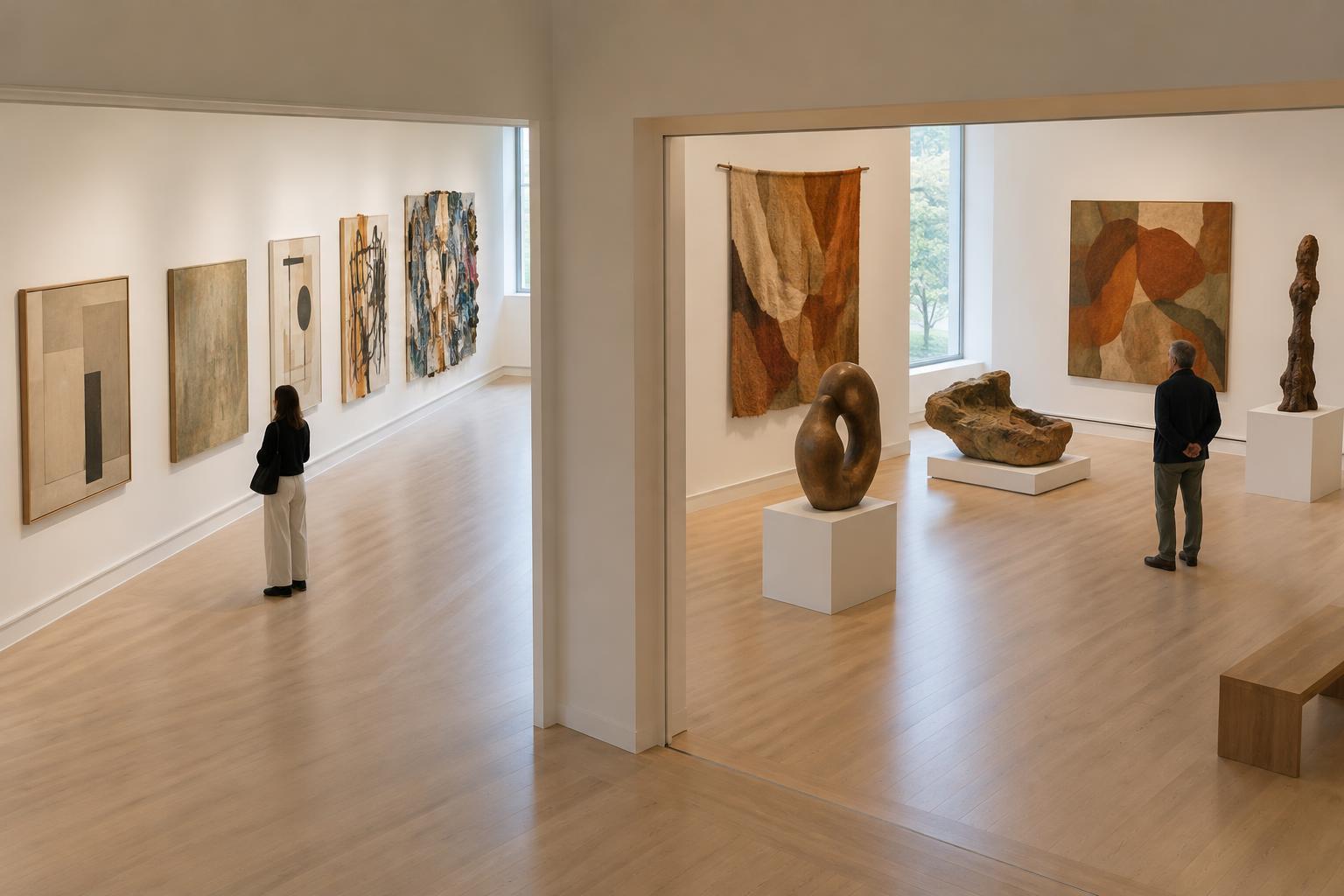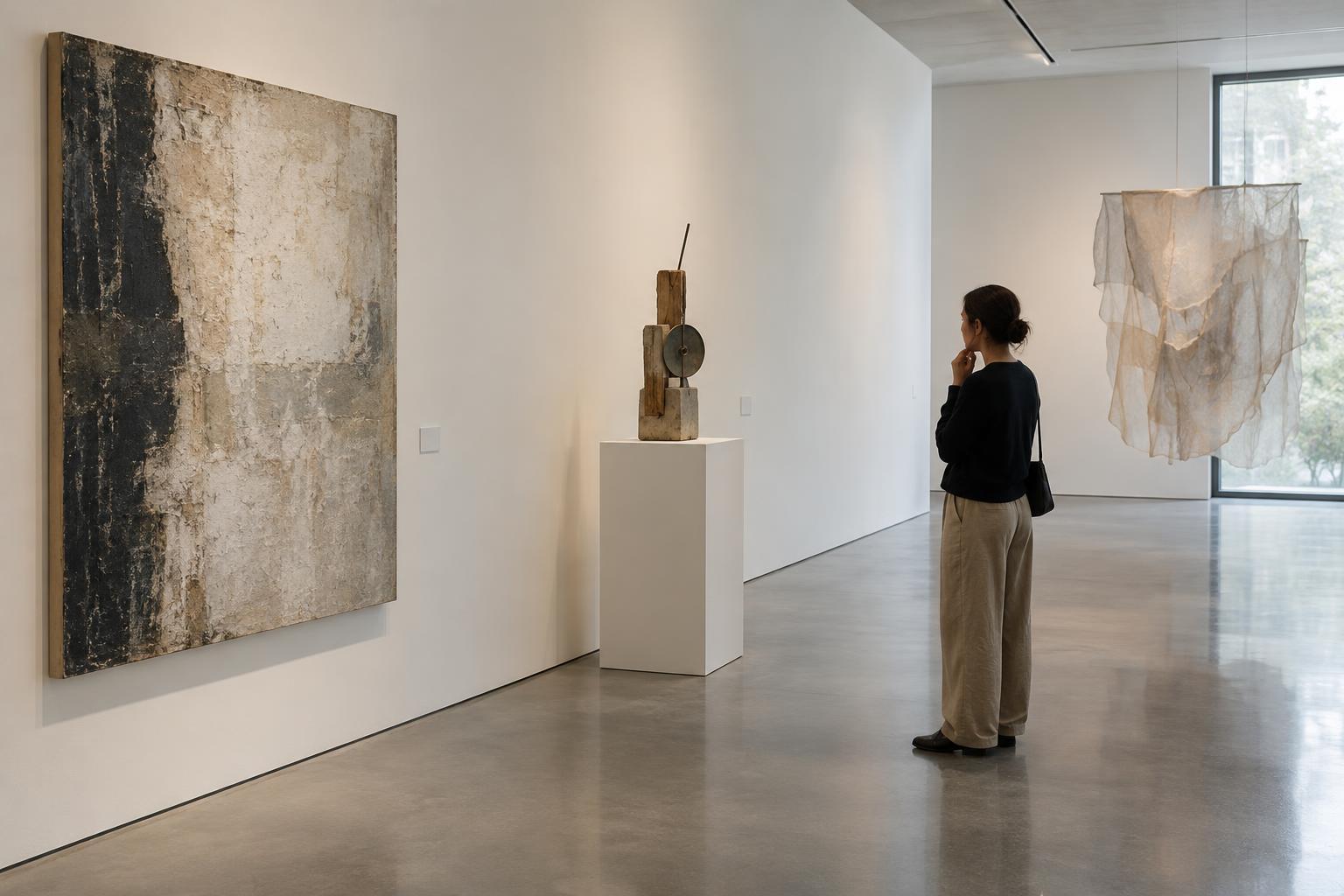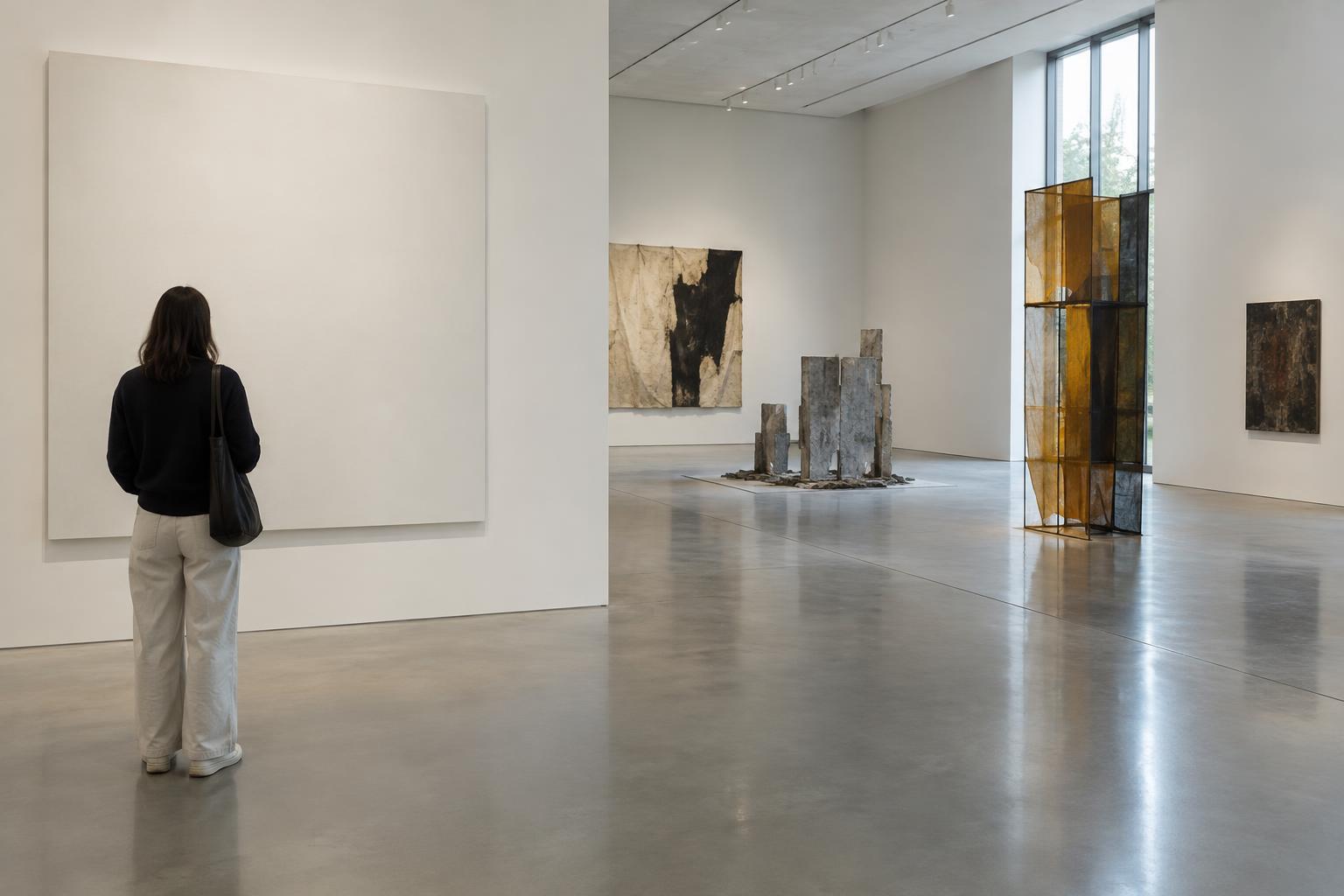
Start with the kind of text it is
The introductory wall text is usually the first substantial piece of writing a visitor encounters in an exhibition. It may name a theme, explain why works have been brought together, or suggest how to move through the space. Its job is to offer a point of entry, not to account for every object or settle every possible interpretation. Reading it with that limited purpose in mind can make it more useful.
Before trying to absorb every sentence, notice the basics: the exhibition title, the artists or practices mentioned, and any place, period or question that gives the presentation its shape. Then look for a sentence that tells you what the exhibition is asking you to consider. You do not need to remember all its terms. A single clear question can serve as a thread to carry into the galleries.
Separate context from interpretation
Wall texts often mix different kinds of information. A statement about a material, a process or the origin of a work provides context you may not be able to see immediately. A claim that a group of works explores belonging, uncertainty or public life is an interpretation: a proposed way to connect what is on view. Both can be valuable, but they ask different things of the reader.
One useful habit is to ask, “What does this text tell me?” and then, “What does it invite me to think?” The distinction leaves room for your own observations. If a text describes an installation as intimate, for example, you might notice that its scale invites close attention while its sound makes you feel exposed. Your response need not match the adjective on the wall to be a thoughtful reading of the work.
Notice the words that organize the exhibition
Introductory texts tend to rely on a few recurring ideas. Words such as memory, transformation or connection can help bring varied works into conversation, but they can also feel broad. Instead of treating them as conclusions, turn them into things to look for. If the text mentions transformation, ask what changes: a material, an image, a familiar object or your position as a viewer?
Pay attention, too, to verbs. Does the text say the artists collect, repeat, conceal, stage or interrupt? Verbs can direct your attention toward methods rather than just themes. In an installation, they may help you notice how light, sound, movement or the route through a room contributes to meaning. When an unfamiliar term appears, try reading the sentence around it before deciding whether you need a precise definition.
Test the introduction against what you see
After reading, move toward a work that catches your attention. Give it a moment before returning to the exhibition’s central claim. What can you observe without the text: its materials, size, placement, rhythm or relationship to nearby works? Then ask how the introduction changes what you notice. Perhaps it draws your attention to a process you might have missed. Perhaps the work complicates the neat connection the text proposes.
An introductory text is especially worth revisiting after you have seen several works. A phrase that seemed abstract at the entrance may become concrete once you have encountered its variations across a room. Equally, you may find that the most memorable work resists the stated theme. That tension is not a failure of reading. It can become a productive question about why the work was included and what the exhibition gains from it.
Let the text be a guide, not an answer key
Exhibition writing is shaped by selection. Even a careful introduction cannot describe every artwork, sensory detail or visitor response. It may foreground a shared concern while leaving differences between works for you to discover. If its language feels dense, look for one concrete noun or active verb to take with you. You can always return to the text later; understanding need not happen at the entrance.
The most useful way to read an introductory wall text is in conversation with the exhibition itself. Read enough to find your bearings, look long enough to form an impression, and revisit the words when you have something to compare them with. By the end, you may agree with the proposed frame, revise it or keep several readings in play. Each is a way of paying attention.