Give the research a job
Research is often part of contemporary art practice. An artist working with a place might look at maps, collect accounts of how people use it, or study the surfaces found there. Someone developing an installation might investigate how a material behaves before deciding what form to build. These activities become useful when they help the artist make a choice. They become less useful when every discovery produces another topic to investigate before any work can begin.
Start by writing down the decision your research needs to support. It might be, “What should a visitor be able to touch?” or “Which features of this site matter to the work?” A question like this does not require you to know everything about the subject. It gives your reading, looking and conversations a purpose. Keep a separate place for intriguing findings that do not answer it, so you can save them without following every lead.
Set a boundary before you start looking
A research boundary can be a period of time, a small set of materials or a specific outcome. You might decide to spend two studio sessions gathering references, then use the next session to make three rough tests. Alternatively, you might stop collecting images once you can describe two distinct visual approaches to your subject. The boundary is not a claim that the subject has been fully understood. It is a way to make sure research has a route back into practice.
It helps to choose a stopping question: “Do I know enough to try something?” That is different from asking whether you feel certain. Uncertainty may be exactly what the work needs to explore. If the subject involves other people’s experiences, histories or cultural materials, pause to consider what permissions, context or care your approach may require. A quick studio test need not be a finished statement, but it should not become an excuse to treat sensitive material casually.
Translate findings into material questions
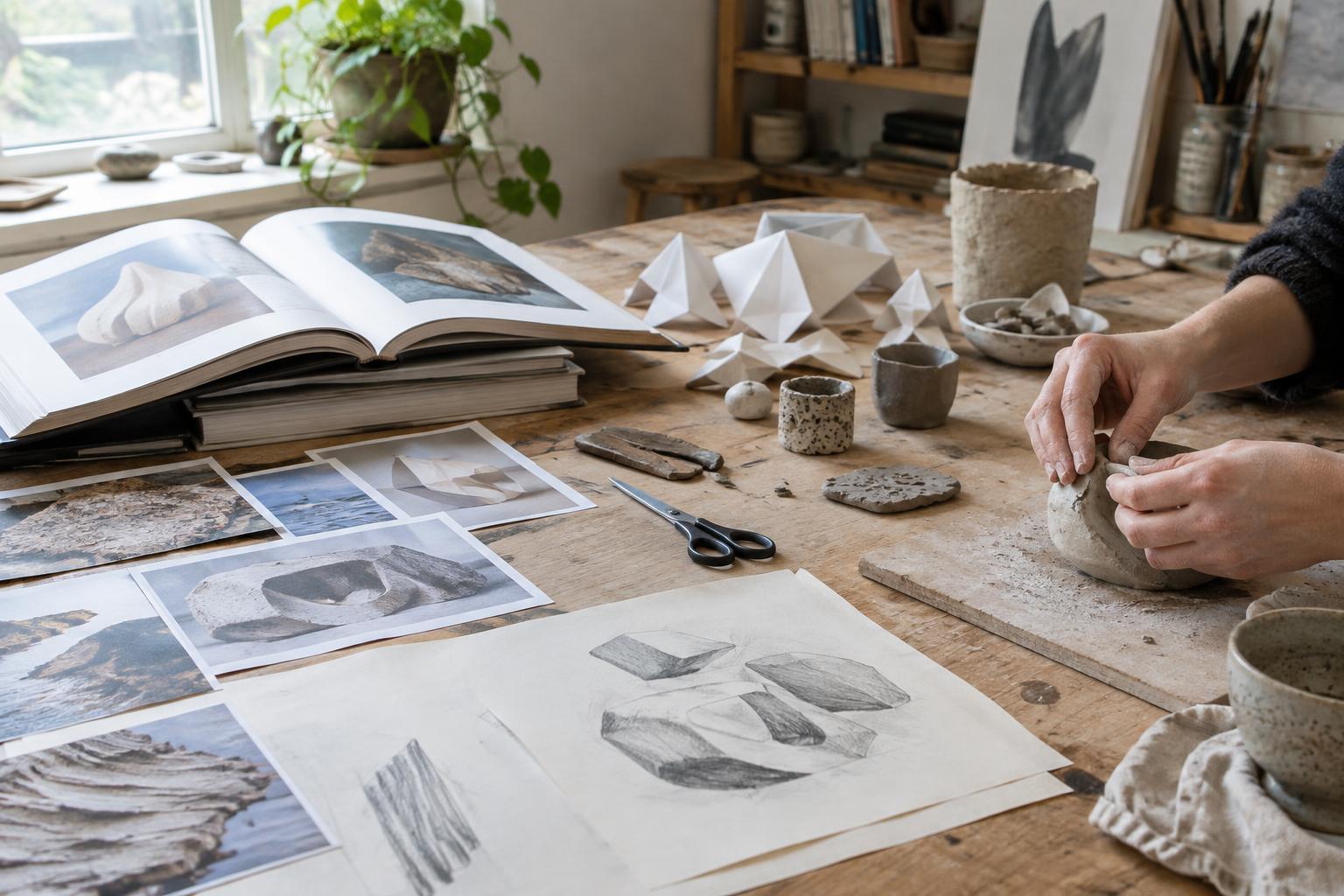
Notes and references do not automatically become art. To move between research and making, translate a finding into something a material, image or space can test. A note about repetition in an archive could become a series of prints with one detail changed each time. An observation about movement through a room could become a temporary arrangement of objects that directs a visitor’s path. The test does not have to illustrate the research literally; it can examine an aspect of the subject that words alone cannot settle.
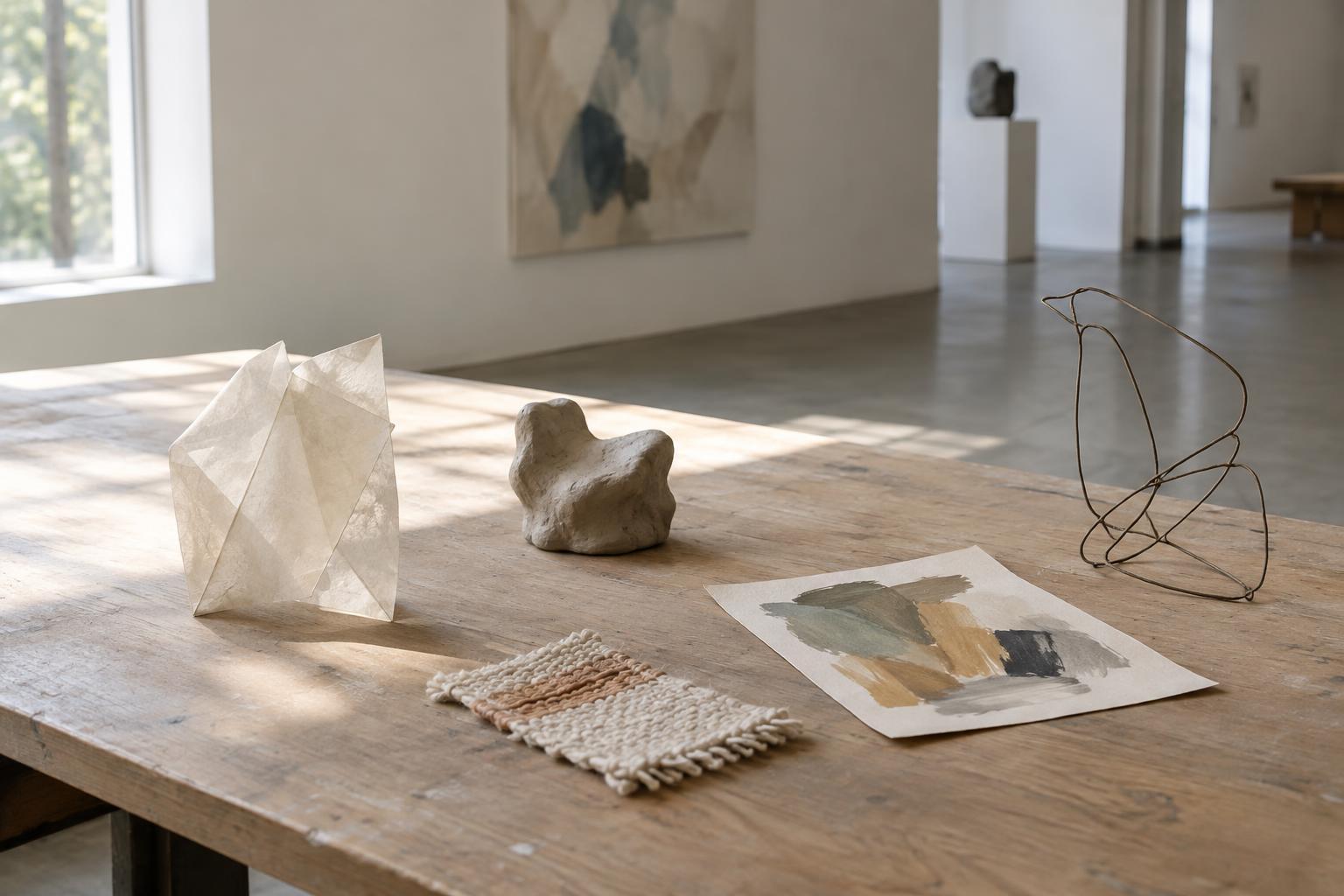
Keep these first experiments modest. Use available materials, work at a manageable scale and leave visible evidence of what you tried. A sketch, a cardboard model or a short sequence of photographs can reveal problems that another hour of reading might not. Record what the test showed, including accidents and failures. Then ask which question the work has raised next. That question can guide a more focused return to research.
Watch for research that has become avoidance
Research may feel productive because it creates notes, folders and plans. Making can feel less secure: an object might resist the idea, or a composition might look ordinary once it exists. One sign of avoidance is collecting several versions of information you already have while repeatedly postponing a simple test. Another is treating a polished proposal as proof that the artwork will work. Neither means the research was wasted; it means the next useful step may be physical or visual rather than informational.
Try a small intervention when you notice that pattern. Close the reference folder and make one version using only what is at hand. Give the attempt a narrow aim, such as testing scale, sequence or the distance between two elements. Afterwards, identify what you genuinely need to find out before the next version. This makes research responsive to the work instead of allowing it to stand in for the work.
Let research and making take turns
A productive process rarely moves in a straight line from investigation to finished piece. A material test may expose a gap in your understanding; a conversation may suggest a new form; an installation mock-up may show that an idea changes when people move around it. Moving back and forth is not a failure to plan. It is a way to keep both inquiry and form open to revision.
At the end of each work session, write a brief note with three parts: what you learned, what you made and what you will try next. This simple record makes it easier to distinguish a necessary question from a tempting detour. Research has done its job when it gives the work something to respond to. Making does its job when it reveals what is worth asking next.