Begin with the work in front of you
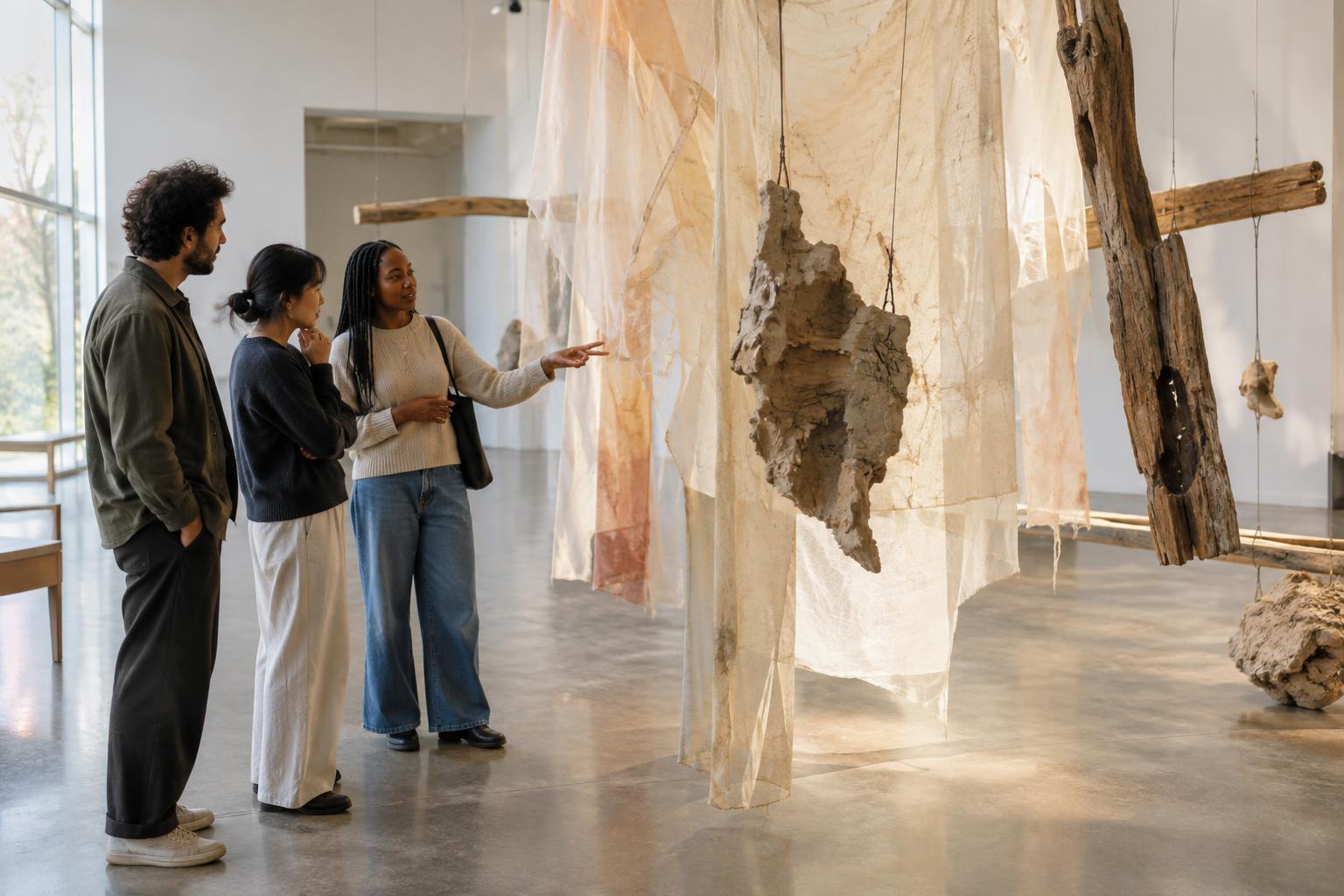
Before searching for a biography, record what led you to the artist. Note the title of the work, its materials, the exhibition or publication where you encountered it, and any dates supplied alongside it. If you are looking at an installation, describe how it uses the room: where a visitor stands, what can be seen or heard, and whether the work changes as people move through it. These observations give you specific questions to investigate instead of a vague search for everything about the artist.
Keep observation separate from interpretation. “The work includes suspended fabric” describes something you can check; “the fabric represents memory” is an interpretation that may need support. Both can be useful, but labeling them differently prevents an early impression from hardening into a supposed fact.
Confirm that you have the right artist
Names are not always unique, and artists may use different spellings, initials or professional names. Compare several identifying details before joining records together: medium, titles of works, exhibition venues and the way the artist is credited. A page that shares a name but describes an unrelated practice should not become part of your account simply because it appears in search results.
Start with information close to the work, such as an exhibition page, collection record or publication credit. These sources can help establish how a particular work was titled, dated and presented. Check details across records when possible, especially if a caption has been copied widely. If two credible records disagree, preserve the difference in your notes rather than quietly choosing the version that seems more plausible.
Use different sources for different questions
An artist’s website, statement or interview can explain stated intentions, working methods and preferred terminology. It is valuable primary material, but it is not independent confirmation of every biographical detail or interpretation. A gallery page may offer useful images and exhibition history while also serving a promotional purpose. A museum record may clarify what is in a collection, but its short description may not tell the whole story of a practice.
For critical context, look for writing that does more than repeat a press release. Exhibition essays, reviews and thoughtful interviews may describe how a work operates, place it beside related practices or identify questions it leaves open. Consider who wrote each text, when it was produced, what work it discusses and whether its claims rest on direct observation. An older essay about an early installation may be illuminating without describing what the artist makes now.
Build a small, traceable set of notes
You do not need an exhaustive archive to begin. Make a simple record for each useful source: its title, author or issuing organization if given, the work or exhibition it addresses, and the specific claim it supports. Distinguish a fact drawn from an artwork caption from an idea offered in an essay. If you cannot find support for a detail, mark it as unverified or leave it out of your draft.
Pay particular attention to images. A photograph of an installation may show only one viewpoint, one lighting condition or one arrangement of a work that can be installed in different ways. Check the caption for the work’s title and photographer credit, and do not assume an image is free to reuse because it is easy to find. When the experience of scale, sound or movement matters, acknowledge what a still image cannot convey.
Write an interpretation that leaves room for doubt
Once the basic record is secure, return to your first observations. Ask which sources deepen or complicate what you noticed. An artist might describe a material choice as a response to its physical properties, while a reviewer focuses on its social associations. You can discuss both without making either the only possible meaning. Attribute distinctive interpretations to the person or text that offers them.
A reliable account also makes its limits visible. If you have seen documentation rather than the work itself, say so. If a source discusses one exhibition, avoid treating it as a summary of the artist’s entire career. Research is most useful when it brings a reader closer to particular works: what they are made of, how they occupy space and why different viewers might encounter them differently. Precision gives your interpretation a stronger foundation than certainty does.