Make room between finishing and judging
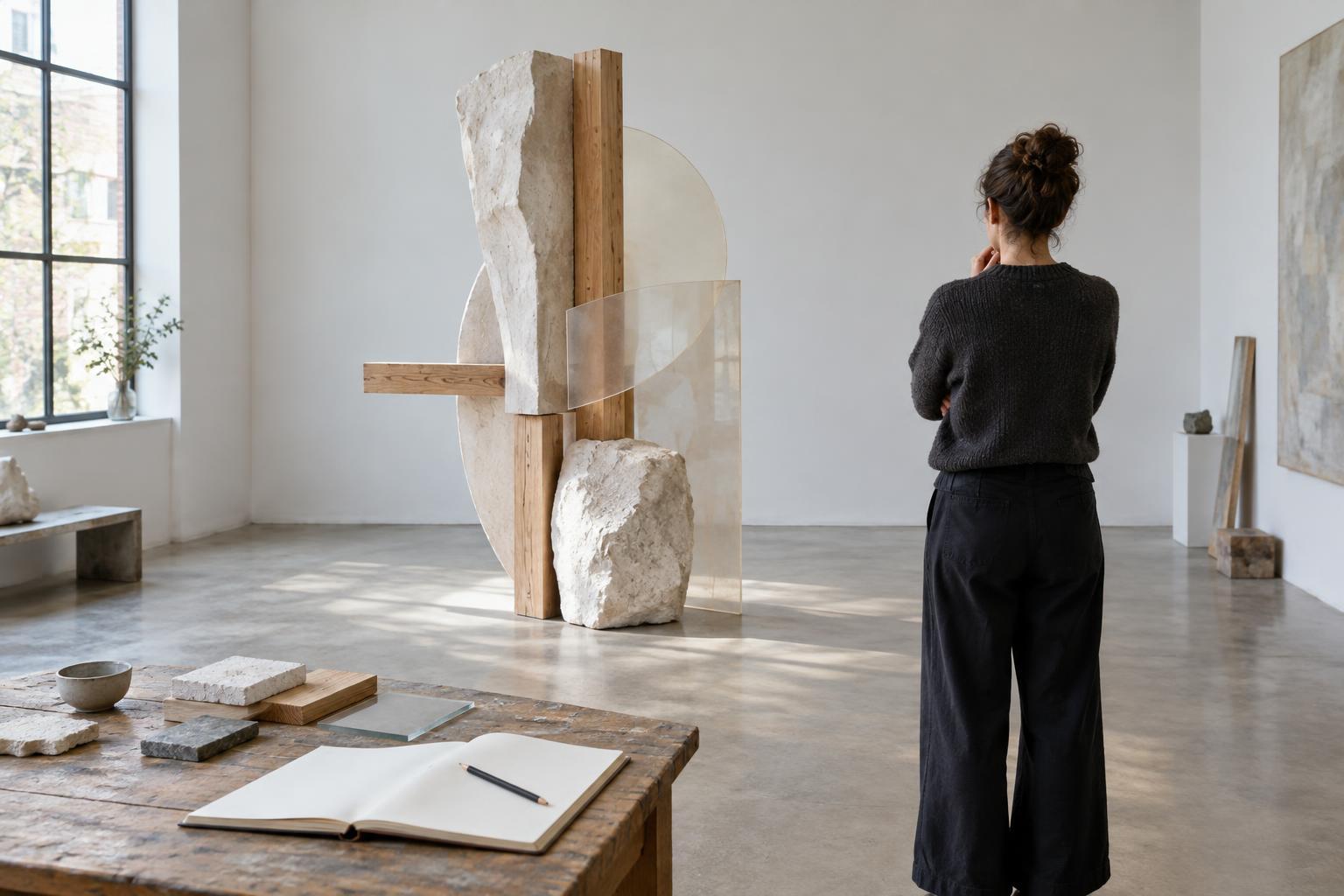
Completing an artwork can bring relief, fatigue, excitement, or disappointment. None of these feelings has to become your final verdict. Before reviewing the project, give yourself enough distance to see it as a series of decisions rather than a single success or failure. That pause might be an afternoon for a small study or longer for an installation that took weeks to build.
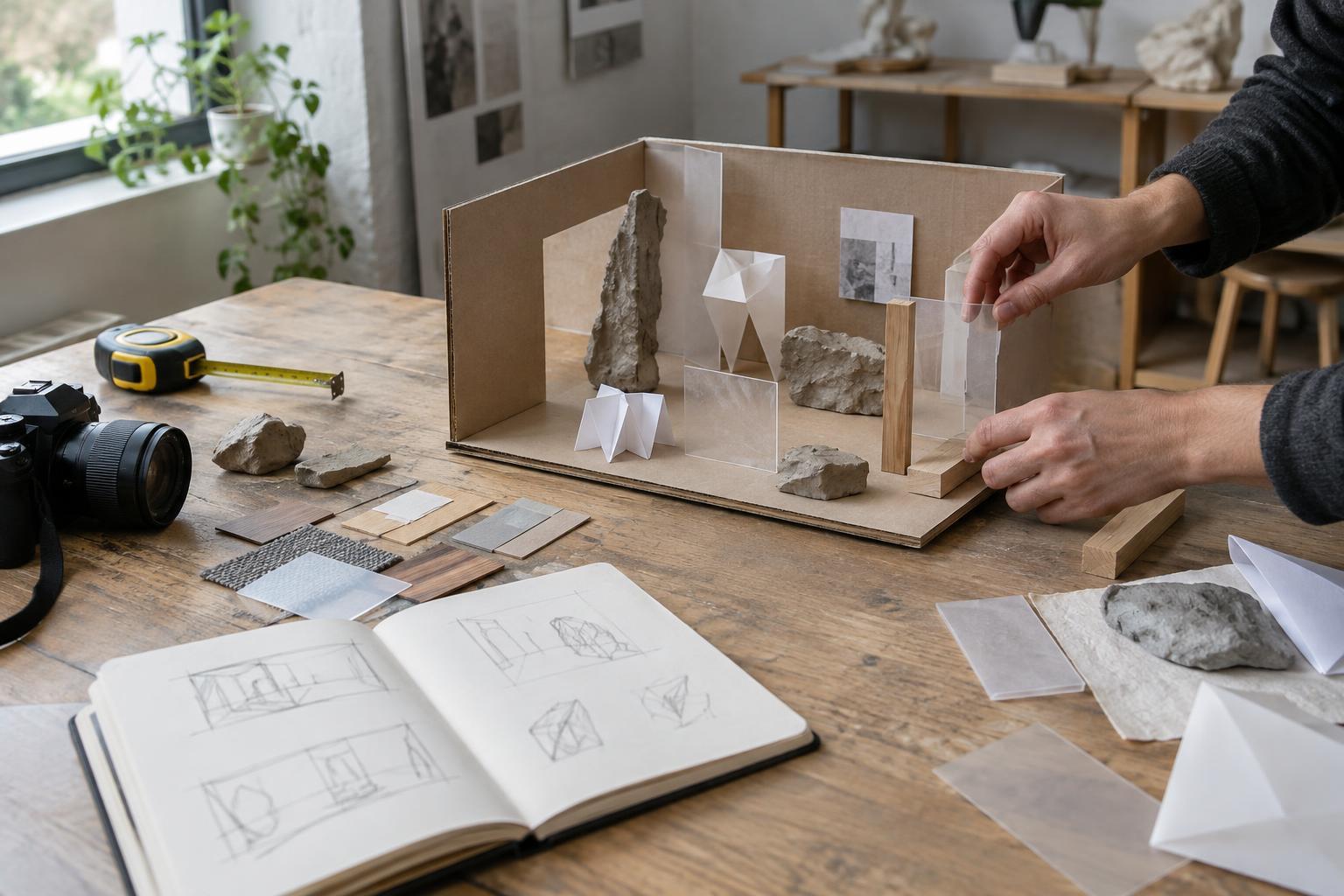
Start by recording what exists, not what you intended to make. Photograph the finished work from several viewpoints, including the approach a visitor would take and details that may be easy to miss. Save sketches, material tests, layout plans, and notes alongside those images. If the work will be dismantled, record how its parts relate to the room, light, sound, and paths through the space. This documentation becomes especially valuable once you can no longer stand inside the project.
Compare the starting question with the finished experience
Return to the question or curiosity that began the work. Perhaps you wanted a fragile material to hold a large shape, or hoped a sequence of images would make viewers slow down. Write down that starting aim in a sentence or two. Then describe what the finished work actually asks someone to notice or do. A change in direction is not automatically a problem; it may be the most interesting thing you learned.
Look at specific choices rather than broad impressions. Did the scale help the work communicate, or did it compete with the details? Did a repeated element create rhythm, or become predictable? For an installation, consider what a visitor encounters first, where they might pause, and whether the work remains legible from more than one position. These questions do not require a single correct answer. They help you identify which effects came from deliberate choices and which appeared unexpectedly.
Review the process, not just the object
A finished piece can conceal the workarounds that made it possible. Reconstruct the process from your notes and memory: what you tested, what you discarded, and where you changed plans. Separate productive surprises from avoidable friction. An unfamiliar material behaving unpredictably might open a new direction; repeatedly running out of drying time might point to a scheduling problem.
Pay attention to the conditions under which you worked. Did the workspace allow you to view the piece at its intended scale? Were your tools suitable for the finish you wanted? Did you have a clear way to store, transport, or install the work? Write these observations without turning them into judgments about your ability. A useful review names a condition you can adjust, such as making a full-size test earlier, rather than a vague conclusion such as needing to be more organized.
Gather feedback without handing over the verdict
Other people can reveal gaps between your intention and their experience, but feedback is most useful when you know what you are asking. Instead of requesting a general opinion, ask a viewer where their attention went first, what they understood about the relationship between two elements, or when they felt invited to move closer. If the project was shown publicly, include observations you made during the display as well as comments you received.
Keep reactions distinct from facts. One person missing a detail does not prove that the detail failed, while several similar responses may give you a reason to look again. You can decide that an unexpected reading enriches the work, or that it pulls attention away from something essential. The point is not to revise the finished piece until everyone agrees. It is to learn how your choices functioned outside your own familiarity with them.
Turn observations into a small next step
End the review by choosing a few lessons you can act on. Make each one concrete: test a material connection at full scale, leave more walking space around an installation, document changes as they happen, or try a quieter way to present supporting text. Keep a separate list of open questions. Not every discovery needs an immediate solution; some questions are better treated as seeds for a new work.
A brief project record can hold the original aim, images of the result, three things you would repeat, three things you would change, and one experiment to try next. Revisit it when planning that experiment, rather than filing it away as a verdict on the past. A good review respects the finished project as its own work while allowing its materials, decisions, and surprises to inform what you make next.