Begin with a question, not a verdict
An exhibition review needs more than a list of works and a quick opinion. It asks how the exhibition presents its ideas and what a visitor can experience in the space. Before entering, write down one or two open questions: How does the installation guide attention? What relationships does it create between works? These questions give your notes a direction without requiring you to decide what you think in advance.
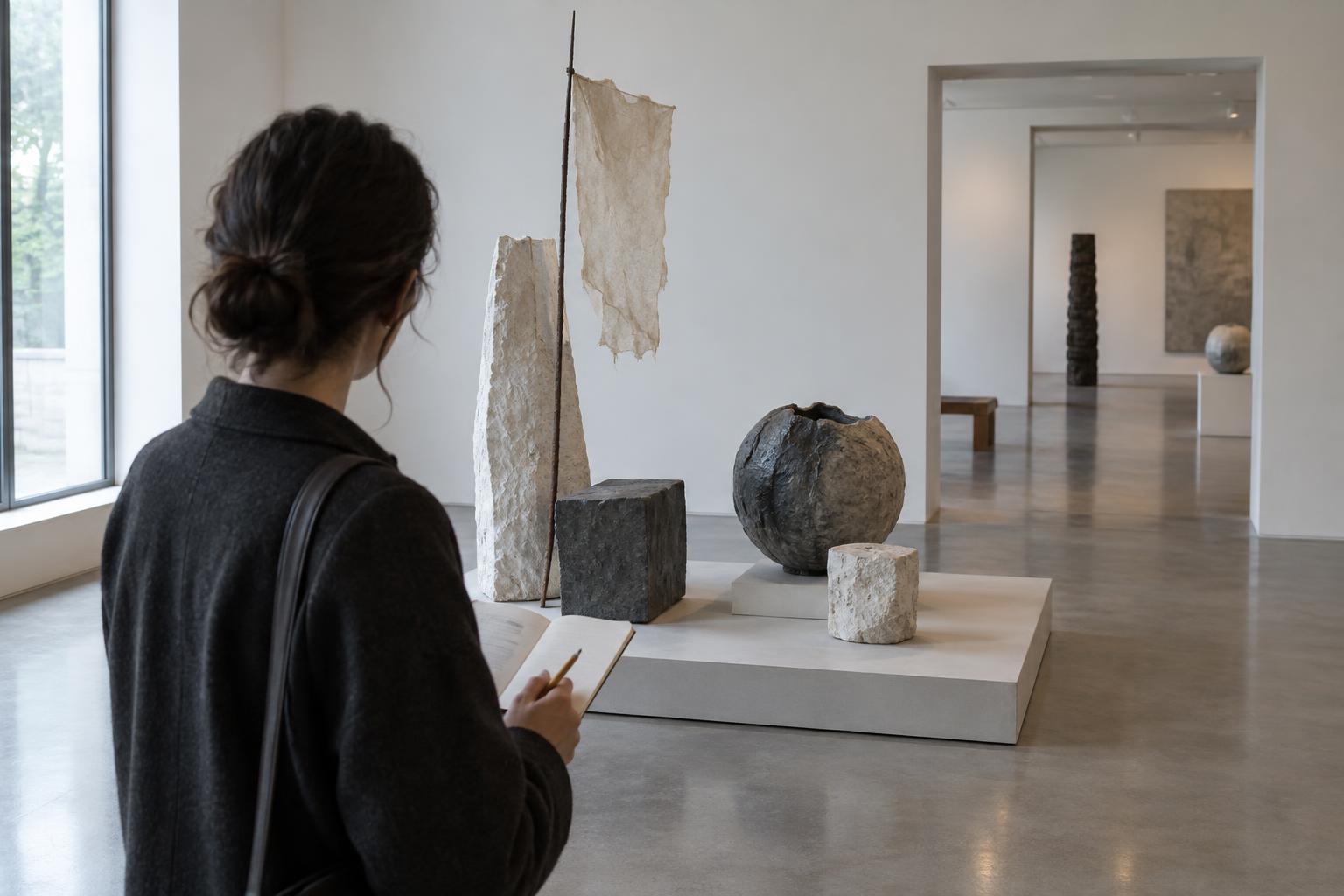
Record basic details you may need later, such as the exhibition title, venue, artists named on the wall text and the order in which you visited the rooms. Copy names and work titles carefully rather than trusting your memory. Keep this factual record separate from your reactions. If a label is unclear or unavailable, mark the detail for checking instead of guessing.
Map the experience of moving through the space
A review can describe an exhibition as an arrangement, not just a collection of objects. Make a rough map of the rooms or a simple numbered list of stops. Note where the exhibition begins, where you can see several works at once and where a doorway, partition or change in lighting alters the pace. You do not need a precise floor plan; you need enough to reconstruct your route when you write.
Pay attention to conditions that affect interpretation. Is a work isolated or crowded by its neighbors? Can you walk around an installation, or do you encounter it from one side? Does sound carry between rooms? Distinguish what you observed from what you infer: “The video is audible in the next room” is an observation; “The sound is meant to connect the two works” is an interpretation. Both may be useful, but they do different jobs.
Choose details that can support a point
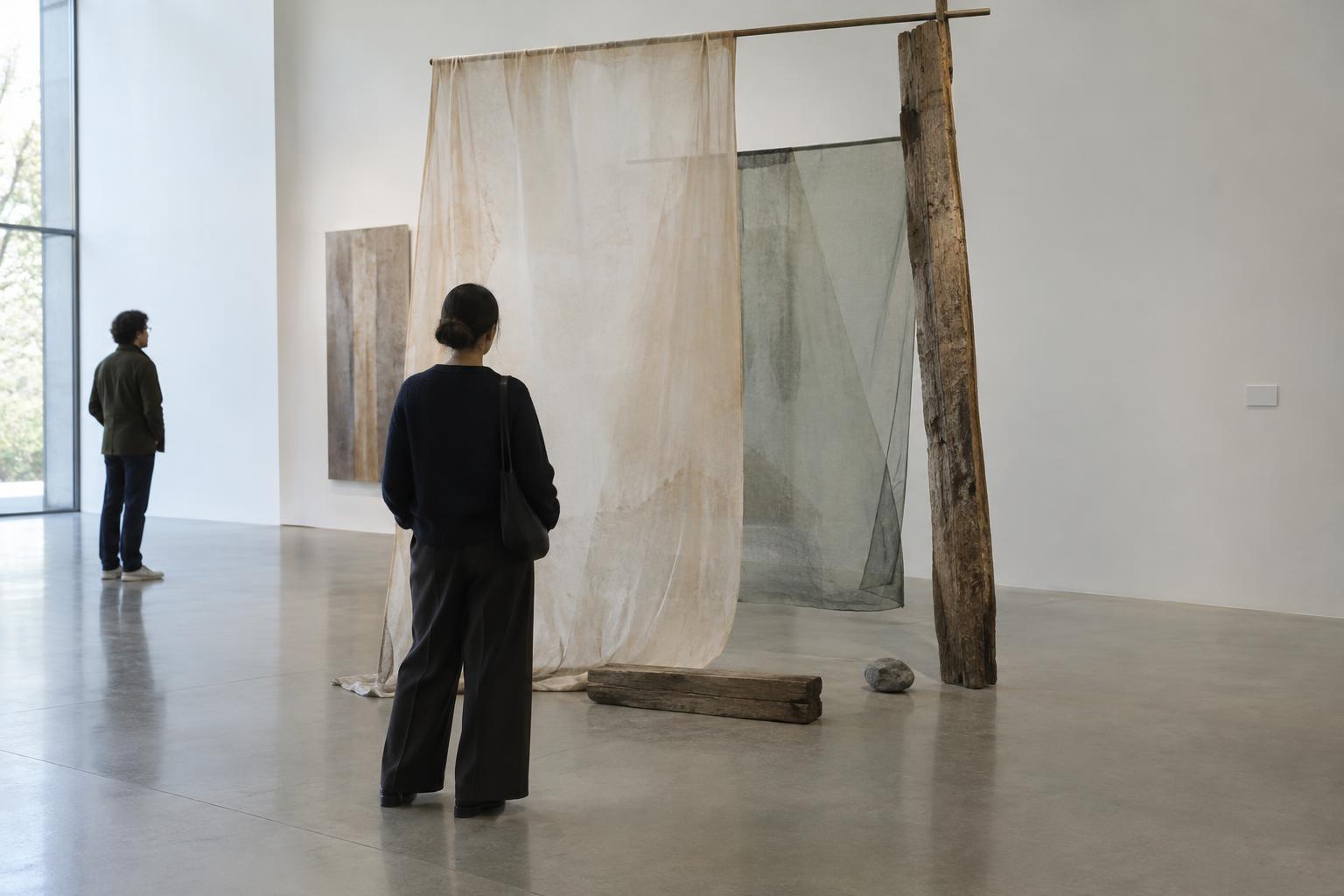
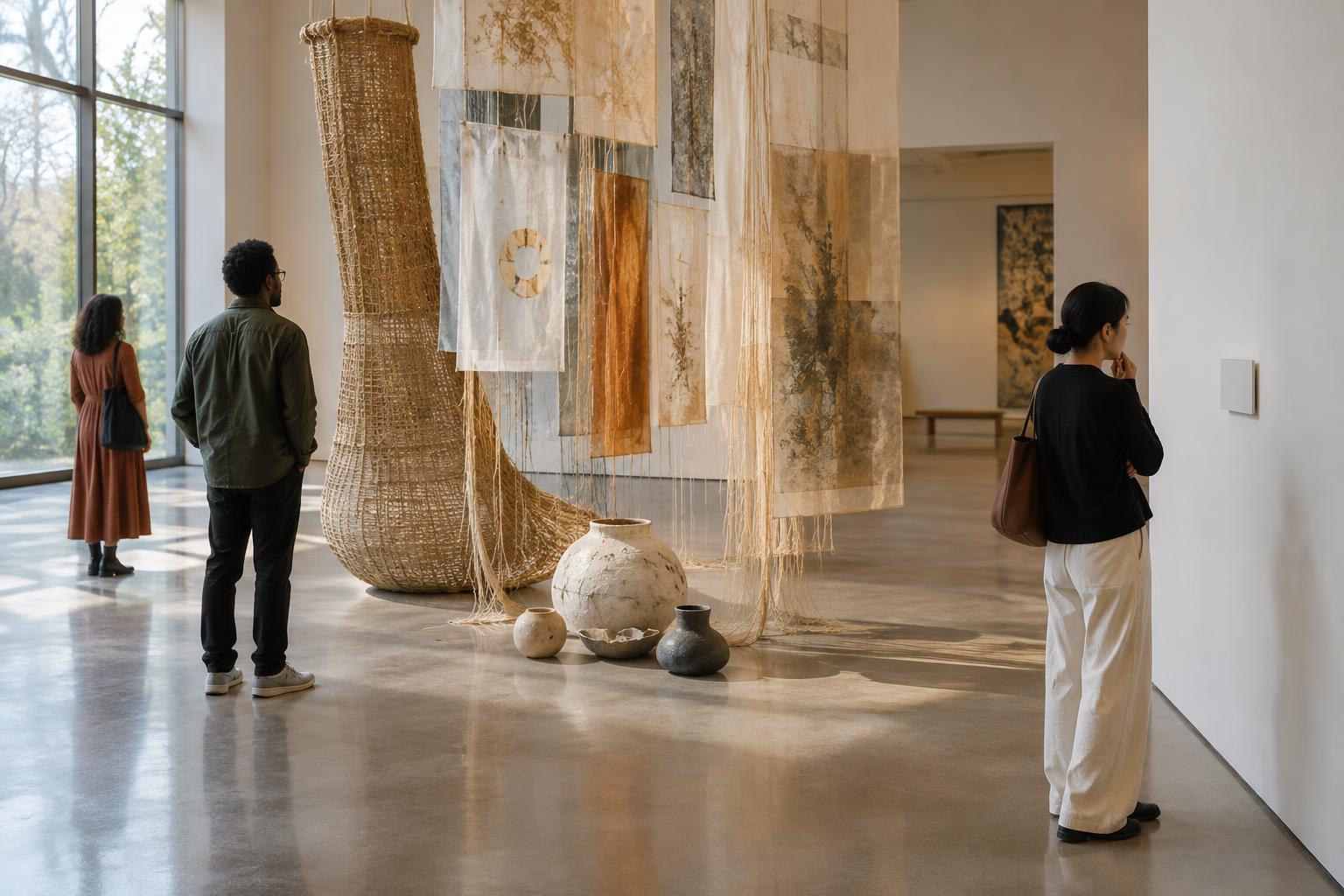
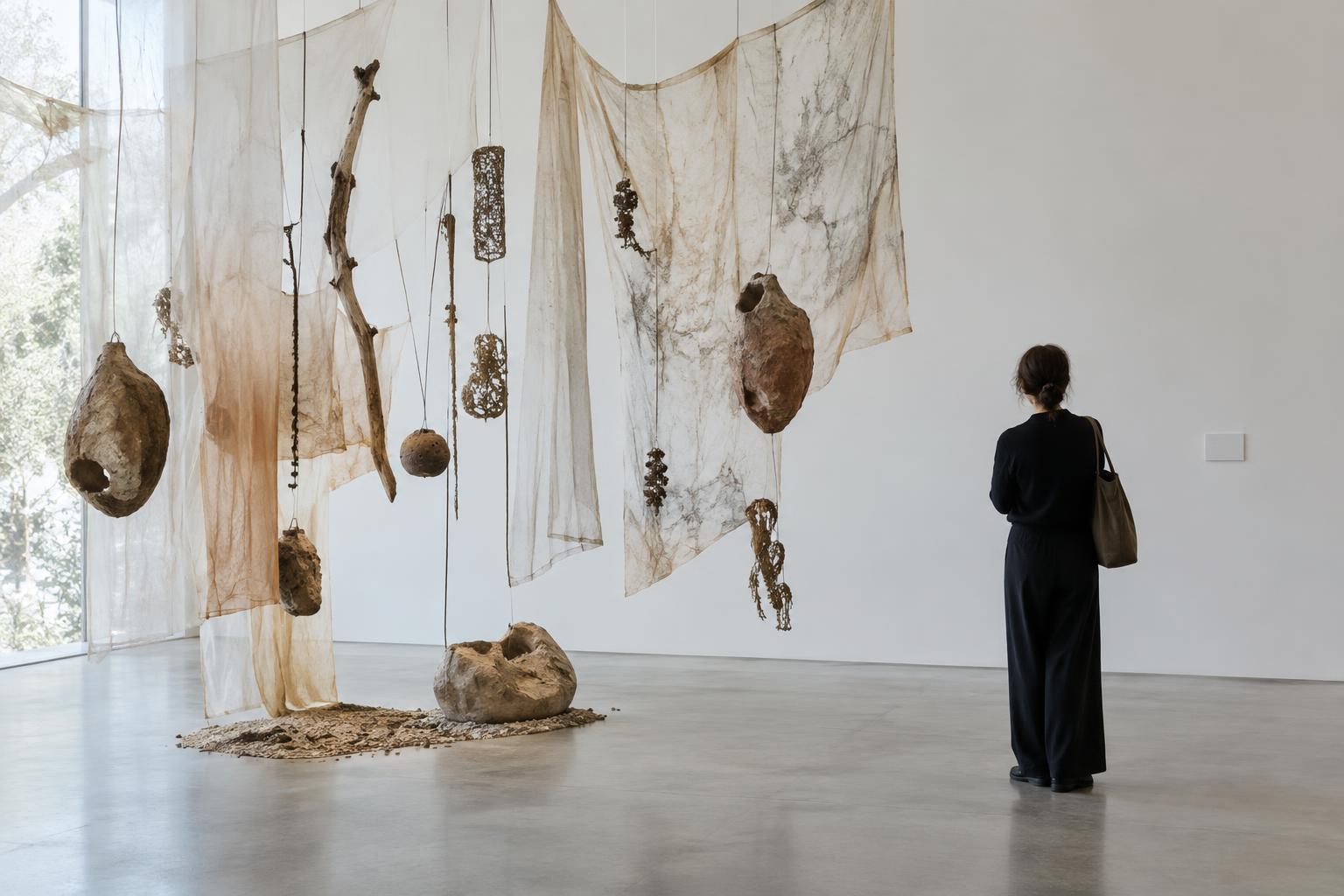
Trying to describe every work equally often produces pages of notes with no clear argument. Instead, select a few moments that seem central, surprising or difficult. For each, record its medium, approximate scale, placement and notable features. Describe what a reader could picture: a repeated shape, a visible join, a shifting projection or a material that catches the light. Specific details give you something to return to when your first impression fades.
Then add a short note about what those details do. A row of small objects might invite close looking; a work placed high above eye level might resist it. Avoid turning that response into a universal claim about every visitor. Phrases such as “I found myself stepping back to see the whole arrangement” preserve the experience while leaving room for other readings.
If you photograph works or labels, follow the venue’s rules and do not let the camera replace written observation. A photograph may help you recall color or placement, but it may not capture scale, sound or the time it took to notice something.
Make room for uncertainty and change
Your first reaction is worth recording, even when it is confusion or impatience. Note when it happened and what prompted it. After reading a label or seeing another room, ask whether that reaction changed. A small pair of notes—“before the wall text” and “after the wall text”—can reveal how much the exhibition depends on explanation and how much the works communicate through their presentation.
Leave space for unanswered questions. If two works seem connected but you cannot say why, write down the visible resemblance or contrast rather than inventing an intention for the artist or curator. Questions can become part of a thoughtful review: they show where an exhibition opens up possibilities and where its choices may be hard to follow.
Turn field notes into a review plan
Soon after your visit, reread your notes and mark three kinds of material: verifiable details, your interpretations and points you still need to check. Look for a pattern rather than the single most dramatic work. Perhaps the exhibition repeatedly asks visitors to look through barriers, move between sound sources or compare handmade surfaces with manufactured ones. A pattern can become the review’s main idea; two or three well-described examples can test it.
You can then make a short outline: introduce the exhibition’s central experience, examine your strongest examples and consider what the installation makes possible or leaves unresolved. Keep details that advance that discussion and set aside those that merely prove you were there. Useful notes are not a complete transcript of a visit. They are a record clear enough to help you write accurately, while still leaving room to think.