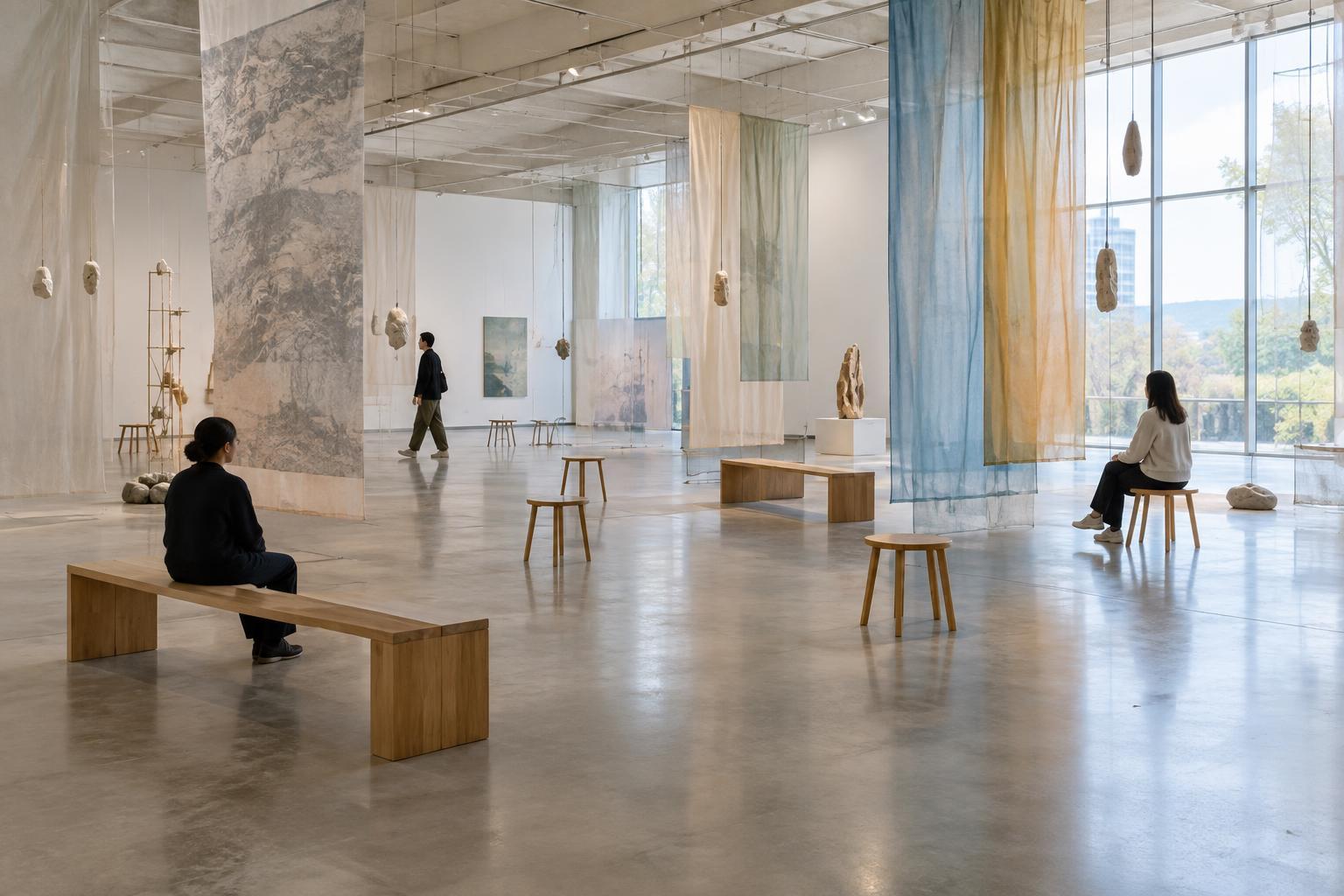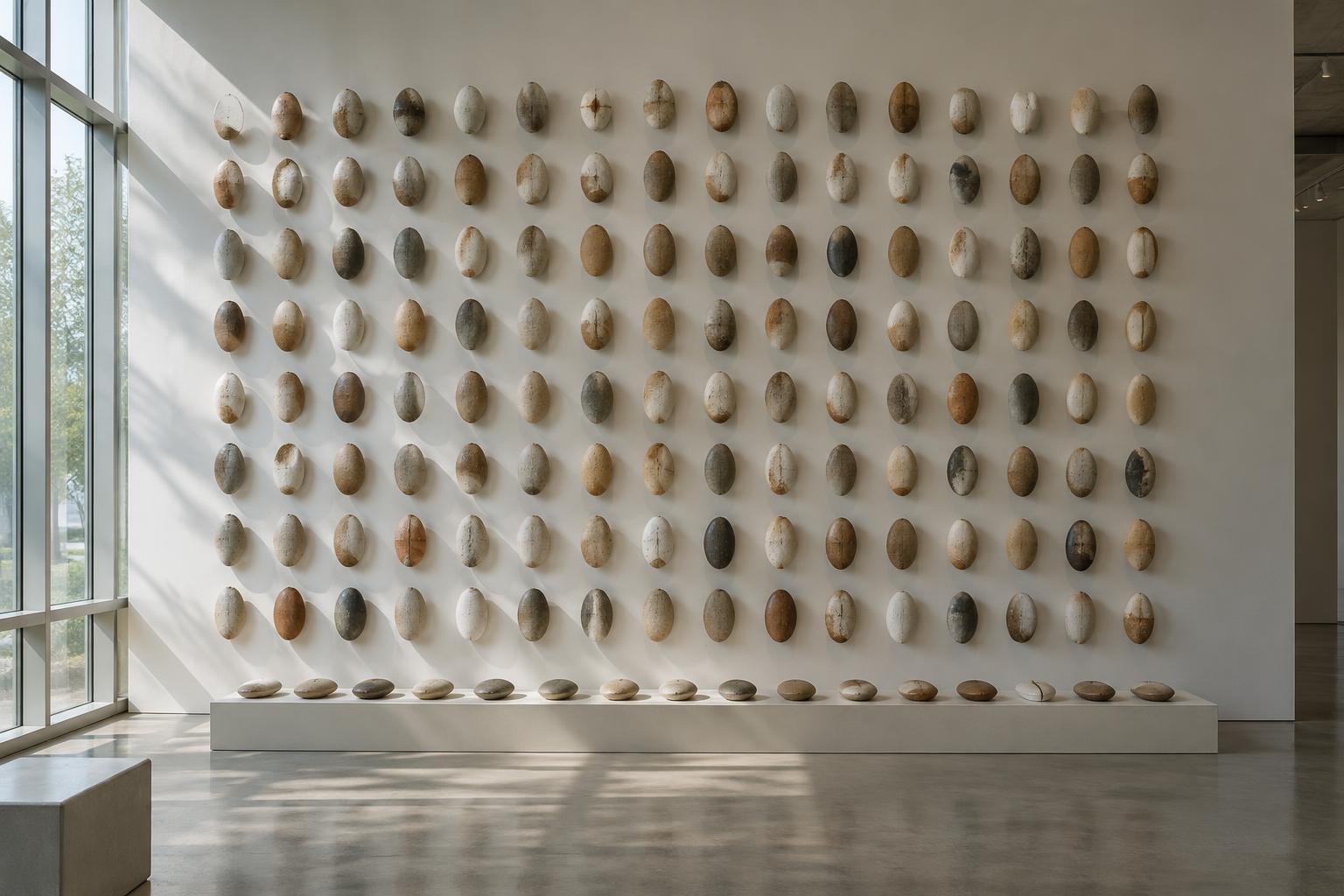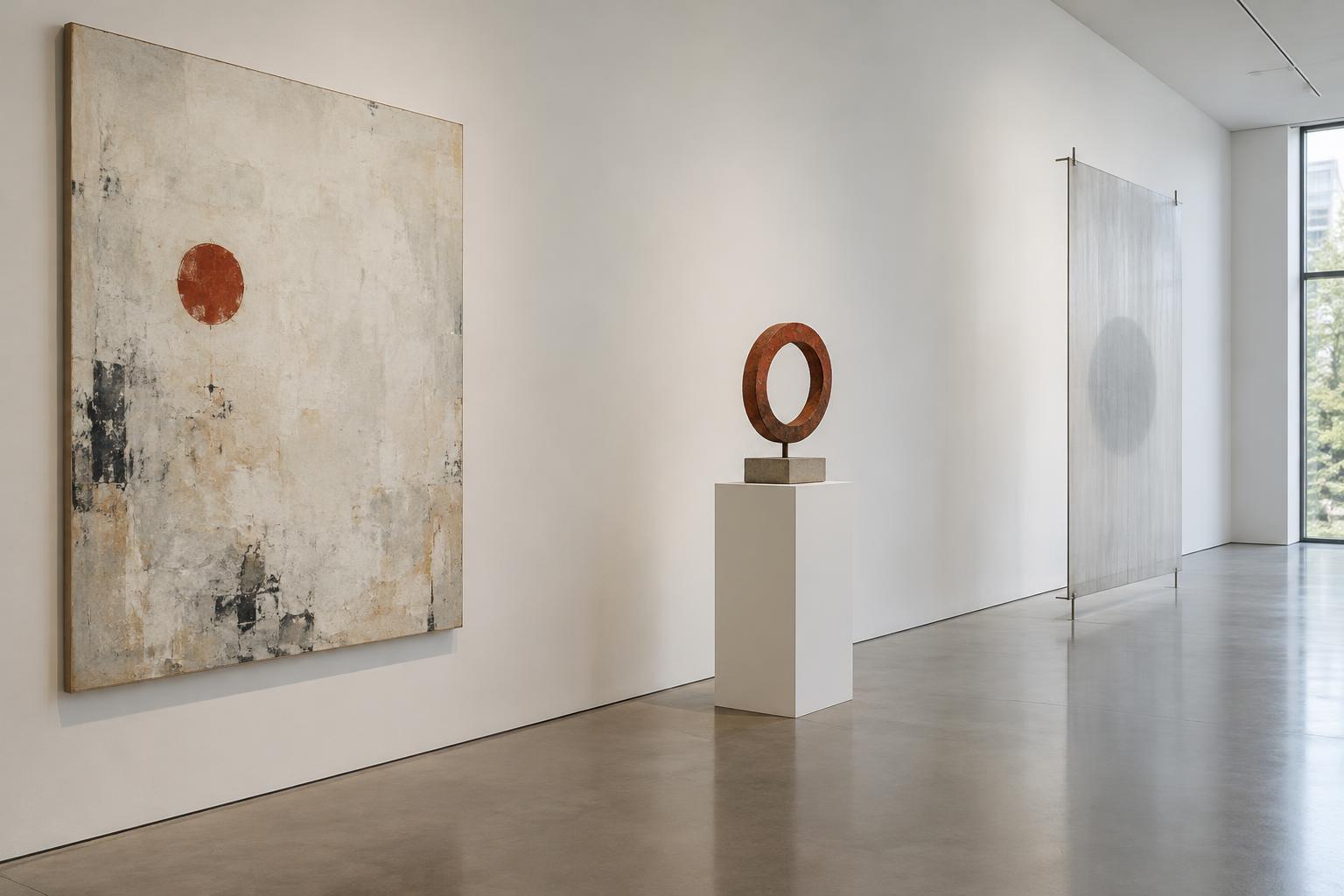
Start with what you can actually see
A recurring motif might be a doorway, a circle, a plant, a particular color or a repeated gesture. It may appear in several works by one artist or across works by different artists. Once you notice it, the exhibition can begin to feel connected in a new way. But recognition is only a starting point: seeing the same shape twice does not tell you why it appears.
Begin with a description rather than an interpretation. Note where the motif appears, what surrounds it and how prominent it is. Is the doorway large enough to walk through, or is it a small painted detail? Is a plant growing, preserved or represented in an image? These observations give you something more reliable to work with than a first impression that everything must symbolize the same idea.
Notice what changes between appearances
The most useful question is often not “What does this motif mean?” but “What happens to it here?” A circle drawn in pencil may feel provisional, while a circle built from heavy materials may assert itself as an object in the room. The works share a form, yet their scale, medium and physical presence ask for different kinds of attention.
Try comparing two appearances closely before looking for more. Consider whether the motif is complete or interrupted, central or peripheral, familiar or strange. Ask whether you encounter it from a distance or only after approaching the work. Differences like these can keep a repeated image from becoming a shortcut that flattens each artwork’s particular choices.
Separate an artist’s pattern from an exhibition’s pattern
A motif may recur because an artist has returned to it across several works. It may also become noticeable because the exhibition brings otherwise separate works together. In a group show, similar images can arise from different materials, experiences or artistic questions. Their resemblance is worth exploring, but it is not proof that the artists intended the same connection.
Look at how the works are presented. Are the related pieces grouped in one area, or do you find the motif again after moving through several rooms? Does the introductory text propose a theme that helps explain the repetition? Such clues can suggest why a visitor might connect the works. They do not replace looking at each work on its own terms.
Use repetition to ask better questions
Instead of trying to settle on a single meaning, let repetition sharpen your questions. If several works include windows, you might ask who can look through them, what remains hidden and whether a window is depicted or physically built. A recurring object can direct your attention to changes in viewpoint, access or material without requiring one answer for the whole exhibition.
It can also help to notice where an expected motif does not appear. If a show repeatedly presents images of shelter but one work offers only an open landscape, that contrast may change how you see the others. Treat the contrast as an observation, not as evidence of a deliberate exception. The goal is to develop a reading you can explain through visible details.
Leave room for resemblance without a shared meaning
Some repetitions are incidental. Common shapes and everyday objects appear often in art because they are part of ordinary visual life. An exhibition may make them feel unusually significant simply by placing many works within your field of attention. If a proposed connection depends on ignoring obvious differences, it may be more useful to describe the resemblance and stop there.
On a final walk through the exhibition, revisit one motif and identify both a connection and a limit to that connection. You might find that two works use the same object but create very different experiences of it. That is a valuable interpretation in itself: following a motif need not uncover a hidden message. It can make you a more attentive viewer of what each work does.