Find the question inside the idea
An initial art idea is often incomplete. You may have a mental image of a suspended form, an interest in discarded packaging, or a wish to change how someone moves through a room. None of these needs to be a finished concept before you begin. Write down what attracts you to the idea, what you want to investigate, and what remains uncertain. This gives you something more useful than a polished description: a starting point you can work with.
Try turning the idea into one or two questions. What changes when a familiar material is placed at an unfamiliar scale? How might a viewer notice a space they usually pass through? A question can guide choices without dictating the final work. If several questions compete for attention, choose one to lead the first experiment and save the others. A workable project needs a direction, not a complete explanation.
Define a first version, not the final version
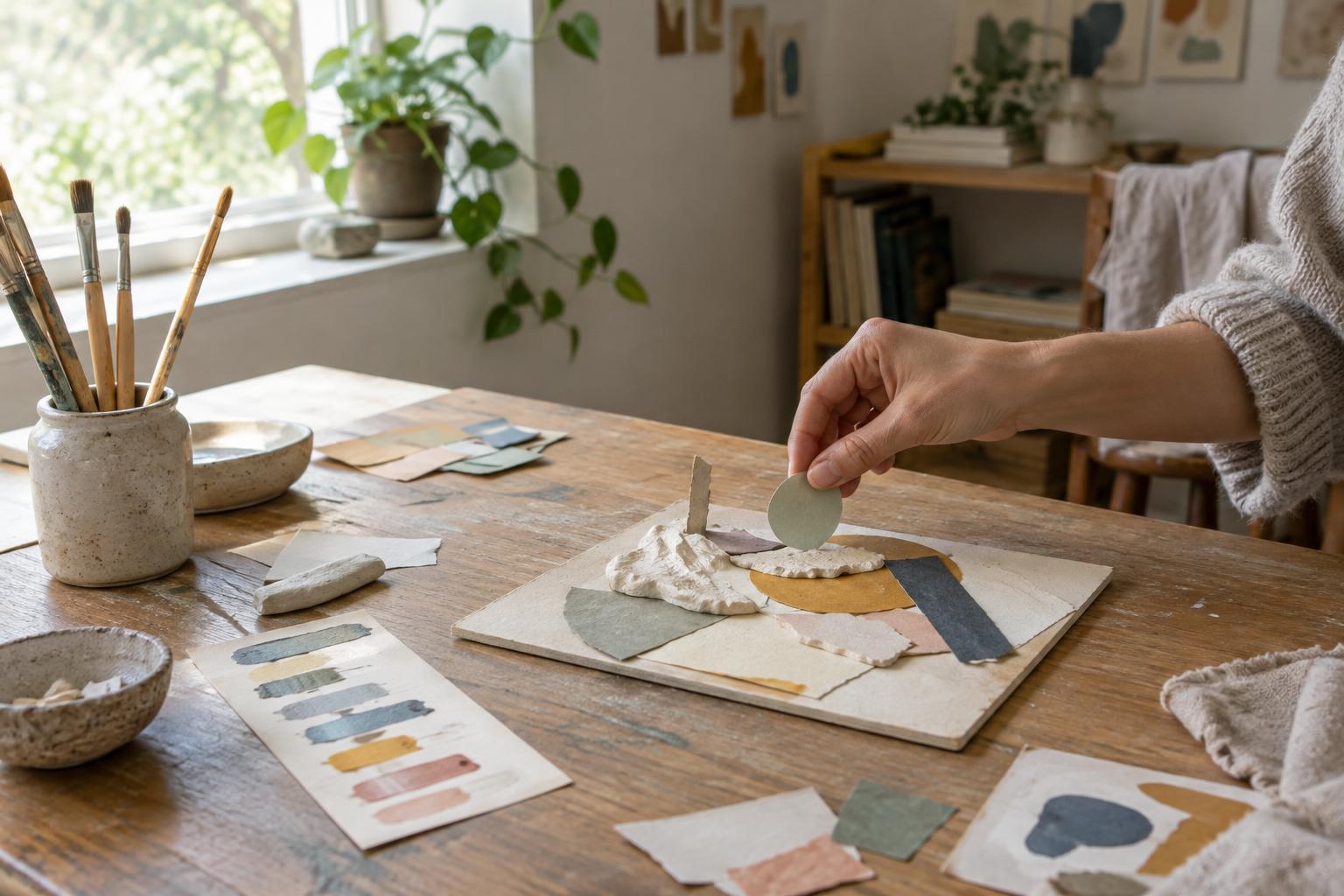
Describe the smallest version of the work that could test your central question. For an installation, this might be a single arrangement in a corner rather than a room-sized environment. For an image-based project, it might be three related studies rather than a complete series. State what you intend to make, where it might be encountered, and what you hope to learn by making it. Keep the description provisional so the work has room to change.
It helps to distinguish the project’s essential feature from its optional features. If the idea depends on light passing through a surface, that interaction matters more than the exact size of the first structure. If it depends on a viewer choosing a path, test the choice before adding elaborate finishes. This distinction makes decisions easier when time, space or materials are limited.
Let materials and space answer back
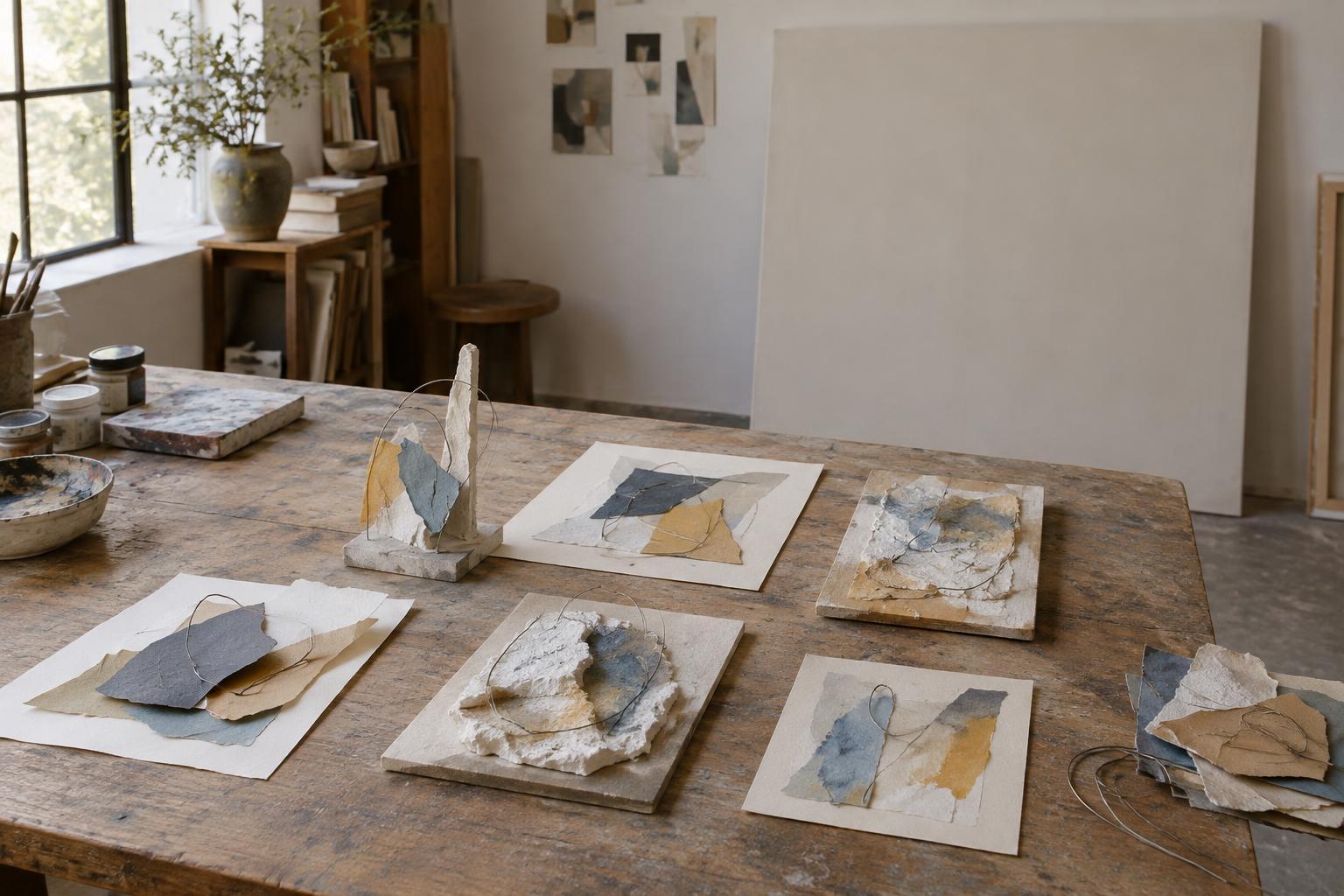
Make a quick test with the materials you expect to use, even if the result looks rough. Draw, fold, attach, project, arrange or document something at a manageable scale. Notice what the material does rather than only what you hoped it would do: a surface may sag, reflect light or cast a useful shadow. Record those observations in notes or photographs. A surprising result may become a stronger direction than the original plan.
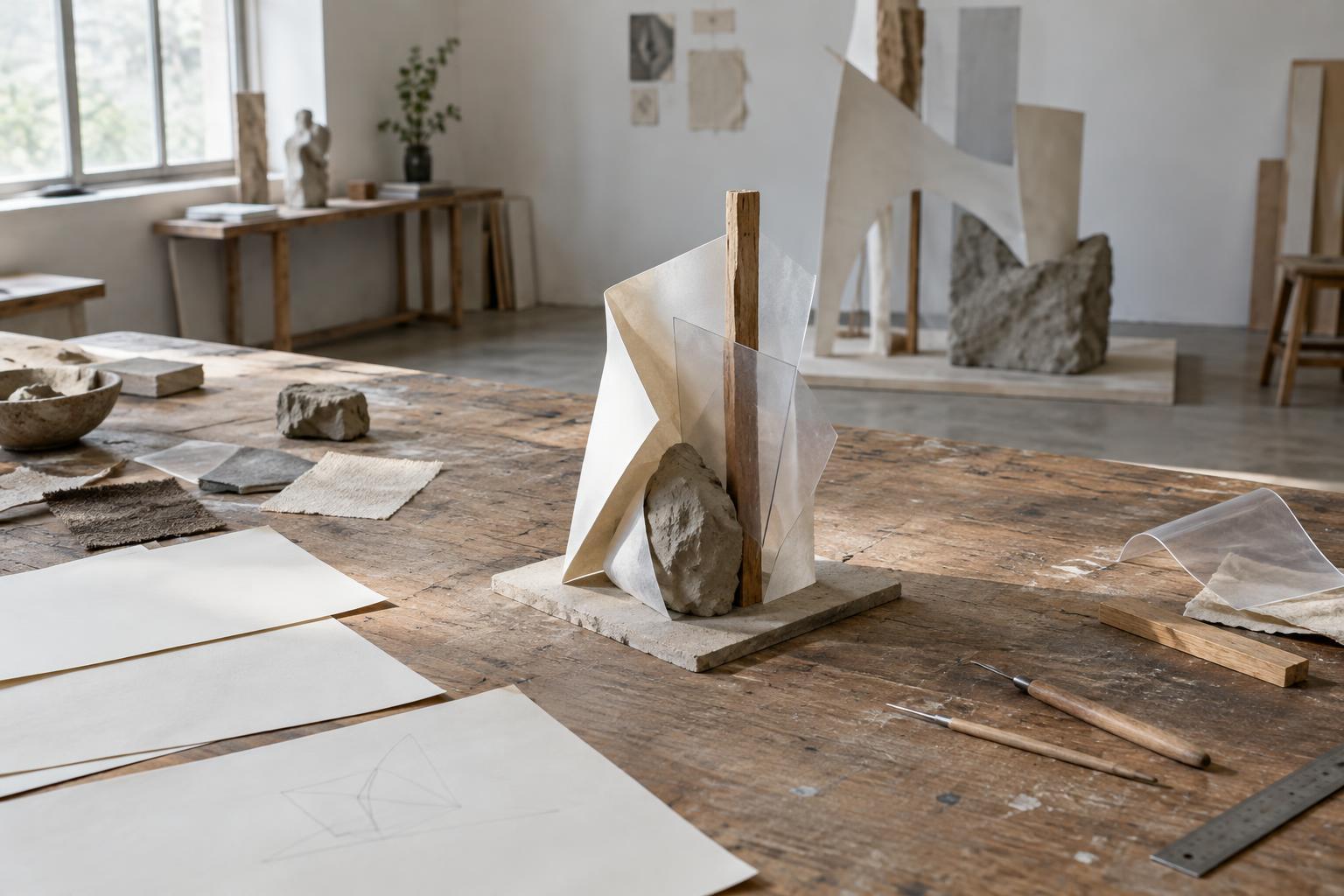
Space deserves the same attention. A work that makes sense on a table may behave differently against a wall or in a passageway. Consider viewing distance, access, lighting and how people can move around it. If you do not have the intended site, mark out approximate dimensions in a space you can use. The aim is not to predict every condition, but to reveal assumptions while they are still easy to revise.
Set boundaries that support the work
A project becomes more manageable when its limits are visible. List the materials, tools, workspace and time you can reasonably commit to a first version. Identify anything the idea depends on that you do not yet have, such as permission to use a site or a way to transport a large component. Then look for a smaller test that does not depend on that unknown. Practical boundaries can sharpen the work instead of diminishing it.
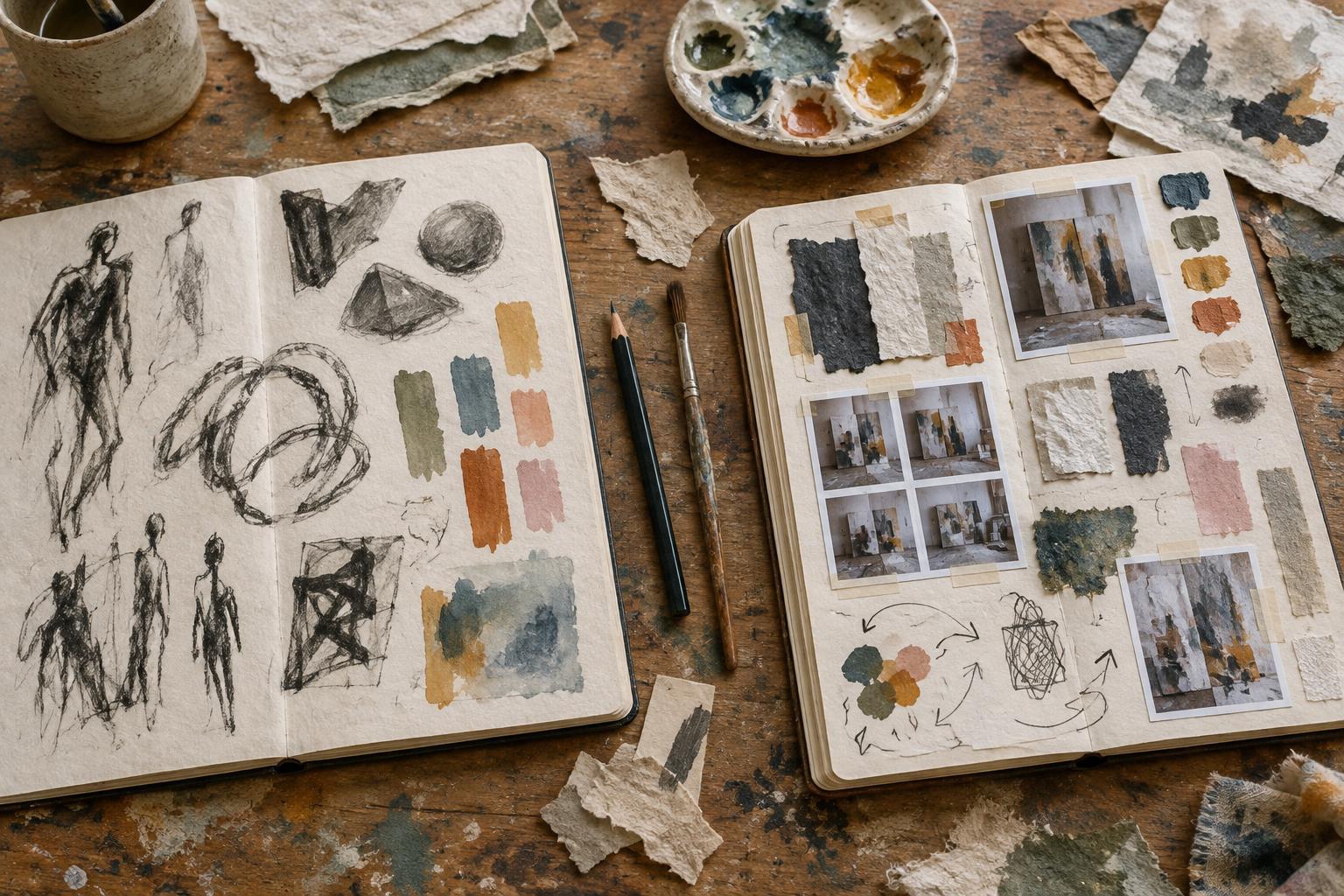
Give yourself a sequence of modest steps: gather references from your own observations, make a test, review it, revise one element, and build a more resolved version. Assign a clear outcome to each step, such as a sketch, a material sample or a photographed arrangement. Avoid planning so tightly that an unexpected discovery feels like a setback. Leave room to change methods while keeping the central question in view.
Review what the work is actually doing
After a test, spend time looking before deciding whether it succeeded. Compare your intention with what is visible or physically experienced. Which elements draw attention? Which feel unnecessary? If another person can see the test, ask what they notice before explaining your idea. Their response is not a verdict, but it may show where the work communicates differently from what you expected.
Use that review to choose the next action. You might change a material, simplify the arrangement, repeat a promising detail or reconsider the scale. Write a short project statement only after you have something concrete to describe, then revise it as the work develops. Turning an idea into a project is less about protecting the first spark than building a process that lets you test, notice and make informed choices.