Give the study a question to answer
A small study works best when it has a specific purpose. Rather than trying to make a reduced version of everything you imagine, identify the part of the idea you are least certain about. Will two materials hold together? Does a repeated shape create rhythm or visual clutter? Can a viewer understand a sequence when approaching it from more than one direction? A study can address one of these questions without having to resolve the entire artwork.
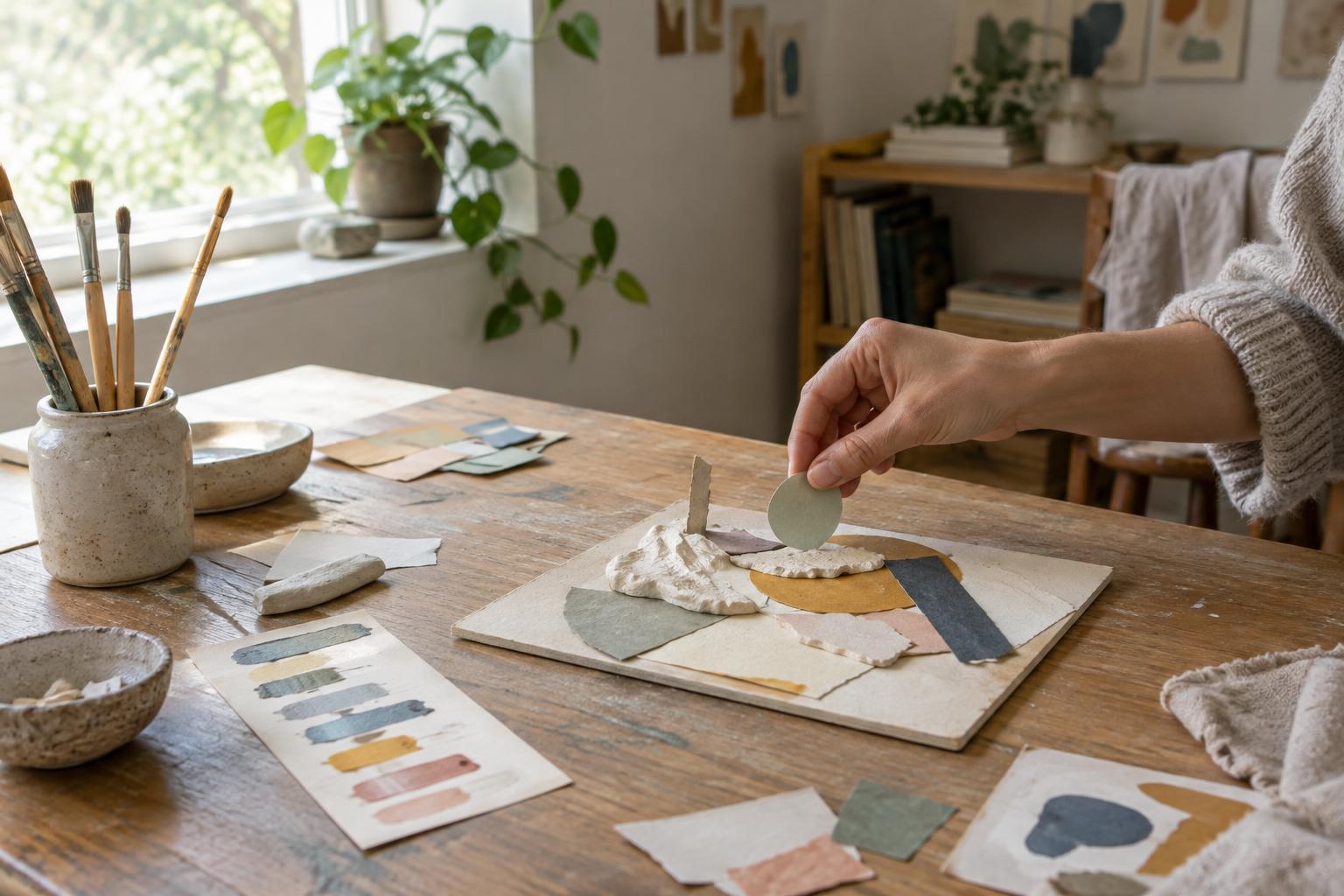
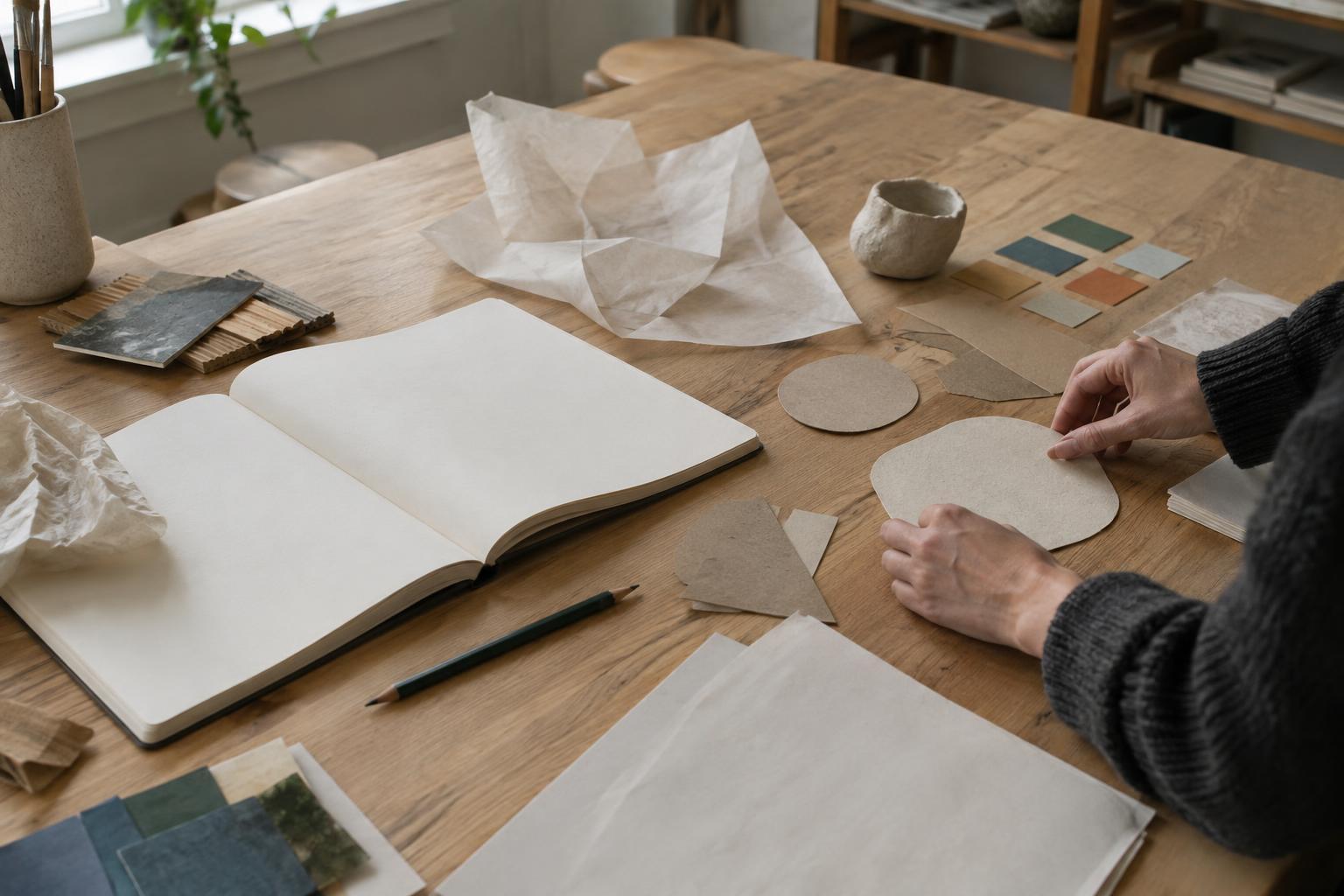
Write the question in plain language before you begin. Then decide what you need to make in order to observe an answer. A quick arrangement of paper shapes may be enough to test spacing. A small panel may reveal how a surface changes under layers of color. An installation idea might need a rough tabletop model and a photograph taken from eye level. The form of the study should follow the uncertainty you want to investigate.
It also helps to define what you are not testing. If the question is about silhouette, inexpensive substitute materials may be adequate. If it is about weight, translucency or how a joint behaves, substitutes could hide the very problem you need to see. Keeping that distinction clear makes a modest experiment more informative.
Change one important thing at a time
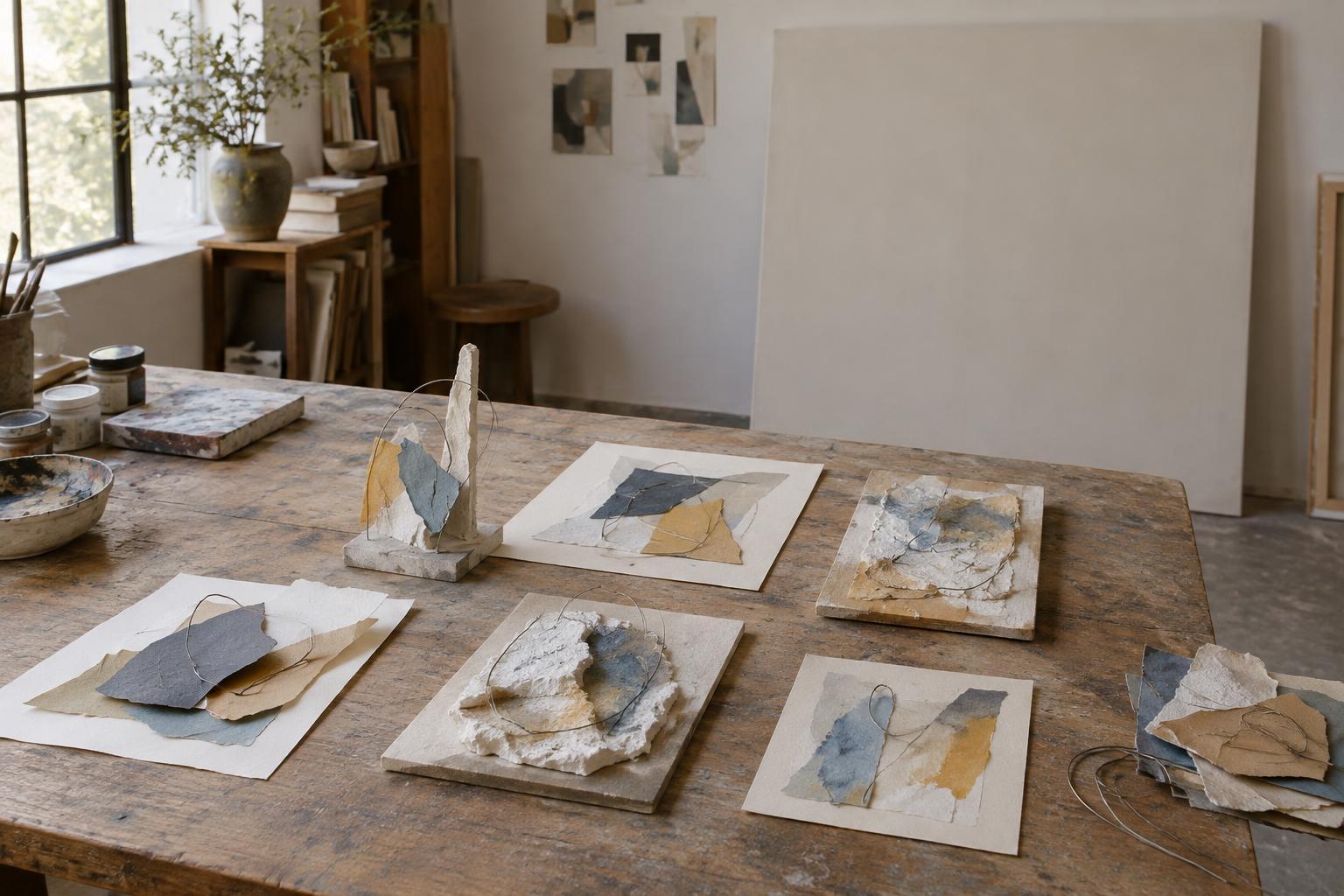
Studies become easier to compare when you keep most conditions steady. Try several versions at the same size while changing only the density of marks, the width of a gap or the direction of a fold. Lay them side by side and notice what each variation does. You may find that a choice that looked promising in isolation becomes less convincing when there is an alternative beside it.
This does not mean every study must be controlled or tidy. An open-ended experiment can be useful for discovering possibilities you did not anticipate. But once something catches your attention, make a second study that isolates it. If a chance overlap of materials produces an interesting shadow, for example, test the overlap at a few distances from the wall. That moves the idea from an accident you like toward a decision you understand.
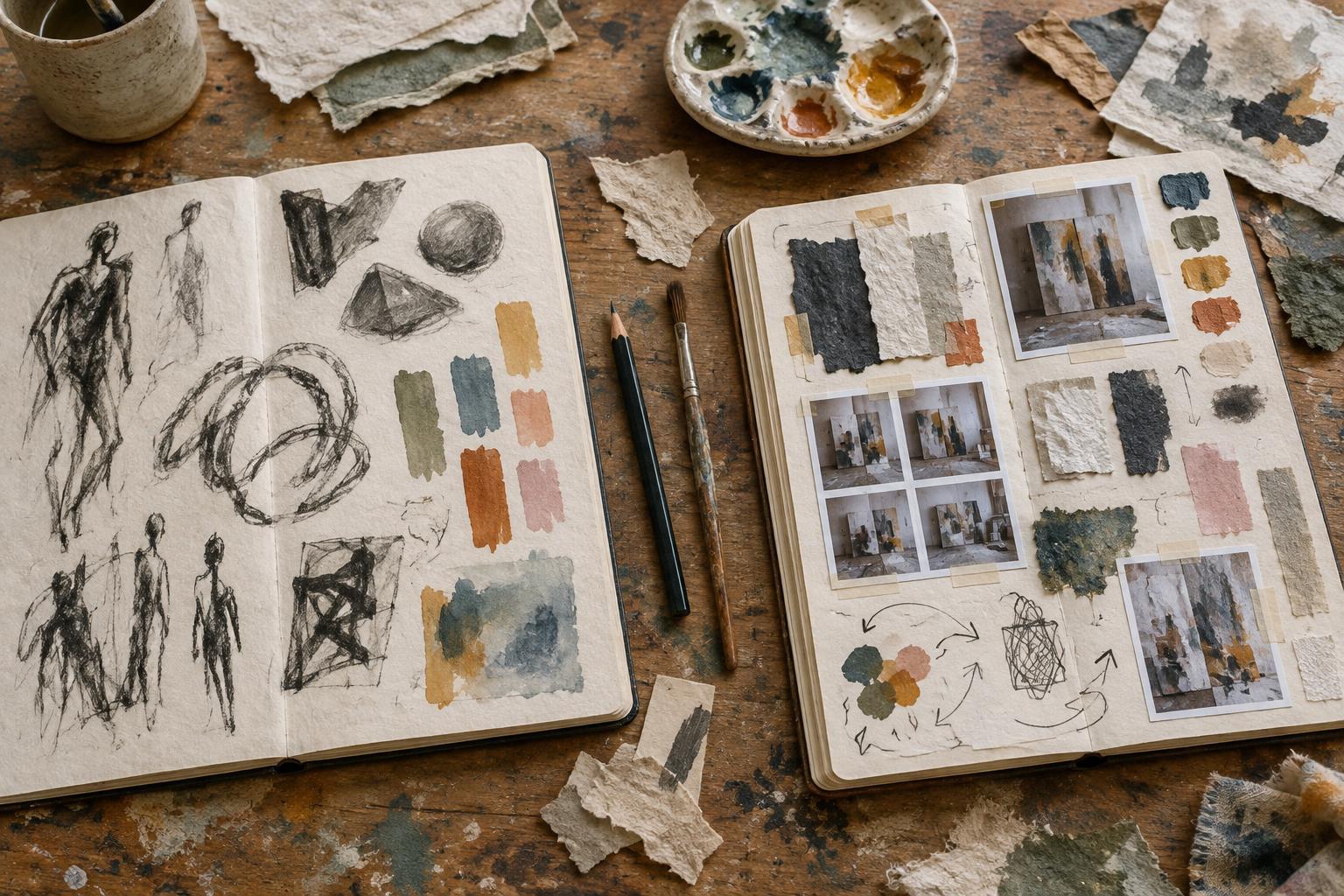
Keep brief notes beside the work: what changed, what you expected and what you actually noticed. A few words are enough. Notes help you avoid repeating an unsuccessful test and make it easier to recall why an imperfect-looking study mattered.
Look for what scale will change
A small study can show relationships, but it cannot predict every quality of a larger work. A line that feels delicate on a page may feel assertive across a wall. A material that stands easily in a tabletop model may bend under its own weight at full size. For work that occupies space, the viewer’s body, movement and distance become part of the experience. Treat the study as evidence about some decisions, not proof that all of them will translate.
Before enlarging, list the features most likely to change with scale: support, balance, joining methods, viewing distance, light and the time it takes to move around the piece. Test those features separately where possible. You might make one full-size corner rather than a complete structure, or place a single element in the intended room to judge its presence. A paper mock-up and a material sample can answer different questions about the same proposed work.
Photograph studies from more than one angle, especially if the finished piece will be three-dimensional. Images can reveal how an arrangement reads at a distance, but also inspect the physical study directly. Texture, depth and resistance to movement may be difficult to judge from a photograph alone.
Decide what to carry forward
After a round of studies, pause before making the larger work. Put the tests where you can see them together and return to your original question. Which result supports the idea? Which result complicates it in a useful way? A study has done its job even when it shows that a planned material or composition is not working. That knowledge can save effort and open a more interesting direction.
Choose a next step based on what remains uncertain. You may be ready to commit to the larger piece, or you may need one more test at an intermediate scale. You can also combine discoveries: the structure from one study, the surface from another and the spacing suggested by a third. Make a note of the decision so that later revisions have a clear starting point.
Keep some studies after the work is complete. They record decisions that may be invisible in the finished piece and can become a resource for future projects. The goal is not to eliminate uncertainty from creative practice. It is to make room for experimentation before every choice becomes costly to change.