Begin with questions, not categories
Identity can refer to a person’s sense of self, their relationships with others, or the labels placed on them by institutions and communities. In contemporary art, it may be explored through portraits, but it can also appear in an arrangement of objects, a sound recording, a performance or an empty space. A useful first question is not “Which identity does this work represent?” but “How does the work ask me to think about identity?”
That shift matters because no single artwork can stand for everyone who shares a background or experience. A familiar symbol may be used with affection, questioned, or deliberately made difficult to read. Rather than treating an artist’s biography as a complete explanation, notice what the work does: what it shows, what it withholds and which assumptions it invites you to examine.
Look at how representation is constructed
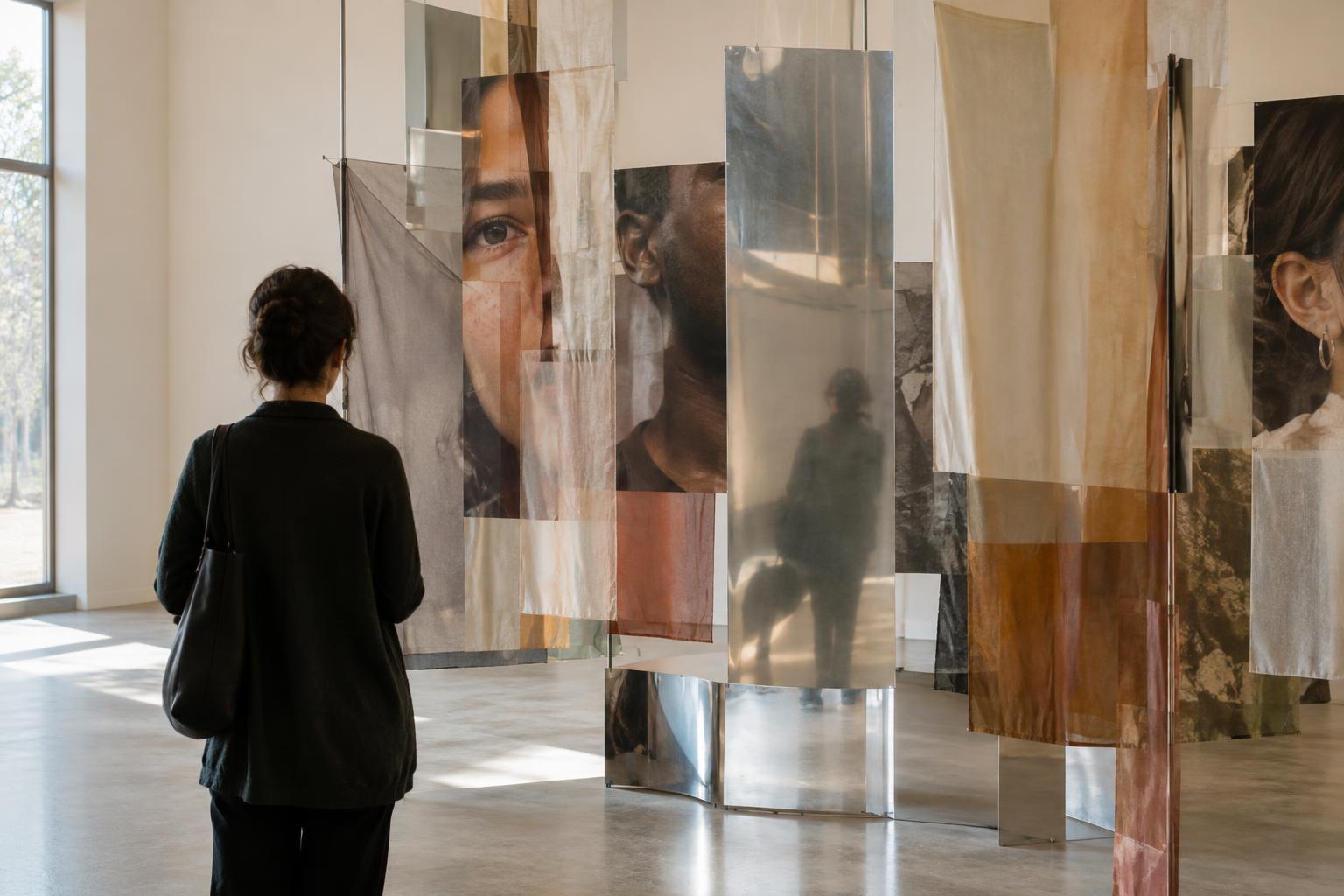
Representation concerns both what is depicted and how it is presented. In a portrait, consider framing, pose, scale and setting. Does the subject meet the viewer’s gaze, look away or appear only in fragments? Is the image intimate or distant? These decisions can affect whether a person seems to speak for themselves, is observed by someone else, or resists easy interpretation.
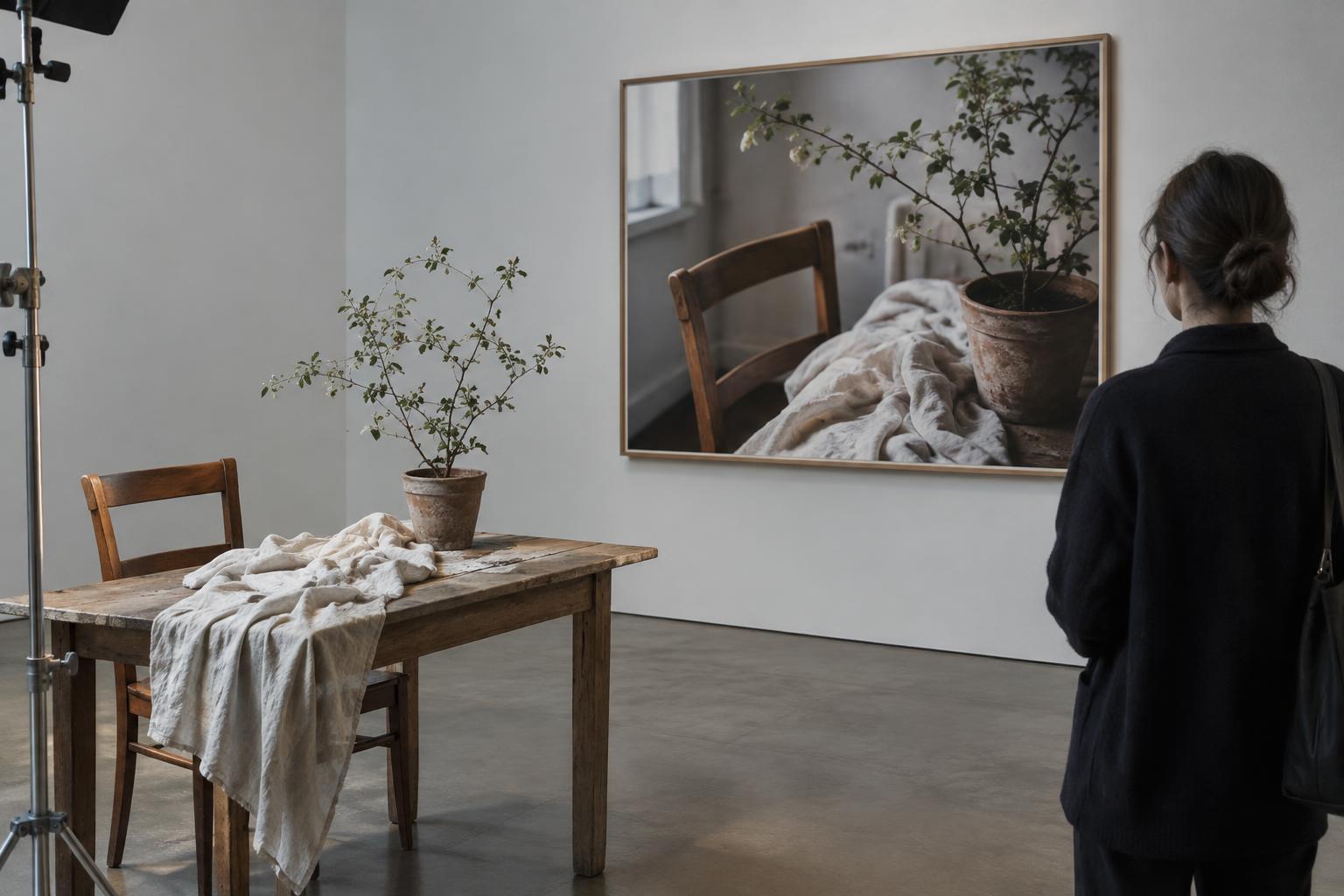
The same questions apply beyond pictures of people. An artist might repeat a household object, alter a document or arrange clothing without showing a body. Such choices can suggest a life through its traces, while leaving room for ambiguity. Ask what a material might mean in this particular work before assigning it a fixed meaning. An ordinary object can carry a personal association, a public history, or both.
Consider materials and space
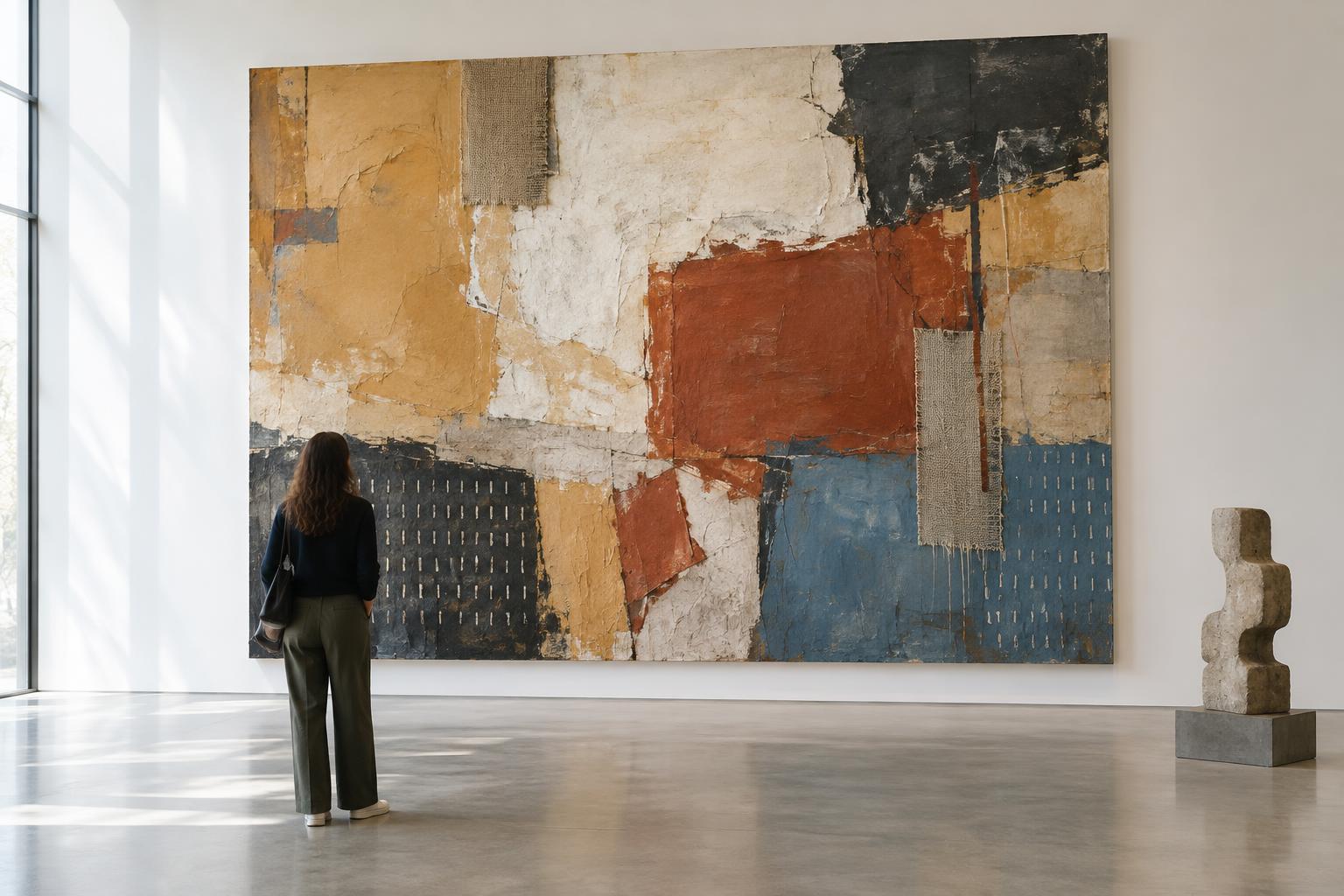
Materials influence how a work makes identity felt. A fragile surface may encourage careful attention; a durable one may suggest endurance. Handwritten text can create a different sense of proximity from printed text, even when the words are the same. These are possibilities rather than rules. Look closely at the artist’s choices, and consider whether the process of making is visible, concealed or part of the work’s subject.
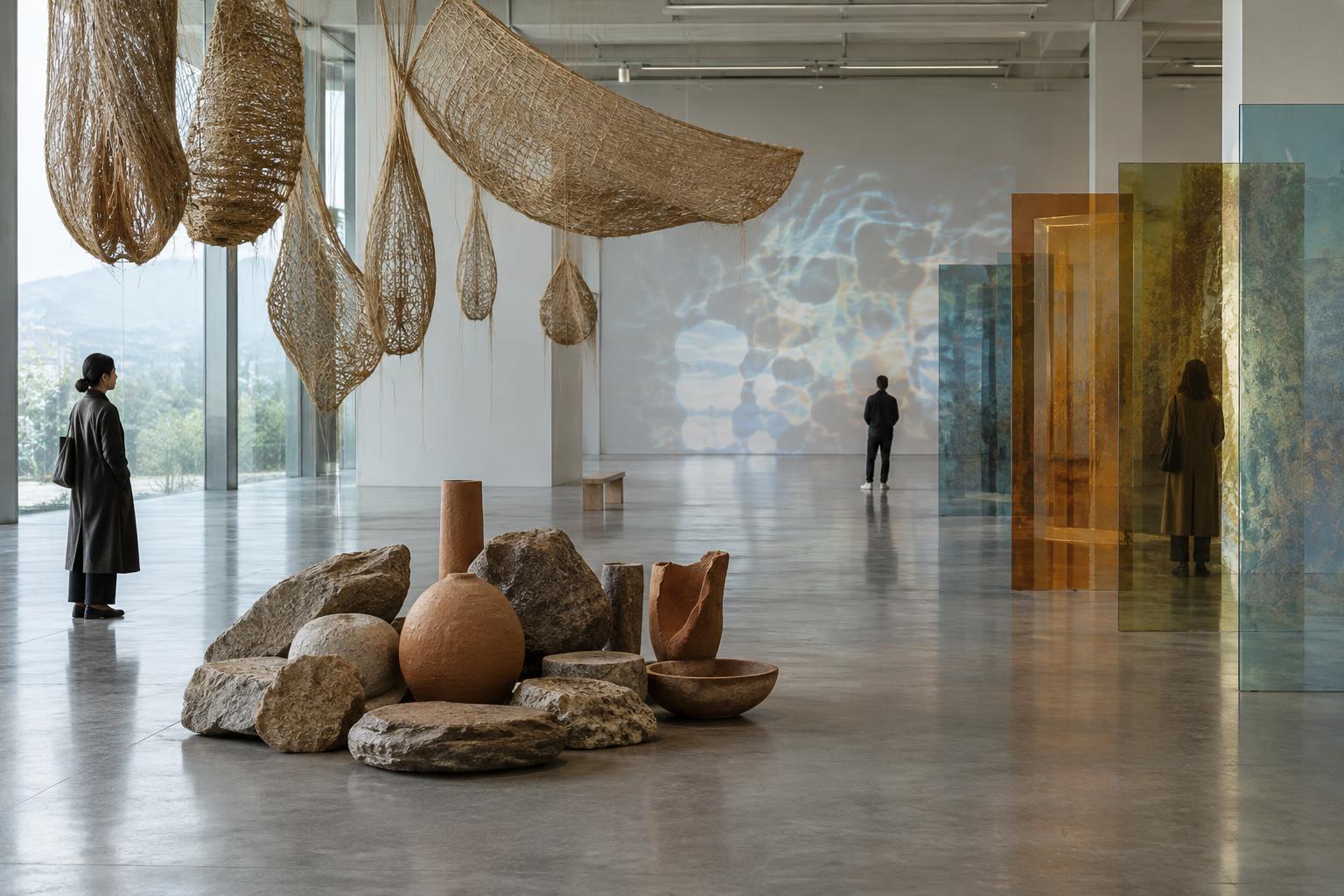
In an installation, the viewer’s position becomes especially important. You may need to walk around a structure, listen from a particular place or see your reflection beside an image. Notice who can enter the space comfortably and what the work asks visitors to do. A piece about belonging, for example, may communicate through distance, access or movement as much as through recognizable symbols.
Read context without letting it settle everything
Titles, wall texts and exhibition themes can help you understand an artist’s intentions or the circumstances behind a work. Read them, but return to the work afterward. Does the explanation draw your attention to something you missed? Does it leave a tension unresolved? Context is useful when it opens a line of inquiry, not when it replaces your own observation.
It also helps to distinguish between an individual perspective and a claim to represent a whole group. An artist may draw on lived experience without presenting it as universal. Likewise, viewers bring different memories and expectations to an exhibition. If your reading differs from the wall text or a companion’s response, identify the details that led you there. A grounded interpretation can remain open to revision.
Practice attentive, responsible viewing
When a work engages with unfamiliar experiences, curiosity is more useful than a quick judgment. Spend time with its specific details before reaching for a broad label. Ask whose viewpoint you are encountering, whose viewpoint may be absent and whether the work makes that absence noticeable. If the artist uses found images or other people’s stories, you can also consider how those people are presented and what remains unknown to you.
A simple way to begin is to make three notes: one thing you can directly observe, one interpretation those details suggest, and one question you still have. Keeping observation separate from inference makes space for uncertainty without stopping you from thinking. Identity and representation are not puzzles with one answer. They are ways to examine how an artwork shapes visibility, voice and the relationship between people who make, present and encounter it.