What is institutional critique?
A museum can appear to be a neutral place: objects hang on walls, labels provide facts, and visitors choose what to see. Yet every exhibition involves decisions. Someone selects the works, places them at a particular height, writes the labels and sets the conditions of entry. Institutional critique is an approach to art that brings those decisions into view. Rather than treating the gallery as an empty backdrop, it asks how museums and other art organizations shape what counts as art and whose work receives attention.
The “institution” in this phrase is broader than a building. It may include collections, funding, education programs, galleries, markets, archives and the habits visitors bring with them. A critical artwork might take the form of an installation, a document, a performance or a change to an exhibition’s usual arrangement. Its aim is not always to condemn the museum. It may instead reveal a contradiction, invite a difficult conversation or test whether an organization can change.
Making the frame visible
One way artists question an institution is to work with the materials through which it speaks. Imagine an exhibition label that describes not only an object but also why it was acquired, what information is missing from its record and who wrote its description. The label becomes more than a guide to looking; it becomes part of the subject. Likewise, an artist might arrange objects according to storage categories rather than artistic movements, prompting visitors to notice how classification affects meaning.
Space can do similar work. A route through a gallery may lead visitors past a normally overlooked doorway, a staff area or a wall of administrative language. These choices do not necessarily expose a secret. They shift attention toward the labor, rules and boundaries that make an exhibition possible. When encountering such work, ask what would remain unnoticed if the piece were removed and the room returned to its familiar layout.
Questions of authority and access
Institutional critique often asks who has the authority to tell an artwork’s story. A collection label may name an artist and medium while leaving out the circumstances in which an object changed hands. An exhibition may present a coherent theme while leaving little room for disagreement. Artists can respond by offering multiple accounts, displaying gaps in a record or inviting people usually treated as an audience to contribute their own interpretations. These gestures make uncertainty legible instead of smoothing it away.
Access is another concern. Admission rules, opening hours, language, physical layout and expectations about behavior can affect who feels welcome in an art space. A work addressing these conditions might be quiet rather than confrontational: a map of routes people can and cannot take, for example, or a reading area that encourages visitors to linger and compare perspectives. The strongest interpretation begins with the specific choice the artist has made, then considers the larger question it raises.
The tension of working inside the system
Institutional critique has a built-in difficulty: critical works are often displayed, collected or promoted by the very organizations they examine. A museum may give an artist room to challenge its practices while also benefiting from a reputation for openness. This tension does not automatically make the artwork ineffective. It can be part of what the work asks viewers to consider. How much can an institution change when it hosts criticism? What happens to a temporary intervention when it becomes a collectible object?
Not every critical gesture produces a visible reform, and not every exhibition that uses the language of critique shares power. It helps to distinguish between a work’s immediate effect on a visitor and any longer-term change to an organization. A disrupted gallery route may alter how someone sees a collection that day. Changes to acquisition, staffing or interpretation practices are different matters and should not be assumed without evidence.
How to look at a critical artwork
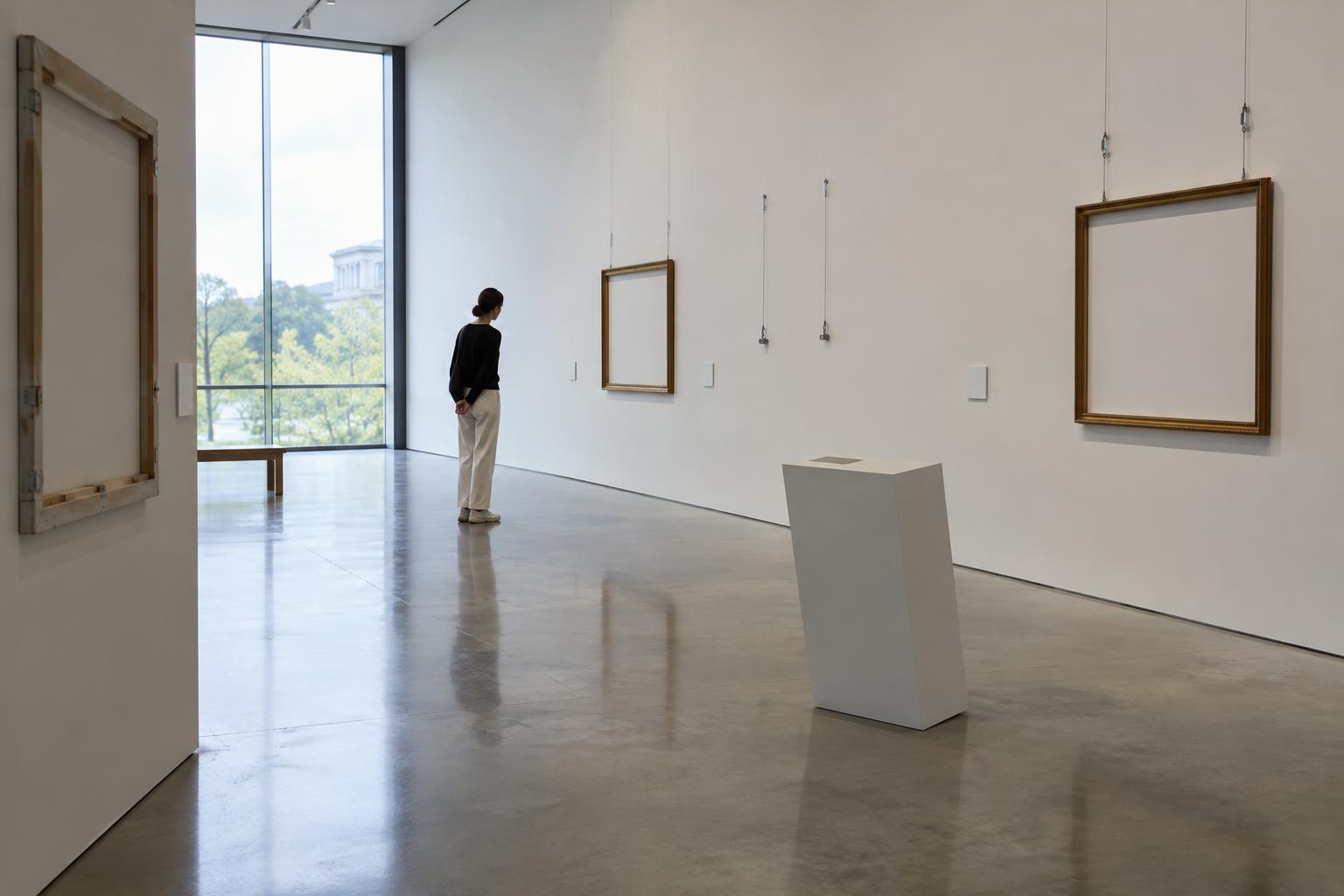
Start with what the work asks you to do. Does it redirect your movement, make you read a familiar kind of text more slowly or draw attention to something absent? Notice its materials and placement as carefully as you would in any other artwork. A borrowed display case, an altered label or an empty section of wall may be a deliberate formal choice, not merely background information.
Then consider the work’s target and its limits. Is it questioning a particular collection decision, a general habit of museum display or your own expectations as a visitor? Could someone with a different relationship to the institution read it differently? These questions keep institutional critique from becoming a simple test of whether a museum is “good” or “bad.” At its most useful, it offers a way to see art systems as constructed—and therefore open to examination, disagreement and revision.