Treat sound bleed as part of the spatial plan
Sound bleed occurs when audio intended for one work remains audible in another part of an exhibition. It can interrupt a quiet installation, make speech difficult to understand or create an unintended relationship between works. Not every overlap is a problem: a distant voice or rhythm may contribute to the exhibition’s atmosphere. The useful question is whether that overlap supports the work or competes with it.
Begin by walking the proposed site before choosing equipment. Note entrances, open thresholds, reflective surfaces and places where visitors pause. Listen from neighboring works as well as from inside the audio installation. A sound that feels modest beside its speaker may be distracting across a doorway. Make a simple map showing where the audio should be clear, where it may be faint and where it should not be readily noticeable. That map gives artists, installers and curators a shared basis for decisions.
Choose playback that fits the listening experience
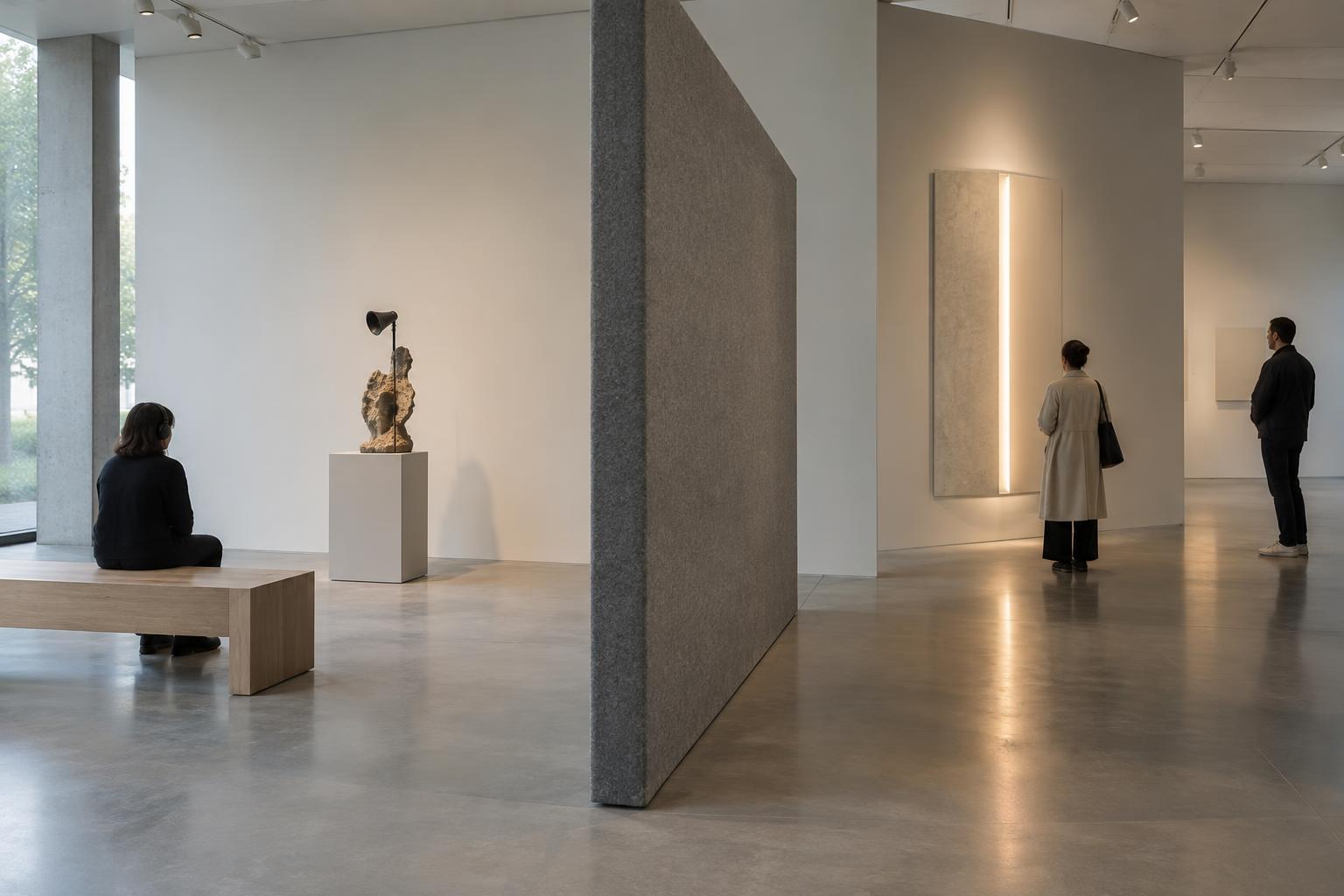
The right playback method depends on how people should encounter the work. Headphones can give each visitor a contained listening experience, but they introduce practical questions about cleaning, accessibility, cable routing and whether visitors should remain aware of their surroundings. A single listening station may create a deliberate pause; it may also form a queue in a narrow gallery.
Speakers allow sound to occupy space and be heard without an extra action from the visitor. When using them, start with the smallest listening area that serves the work. Place speakers close to the intended audience and aim them toward that area rather than toward an opening or a neighboring piece. Directional speakers can help in some layouts, but they do not create an absolute boundary. Low tones in particular may travel beyond the apparent focus of a speaker. Test the actual audio through the proposed setup before committing to it.
Use layout and surfaces to create separation
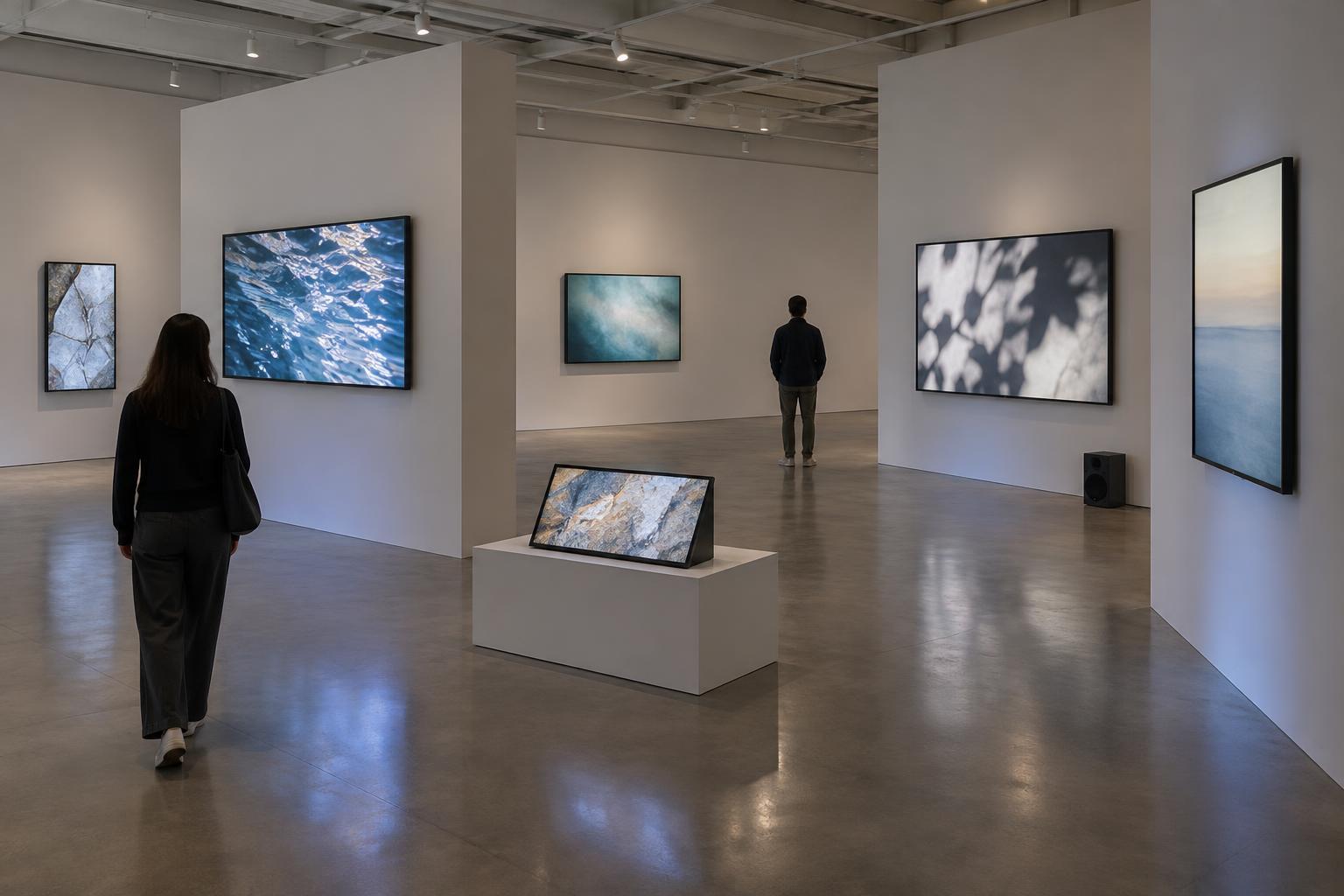
Physical arrangement often does more than a volume adjustment alone. Turning an entrance away from a speaker, placing a listening point deeper inside a room or allowing a transitional area between works can reduce direct spill. Screens and partitions may block a clear path for higher-frequency sound, while their effect on lower frequencies can be limited. A partition should therefore be assessed by listening on both sides, not by assuming that a visual barrier is an acoustic one.
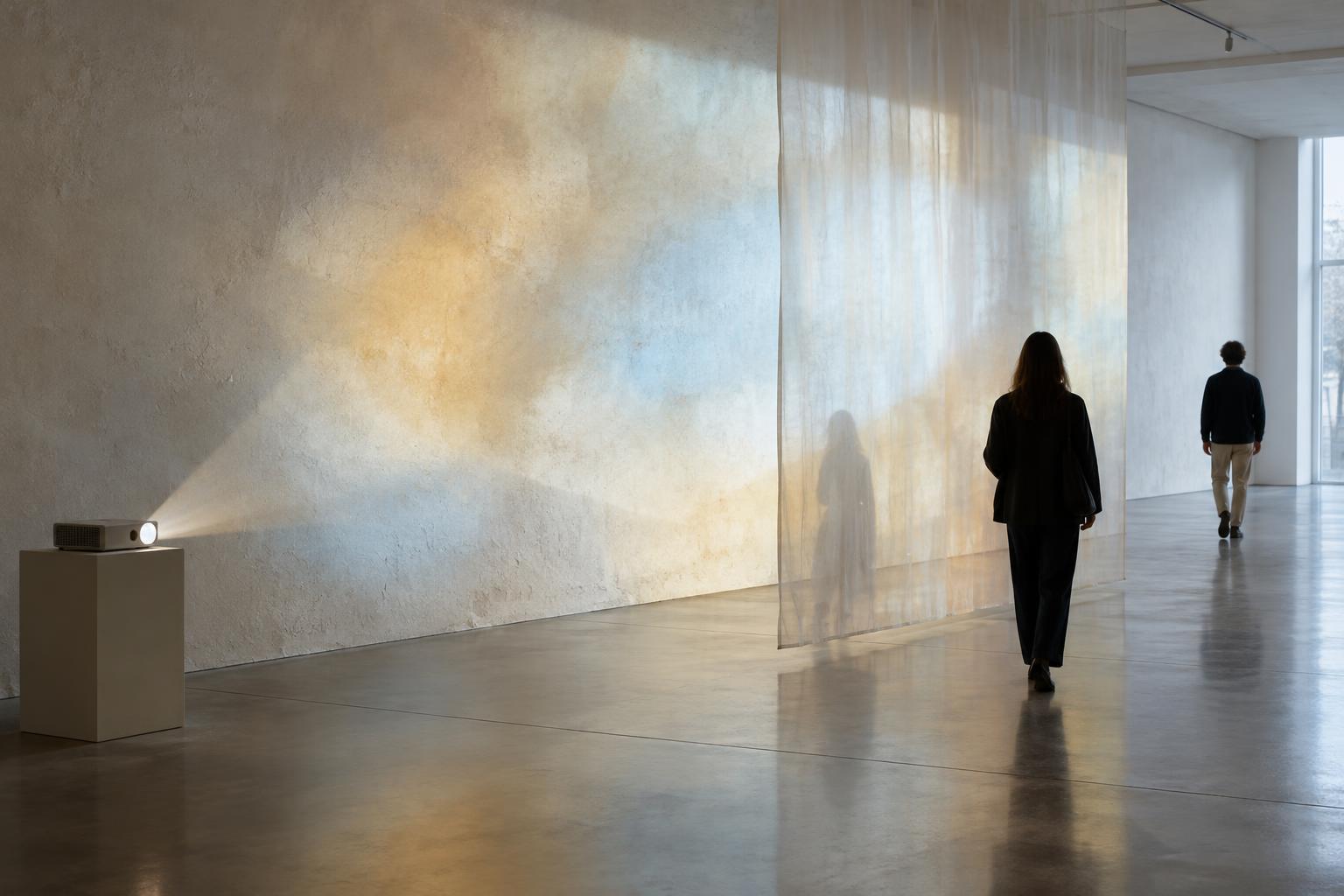
Rooms with hard floors, bare walls and high ceilings may sustain reflections that make audio feel louder or less distinct. Rugs, curtains and other soft elements can sometimes temper those reflections if they suit the installation and the venue’s requirements. They should not be added automatically: a material introduced for acoustic reasons also changes the work’s appearance and how visitors move through it. When several audio works share a space, their positions, orientations and quiet intervals can be planned together rather than solved one at a time.
Set levels with visitors and neighboring works in mind
Sound checks are most useful when they include more than the ideal listening position. Play the loudest passages and walk the full visitor route, including thresholds, adjacent rooms and any quiet seating areas. Check whether spoken words remain intelligible at the intended point without requiring a level that dominates elsewhere. If the audio loops, listen for abrupt restarts or repeated peaks that might draw attention across the gallery.
An empty space may sound different once visitors arrive, so treat the initial setting as a starting point. Leave a clear record of playback level and equipment settings so a well-meaning adjustment does not undo the balance. If several works can be heard together, listen to them together. Reducing every track until it is barely audible is rarely a good solution; changing placement, editing a particularly forceful passage or adjusting the timing of playback may better preserve each work’s character.
Make testing an ongoing curatorial tool
Invite someone unfamiliar with the installation to follow the visitor route and describe what they hear, without first telling them where each soundtrack belongs. Their observations can reveal a distracting spill or an unexpectedly effective overlap. Ask as well whether instructions are audible, whether headphones are easy to use and whether a visitor can move through the space without approaching cables or equipment.
After opening, check the installation at different points in the day if possible. Doors may be left open, equipment may shift and visitor behavior may differ from the installation team’s expectations. Small adjustments can help, provided they are considered in relation to the artwork and neighboring pieces. Managing sound bleed is not simply the pursuit of silence outside a marked zone. It is the work of deciding where listening begins, how it changes as people move and what each sound is allowed to share with the space around it.