Emptiness is something viewers encounter
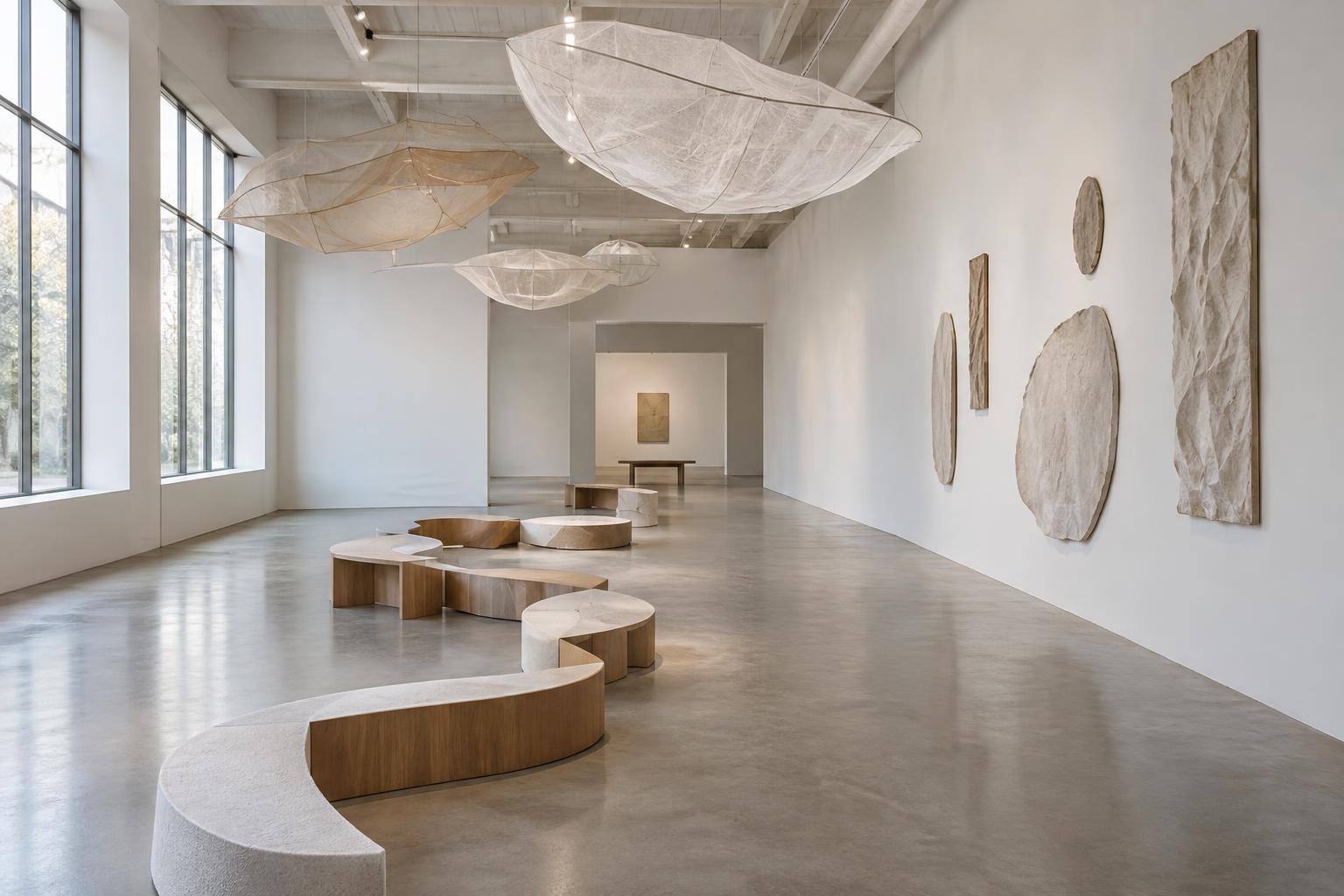
Negative space is often described as the area around an object. In an installation, that definition can feel too static. Visitors enter the work, cross distances and decide where to stand. An empty stretch of floor may slow their approach to a small object, while a clear area between two structures may become the place where they pause. The space is not simply left over after the objects are arranged; it helps determine how those objects are experienced.
This does not mean every gap carries a hidden message. Emptiness can serve several purposes at once: giving the eye a rest, allowing people to pass safely or making a crowded area feel more intense by contrast. A useful question is not “What does the empty space symbolize?” but “What changes because this area is empty?” That question keeps attention on what a viewer can see, hear and do.
Distance gives objects a relationship
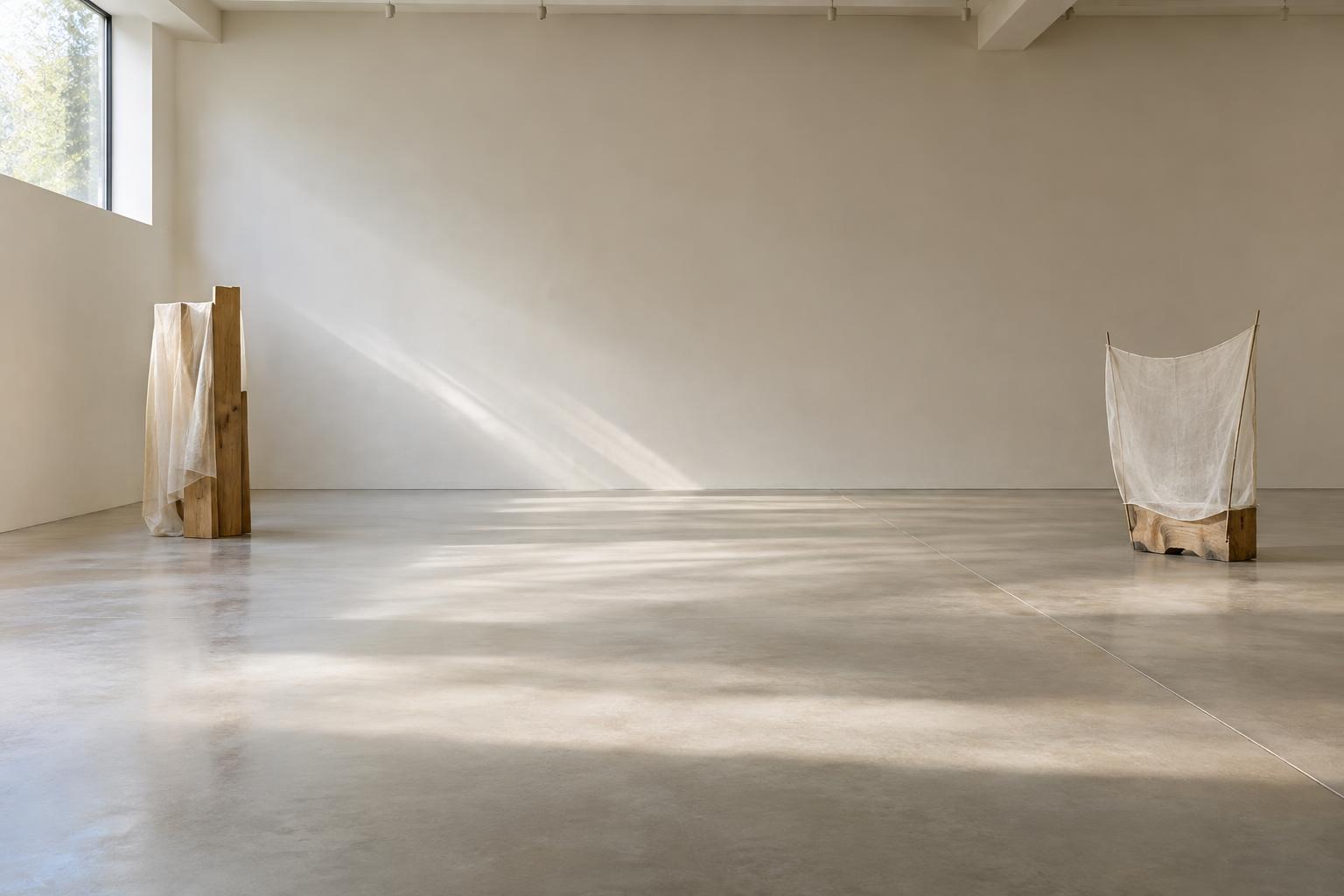
Imagine two modest objects placed close together. A viewer may read them as a pair and compare their surfaces. Move them to opposite ends of a room, and the walk between them becomes part of the encounter. The viewer may hold the first object in memory while examining the second. Distance can create anticipation, uncertainty or a sense of separation without adding another physical element.
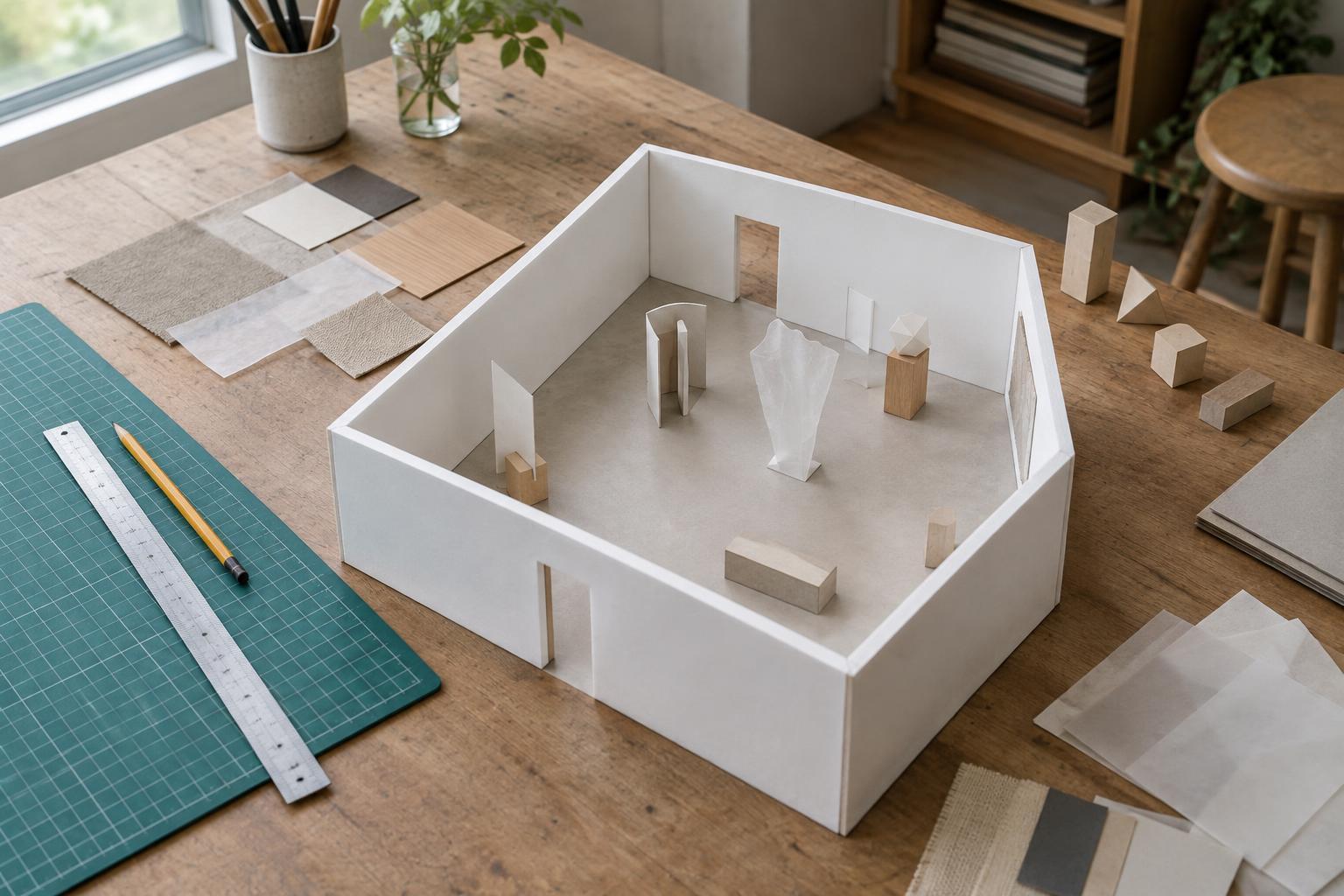
Scale matters as much as distance. A single object surrounded by a wide margin may command attention, but it may also look vulnerable or easy to miss. Several objects with uneven gaps can create a rhythm: gather, disperse, gather again. When planning a layout, it helps to test these effects from more than one position. What feels balanced in a floor plan may feel abrupt from the doorway or indistinct at eye level.
The body completes the composition
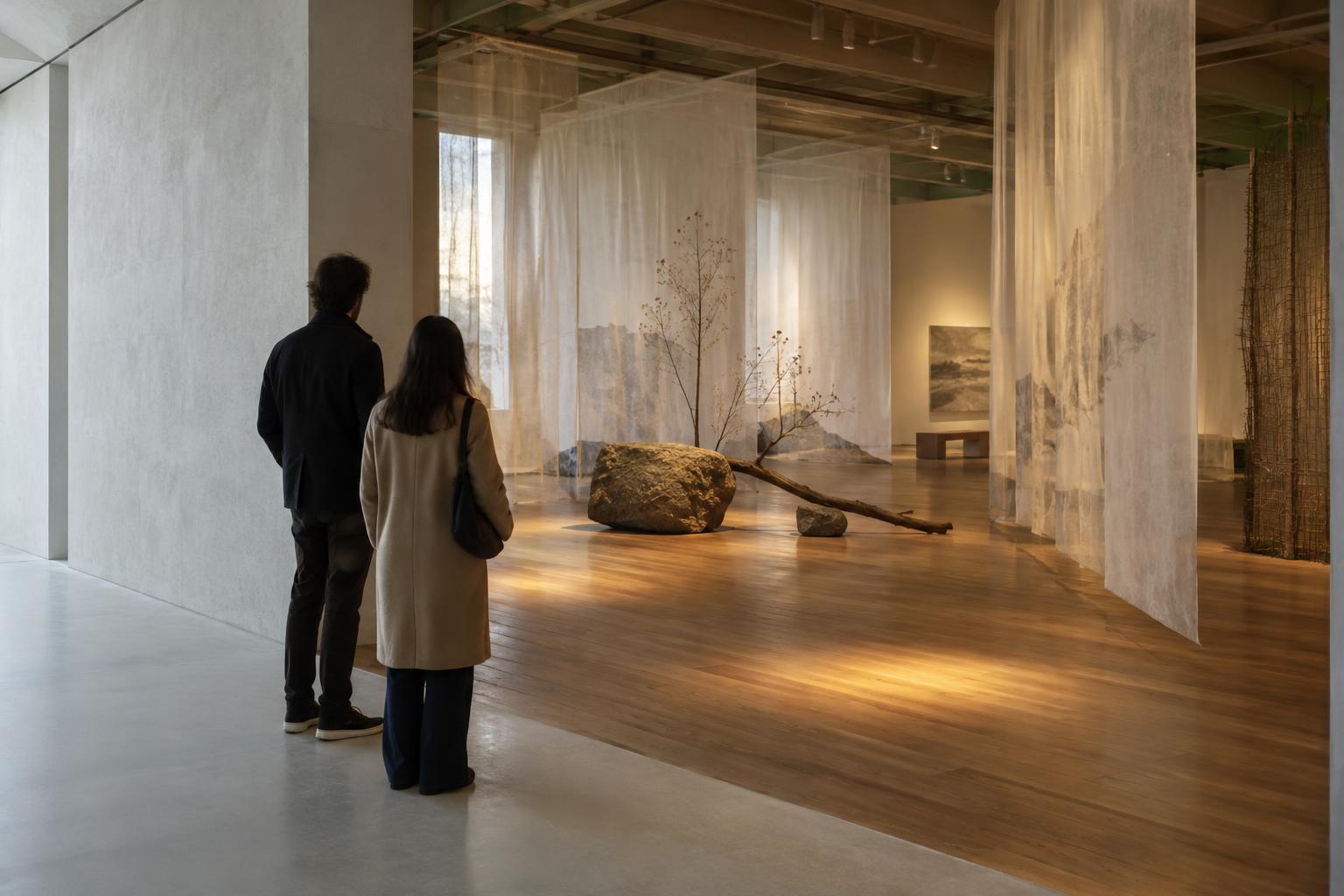
Installation space is experienced over time. A narrow passage may invite a careful pace; a broad opening may offer a choice of routes. Even when visitors are free to move anywhere, the placement of work can suggest where to approach, turn or stop. Negative space becomes especially noticeable when a route offers a view before it offers access. The viewer sees something across the room, then takes time to reach it.
That movement also changes what is absent. A gap may look empty from one angle but frame another visitor from a different angle. A corridor may seem quiet until footsteps become audible within it. If the work depends on an open area, the maker can consider how it functions with one person present and with several. The aim need not be to control every movement; it can be to leave room for different ways of encountering the work.
Light, sound and architecture occupy the gaps
An empty area is rarely neutral. Daylight might cross it, a shadow might mark its edge, or sound might carry through it. Walls, windows and doorways also influence whether a gap feels enclosed or expansive. A blank wall behind an object can sharpen its outline; the same object against a busy view may seem less distinct. Looking at negative space therefore means noticing the conditions around the work, not only measuring vacant floor.
For artists, a simple site visit can reveal useful constraints. Stand at likely entry points and note what is visible first. Listen from the quietest and noisiest parts of the room. Check whether a clear route remains when someone stops to look. These observations may lead to small adjustments rather than a dramatic redesign: shifting an object, widening an interval or allowing a shadow more space to fall.
How to read what is not there
When interpreting an installation, start with a description before reaching for a meaning. Where are the occupied areas? Which spaces invite you through, and which hold you back? Is there a place where you can take in the whole work, or does it appear only in fragments as you move? Such observations make an interpretation more specific than saying that the room feels “empty.”
Then consider what the gaps allow you to notice. They may emphasize a material’s texture, separate competing sounds or make the room’s existing architecture difficult to ignore. They may also leave space for visitors to form their own connections between elements. Negative space is not automatically profound, but it can be an active part of an installation when its dimensions, position and effects matter to the experience of the work.