Begin with the site, not just the object
An outdoor installation is never alone in a room. Light shifts across it, rain reaches it from different directions, and people may encounter it while doing something other than looking at art. Before settling on materials or dimensions, spend time observing the proposed site. Where does water collect? Which areas stay shaded or exposed? How do people move through the space, and where might they pause, lean or cut across a corner?
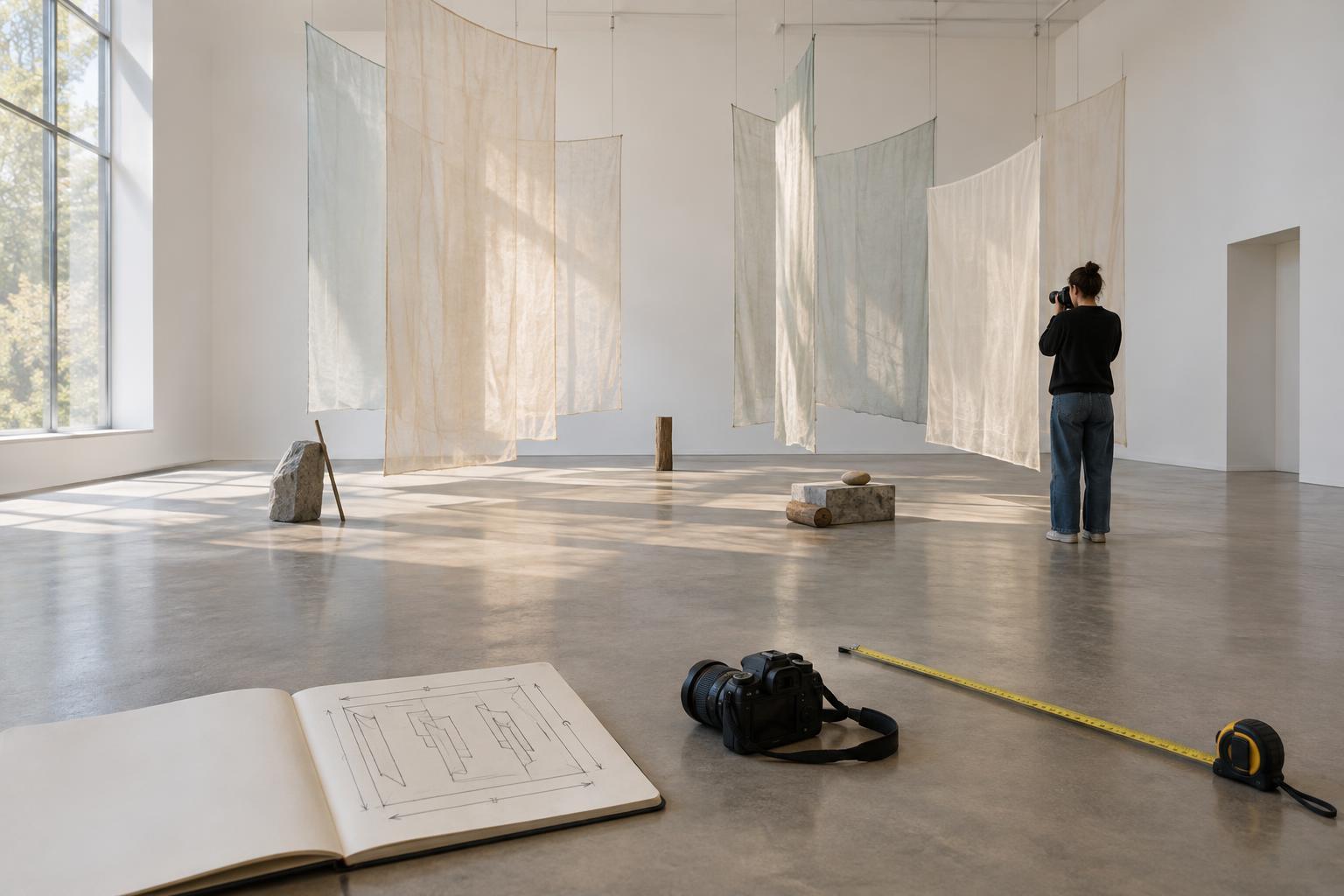
These observations can shape the work rather than merely constrain it. A piece that casts shadows might make changing sunlight part of its composition. One near a walkway may need to remain legible from several angles. Sketch the installation in relation to paths, planting, seating and nearby structures. If the site is not yours to manage, discuss placement, access and permitted methods of attachment with those responsible for it before treating a design as final.
Choose materials with change in mind
Outdoor exposure affects materials in different ways. Some colors fade; some surfaces stain, swell, corrode or become brittle. A material that looks compelling in a studio may behave differently after repeated wetting and drying. Test samples in conditions resembling the intended setting when possible, and examine the whole assembly: coatings, adhesives, fasteners and joints can affect how a work ages just as much as its most visible surface.
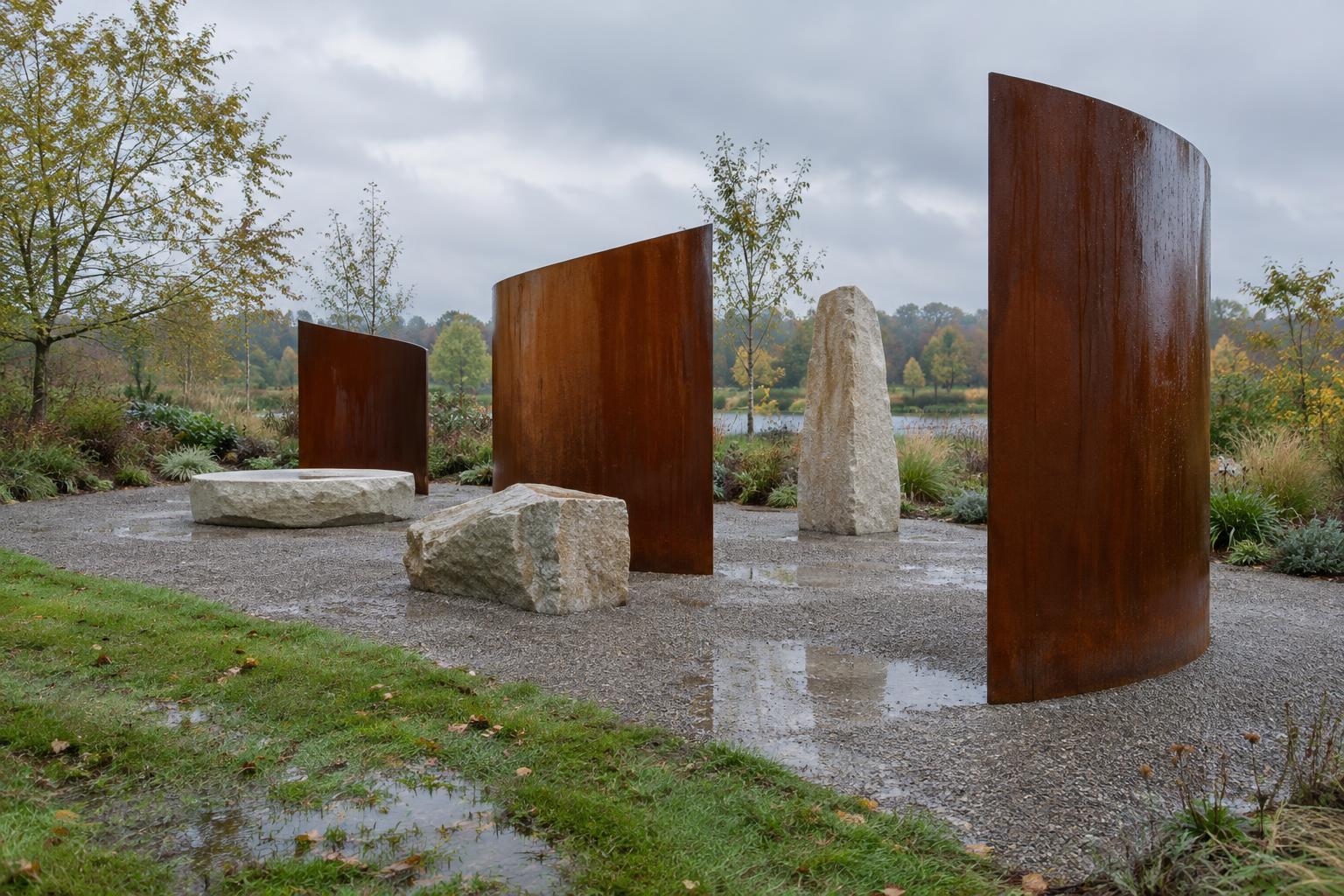
It helps to decide which changes belong to the artwork. A gradual patina may reinforce an idea about time, while a peeling finish may obscure an image or leave fragments on the ground. Document the intended appearance and the range of change you are willing to accept. That distinction gives future caretakers a basis for deciding whether to preserve a mark of exposure, clean it or repair it. For unfamiliar materials or demanding structural conditions, seek appropriate technical guidance rather than relying on a small sample alone.
Plan for wind, water and contact
Weather is not a single condition. Wind can move flexible parts or place stress on connections; rain can enter openings and linger where it cannot drain; strong sun can make a surface unpleasant to touch. Consider these possibilities while developing the form. A sheltered recess, a replaceable component or a design that lets water escape may be more useful than adding protection after installation.
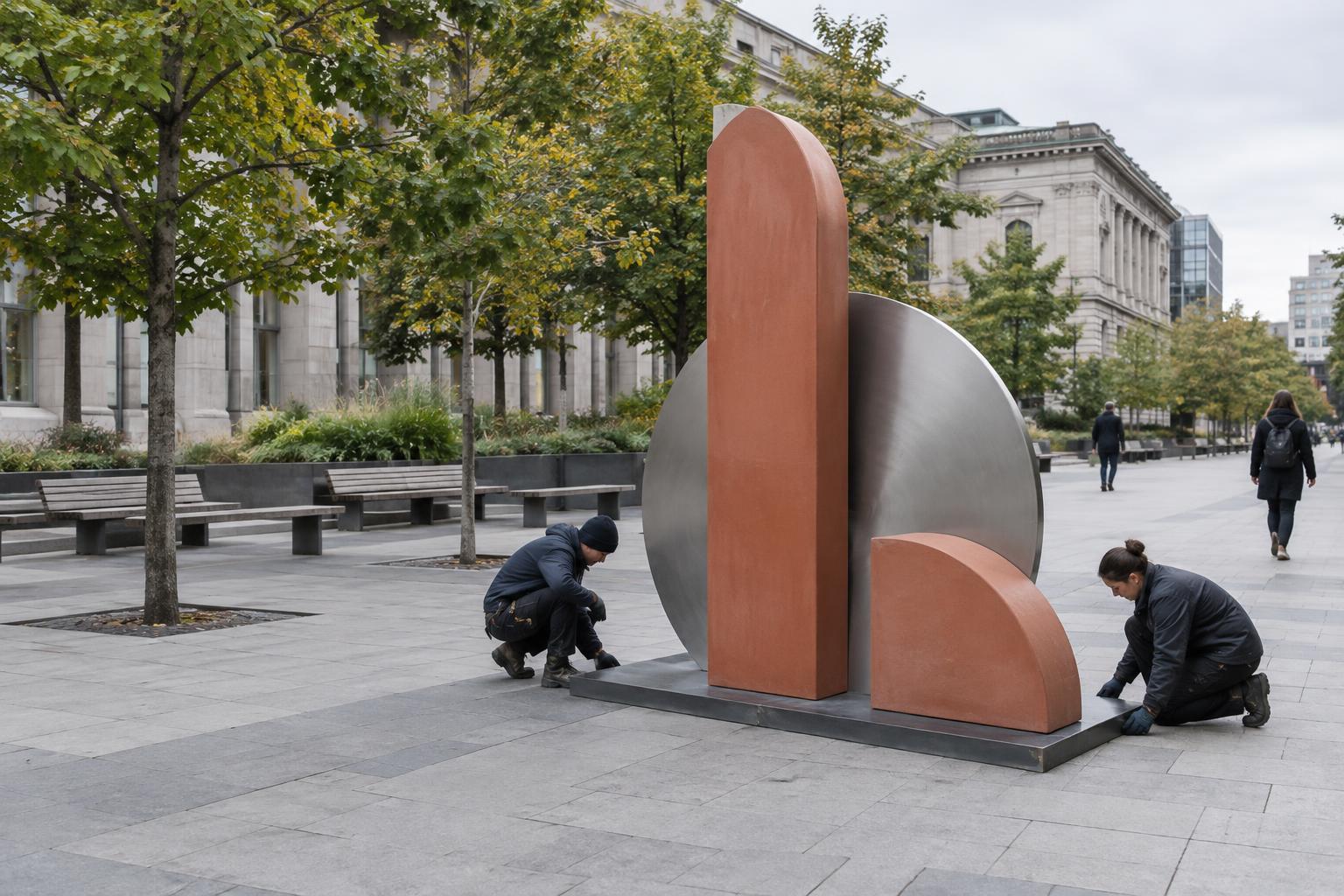
Visitors are another part of the outdoor environment. Even a work meant only to be viewed may be touched, climbed on or used as an informal landmark. Think through what someone can reach, trip over or dislodge, including when the site is crowded or visibility is poor. Clear sightlines and an unobstructed route can help the work coexist with everyday movement. Where an installation requires anchoring, electrical components or public access, have qualified people review the relevant design and site requirements.
Make maintenance part of the proposal
An installation does not become maintenance-free because its materials are described as durable. Leaves gather in gaps, labels become hard to read, and minor damage can grow if no one knows who should address it. Write a short care plan while the work is being designed. Identify what should be inspected, how often it can reasonably be checked, what cleaning methods are suitable and which parts can be replaced without changing the artwork.
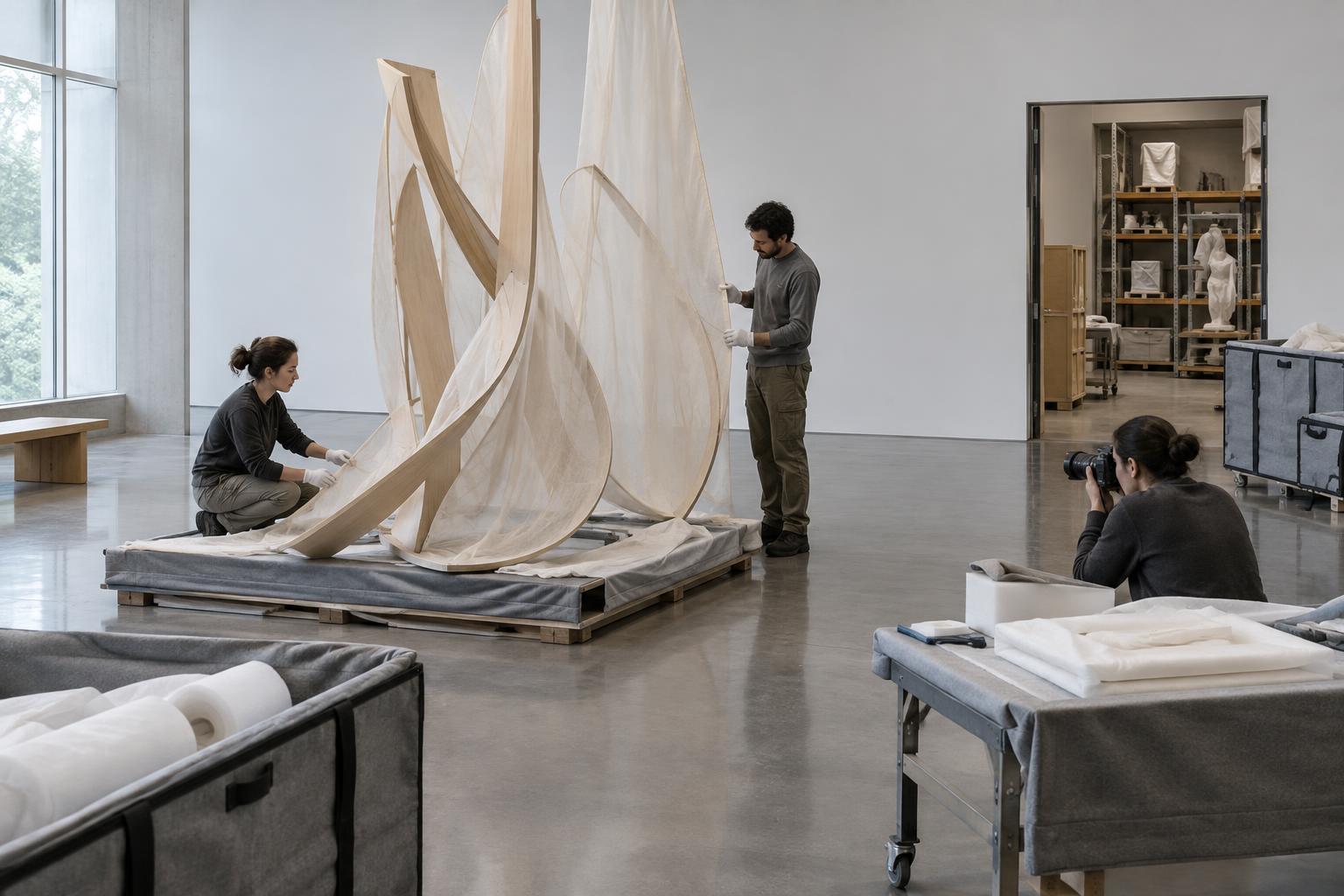
Keep the plan usable for someone who did not make the piece. Include clear photographs of its initial condition and notes on finishes, connections and spare components. State who is responsible for routine checks and who should be contacted when a problem falls outside routine care. If the work is temporary, plan for removal too: how it will come apart, what will happen to its materials and how the site will be left afterward.
Let upkeep inform the artistic experience
Maintenance is often treated as an invisible task that begins after the creative work ends. For outdoor art, it can be a useful design question from the start. A surface that can be cleaned without erasing its texture, or a component that can be changed without dismantling the whole piece, may preserve the intended encounter over time. Conversely, a work designed to weather visibly can invite viewers to notice how place and duration alter what they see.
The aim is not to eliminate every trace of exposure. It is to make deliberate choices about what may change, what must remain stable and who can act when the two become difficult to distinguish. With those choices in place, an outdoor installation can engage its surroundings without leaving its future entirely to chance.