What does a photograph claim to show?
A photograph often appears to offer direct access to something that stood before a camera. That connection matters, but it does not make the image a complete account of an event. A photographer chooses where to stand, when to press the shutter, what to leave outside the frame, and which image to show. Even a casual-looking photograph is the result of decisions.
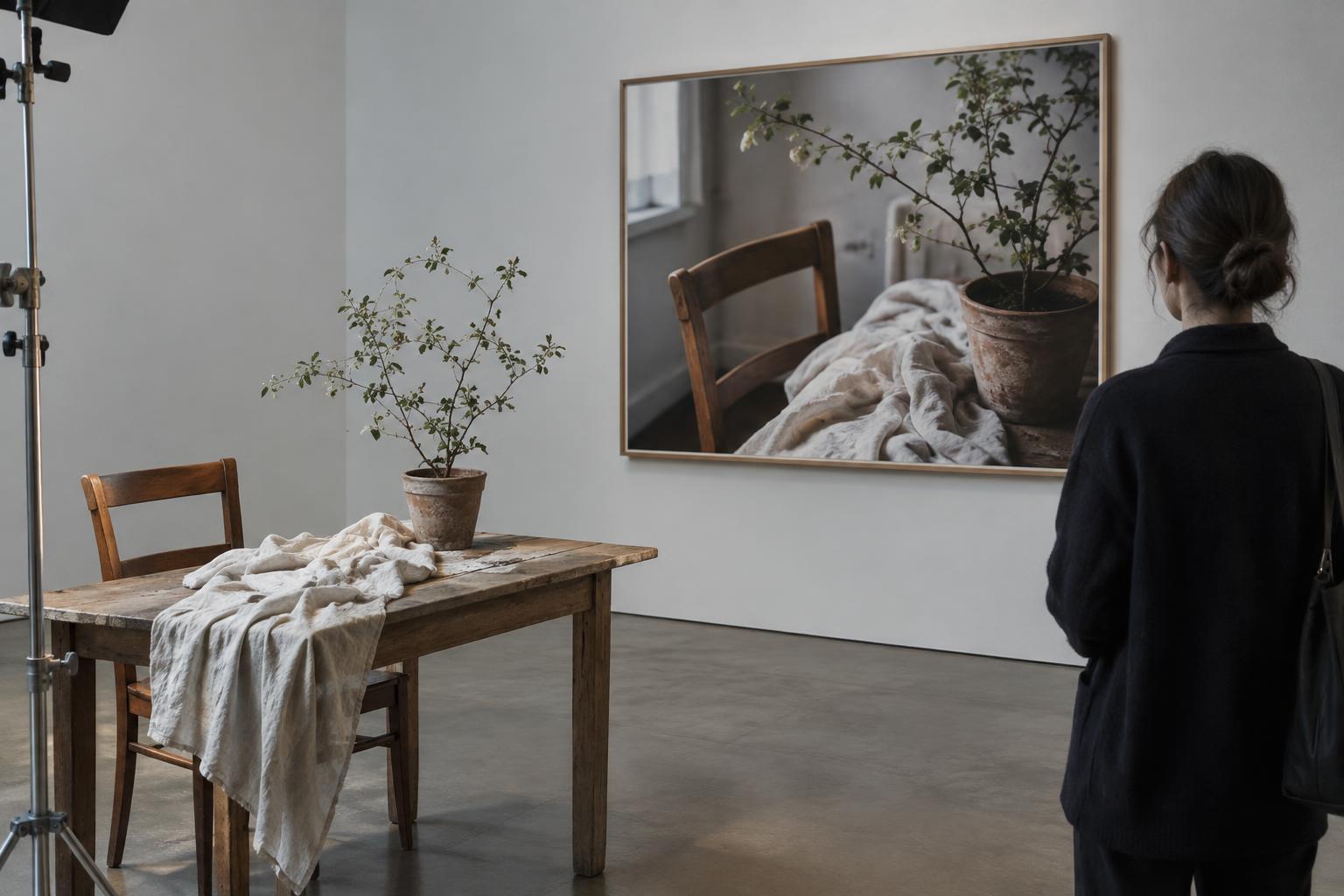
In contemporary art, the question is often not simply whether a photograph is real. It is what kind of account the image offers and how it asks to be trusted. A picture of an empty room might document a place as it was found, record a temporary arrangement made for the camera, or present a set built to resemble an ordinary interior. The visible scene alone may not settle the matter.
This uncertainty can be productive rather than frustrating. Instead of treating documentary and constructed photography as opposite categories, viewers can consider them as approaches that overlap. A staged photograph still records the staged scene. A documentary photograph can become part of a constructed narrative when an artist selects, sequences, captions, or displays it.
The many forms of construction
Construction does not always mean an elaborate set or digital alteration. An artist might ask someone to repeat a gesture, move an object toward the light, or wait until a space is empty. They might combine photographs taken at different times or make a new image of an older print. These methods change what the photograph communicates, even when every visible object existed in front of a camera.
Other works make their artifice easier to see. Painted backdrops, props, costumes, unusual lighting, and impossible combinations can signal that the image is a scene made for viewing. Such photographs may draw attention to the conventions of advertising, portraiture, cinema, or the family album. Recognizing those conventions gives a viewer more to consider than a simple test of whether the scene really happened.
Digital tools add further possibilities, but they do not create a clean divide between older, truthful pictures and newer, manipulated ones. Cropping, printing, retouching, and arranging images have long shaped photographic meaning. A useful question is not only “Was this edited?” but “Which choices are important to the work, and what do they lead me to believe?”
How context changes the documentary claim
The same photograph can carry different meanings in a personal archive, a news report, and an exhibition. In a gallery, its size, placement, neighboring images, and accompanying text affect how it is read. A single large print may invite close attention to surface and detail. A wall of small images may suggest comparison, repetition, or an attempt to gather evidence. Neither format guarantees what the photographs can prove.
Titles and captions deserve particular attention. A precise place name can make an image feel anchored to a specific situation; an ambiguous title can leave more room for interpretation. Text may supply information a viewer cannot get from the picture, but it can also introduce a character, a voice, or a fictional premise. When looking at a work, try separating what is visible from what the surrounding words ask you to accept.
The people pictured matter as well. A documentary claim can raise questions about who chose the image, who is identified, and whose point of view is missing. Those questions need not lead to an immediate verdict about the artist’s intentions. They offer a way to look carefully at how a photograph represents other people and how much authority its presentation assumes.
A practical way to look
Begin with description. Note the setting, figures, objects, light, and edges of the frame without deciding what the image means. Then identify any signs of direction or staging: repeated poses, theatrical lighting, conspicuous props, or a scene that seems arranged around the camera. None of these is proof by itself. Natural-looking images can be staged, and striking compositions can occur without planning.
Next, look at the work’s presentation. Is this one photograph or part of a sequence? Do changes from image to image suggest a passage of time, several views of a place, or different versions of a story? What does the title add? If the exhibition provides information about the artist’s method, consider how it changes your first reading rather than using it to erase that reading.
Finally, ask what remains unresolved. Some works rely on the tension between a photograph’s documentary appearance and the artist’s visible construction. Others clearly announce a fictional scene while borrowing the detail and immediacy associated with documentary images. Looking well does not always mean reaching a firm answer. It can mean noticing exactly where the image offers evidence, where it invites speculation, and how those two experiences work together.