Three parts of a painted surface
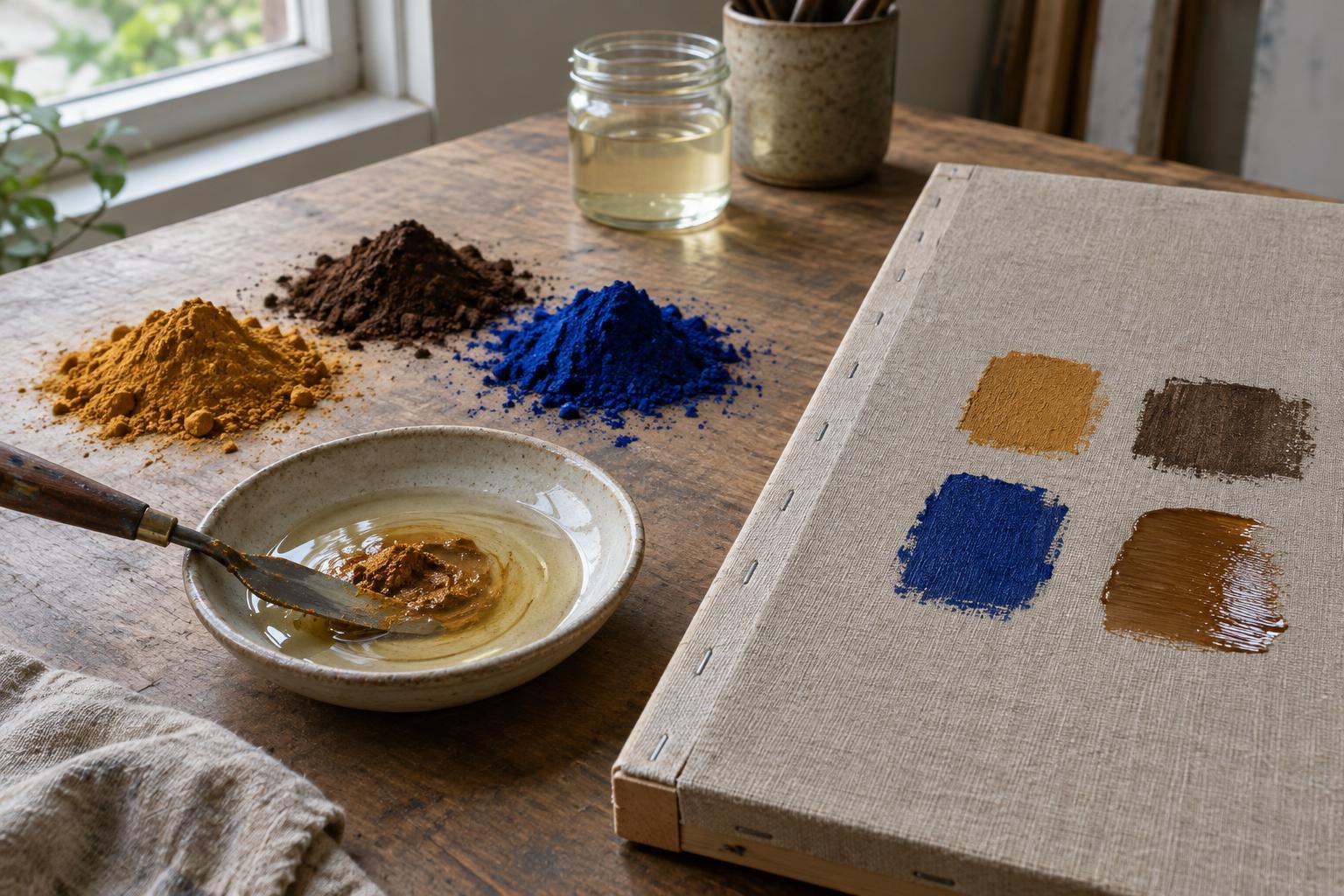
When looking at a painting or a painted installation, it is easy to treat color as a single thing. In practice, a colored surface often brings together three distinct elements: pigment, binder and support. Pigment provides color. Binder holds the pigment together and helps it adhere. Support is the surface that receives the mixture, whether canvas, paper, wood, wall or another material.
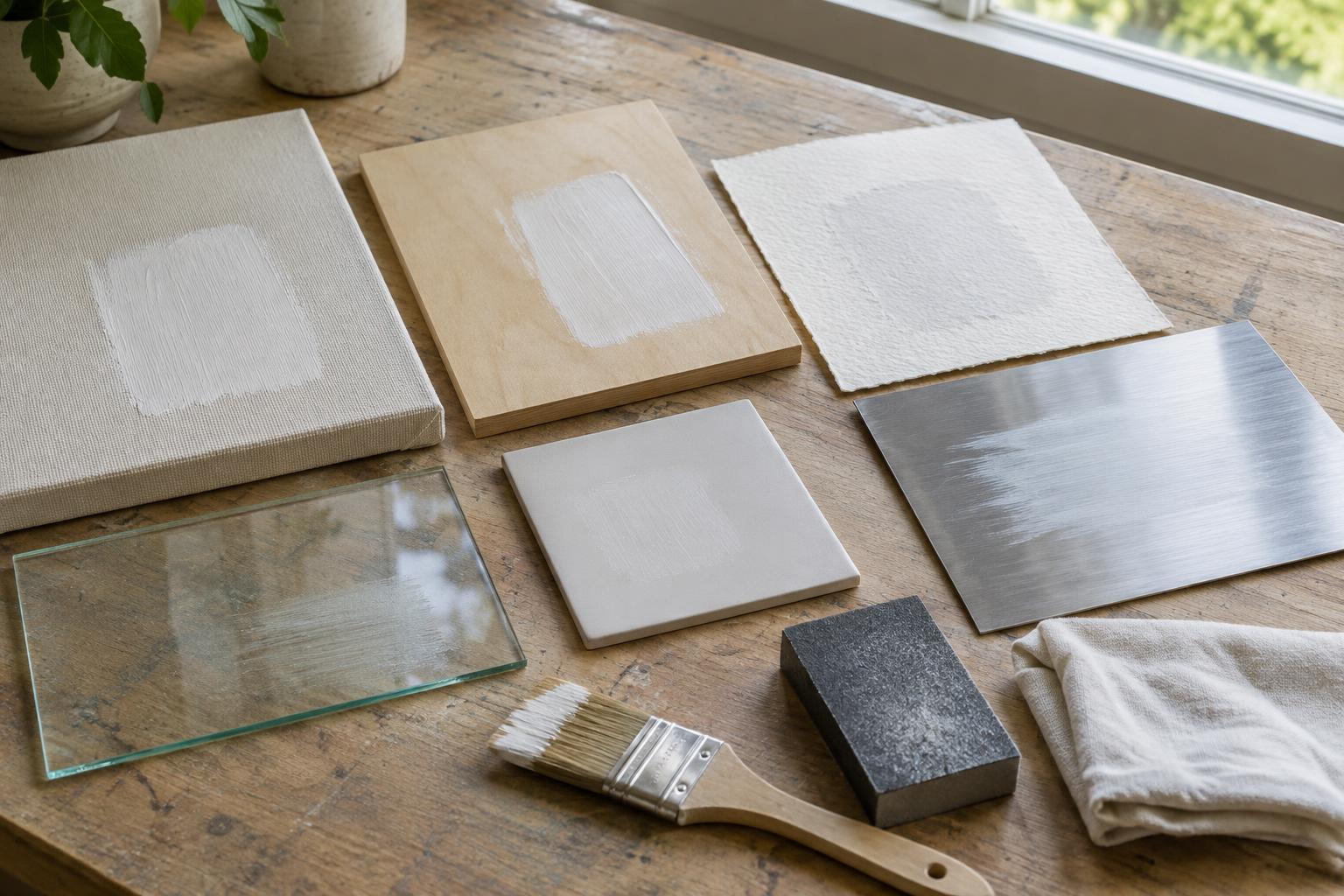
These elements do not work independently. The same pigment can look different when suspended in a different binder or applied to a different support. A rough surface may interrupt an even coat, while an absorbent one may pull liquid into its fibers. Thinking in terms of these three elements gives viewers a useful question to ask: which qualities come from the color itself, and which come from the way it is carried and placed?
Pigment: color with a physical presence
Pigments are particles that give paint its color. They can differ in hue, transparency, particle size and the way they scatter or absorb light. An opaque pigment may cover what lies beneath it; a more transparent one may allow earlier layers or the support to remain visible. Even before an artist chooses a binder, those differences affect the range of effects the color can produce.
Pigment also has a physical presence. In a thin application, particles may seem to merge into a continuous field of color. In a thicker application, they may contribute to a surface that catches light unevenly. Color, then, is not only a visual choice. It can help determine whether an area appears airy or dense, flat or textured, settled into a surface or visibly built upon it.
Binder: the material that makes color workable
A binder holds pigment particles in a usable paint film and helps connect them to a support. Different binders make different working methods possible. Watercolor binder, for example, allows pigment to be diluted and moved across paper with water. Acrylic binder can form a flexible film as water leaves the paint. Oil binder generally permits more time for blending than quickly drying water-based paints, though the experience depends on the particular materials and conditions.
Binder can also influence how light meets the finished surface. A paint film may appear matte, glossy, translucent or opaque depending on its ingredients and application. This is why two passages of similar color may feel unlike one another: one may absorb light softly while the other reflects it. For a viewer, noticing the sheen of a surface can be as revealing as identifying its hue.
Support: more than a place to put paint
The support gives an artwork its physical ground, but it can do much more than hold an image. Paper can buckle, stain or show the path of a watery mark. Woven canvas can remain visible through thin paint. Wood offers a comparatively firm surface, while a wall makes the painted area part of a room’s architecture. Each support brings its own scale, texture and behavior into the work.
Preparation changes that relationship. A coating between paint and support may reduce absorbency, smooth a texture or establish an initial color. Leaving parts uncoated can invite the support to participate more directly. In contemporary practice, an artist may expose an edge, let a stain pass beyond an expected boundary or use a support whose shape affects how people move around the work. The material underneath is then part of the artwork’s meaning, not merely its backing.
Looking at the relationships between them
A useful way to examine an artwork is to begin with what is visible rather than trying to name every material. Where does color sit thickly on top of a surface, and where does it seem to soak in? Are brush marks preserved or leveled out? Does the support show through, or has it been carefully concealed? These observations can suggest how pigment, binder and support interact without requiring a definitive account of the artist’s process.
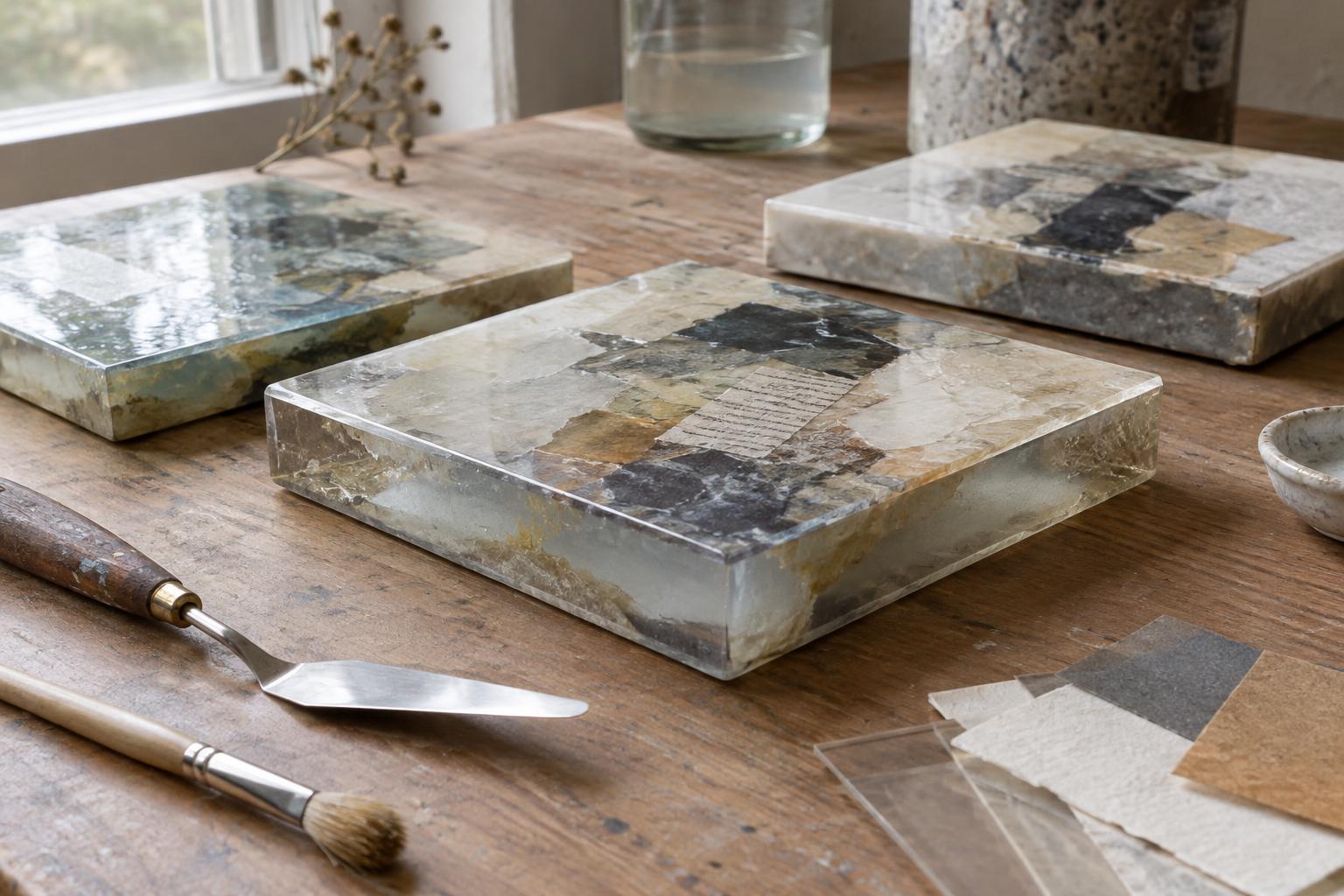
The relationships may also explain an artwork’s effect in space. A glossy painted panel can reflect its surroundings; a matte wall painting may appear closely tied to the wall; a lightly stained textile may move and reveal its weave. None of these effects belongs to pigment, binder or support alone. They arise from choices made among all three, reminding us that an artwork’s surface is both an image to see and a material construction to encounter.