Begin with behavior, not appearance
A sheet of paper, a length of fabric and a thin metal panel can occupy the same area yet invite different kinds of work. One absorbs a wash, another folds around a frame, and the third may hold a crisp edge. Looking at a material tells you something, but handling and testing it reveal what it can do. That distinction matters in artmaking: the surface you choose can change the marks, joins, scale and installation of a piece.
Porosity, flexibility and weight provide three useful questions. What can pass into or through the material? How does it change shape under pressure? What effort does it take to lift, support or move? These properties interact, so treat them as a way to begin observing rather than as fixed labels. Two samples sold under the same material name may behave differently because of their thickness, weave, coating or construction.
Porosity: what a surface receives
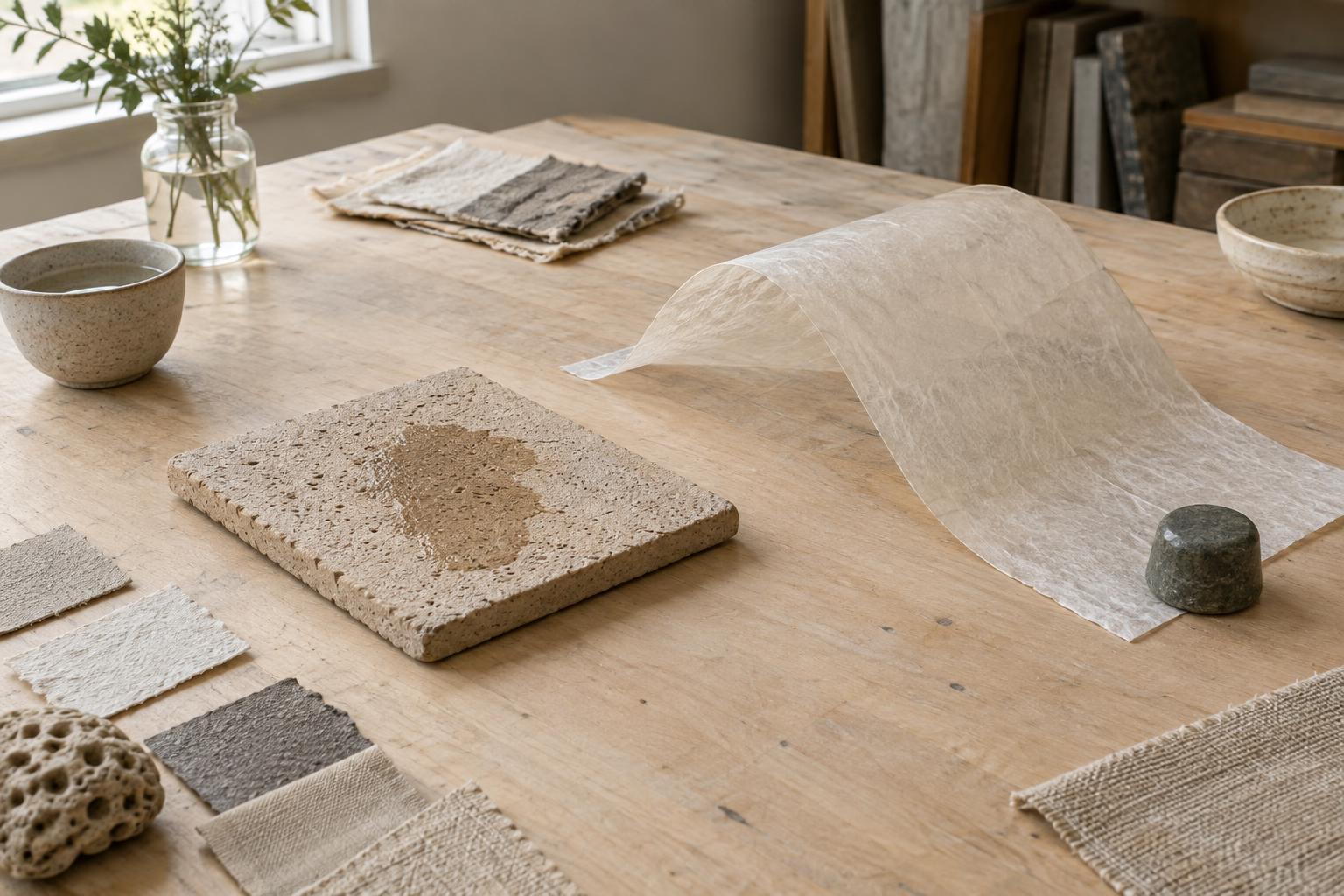
Porosity describes the presence of openings or spaces that can admit liquid, air or particles. In a studio, it becomes visible when a surface absorbs paint, draws adhesive into its fibers, allows light through, or traps dust in its texture. An absorbent support may soften the edge of a mark; a less absorbent one may leave color sitting visibly on top. Neither effect is inherently better. The question is whether it serves the work.
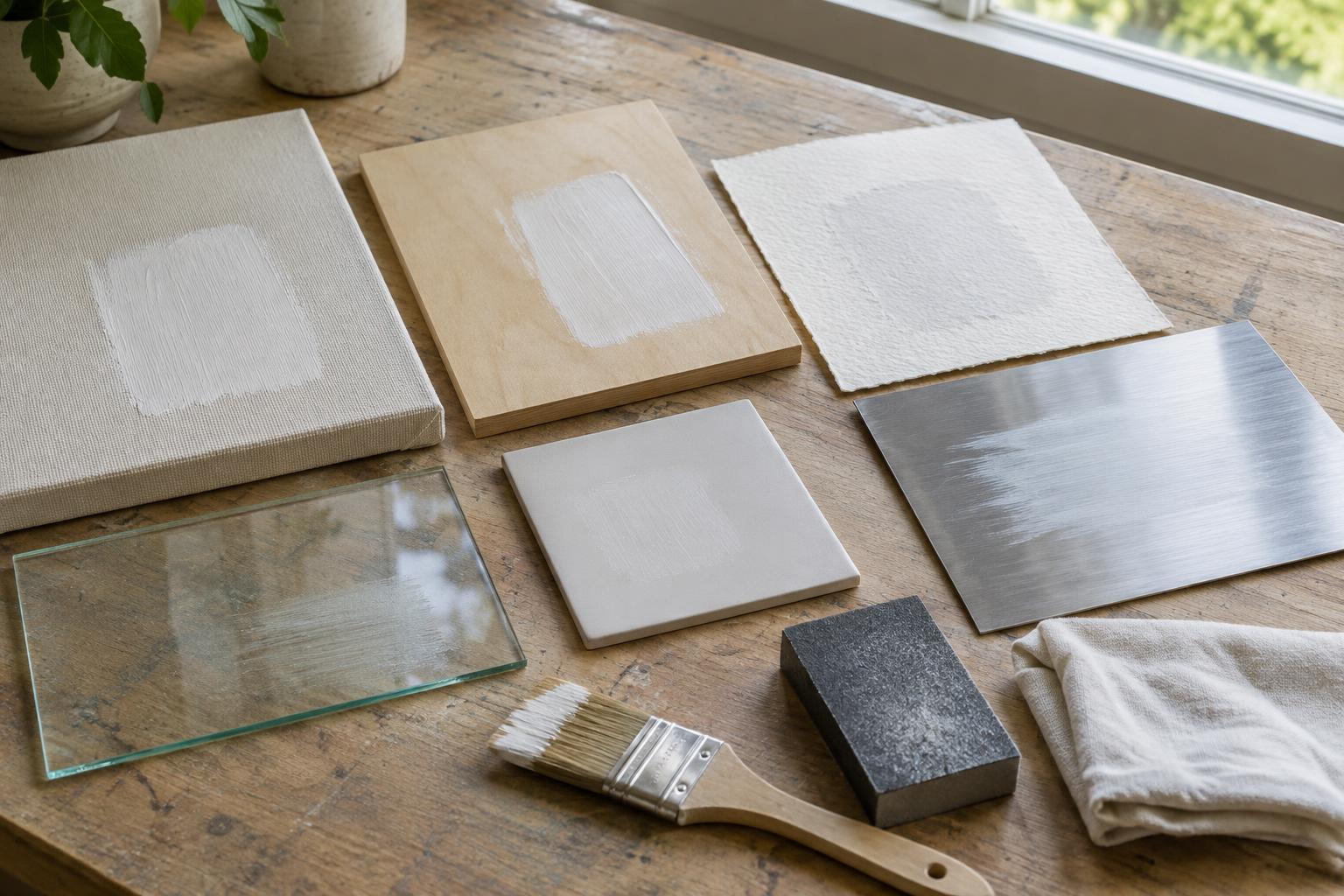
To investigate, place small, consistent drops of your intended medium on offcuts and observe where they travel. Test the front, back and cut edge when those surfaces differ. Let the samples dry before judging them: a mark can look controlled while wet and spread later, or an adhesive can appear secure before it has fully set. If a coating or sealant is part of the plan, compare a treated sample with an untreated one. Record what you used so you can repeat a useful result.
Porosity also matters beyond mark-making. An open weave may create layered shadows; a dense but textured surface may catch projected light unevenly. Materials that absorb moisture can also change shape as conditions vary. For work intended to remain on display, consider how those changes could affect joins, tension and nearby surfaces.
Flexibility: how a form responds
Flexibility is more than the ability to bend. Notice whether a material springs back, keeps a crease, stretches in one direction, or weakens when bent repeatedly. A soft sheet might drape into a curve under its own weight, while a stiffer sheet needs a support to hold that curve. Those behaviors can determine whether a form feels suspended, folded, taut or unstable.
Simple tests are often more revealing than a description on a package. Bend a sample gently in different directions, then release it. Try a loose fold and a sharper crease on separate pieces. If you intend to stitch, fasten or hang it, test those actions too: flexibility near a fastener may be different from flexibility across an uninterrupted span. Avoid assuming that a material which bends easily will withstand repeated handling.
Flexibility can become part of the viewer’s experience. A hanging element may shift slightly as people pass; a rigid element may make a room feel more sharply divided. Plan for what the work is allowed to do, including movements you do not want. A flexible component may need clearance from a wall or another object, while a deliberately fixed form may need a less visible support than the material alone can provide.
Weight: a property felt by the whole installation
Weight affects more than transport. It influences whether a piece sags, how its edges meet, and what kind of support its scale demands. A small sample may feel light in the hand, but a large assembly of the same material can place very different demands on its frame or hanging points. Distribution matters as well: an off-center mass can tilt a suspended work even when its total weight seems manageable.
Make a modest mock-up that includes the intended layers and connections, not just the most visible surface. Hold or hang it in the orientation you plan to use, and look for sagging, twisting and pressure at joins. For wall-mounted or suspended work, the strength of the wall, hardware and attachment method must be considered together. Where a failure could harm someone or damage the space, seek appropriate installation expertise rather than relying on a studio sample alone.
Weight also has expressive possibilities. A heavy-looking object made from a light material can unsettle an expectation; a visibly burdened support can draw attention to effort and gravity. Those effects are strongest when they arise from a construction that works, rather than from an unsupported assumption about how the finished piece will behave.
Make tests part of the work
A useful material test is small, specific and tied to a decision. Instead of asking whether a material is suitable in general, ask whether it will hold a particular fold, accept a particular mark, or hang across a particular span. Change one variable at a time when possible, and keep samples that show both success and failure. Labeling them with the medium, method and orientation can save you from repeating a test later.
Finally, revisit the work from a viewer’s position. Step back, move around it and notice which material behaviors remain visible. A porous surface may read as depth, staining or softness; flexibility may register as motion or as a carefully held line; weight may be apparent through tension and support. Reading materials this way keeps technical choices connected to meaning. The aim is not to master every property before making, but to let attentive observation guide what you make next.