Treat the old project as material, not a promise
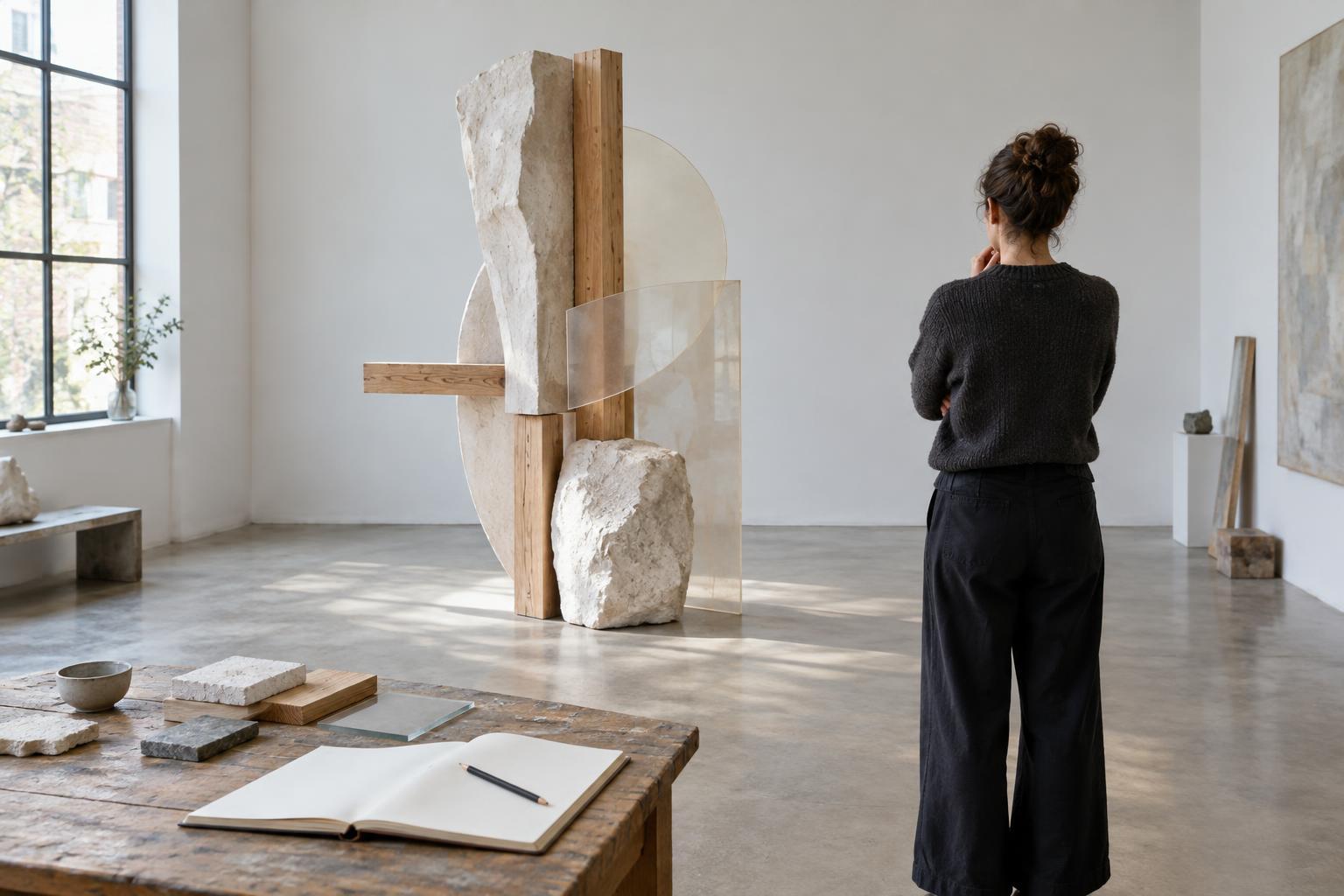
An abandoned art project can feel like a task waiting to be finished. That feeling makes it tempting to resume exactly where you stopped, even if your interests, working conditions, or understanding of the idea have changed. A more useful approach is to treat the project as a collection of material you can examine. Sketches, test pieces, photographs, notes, failed joins, and half-built structures may all hold possibilities without obliging you to follow the original plan.
Begin by gathering what still exists in one place, physically or digitally. Look before you revise. Which decisions still feel alive? Which elements were solutions to constraints that no longer apply? If an installation was planned for a particular room, for example, its scale may be less important now than the way it directed a viewer’s attention. Separating the underlying interest from the old format gives you room to continue without pretending nothing has changed.
Find the question beneath the plan
Old plans often describe what to make rather than why it mattered. A note that says “suspend fabric panels across the room” specifies an action, but the project’s lasting question might concern movement, privacy, or how light changes a surface. Write one or two sentences about what you were trying to notice or test. If you cannot remember, let the surviving work suggest a question rather than forcing a confident explanation.
Then compare that question with the project’s unfinished parts. A drawing may have more energy than the proposed sculpture; a material test may be more compelling than the final composition it was meant to support. You are allowed to promote a supporting experiment into the main work. You are also allowed to decide that the original question has been answered for you. Revisiting a project can clarify that it should be documented and set aside, not completed.
Make an inventory of what is reusable
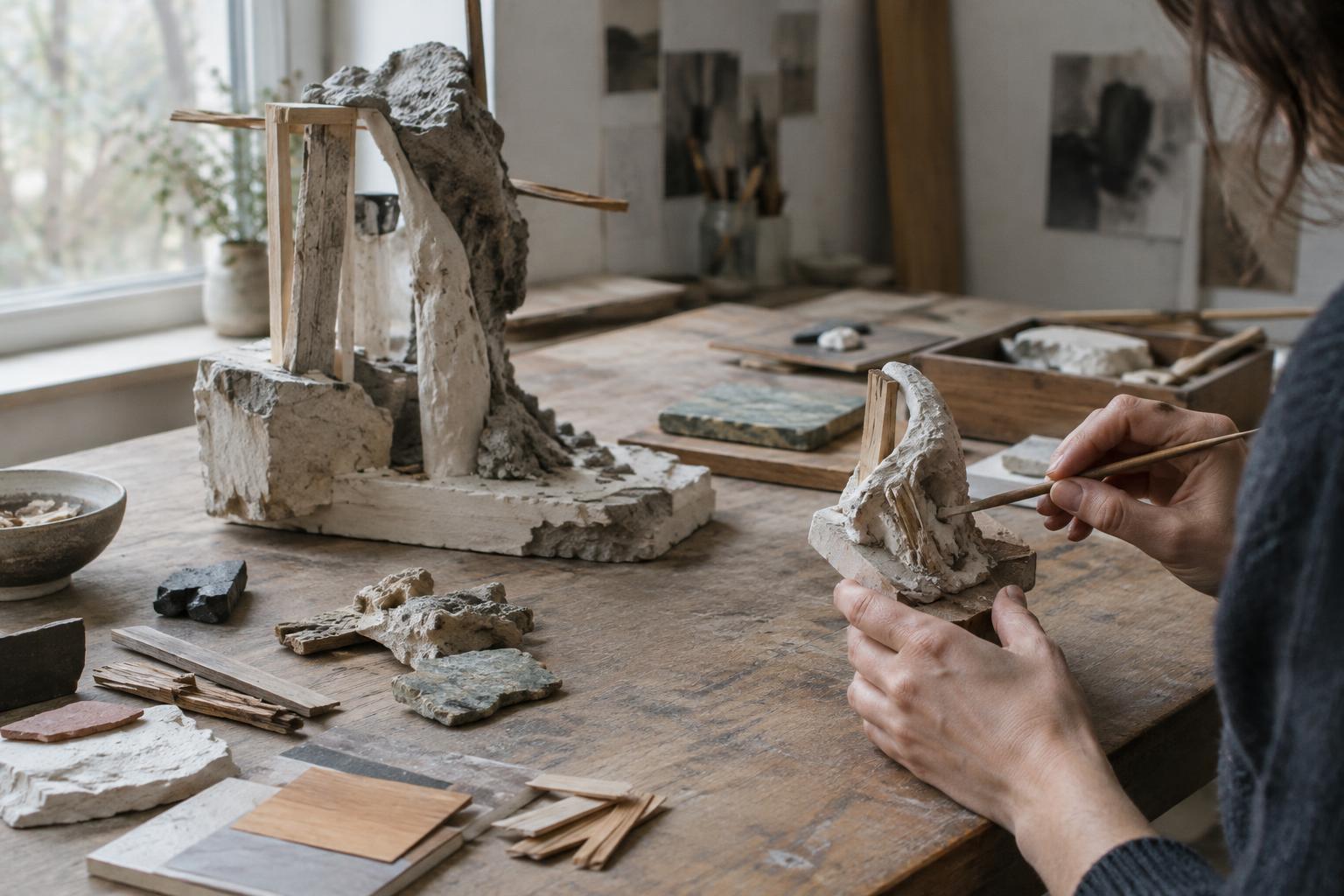
A simple inventory can prevent the return from becoming another large, undefined undertaking. Divide what you have into three groups: elements you can use as they are, elements that need alteration, and elements you would rather release. Include ideas as well as objects. A sound recording, an arrangement of images, a method of fastening, or a rule for collecting observations may be more reusable than the most finished-looking component.
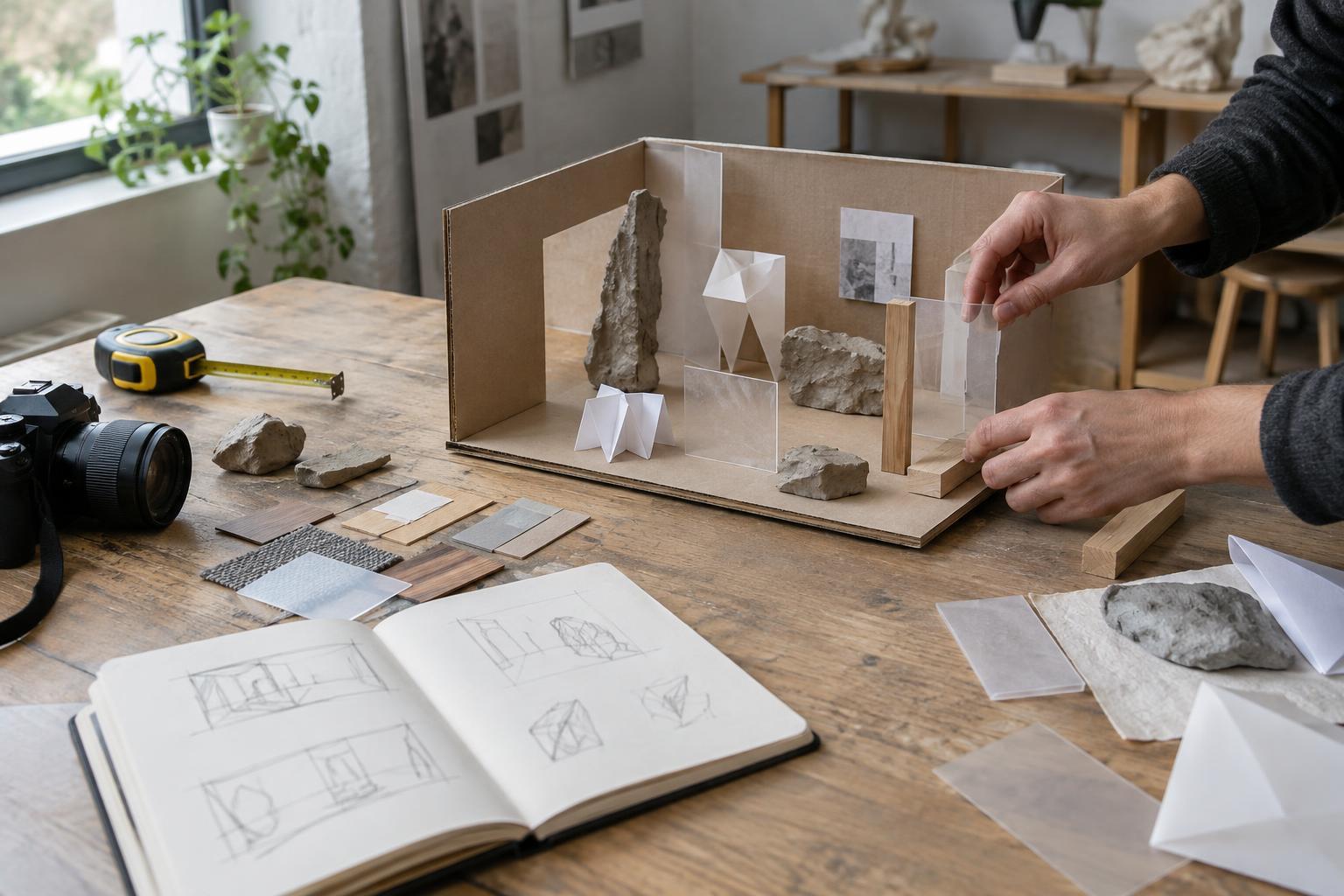
Pay attention to practical limits while you sort. Are materials fragile, difficult to store, or unsuitable for a new site? Does an earlier process depend on equipment you no longer have? Rather than rebuilding every missing part, look for a smaller form that preserves the project’s strongest relationship. An unrealized room-scale installation might become a tabletop study, a sequence of photographs, or a set of instructions. These forms are not substitutes by default; each should be judged by what it lets the work do.
Choose a test small enough to finish
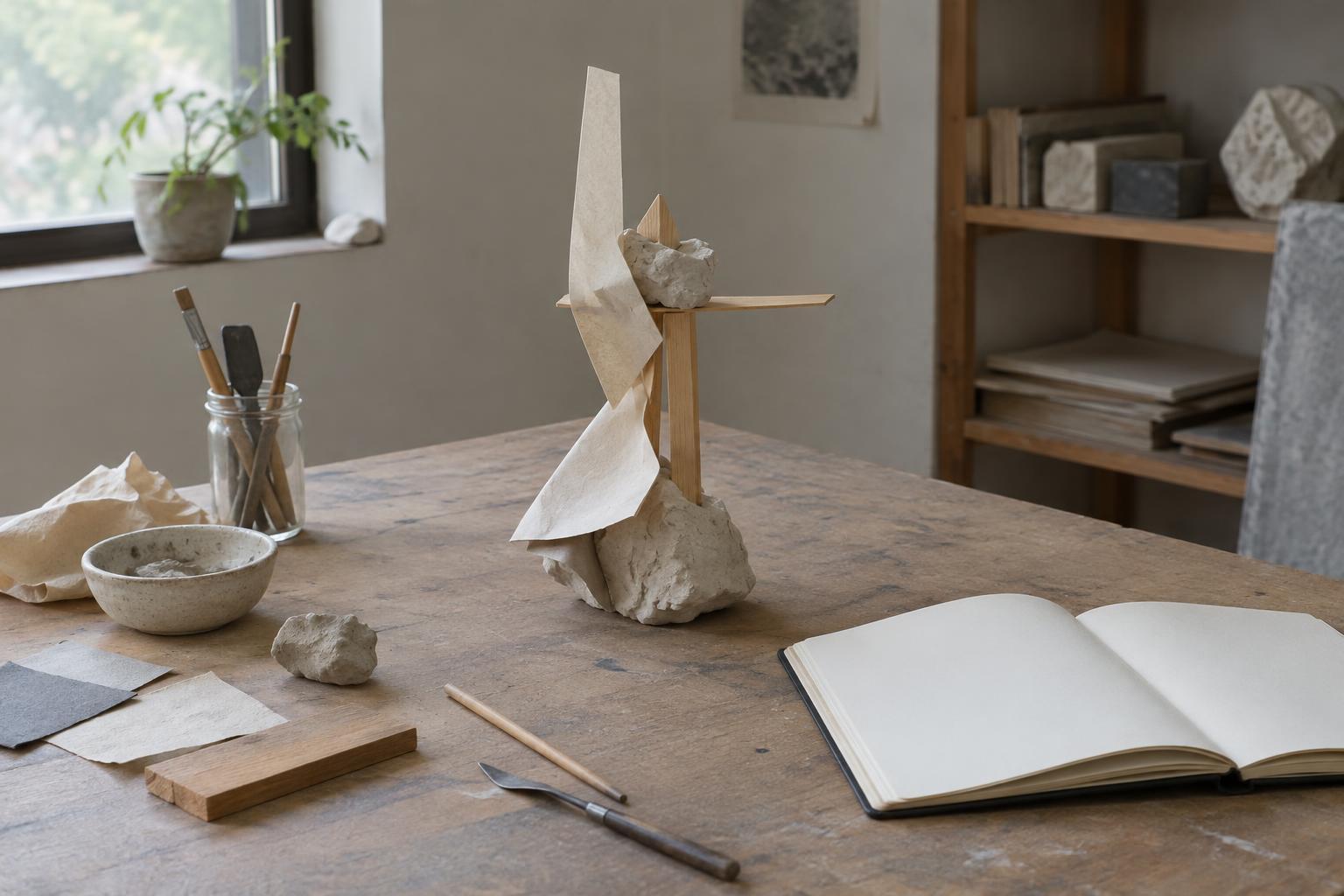
Once you have identified a promising direction, resist writing a complete new production plan. Choose a test with a clear boundary: one afternoon, one corner of a room, one material pairing, or a short series of images. Decide in advance what the test should help you learn. You might ask whether a structure stands without hidden support, whether a repeated gesture remains interesting across several attempts, or whether a viewer can move around the work as you intended.
Record the result, including what did not work. A few photographs and plain notes can be enough. Try to distinguish a problem with execution from a problem with the idea. If a delicate assembly collapses, a sturdier connection may be worth testing. If its stability removes the quality you cared about, the difficulty may be part of the work’s subject. A limited experiment makes that distinction easier to see than another ambitious attempt at a finished piece.
Let the return change the project
Returning does not require loyalty to an earlier version of yourself. You may bring different skills, questions, and sensitivities to the work now. Make a brief note of what has changed, then decide what the project needs in its present form. If you are preparing it for an exhibition, consider how its materials, placement, and sequence will be encountered. If it remains a studio investigation, you may need only a workable next question.
Give the project a stopping point as well as a next step. After a few tests, decide whether to develop it, archive it with clear documentation, or reuse selected parts elsewhere. This keeps revisiting from becoming an endless cycle of rescue. The aim is not to prove that the original effort was worthwhile by completing every intention. It is to notice what that effort made possible and give the most useful part of it a deliberate future.