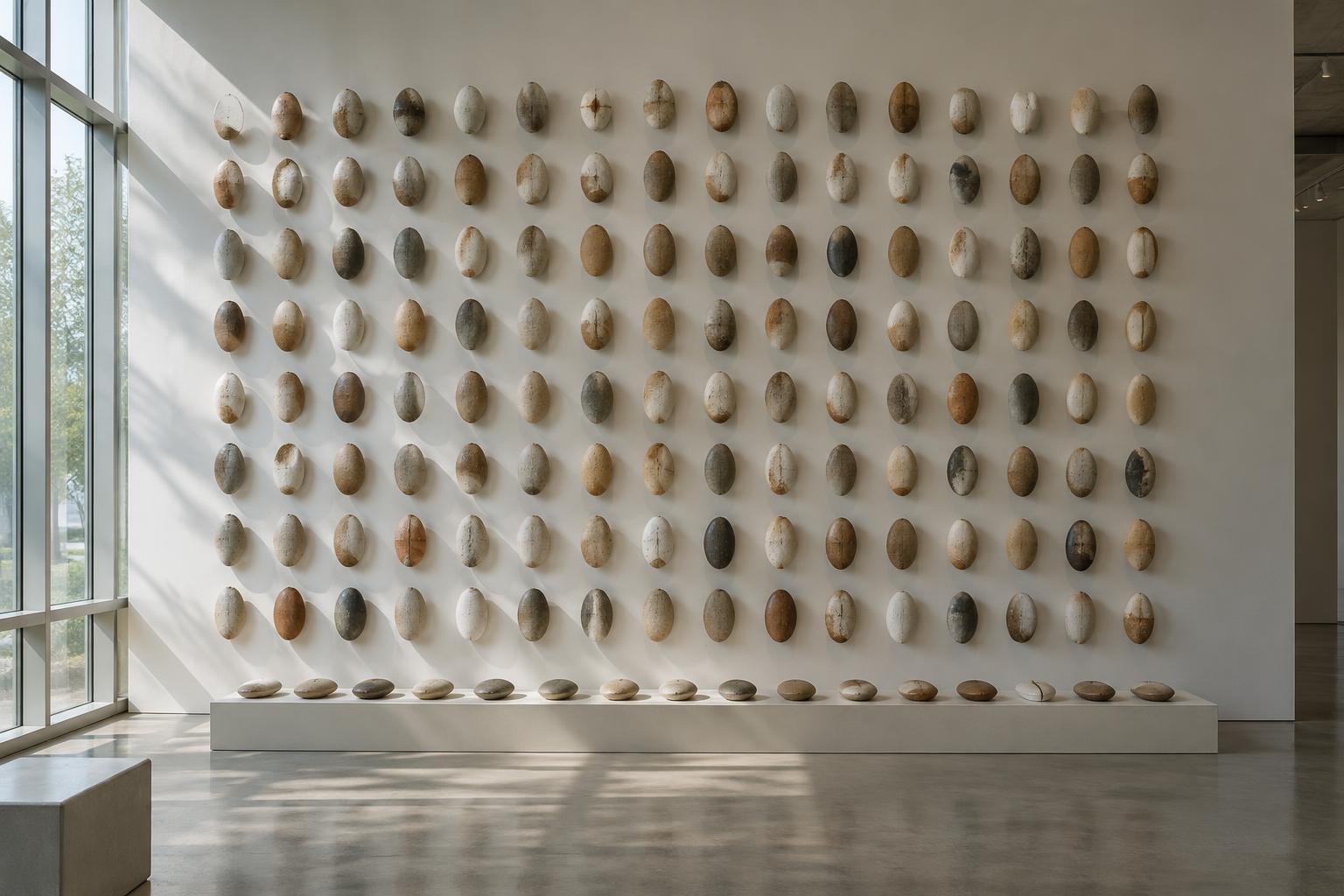
Treat a seat as part of the composition
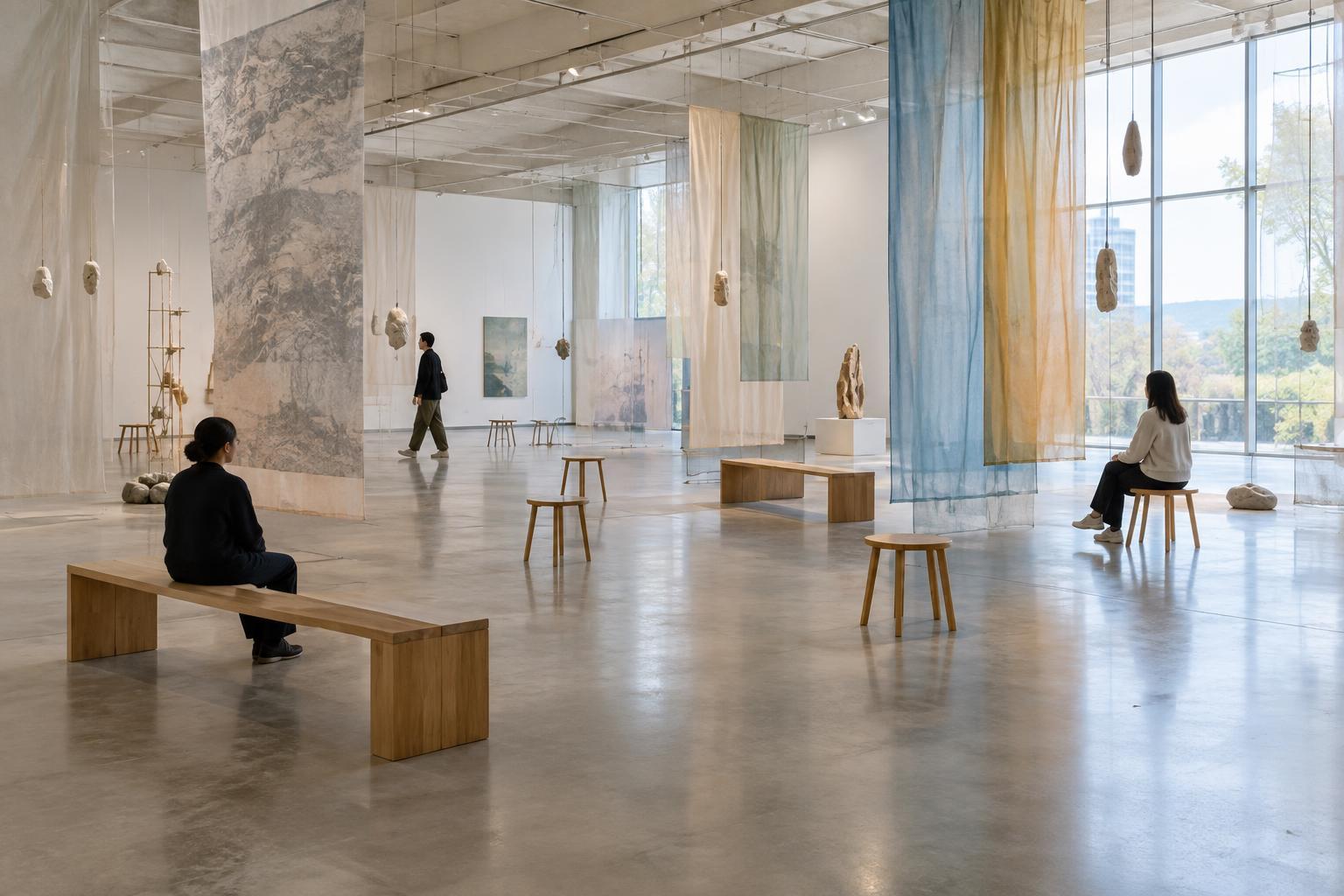
An installation is experienced over time as well as across space. A visitor may walk through quickly, stop at an unexpected detail or return to something they passed earlier. Seating changes those possibilities. It offers a reason to remain in one place long enough for a sound to repeat, a projection to shift or a relationship between objects to become apparent. Even in a work with no moving parts, sitting can make visitors more aware of distance, light and the edges of a room.
A seat also creates a suggested viewpoint. Placed directly in front of a focal element, it can make the work feel like a presentation to be watched. Turned slightly away, it may encourage visitors to notice the surrounding space. Neither approach is inherently better. The useful question is what the work gains when someone stays there—and what might be missed if that becomes the only place people feel invited to pause.
Decide what kind of pause the work invites
Before choosing a bench or chair, consider the duration of attention the installation asks for. A brief pause near a small detail may need only a modest place to perch. A work that unfolds through a long sequence may benefit from a more comfortable place to sit. The aim is not to predict exactly how long visitors will stay, but to avoid a mismatch between the invitation to linger and the physical experience of doing so.
The character of the seat matters too. A familiar chair may suggest an intimate, domestic encounter; a continuous bench can make room for people who arrive together while allowing them to face different directions. Seating built into an artwork can blur the line between viewing and participation. If visitors are meant to use it, make that invitation clear through its placement and presentation rather than relying on them to guess whether touching is permitted.
Leave room for movement and different viewpoints
Seating should create an option, not turn the installation into a single fixed view. When planning its location, imagine someone approaching the work, someone seated and someone continuing past. Do those experiences coexist, or does one block another? A seat near a narrow passage, for example, may become an obstacle once it is occupied. A seat too close to an object may make it difficult for others to examine that object without interrupting the person sitting there.
It can help to offer more than one way to pause, where the space allows: a place near the center of activity and another at its edge. Visitors may want to sit with the work, observe other people moving through it or simply take a moment before continuing. Not every installation needs multiple seats, but considering these different uses can prevent seating from feeling like an instruction to look in only one direction.
Test the occupied space, not just the empty plan
A floor plan can show where furniture fits, but it cannot fully show what happens when people use it. During a walkthrough, sit in each proposed position and look around at a natural eye level. Check whether important elements disappear behind other visitors, whether nearby sound feels different and whether the seat draws attention away from a part of the installation that matters. Then ask someone else to move through the room while the seat is occupied.
Small changes can have large effects. Moving a bench away from a wall may make its back visible as an object in the space; turning it may open a view that was previously obscured. If possible, test with temporary seating before settling on a form and position. The goal is not to control every visitor’s response. It is to make a pause available while leaving the installation open to walking, looking again and choosing when to move on.