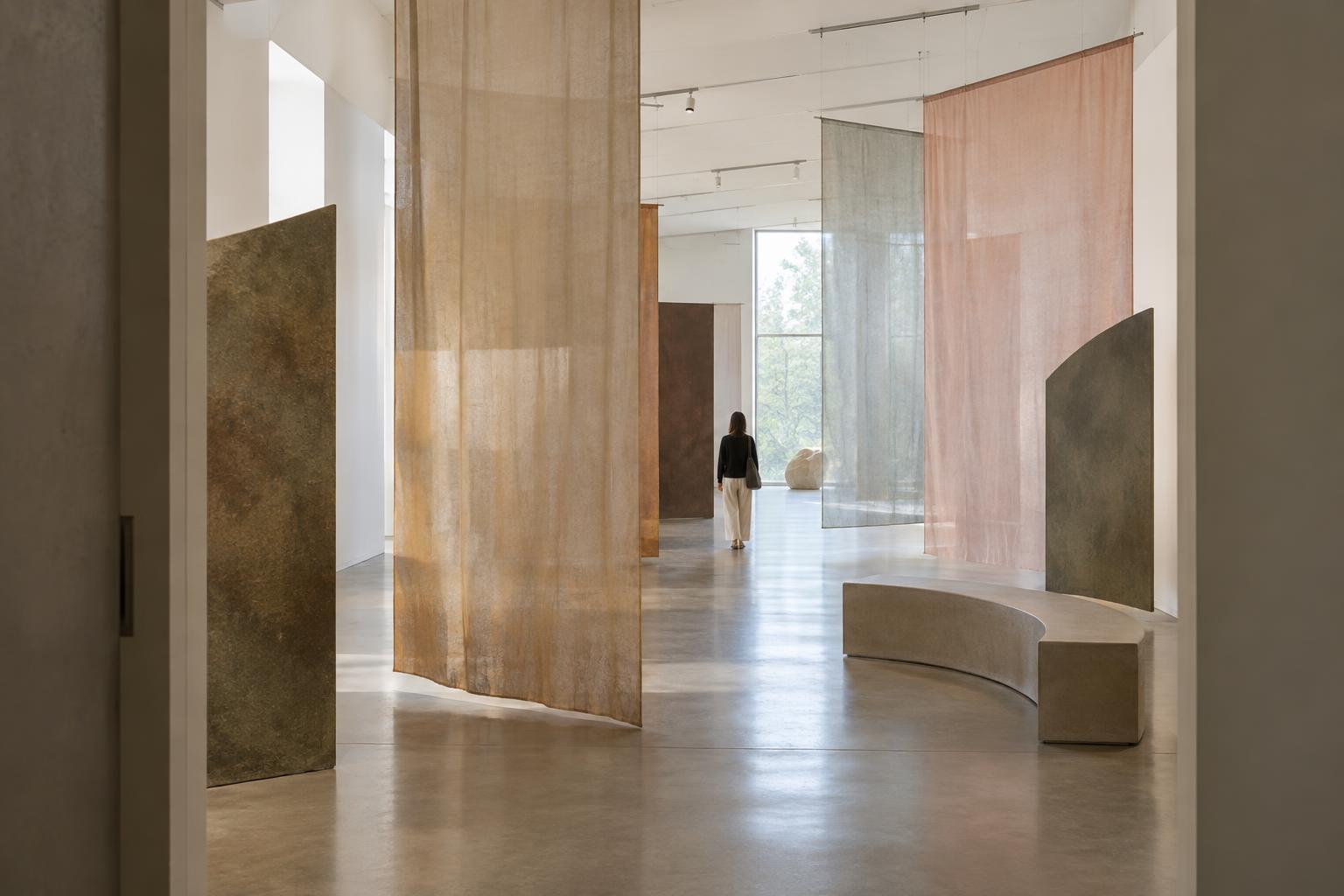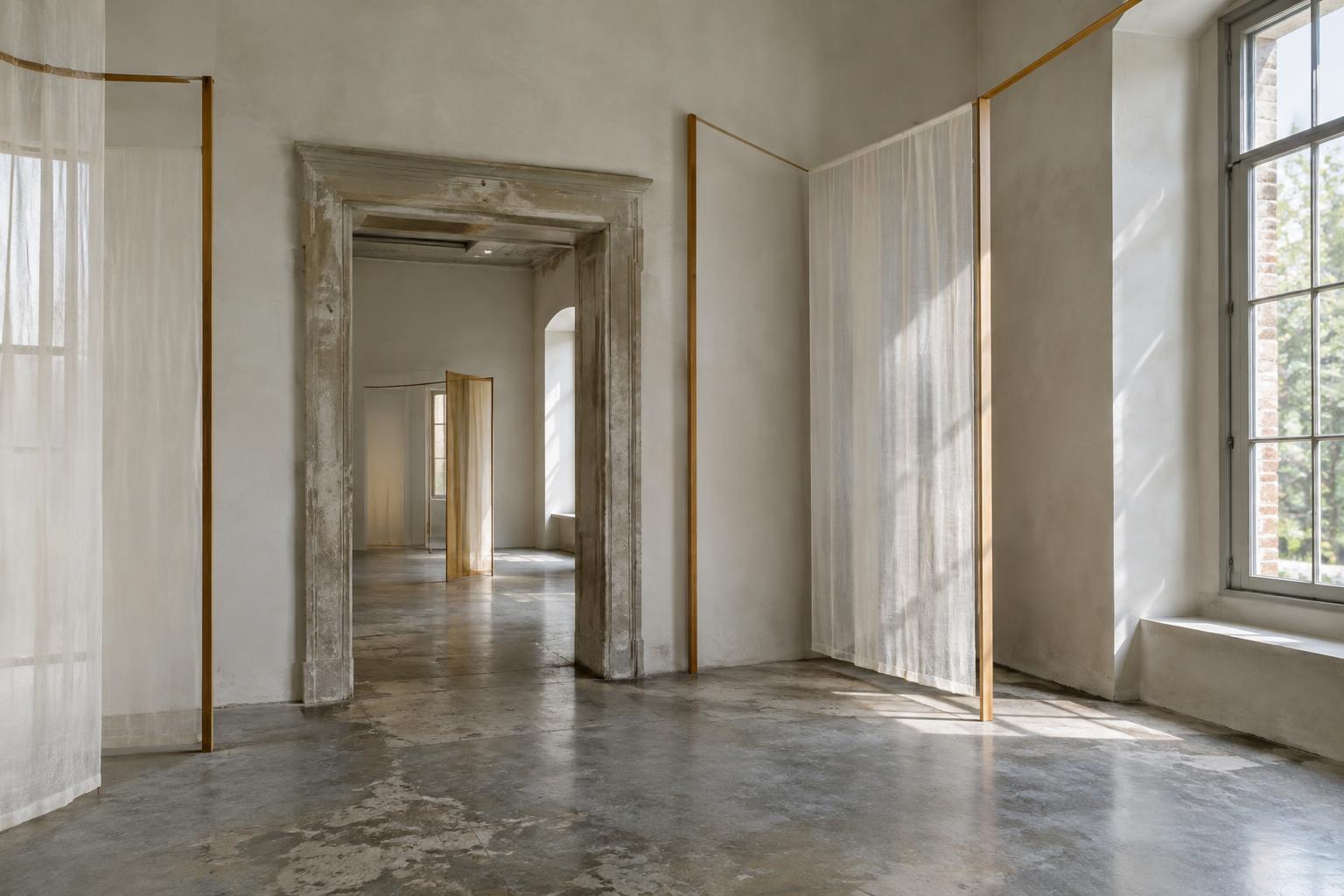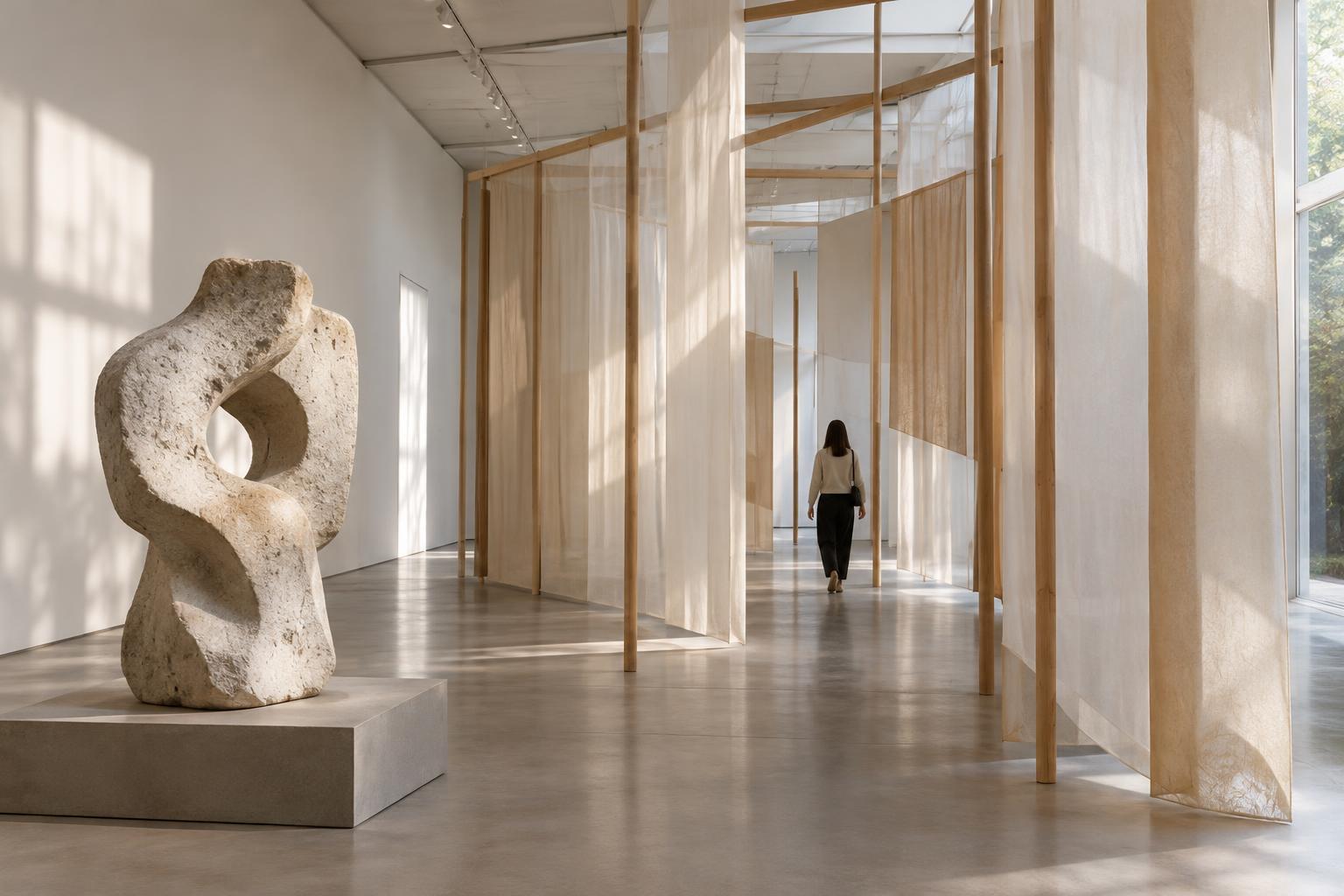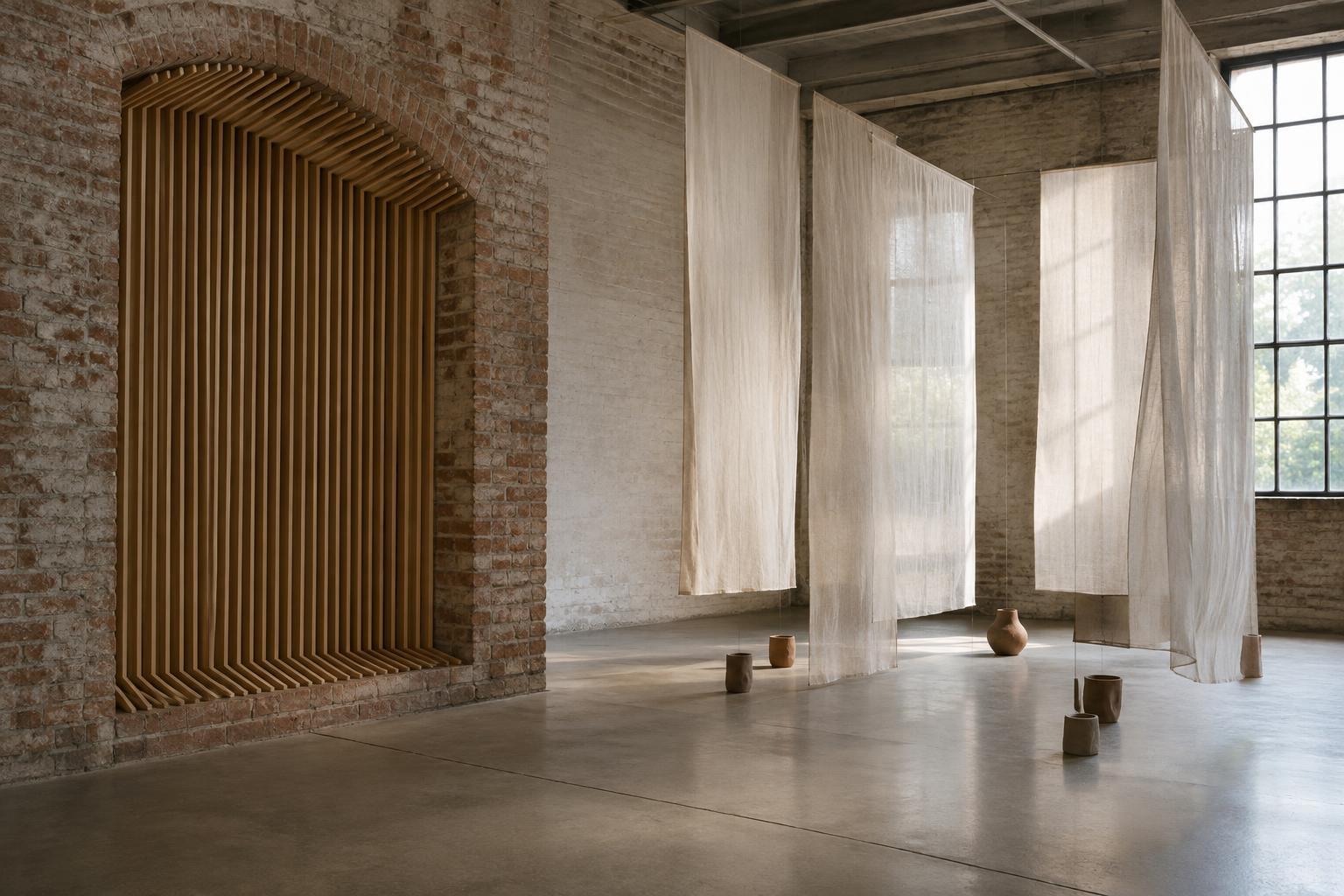
Why the site matters
An installation is never experienced apart from its surroundings. A narrow passage changes how visitors move; a high ceiling changes the scale of an object; street noise can become part of what a viewer hears. Some artists treat these conditions as practical limits. Others make them central to the work. Site-specific and site-responsive are two ways of describing that deeper relationship between an installation and its location.
The terms are useful, but they are not strict categories. Artists, curators and viewers may use them differently, and a single work can fit both. The distinction is most helpful as a question: is this installation inseparable from one place, or is it shaped by an active response to the place where it appears?
What makes an installation site-specific?
A site-specific installation is conceived for a particular location. Its form or meaning depends on features that cannot easily be carried elsewhere: the dimensions of a room, the route through a building, a view through a window, or the history attached to a public square. Removing the work may change it so substantially that presenting the same components in another setting would amount to a different work.
Imagine a series of panels fitted into the recesses of a former waiting room. Their spacing follows the room’s architecture, while their imagery draws attention to how people once used it. The panels are physical objects, but the installation includes the intervals between them, the viewer’s path and the room itself. Reassembling the panels in a conventional gallery could preserve the objects without preserving that relationship.
Site-specific does not necessarily mean permanent. A temporary installation can be closely tied to a place, while a long-lasting work may be fairly independent of its surroundings. The defining issue is not how long it remains, but how much of its identity rests on that particular site.
What makes an installation site-responsive?
A site-responsive installation develops from an artist’s attention to the conditions of a place. Those conditions might be architectural, social, sensory or practical. The artist could work with changing daylight, respond to patterns of movement, use materials associated with the location, or consider how different people encounter it. Response suggests a process of observation and adaptation rather than a fixed formula applied to every venue.
For example, an artist might create a set of suspended forms that changes from one exhibition space to another. In each location, the forms are arranged in relation to airflow, sightlines and entrances. The materials and underlying idea remain recognizable, but the final configuration responds to its surroundings. Unlike a work designed to belong only to one room, this installation may be able to take meaningful new forms elsewhere.
A response need not be visually obvious. It might emerge through where an artist places a quiet area, which existing sounds they leave audible, or how they avoid blocking a familiar route. Learning about the artist’s decisions can deepen an encounter, but careful looking can also reveal how a work meets its setting.
Where the terms overlap
The difference is not simply that site-specific work stays put and site-responsive work travels. A work made for one location can also be responsive to its light, use and history. Likewise, a project that adapts across venues may be so thoroughly reworked each time that every version feels closely tied to its site. Descriptions of the work may emphasize one aspect of this relationship without ruling out the other.
It helps to separate a work’s starting point from its ability to move. Ask what the artist needed to know before making it, which choices changed on site, and what would be lost if it were installed somewhere else. Documentation can show a previous version, but photographs rarely convey every element of scale, movement or atmosphere. A relocated work may therefore invite a new interpretation even when its materials remain the same.
How to look at an installation in place
Start with your own route. Where do you first encounter the work, and what can you see from there? Notice whether its elements frame a doorway, interrupt a direct path, draw your eye toward an overlooked surface or ask you to pause. Then consider what belongs to the artist’s intervention and what was already present. The exchange between the two may be more important than either on its own.
Next, imagine the work in a different setting. Would its dimensions, materials and central idea still make sense? Would a new site call for rearrangement, or would moving it strip away a crucial connection? These questions will not always produce a neat label. They do, however, bring the purpose of both terms into focus: to help us see an installation not just as objects in a space, but as a relationship formed with that space.