Two tools for different kinds of attention
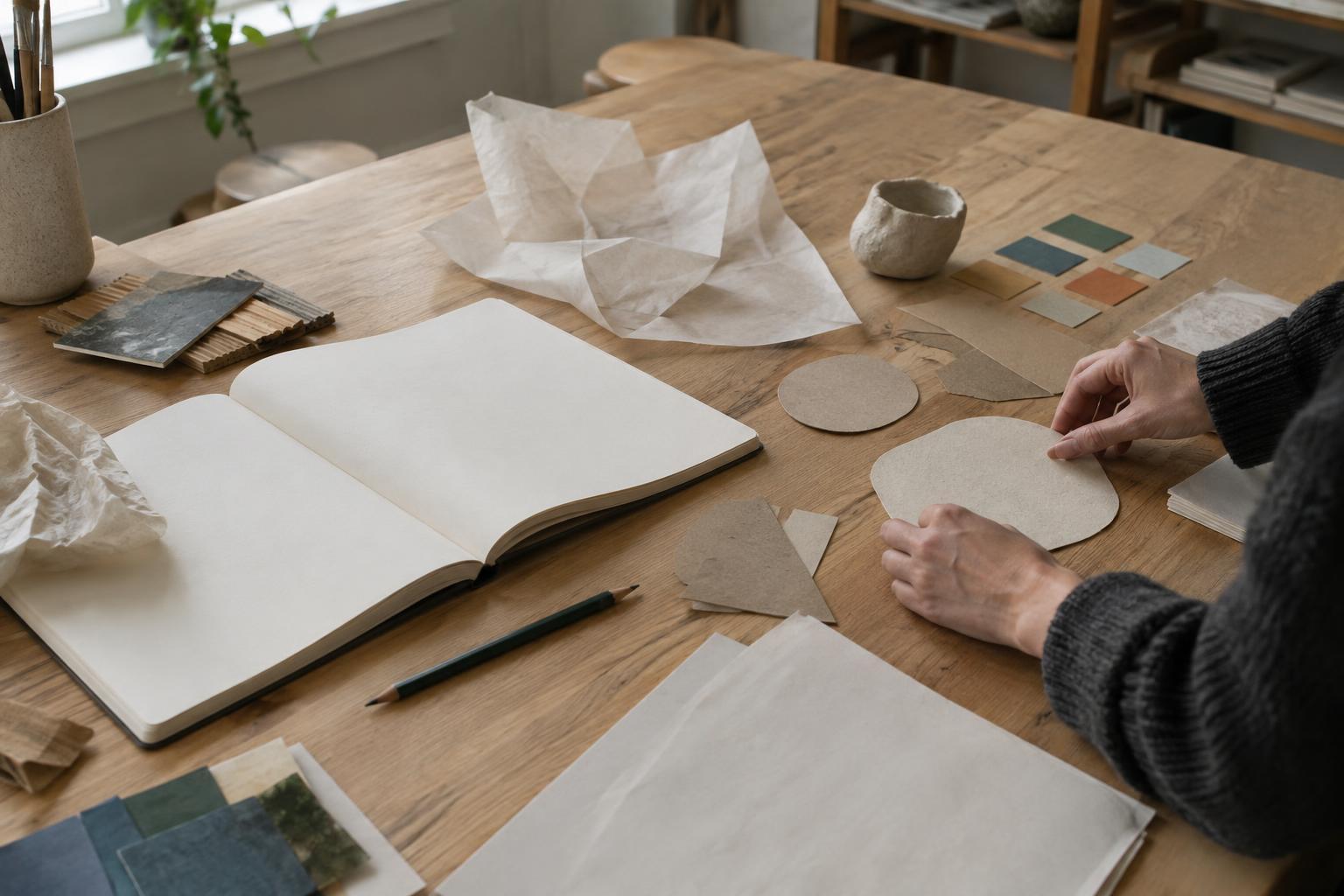
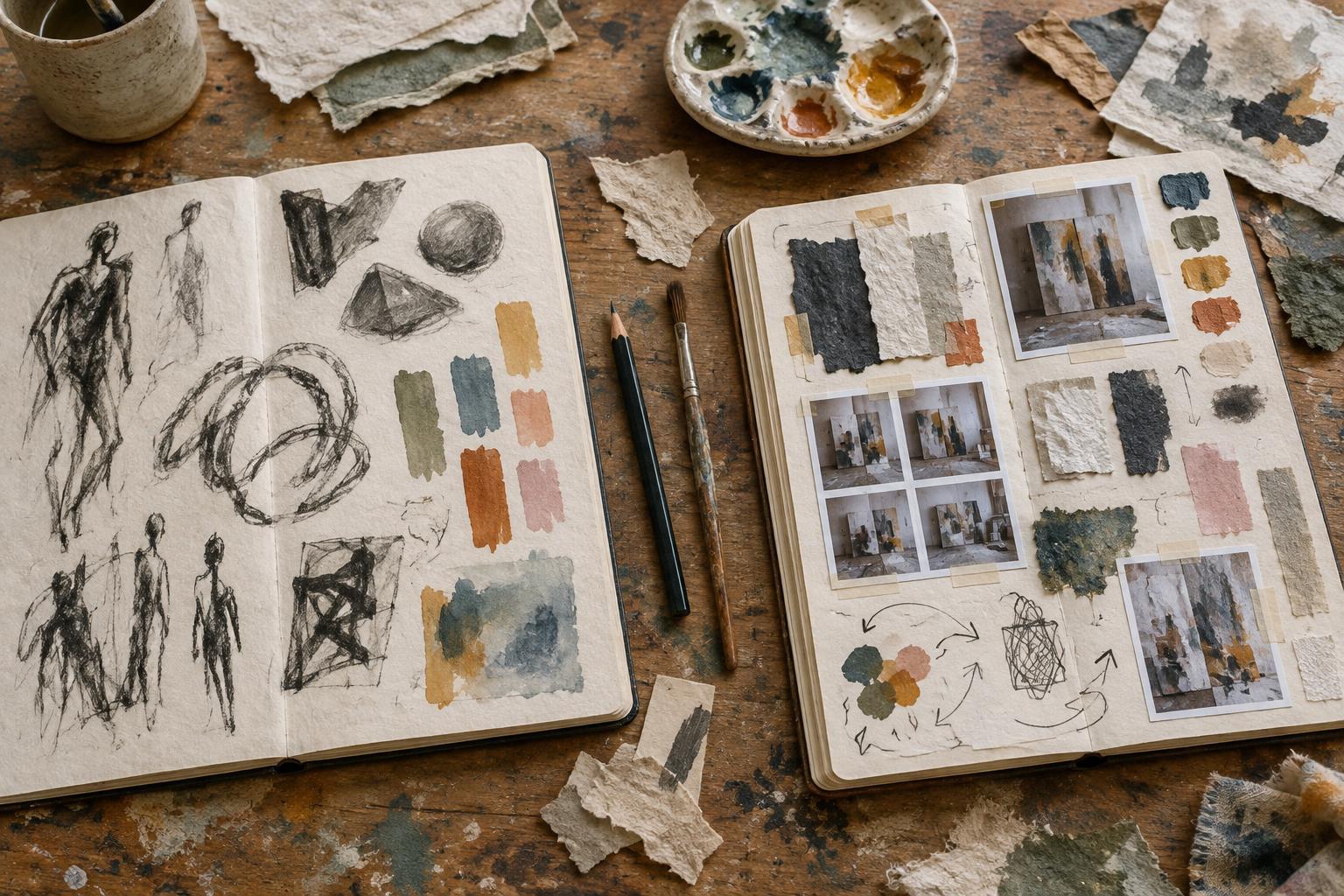
A sketchbook and a process journal can look identical from the outside. Both may contain drawings, scraps of paper, notes and unfinished thoughts. Their difference is less about format than purpose. A sketchbook gives an artist a place to notice, try and imagine. A process journal helps the artist follow what happened during a project and consider why it happened.
Neither needs to be tidy or complete. A page of awkward shapes might be valuable because it leads to a new form. A brief note about a failed material test might save time later. Thinking of the two tools as complementary, rather than competing, makes it easier to use them without turning every page into something meant for display.
What a sketchbook makes possible
A sketchbook is useful when an idea is not yet ready to be explained. Quick drawings can test scale, rhythm, placement or the relationship between objects. An artist planning an installation might sketch how a viewer enters a room, where a hanging element could interrupt a sightline, or what changes when a work sits near the floor instead of on a wall. These drawings do not have to predict the finished piece; they make possibilities visible.
The sketchbook can also collect things that catch the eye without an immediate purpose: color combinations, folds, shadows, fragments of language or diagrams of an encountered space. Putting them together may reveal a connection that would be easy to miss if each observation stayed in a separate photograph or memory.
To keep the sketchbook useful, allow repetition. Draw the same arrangement from several angles or make ten small variations of one form. The aim is not to fill every page with distinct, polished ideas. It is to give an idea enough room to change.
What a process journal can reveal
A process journal comes into its own when decisions and tests begin to accumulate. It can record what an artist intended, what they tried, what they noticed and what they might change next. For a material experiment, that could mean noting how a surface was prepared, how two materials interacted and which result felt worth pursuing. For a spatial work, it could mean recording what became apparent after arranging objects at full scale.
Writing down decisions makes a project easier to revisit after a break. It can also help distinguish a productive surprise from a problem that keeps recurring. A short entry such as “the translucent layer softened the edge but hid the joint” preserves more useful information than a photograph alone. The point is not to justify every choice. It is to leave a trail that the future version of you can understand.
Questions belong in the journal too. What changed when the work moved into a different room? Which part depends on the viewer walking around it? What still feels unresolved? Such prompts keep the record open-ended, especially when the work resists a neat account of progress.
How to use them together
One approach is to let the sketchbook generate options and the journal track selected experiments. Sketch three possible layouts, then test one with temporary materials. In the journal, describe what the test made possible and what it ruled out. Return to the sketchbook for another round of variations. This back-and-forth treats making and reflection as parts of the same practice.
A date, project name or simple page reference can connect related entries without making the system elaborate. You might paste a small copy of a sketch beside a journal note, or write “see blue-paper studies” next to a material observation. When documenting a work that changes with light, movement or handling, record the conditions of the test as well as your response. That context can matter when you try to recreate an effect.
There is no need to separate the books if maintaining two feels burdensome. A single notebook can serve both purposes, with drawings on one page and observations on the next. Loose pages, digital notes or a folder of photographs can work as well. Choose a setup that you can return to during ordinary studio days, not just at the start of an exciting project.
Keep the record useful, not precious
A notebook becomes more helpful when it is safe to be incomplete. Leave space for a rough drawing, label an uncertain idea as uncertain and record a test that did not work. If every entry has to look like a finished presentation, the notebook may stop supporting experimentation.
Review the pages occasionally, asking different questions of each tool. In the sketchbook, look for forms or connections you want to explore. In the process journal, look for decisions you have repeated, questions you have avoided or materials you want to test again. The value of either book is not measured by how much it contains. It lies in whether its pages help you see what to try next.