Start with the task, not the material’s reputation
A material can behave differently depending on how it is used. Brushing on paint, sanding a dried surface and spraying a finish may each call for different precautions. Before starting, identify what could enter the air, touch your skin or splash into your eyes. Read the product label and safety data sheet when available, especially for unfamiliar pigments, solvents, adhesives and coatings. Follow their instructions on ventilation, protective equipment, storage and disposal.
A useful studio habit is to plan the work in stages: preparation, application, drying and cleanup. Exposure does not necessarily end when a brush is put down. Open containers, curing coatings, dusty offcuts and solvent-soaked rags can continue to affect a workspace. Keeping lids closed, limiting the amount of material at the worktable and separating messy processes from clean ones can reduce avoidable contact.
Match ventilation to dust, mist or vapor
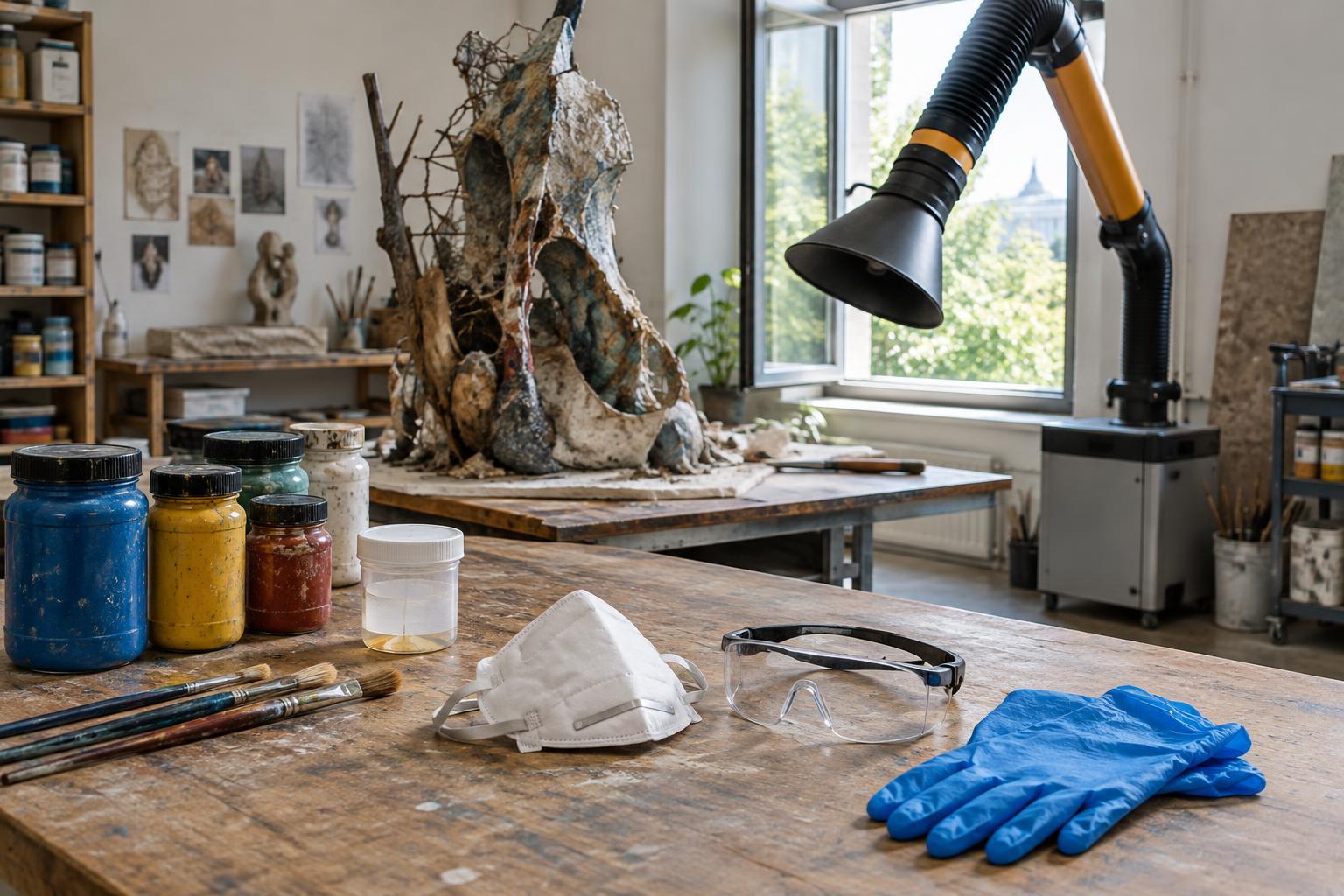
Ventilation works best when it addresses a contaminant close to where it is generated. For sanding, carving or handling dry pigment, a suitable dust-extraction setup can help capture particles before they spread. For processes that release vapors or spray mist, a system designed for those emissions may be needed. Opening a window can improve general airflow, but it is not a dependable substitute for appropriate local capture, particularly when a product calls for specific ventilation.
Think about where the air goes as well as where it comes from. A fan that blows dust across a studio or directs fumes toward another room simply moves the problem. Spray products and flammable solvents need particular care: ordinary fans, switches or improvised booths may introduce ignition risks. If a process cannot be ventilated as the product requires, choose a different material or method, or move the task to a properly equipped space.
Choose protective equipment for the exposure
Protective equipment adds a layer of protection; it does not replace safer methods or effective ventilation. Safety glasses help with incidental splashes and flying fragments, while tasks with a greater splash risk may call for goggles. Gloves should be compatible with the specific substance and changed when torn or contaminated. One glove material is not suitable for every solvent or adhesive, so check the product guidance rather than assuming that any disposable glove will do.
Respiratory protection also depends on what is in the air. A particle-filtering respirator intended for dust does not necessarily protect against solvent vapors, and a loose-fitting face covering should not be treated as equivalent to a properly selected respirator. Respirators require an appropriate filter or cartridge, a good fit and correct use to work as intended. If a task calls for respiratory protection that you cannot select and use confidently, reconsider how or where to do the task.
Apply the principles to familiar studio processes
Water-based paint is often convenient for routine studio work, but its label still matters; additives, pigments and application methods vary. Avoid creating airborne mist unnecessarily, and wash paint from skin rather than using strong solvent as a hand cleaner. With oil paint, mediums, varnishes and solvent-based adhesives, keep containers closed when not in use and pay close attention to ventilation and flammability instructions. A lower-odor product is not automatically free of exposure concerns.
Dry clay, plaster, charcoal and powdered pigments deserve a different kind of care. Mixing, sanding or sweeping them dry can put fine particles into the air. Work gently, use suitable capture where appropriate, and clean surfaces with methods that do not simply raise the dust again. When cutting or sanding a finished object, consider all its layers: the base material, primer, paint and coating may each affect the precautions needed.
Make cleanup part of the studio setup
A well-organized work area makes safer choices easier. Designate places for dusty tasks and liquid materials, keep food and drink away from active work, and store chemicals in their original labeled containers when possible. Set out the equipment needed for cleanup before opening a product. That might include a suitable waste container, tools for wet cleaning, or a dust extractor appropriate to the material.
Dispose of used solvents, coatings, contaminated rags and collected dust according to the product instructions and local requirements; do not assume they belong in ordinary trash or down a drain. Recheck your setup whenever a process changes. The protection adequate for brushing a small sample may not be adequate for spraying a large surface or sanding the result. Treating ventilation and protective equipment as part of the artistic method makes it easier to experiment without overlooking the conditions in which the work is made.