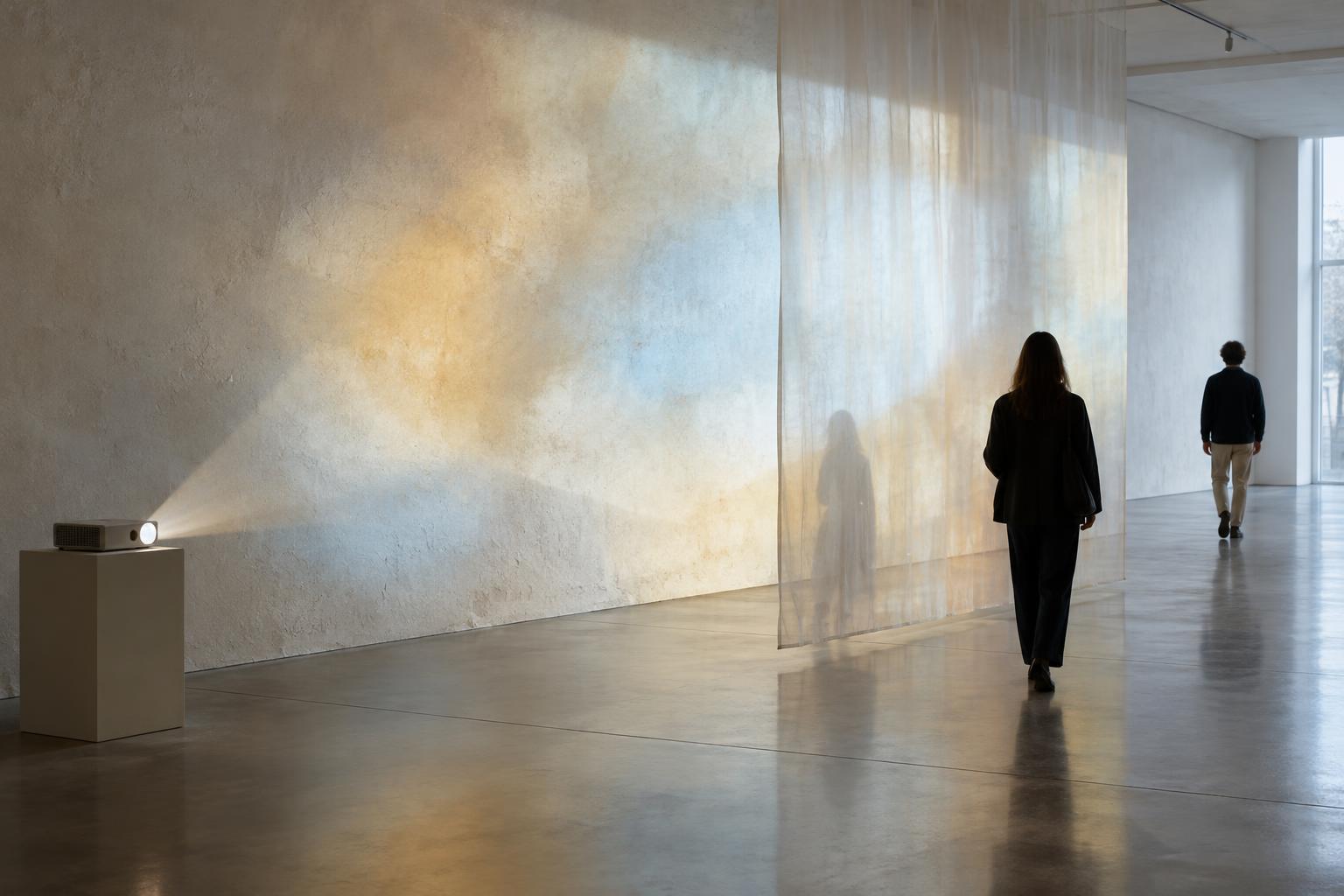
Begin with the space the work will occupy
A suspended installation is experienced as a relationship between an object, a room and the people moving beneath or around it. Before choosing cables or fixing points, describe what the work needs to do visually. Should it hover close to a wall, cross a circulation route, or shift subtly with air movement? A sketch or model can clarify the intended effect, but a site plan should also show entrances, doors, lights, vents, emergency equipment and areas where visitors may pause.
The same description should identify what could change during the exhibition. Modular elements might be rearranged; a material might absorb moisture; visitors might be tempted to touch a low-hanging edge. Thinking through those possibilities early helps distinguish essential artistic choices from details that can be adjusted to suit the venue. If the room cannot safely support the intended arrangement, revising the work is part of the design process, not a failure of it.
Describe the load before discussing hardware
The visible object is only part of what a suspension system must support. Mounts, frames, lighting, cables and other attached components contribute to the total load. Teams should record the weight and dimensions of each component where known, identify what is uncertain, and note whether the finished work will remain still or move. A suspended form that swings or can be pulled presents different questions from a stationary one.
Weight alone does not establish whether a proposal is safe. Where the load acts, how it is shared among attachment points, and what happens if one component shifts all matter. Artists can supply accurate object information and a clear account of the desired placement; a qualified rigger or structural professional should determine whether the proposed support and suspension method are appropriate. Do not assume that adding more attachment points automatically makes a design safer.
Treat anchor points as part of the building
A beam, ceiling grid or existing hook may look convenient without being suitable for an artwork. Its capacity and intended use may be unknown, and finishes can conceal the structure behind them. Venue staff should identify approved attachment locations and provide any available building or rigging information. Permission to use a room is not, by itself, permission to fix equipment to every surface in it.
An installation plan should make the proposed connection points legible to everyone involved. Mark them on a drawing, distinguish confirmed locations from suggestions, and agree who has authority to approve changes. If an anchor proves unsuitable on site, work should pause while the plan is reviewed. Moving a fixing to a nearby spot or substituting a component without review can alter how the whole assembly behaves.
Plan installation and visitor access together
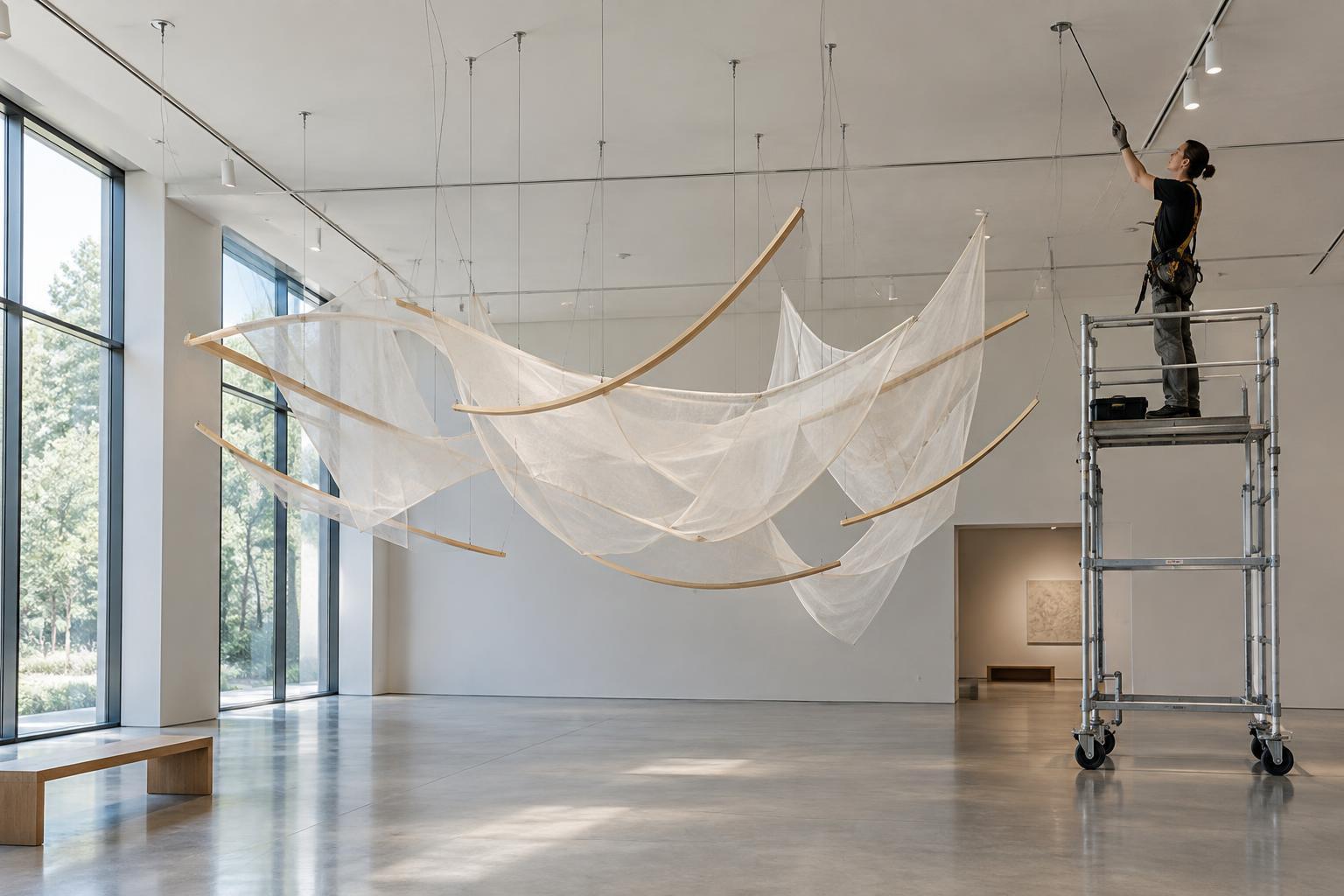
Safe installation requires a sequence as well as a final drawing. Consider where components will be assembled, how they will be raised, who needs access to the area, and when visitors and other staff must be kept clear. The team should establish roles before work begins, including who supervises the lift, who checks connections and who can stop the process if conditions differ from the plan. Any work at height or overhead rigging should follow the venue’s procedures and be carried out by suitably trained people.
The finished arrangement needs to account for ordinary gallery behavior. People may cluster under a focal point, reach toward a tempting surface, or move chairs and temporary partitions. A work should not rely on visitors following an ideal path to remain safe. Barriers, placement or changes to the form may help protect the intended viewing experience while keeping people away from hazards.
Make checks visible in the exhibition plan
A handover should record what was installed, where it is attached, who approved it and what must not be altered without another review. Photographs and a simple component list can help staff recognize a change in position or a missing part. Before opening, the responsible team should confirm that the installation matches the approved plan and that the visitor area is ready.
Checks do not end on opening day. Agree on an inspection routine suited to the work and venue, including what staff should look for and whom they should contact if something seems loose, displaced or damaged. Staff should have a clear way to restrict access until a concern is assessed. For an artist, this continuing attention can preserve the work’s intended sense of suspension: the audience sees a compelling encounter with space, while the support behind it remains deliberate and accountable.