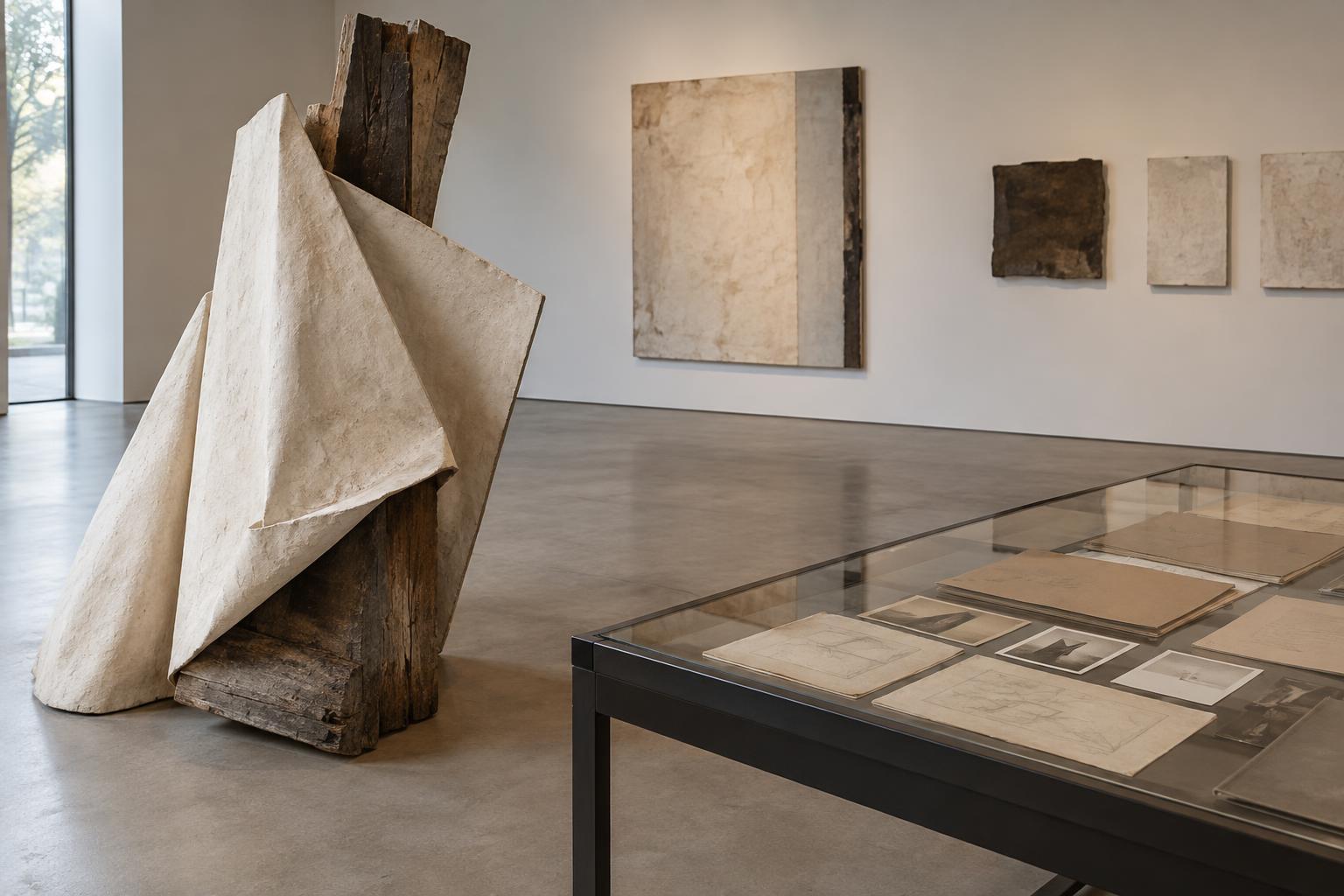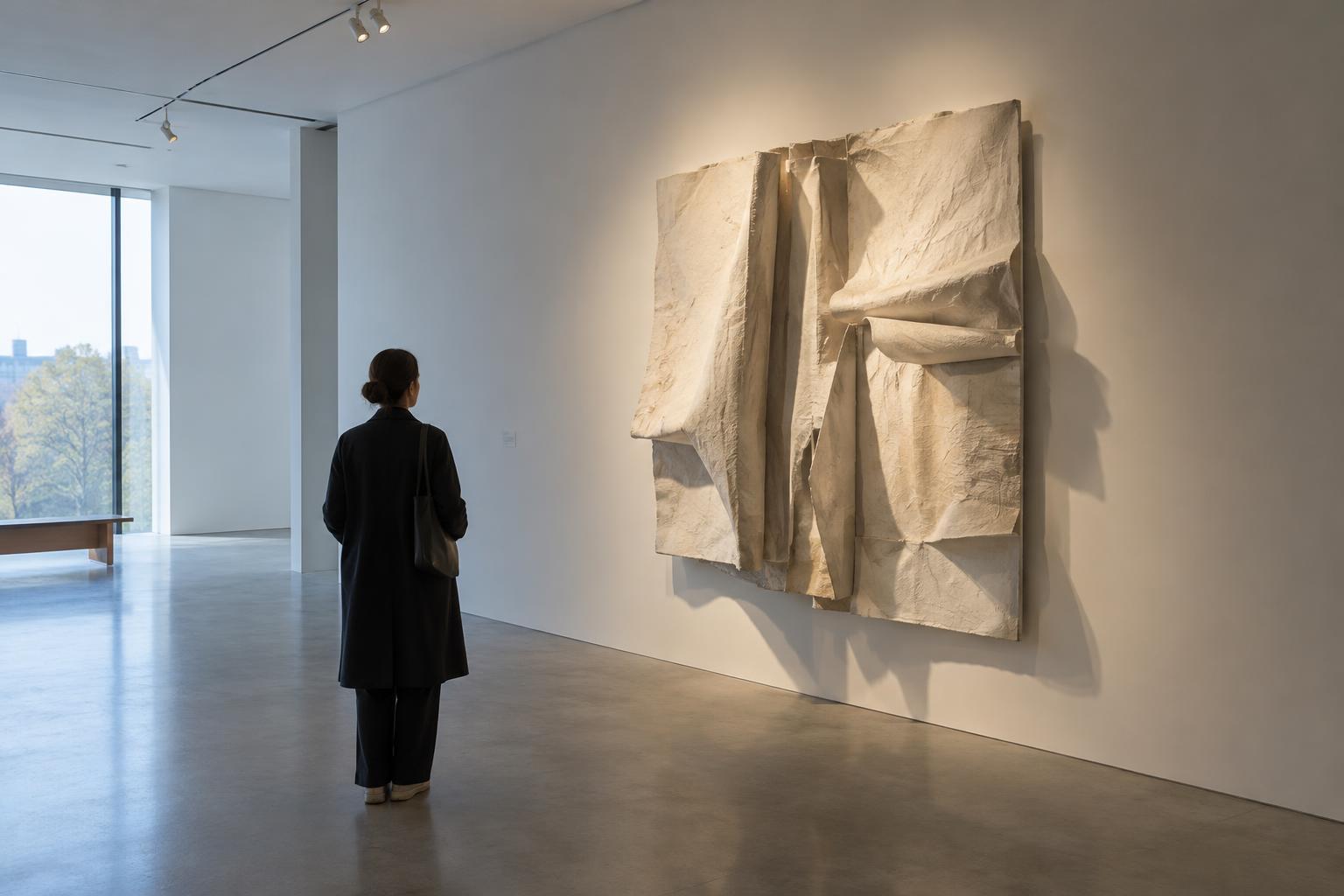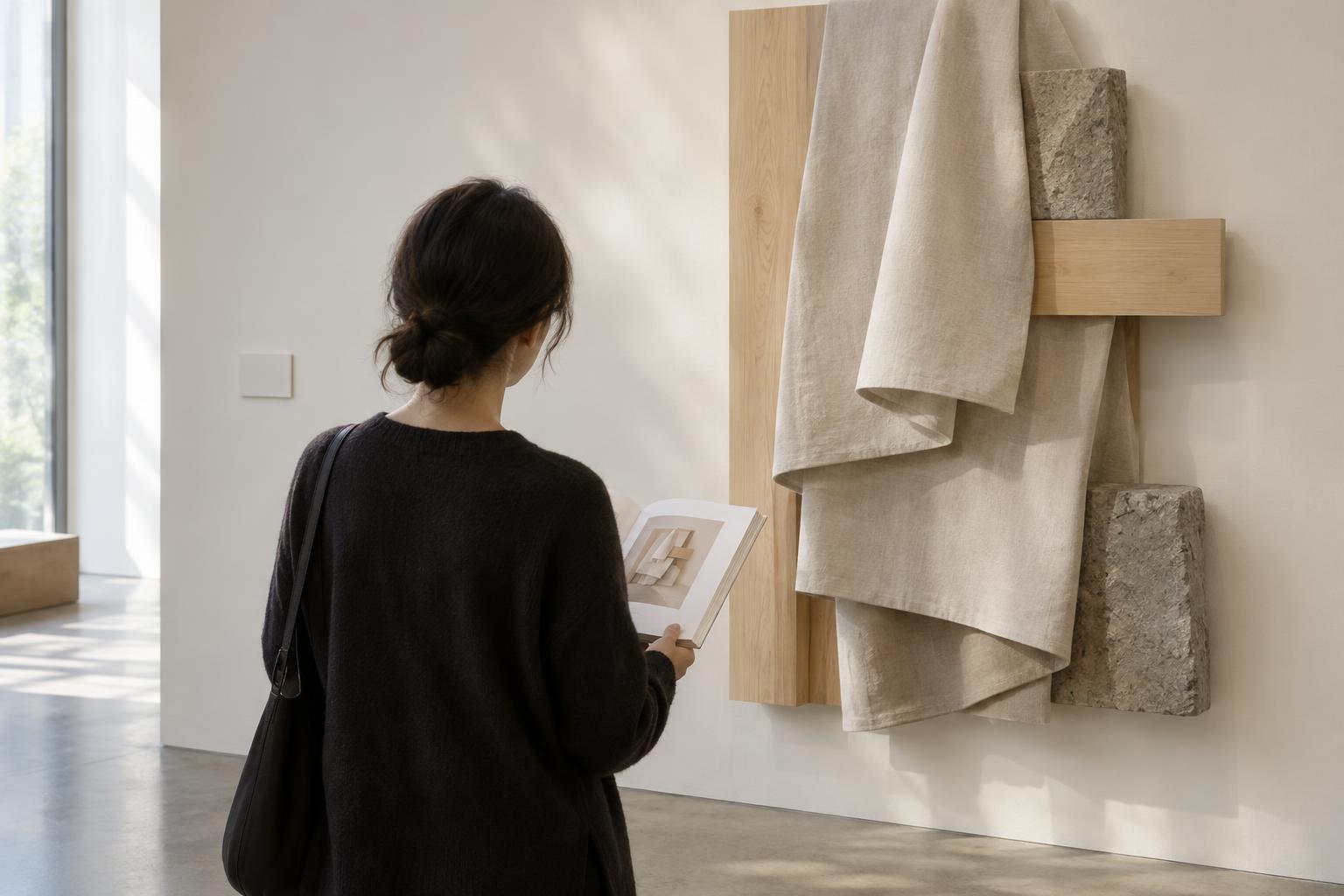
Two formats, two reading situations
Wall text meets visitors while they are standing in an exhibition. It may identify an artist, title, date, and materials, or offer a short introduction to a room or group of works. Its job is to provide a useful point of entry without demanding that someone stop looking for long. An exhibition catalogue has more room to develop ideas. It may bring together essays, images, interviews, and details about how works were made or selected. Readers can usually spend time with it away from the gallery.
Neither format is a master key to an artwork. A label can clarify what a visitor is seeing; a catalogue can make a sustained argument. Both involve editorial choices about what to emphasize. Recognizing those choices helps you use the writing as a companion to your encounter with the work, not as a replacement for it.
Use wall text for orientation in the room
Reach for wall text when a basic fact would change how you look. In an installation, a materials line might distinguish a projected image from a reflection or reveal that an object is made from an unexpected substance. A short room introduction can also help you notice a relationship among works that initially seem unrelated. Read enough to find your bearings, then turn back to the space and test what the words have brought to your attention.
Wall text is especially useful when time or attention is limited. A visitor may be moving with a group, navigating sound from another work, or trying to take in a large room. Brief writing respects those conditions. Still, you do not have to read every label before forming an impression. Try looking first, noting a question, and checking the text afterward. If the label offers an interpretation you do not share, compare it with what you can actually observe.
Use a catalogue to follow an idea further
A catalogue becomes valuable when an exhibition raises questions that cannot be answered in a few lines. You might want to know why certain works were shown together, how an artist has used a material across different pieces, or what choices shaped the exhibition’s layout. Longer writing can explore these connections, while photographs may help you revisit works after leaving the gallery. An interview, when included, can add another perspective on a process without settling every possible reading of its results.
Catalogues also let you read at your own pace. You can return to a difficult passage, compare images, or follow one essay while setting another aside. That freedom matters for exhibitions built around complex themes or work that changes as you move through it. At the same time, a photograph of an installation cannot fully convey its scale, sound, or effect on your movement. Use the catalogue to extend the encounter, while remembering what the page leaves out.
Let the question choose the format
Before reading, ask what you need. If the question is “What am I looking at?” a nearby label may be enough. If it is “Why did the curator place these works together?” start with the room text, then turn to the catalogue if you want a fuller account. If you are curious about a material or method, look for basic information on the wall and use longer-form writing to explore the process in more depth. The most useful source depends on the question, not on which format seems more authoritative.
It helps to notice whose voice you are reading. A label may describe a work without naming its writer. A catalogue may contain distinct views from a curator, an artist, or another contributor. Those voices can complement one another, but they need not agree. When a statement feels definitive, ask whether it describes an observable feature, offers context, or proposes an interpretation. That distinction leaves room for your own careful response.
Build a rhythm of looking and reading
One practical approach is to make a first pass through the exhibition with minimal reading. Notice where you slow down, what you hear, and which works seem connected. On a second pass, consult the relevant wall text and see whether it sharpens or complicates your observations. If the exhibition continues to interest you, use the catalogue afterward to pursue a few specific questions rather than trying to absorb every page at once.
You can also reverse that order when it suits you. Someone unfamiliar with an exhibition’s subject may welcome an introduction before entering; someone drawn to an individual work may prefer to read only after spending time with it. Wall text serves the immediate encounter, while a catalogue supports longer reflection. Used together, they can make interpretation more active: look, read, reconsider, and allow the work to exceed what either format can say.