A starting point, not a verdict
An artwork label can feel like a set of instructions placed beside the work: read this first, then understand what you see. It is more useful to treat the label as a starting point. It may identify the artist, title, date, materials and lender, and it may offer a short interpretation. Those details can orient you, especially when a work uses unfamiliar forms or occupies a room in an unexpected way. They do not settle everything the work can mean.
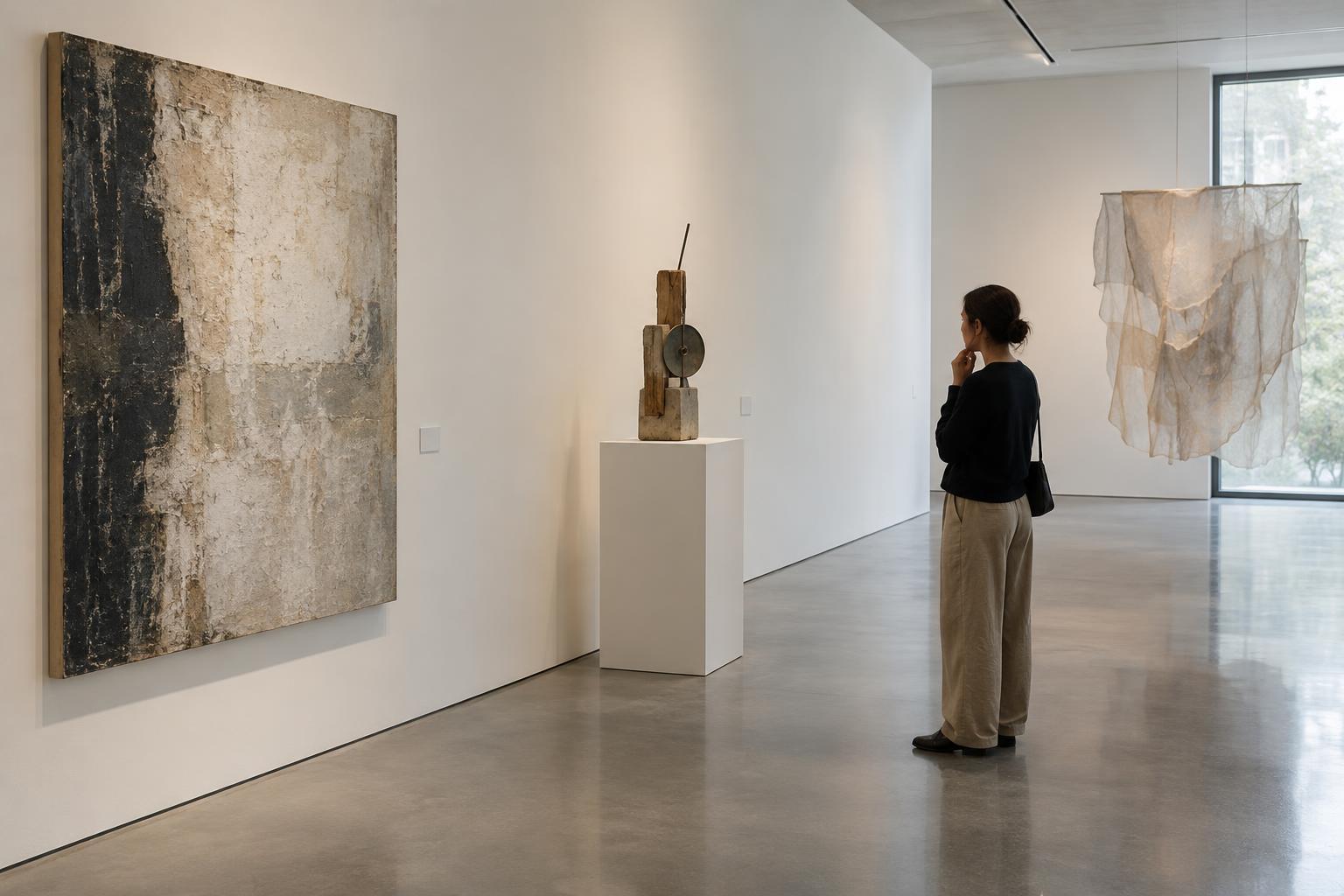
Labels also compete with the artwork for your attention. If you read one before looking, its language may guide what you notice first. Try occasionally reversing the order. Spend a moment with the work, note one or two questions, and then read the label. You can return to the work afterward to see which questions the text answers and which remain open.
What the basic details can reveal
A title can suggest a subject, a mood or a point of tension, but it need not describe what is pictured. A date can place a work within an artist’s practice or help you distinguish the moment it was conceived from the moment it was made, if the label provides that distinction. A materials list can draw attention to choices you might otherwise miss: a surface that looks solid but is lightweight, or an image made through several processes.
Even straightforward details benefit from careful reading. “Mixed media” tells you less than a specific list, while the name of a material does not explain how it was used. In an installation, a label may identify components without capturing the role of sound, movement, lighting or your route through the space. Let the factual details sharpen your looking rather than stand in for it.
What a short interpretation leaves out
A curatorial paragraph has limited space. It may introduce a theme, describe a method or connect the work to the exhibition’s larger argument. To do that, it selects some details and leaves others aside. The resulting text reflects an interpretive choice, not a complete account of every influence, decision or possible response. Two viewers can notice different features of the same work without either response being careless.
A label may also sound more certain than the experience of looking feels. Words such as “explores” or “questions” often point toward a useful way in, but they rarely specify exactly how a work achieves that effect. If a label says an installation considers memory, ask what in the work prompts that reading. Is it the arrangement of objects, the materials, the use of repetition or something else? If you do not see the connection, that is a worthwhile question.
Reading what is absent
Some important information may not fit on the wall. A label might not explain who fabricated an object, how an installation changes when it is reassembled, or why a particular material was chosen. It may not describe the decisions behind conservation or display. Absence does not necessarily mean those questions were ignored; a short label simply has a different job from a longer catalogue essay or conversation.
Other gaps are worth noticing because they shape access to the work. Does the label clarify whether visitors may walk around, through or into an installation? Does it help someone understand a sound element that is difficult to hear, or an image whose details are hard to see? Such questions concern the visitor’s experience, not just interpretation. When information is missing, you can hold the question open rather than filling it with an unsupported assumption.
A simple way to use labels well
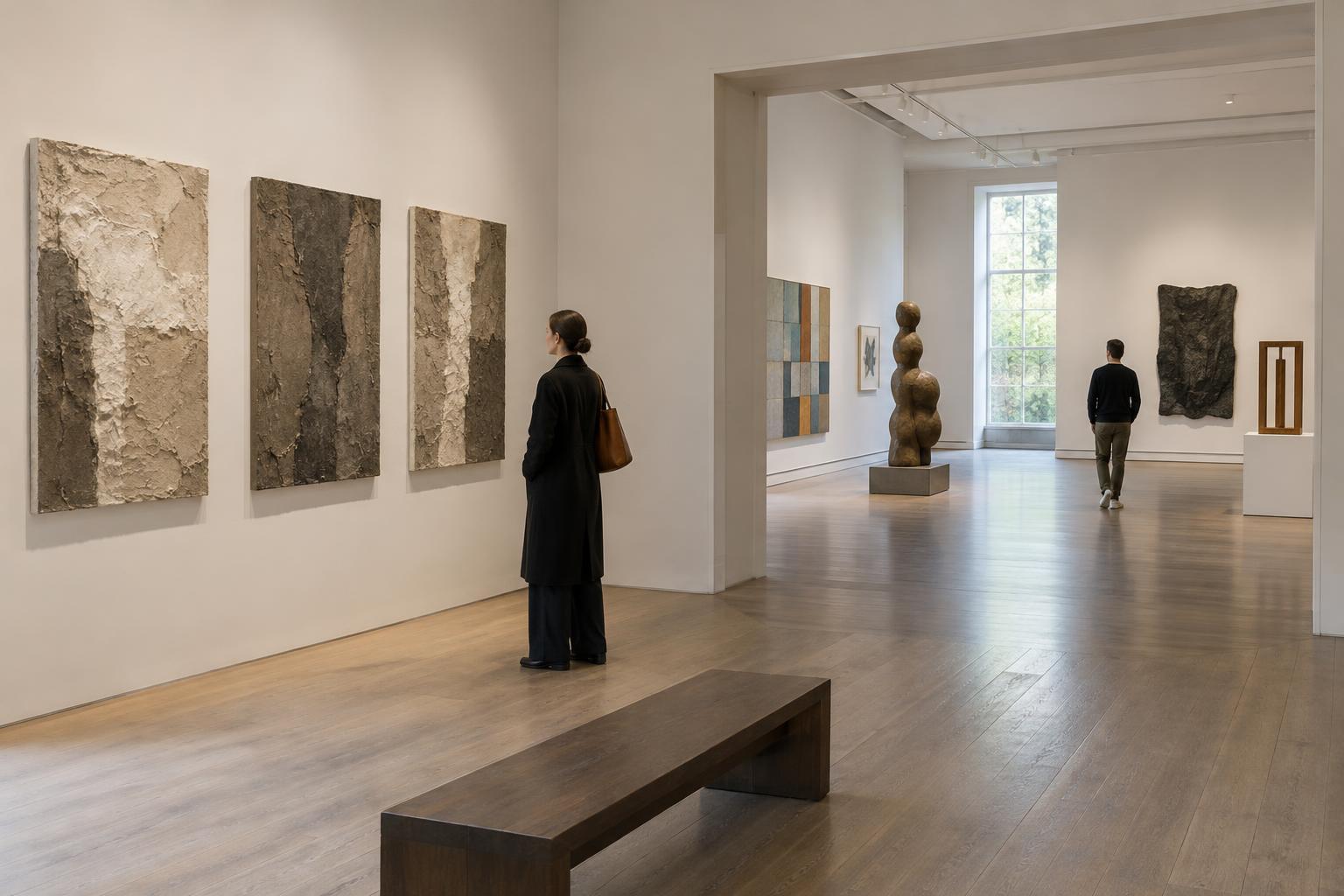
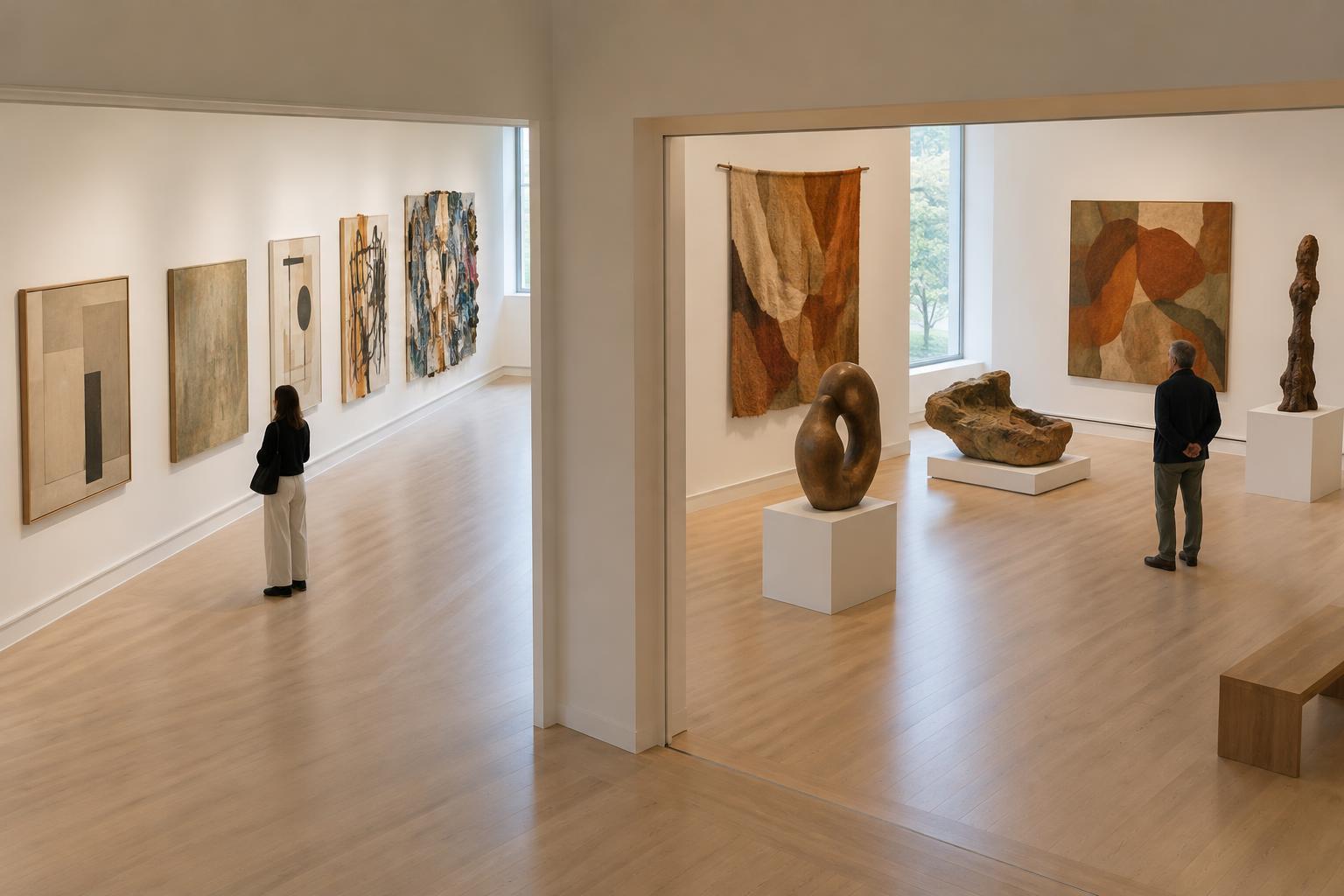
On your next visit, try a three-pass approach. First, look without reading and describe to yourself what is present: scale, color, texture, placement, sound and the space between elements. Second, read the label and separate its identifying details from its interpretation. Third, look again. Notice whether the text helps you see something new, confirms an impression or pulls your attention away from something you still find significant.
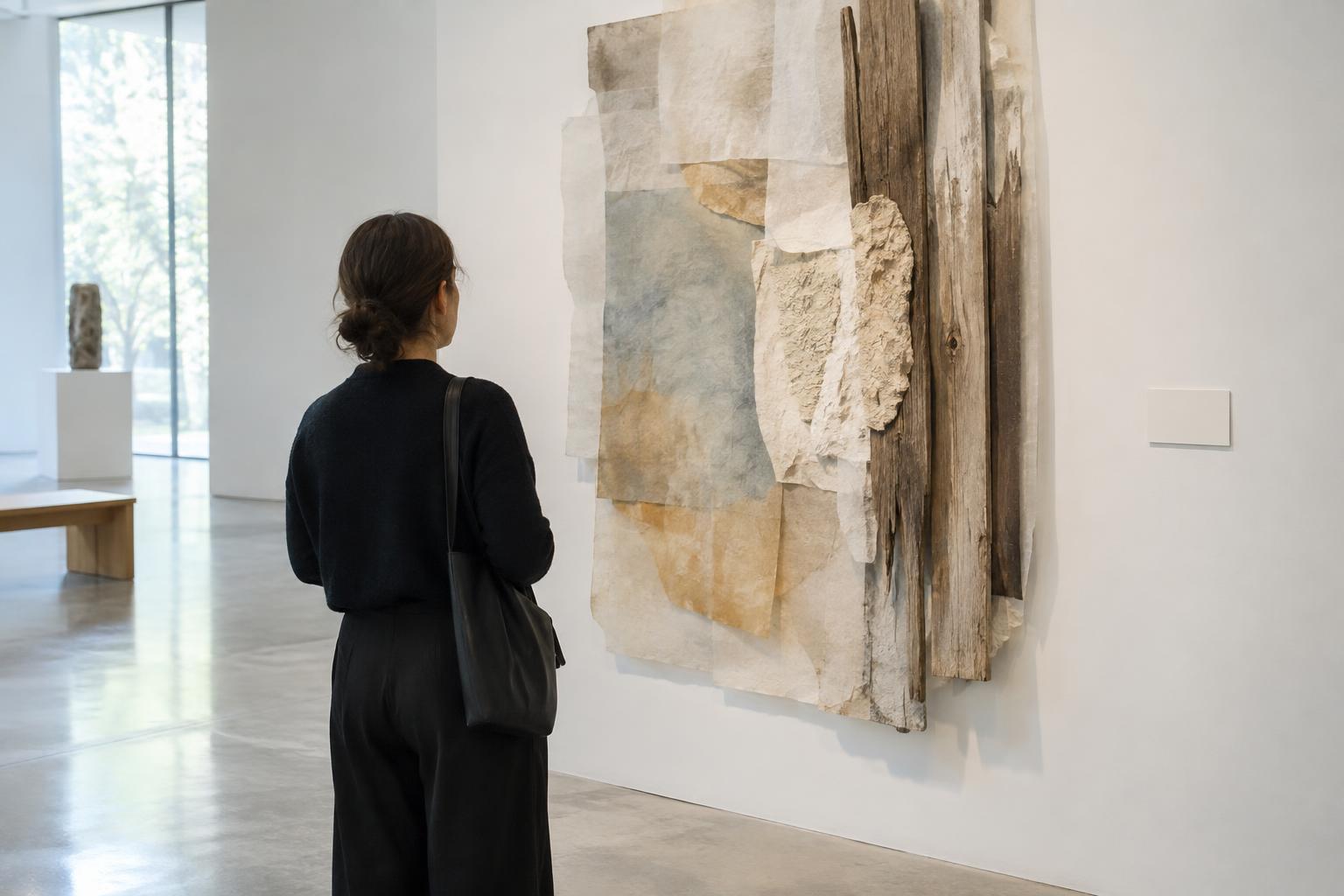
There is no obligation to agree with every sentence on a wall. A label can offer context and vocabulary; it cannot have your encounter with the work for you. The most productive reading may end not in certainty but in a more precise question: Why was this placed here? What changes when I move? Which part of the interpretation can I see in the work itself? Those questions keep the label and the artwork in conversation.