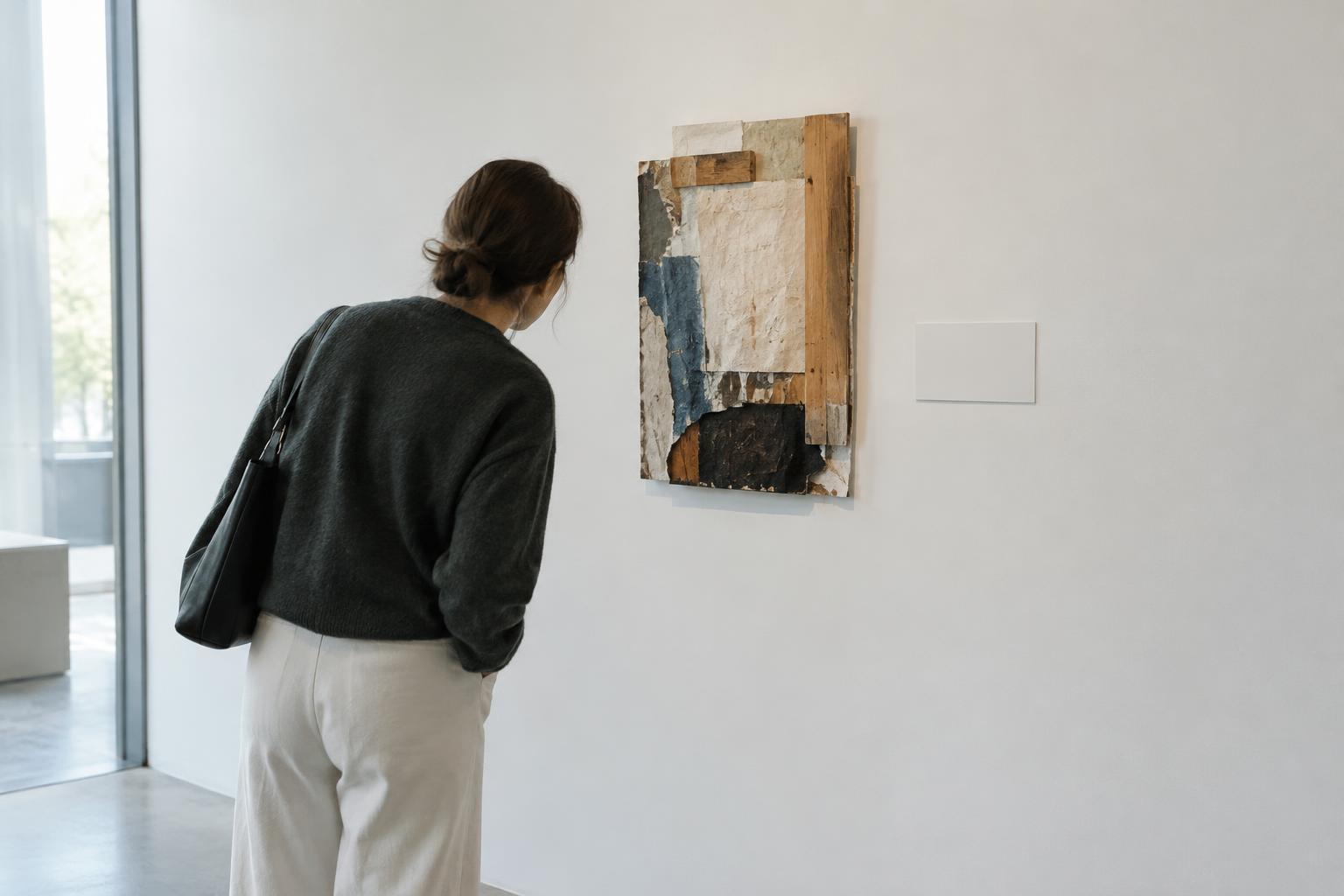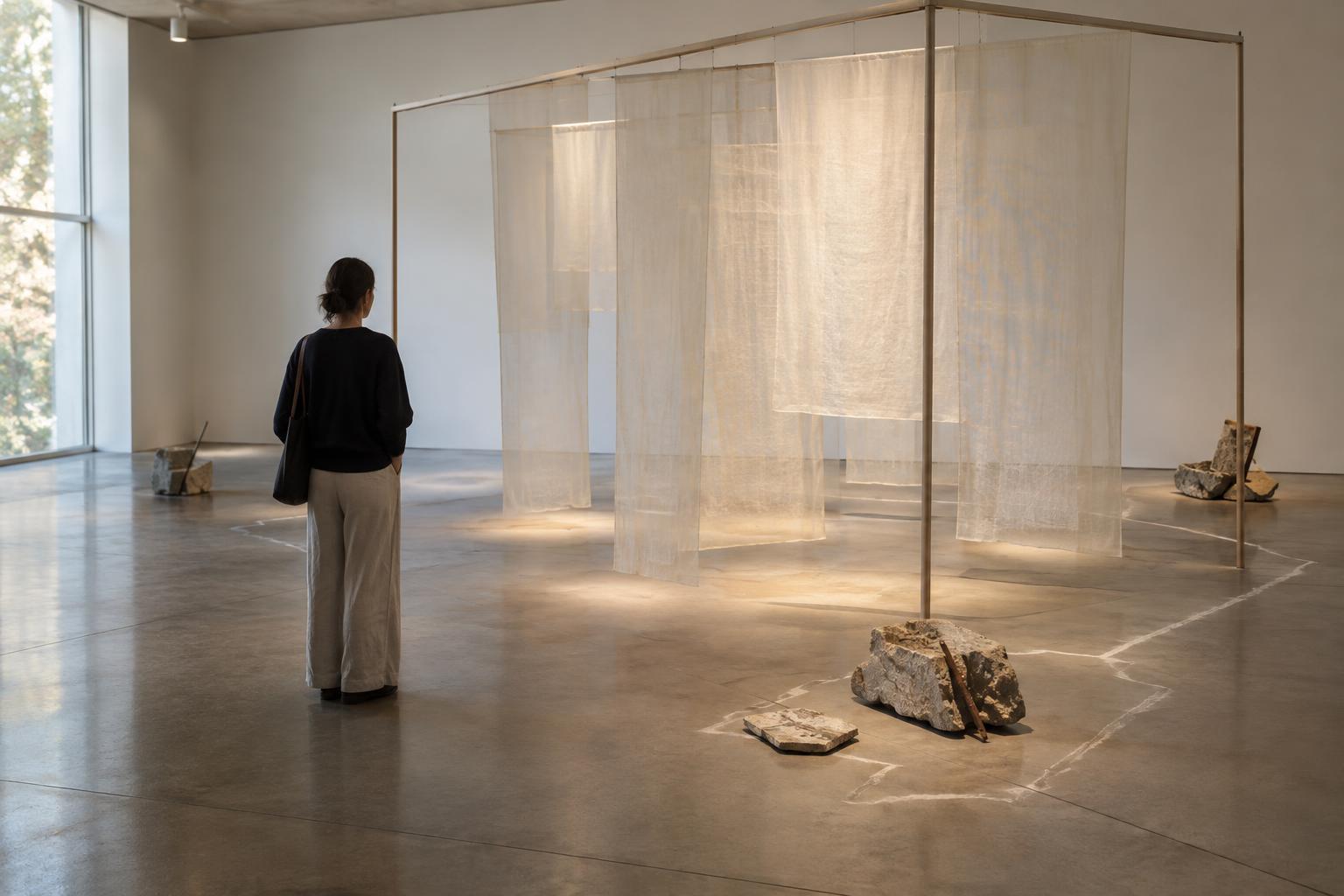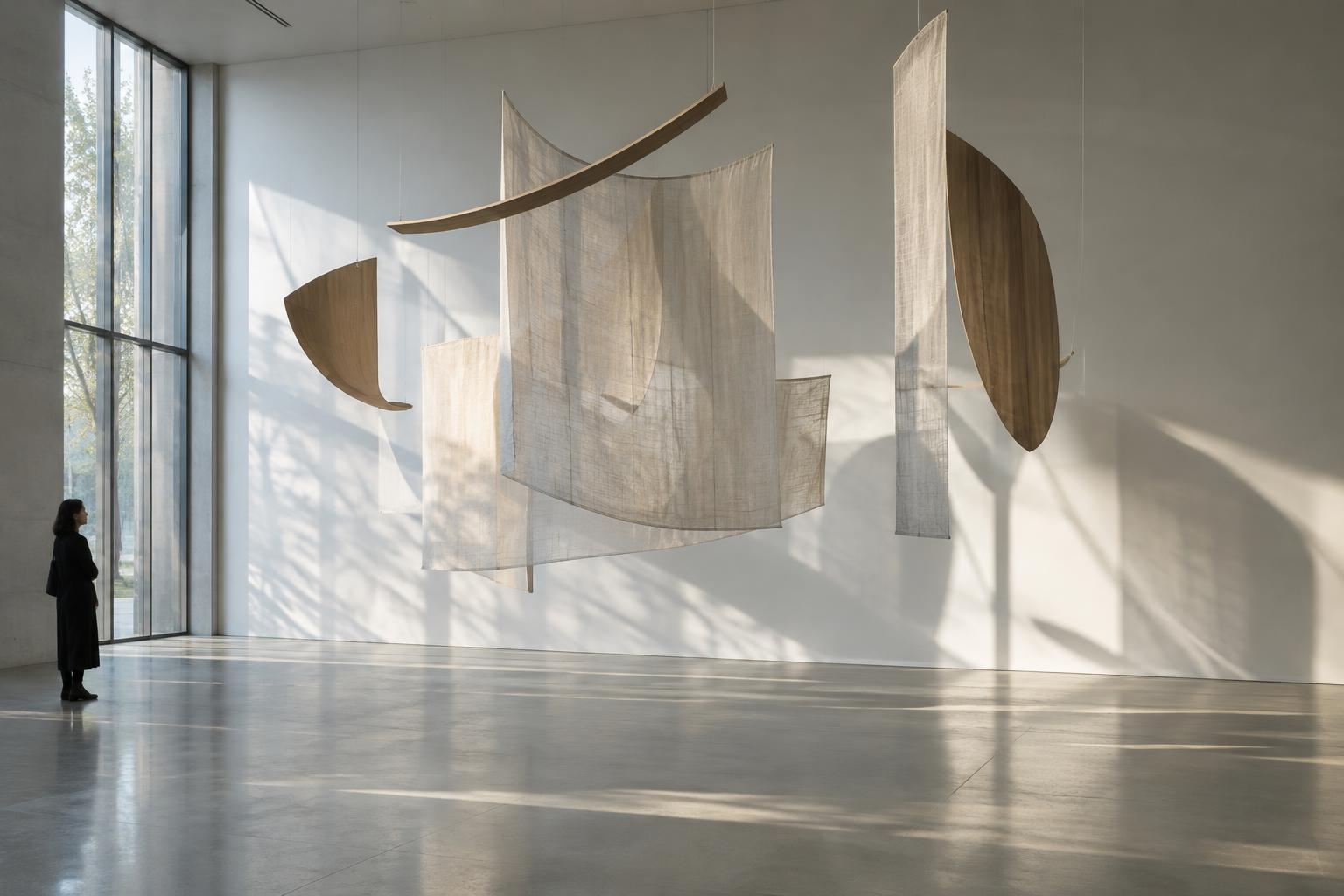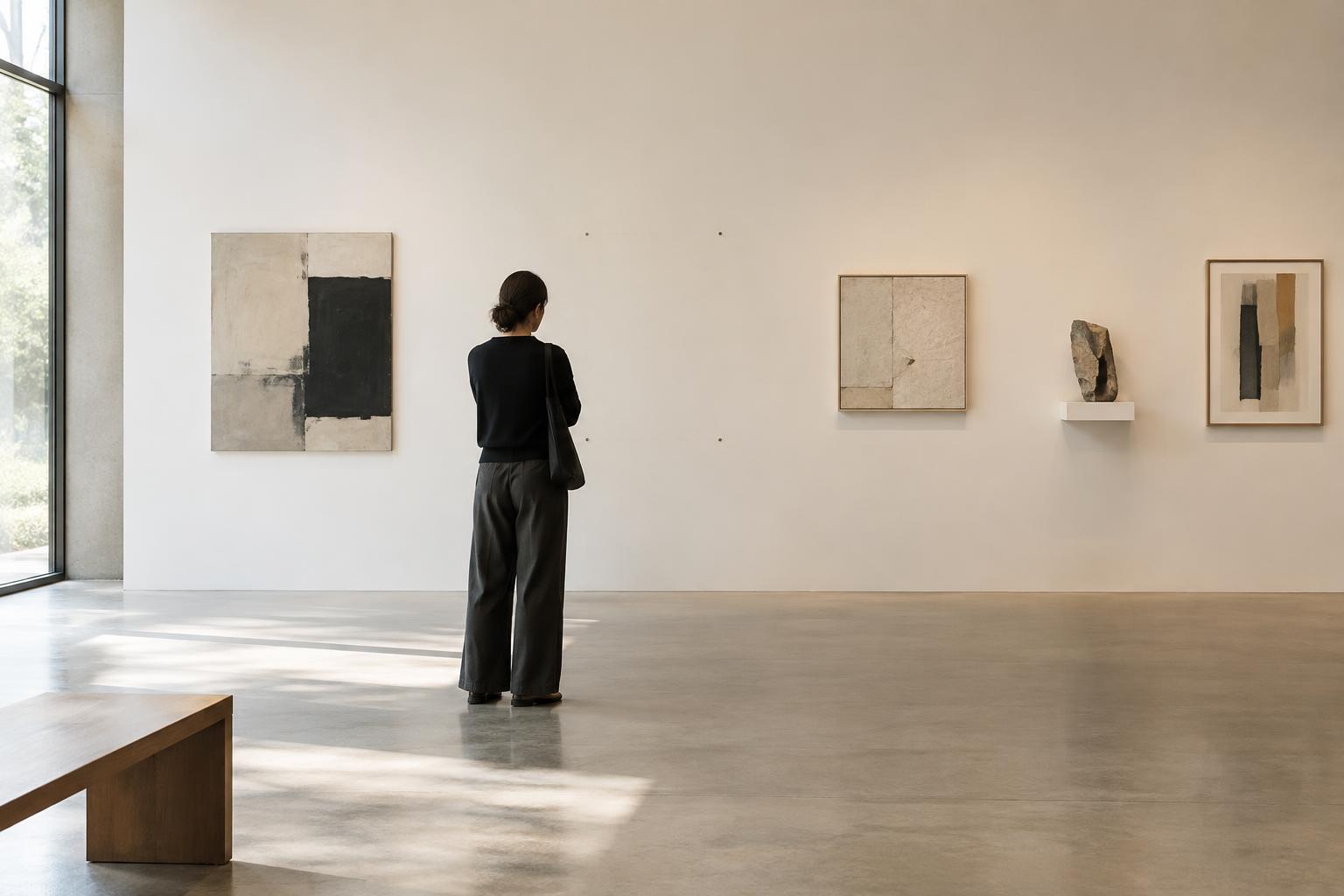
Begin with the story the exhibition offers
Every exhibition is a selection. Even a generous gallery has limited space, and a focused show needs boundaries. Curators, artists and other contributors choose works, arrange them, write labels and decide what a visitor encounters first. Those choices make an argument, whether the exhibition states it directly or lets the arrangement do the talking. Asking what is missing can help reveal the shape of that argument.
Start with what is actually present. Is the exhibition organized around one artist, a material, a place or a question? Which works receive room to breathe, and which are grouped closely together? A gap becomes more meaningful when you can describe the expectation that produced it. In a show about an artist’s changing use of space, for example, you might notice that early drawings appear but later installations are represented only by photographs. That difference offers a useful question: how does the exhibition let visitors experience spatial work?
Distinguish an omission from a limit
Not everything absent has been deliberately excluded. A work may be too fragile to display, impossible to borrow, unsafe to reconstruct or dependent on conditions the venue cannot provide. A small exhibition might choose depth over a broad survey. Visitors rarely know the full history of such decisions, so an omission is best treated first as an observation, not proof of a motive.
Still, practical limits affect interpretation. If an installation survives in the gallery as a photograph and a short caption, visitors may learn about its appearance without sensing its scale, sound or movement. If a work made for a street is presented indoors, the exhibition may clarify its materials while leaving its public setting harder to imagine. The question is not simply why the original is missing. It is what the available substitute allows us to understand, and what remains difficult to grasp.
Look for missing voices and contexts
Omissions can also occur in the account surrounding the objects. Wall text may explain a technique but say little about the people who helped make a work. An exhibition of art in public space may show plans and finished photographs without describing how passersby encountered it. A display of experimental materials may celebrate innovation while leaving the labor of fabrication almost invisible. These are not necessarily failures, but they point to other possible readings.
Notice whose perspective guides the labels. Do you hear from the artist, collaborators, residents or participants, or mainly from an institutional narrator? No exhibition can include every voice, and adding more text is not always the answer. The useful question is whether a missing perspective would change how a visitor understands the work’s making, use or reception. This keeps attention on interpretation rather than on compiling a checklist of names.
Pay attention to gaps in the visitor’s experience
Some omissions are felt before they are named. A room of objects made to be handled may ask visitors to look but not touch. Documentation of a performance may preserve an image while leaving out duration, fatigue or the presence of an audience. A video installation viewed through headphones may create a different sense of shared space than it would with sound filling a room. These gaps remind us that a work and its exhibition are related experiences, not identical ones.
A productive visit can include a pause between rooms to ask what each display method foregrounds. Photographs can make details easier to compare; a recreated environment can convey scale; a sketch can expose a decision that a finished work conceals. Each format also leaves something behind. Rather than seeking a perfect presentation, consider how the exhibition makes its compromises visible—or whether you must infer them.
Turn a gap into a better question
An omission is most useful when it changes the questions you ask. Instead of declaring that a show has ignored a subject, try a more precise formulation: What would an account of this material look like if it included the failed tests? How might this installation read if visitors could see its original site? What happens to a collective project when only one contributor is named in the main text? Such questions can open interpretation without pretending to know answers the exhibition does not supply.
Keep a brief record of what prompted the question: a label, an empty stretch in a timeline, a change of medium or an unexpected transition between rooms. Then return to the works on view. The purpose of noticing omissions is not to replace looking with suspicion. It is to see more clearly how an exhibition builds knowledge from partial evidence—and to remain curious about what lies beyond its frame.